15+ Deck Lighting Ideas for Warm Evenings Outdoors
Good deck lighting is the difference between a space you use until sunset and one you live in all evening. The right combination of light sources transforms a deck from a daytime platform into a warm, atmospheric outdoor room that you genuinely never want to leave once the sun goes down. These ideas cover every type of deck lighting, every budget, and every style so you can build a scheme that works beautifully for your specific outdoor space.
Why Deck Lighting Is the Highest-Return Outdoor Investment You Can Make
Most homeowners think of deck lighting as an afterthought, something to sort out once the deck is built and furnished. It is actually one of the most important design decisions in the entire outdoor space and one that deserves attention from the very beginning of the planning process. Here is why.
It Extends Your Usable Hours Dramatically
Without lighting, a deck is available for use from sunrise to sunset. With the right lighting, that usable window extends by several hours every evening of the outdoor season. In practical terms, a deck that gets used from eight in the morning to eight in the evening gets perhaps twice the daily use of one that gets used only in daylight. Across a full outdoor season, that difference in use is enormous and represents the payback of the lighting investment in the most direct and tangible way possible.
It Creates the Atmosphere That Makes a Deck Irresistible
The quality of light fundamentally determines the atmosphere of any space. This is as true outdoors as it is indoors. A deck lit by a single harsh overhead floodlight feels like a car park. The same deck lit by layered warm sources at multiple heights feels intimate, welcoming, and deeply beautiful. The furniture, the planting, and the paving are all the same. The experience is completely different. Lighting is the single element with the greatest power to transform the atmosphere of an outdoor space and it should be treated with that level of significance.
Love Chic Living Club?
Add us as one of your preferred Google sources and discover more home decor, DIY, outdoor, and lifestyle inspiration from us.
It Transforms How the Space Looks From Indoors
Your deck is something you look at from inside the house far more often than you are actually sitting on it. A well-lit deck visible through the main living room or kitchen windows becomes a beautiful view that adds to the quality of the indoor living experience in a way that an unlit deck at night, which is simply invisible, never can. Design your deck lighting with the view from inside in mind as well as the experience from outside.
It Makes the Deck Safer
Beyond atmosphere and aesthetics, deck lighting has a critical practical function. Steps, level changes, railing edges, and the transition between the deck and the garden are all potential hazards in the dark. Step lights, recessed floor lights, and path lighting around the deck perimeter make these hazards visible and keep everyone using the deck safely after dark. This practical safety function is the baseline requirement of any deck lighting scheme, regardless of the atmosphere it also creates.
How to Plan a Deck Lighting Scheme
Great deck lighting does not happen by adding a few lights here and there. It requires the same level of planning and intention that any other design element of the deck demands.
Plan Three Layers
The most reliable approach to deck lighting design is to plan three distinct layers that work together. The ambient layer provides the overall gentle illumination of the space, typically from string lights, a pendant, or wall sconces. The task layer provides directed light where it is needed for specific activities, typically over the dining table or BBQ area. The accent layer highlights specific features like plants, architectural details, or the railing, creating visual interest and depth. A deck with all three layers feels richly lit. A deck with only one or two layers always feels like something is missing even if you cannot immediately identify what.
You May Also Love

Decide on Power Sources Early
Hardwired low-voltage LED systems are the most reliable, most versatile, and ultimately the most satisfying deck lighting option. They require planning and installation before the deck is fully furnished but produce a clean, professional result with no visible cables and no batteries to replace. Solar lights are the most convenient and most affordable option for a deck that is already built and furnished, requiring no installation at all. Battery-powered lights are useful for accent and portable lighting applications. Decide on your power source strategy before buying any lights and plan your electrical access points during the deck construction phase if possible.
Use Warm White Throughout
The most important single decision in deck lighting is color temperature. Warm white LEDs at around 2700K produce the most flattering, most inviting, and most atmospheric outdoor light. Cool white and daylight temperature lights, above 4000K, produce a clinical, harsh quality that feels wrong and uncomfortable outdoors regardless of their technical brightness. Warm white throughout, without exception, is the rule for deck lighting that feels genuinely inviting.
Think About Controls
A deck lighting scheme that requires switching on twelve different light sources individually is one that will not be used to its full potential. Group your lights into circuits that make sense for how you use the deck. All ambient lights on one switch or dimmer. Feature and accent lights on another. Step and safety lights on a third, possibly with a motion sensor or dusk-to-dawn sensor so they come on automatically. Smart lighting systems that allow all circuits to be controlled from a phone or voice assistant are increasingly affordable and enormously convenient for outdoor spaces.
Plan for Dark Sky Principles
Outdoor lighting that shines upward, spreads sideways beyond the deck, or is unnecessarily bright contributes to light pollution and can disturb neighbors. Choose fittings that direct light downward or inward, use the minimum brightness needed for each application, and shield any fittings that might otherwise cause glare or spillage beyond the deck boundary. This consideration is increasingly important in suburban and rural settings and in some jurisdictions is becoming a code requirement.
Don't miss: 14+ Minimal Patio Remodel Ideas That Feel Open →
Deck Lighting for Different Deck Styles
The right lighting fixtures and approach depends significantly on the style of the deck and the home it belongs to.
For Contemporary and Modern Decks
Recessed LED floor lights set into the deck boards, flush-mounted wall lights in a square or rectangular profile, concealed LED strip lighting under the top rail of the railing, and a single architectural pendant above the dining area. Fixtures should be as flush and unobtrusive as possible, visible only when lit. The contemporary deck lighting scheme is characterized by the invisibility of the hardware and the quality of the light it produces.
For Traditional and Colonial Decks
Lantern-style wall sconces on the house wall, post cap lights on every railing post, candle lanterns on the dining table, and string lights with classic Edison bulbs strung in a neat catenary above the seating area. Traditional deck lighting fixtures have visible decorative form that contributes to the daytime appearance of the deck as well as the evening atmosphere.
For Rustic and Farmhouse Decks
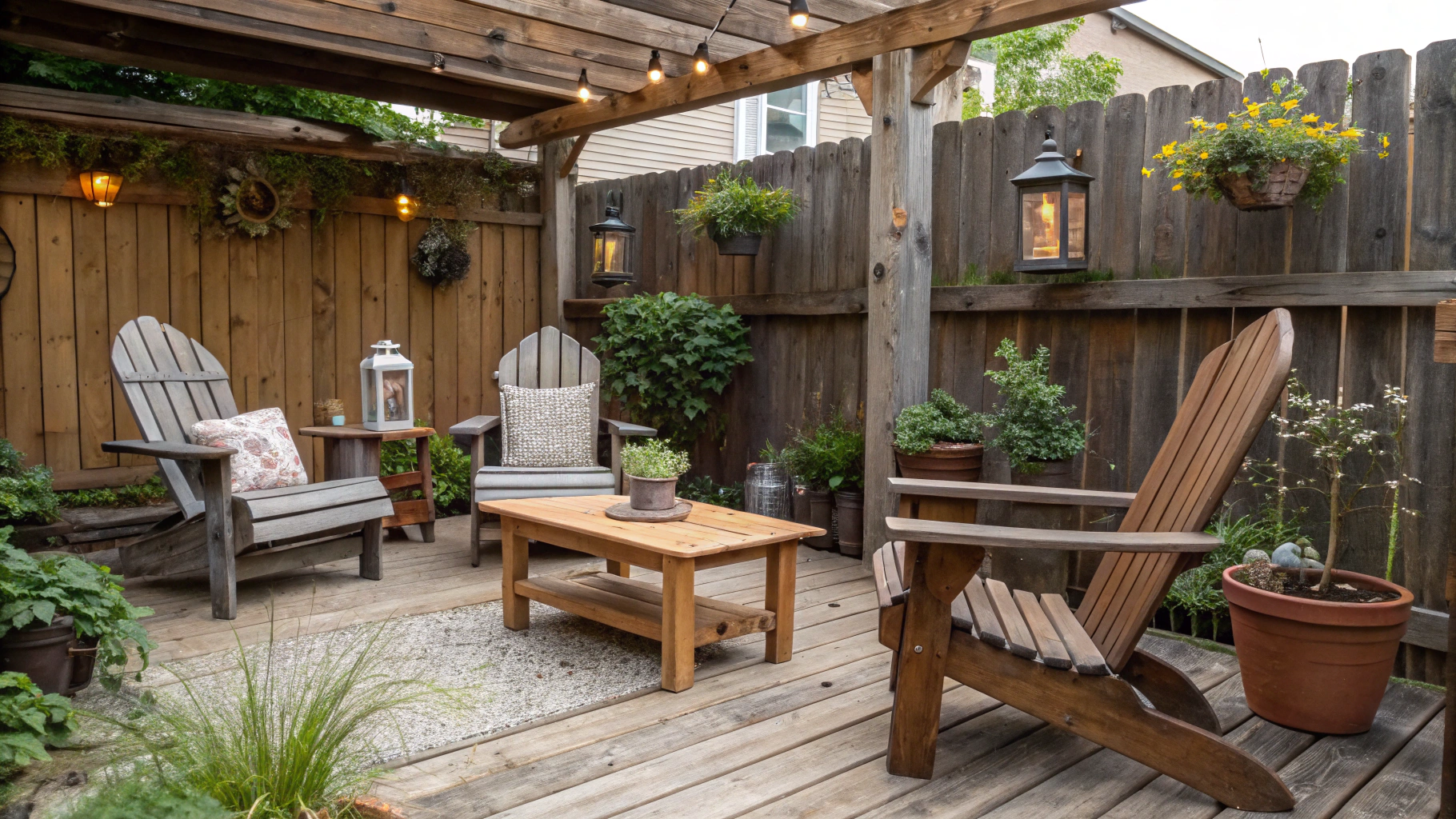
Edison bulb string lights in loose festoon loops rather than tight catenaries, mason jar lanterns on the railing or steps, candles in weathered metal holders on the table, and solar spike lights at the base of large planters. Farmhouse deck lighting should feel slightly improvised and organic rather than designed, with a warmth and informality that more polished lighting schemes lack.
For Coastal Decks
Rope light details, lanterns in coastal glazes or natural materials, solar path lights along the deck perimeter, string lights in a loose overhead canopy, and candles protected from the sea breeze in hurricane glasses. Coastal deck lighting should feel relaxed, natural, and slightly impermanent, like a beautiful evening that was not too planned.
Keep Exploring
Technical Basics of Outdoor Deck Lighting
Understanding a few technical fundamentals helps you make better purchasing decisions and avoid common mistakes.
Always Use Outdoor-Rated Fixtures
Every light fitting used on a deck must be rated for outdoor use. Indoor-rated fixtures exposed to outdoor humidity, temperature fluctuations, and direct rain deteriorate rapidly, become safety hazards, and void any warranty. Look for IP ratings on outdoor light fittings. IP44 is the minimum for a covered deck. IP65 or above is appropriate for exposed positions subject to direct rain.
Low Voltage Is Safer and More Efficient
Low-voltage LED deck lighting systems running at 12V DC are the safest option for outdoor use because they present no shock risk from damaged cables or connections and are far more efficient than line-voltage systems. Most recessed deck lights, path lights, and post cap lights run on low-voltage systems. They require a low-voltage transformer connected to a standard power outlet and the transformer does the work of converting line voltage to the safe 12V output the lights require.
GFCI Protection Is Non-Negotiable
Any outdoor electrical outlet used to power deck lighting must be protected by a Ground Fault Circuit Interrupter breaker. GFCI protection detects tiny current leakages that could indicate a shock hazard and cuts the circuit instantly before harm occurs. This is a code requirement in all US jurisdictions for outdoor outlets and is a genuine life safety measure. Never power outdoor lighting from an unprotected indoor outlet via an extension cord.
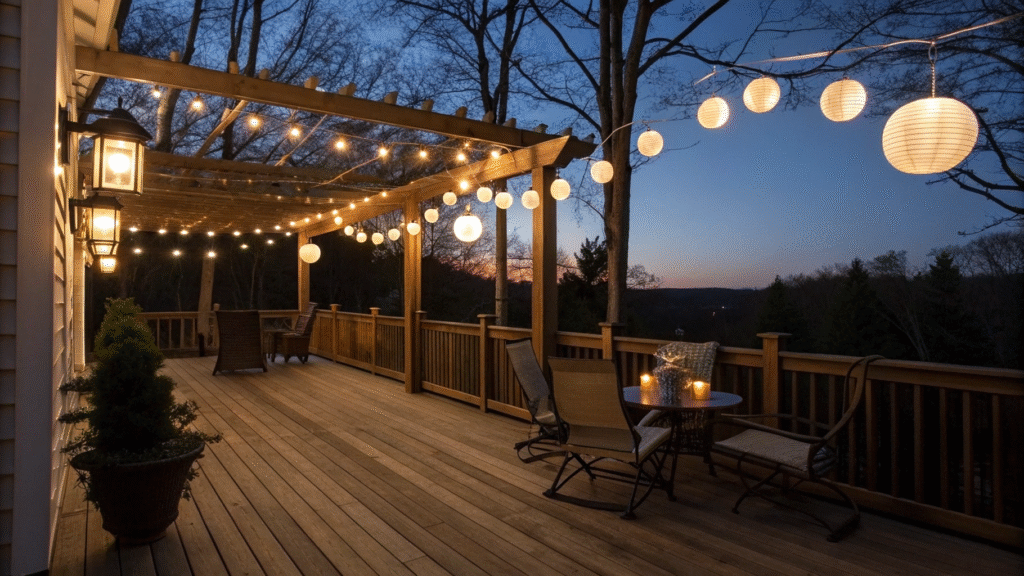
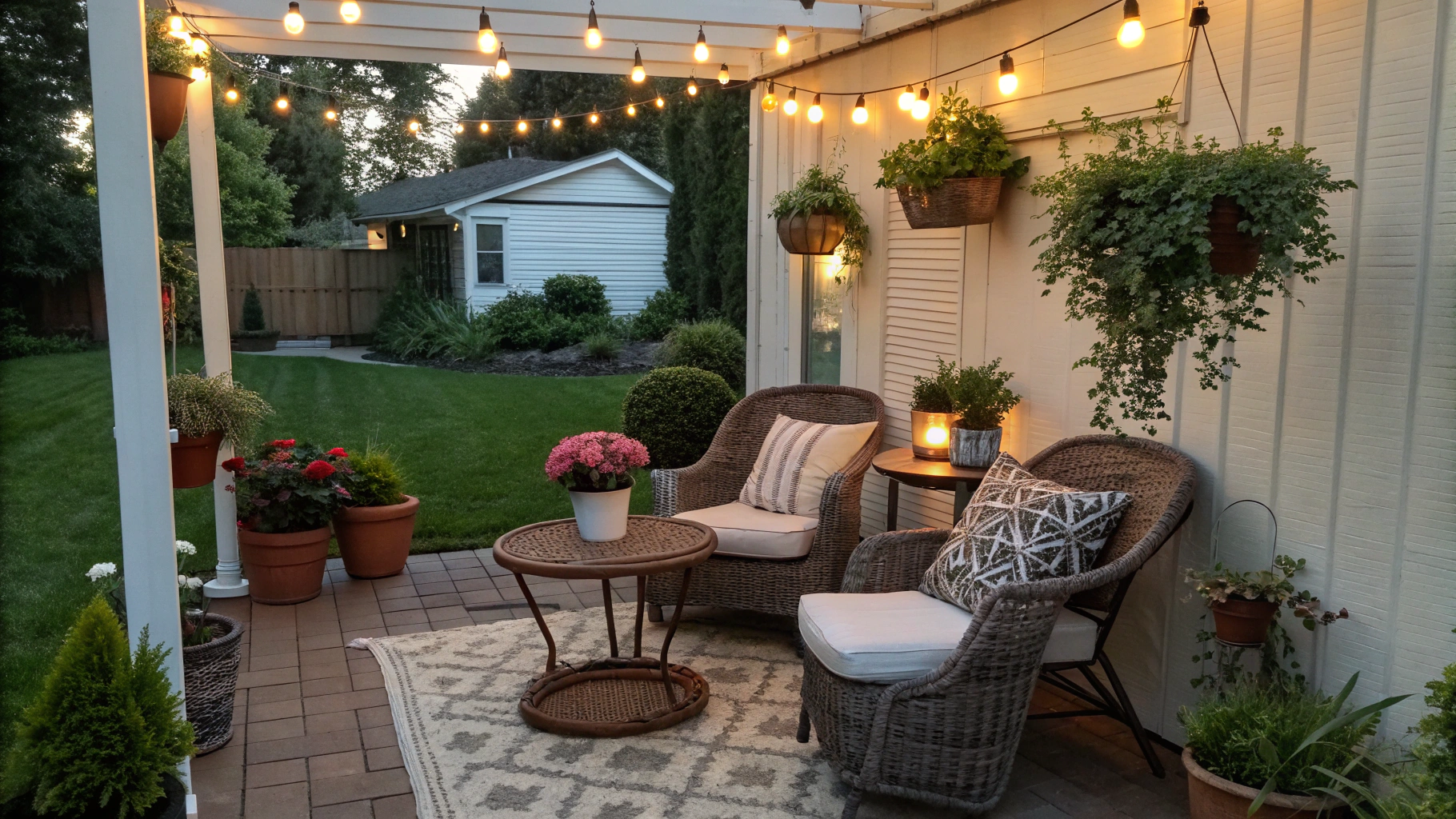
1. String Light Canopy
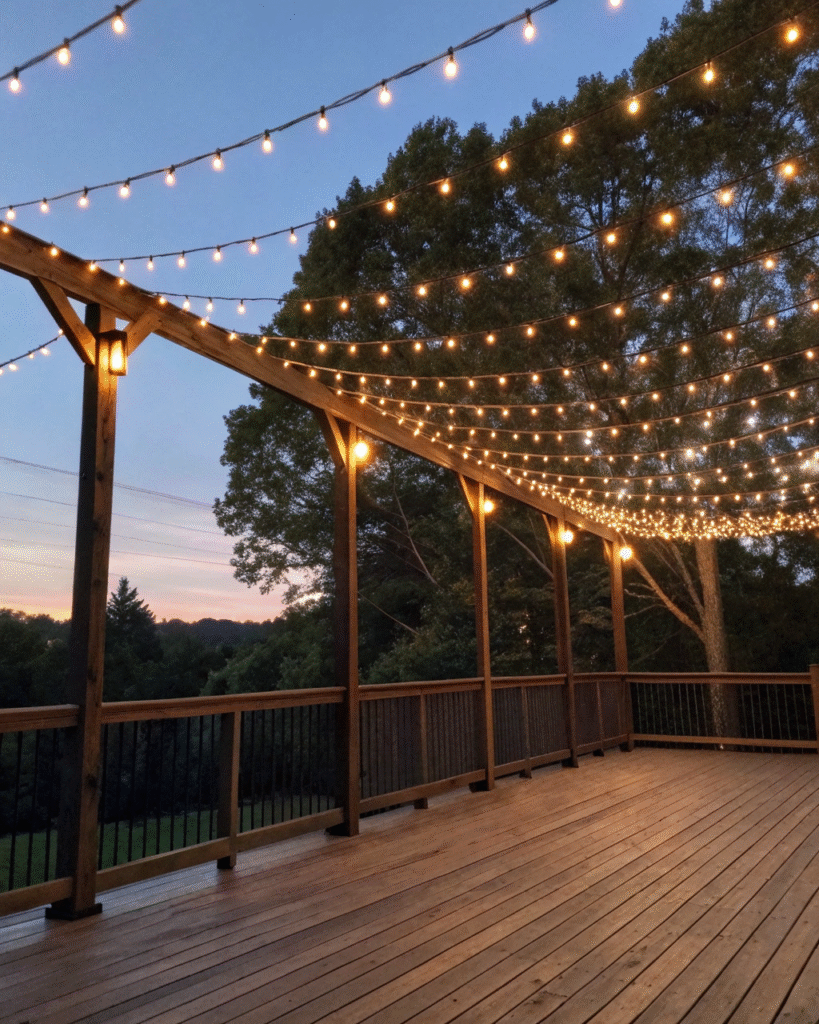
Drape string lights overhead for a magical glow that feels warm and welcoming.
Pro Tip: Hang them in crisscross patterns to evenly distribute light across your deck.
2. Lantern Lighting
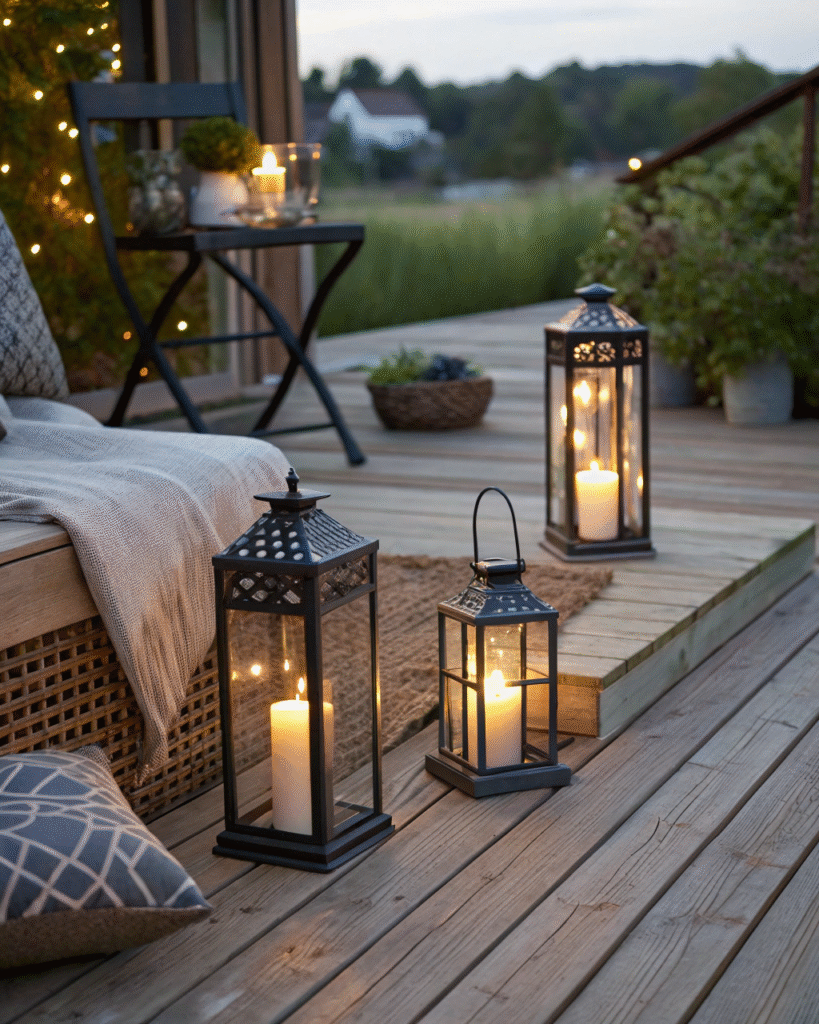
Lanterns add timeless charm and can be easily moved around.
Pro Tip: Use a mix of heights and styles for a layered, romantic feel.
3. Step Lights
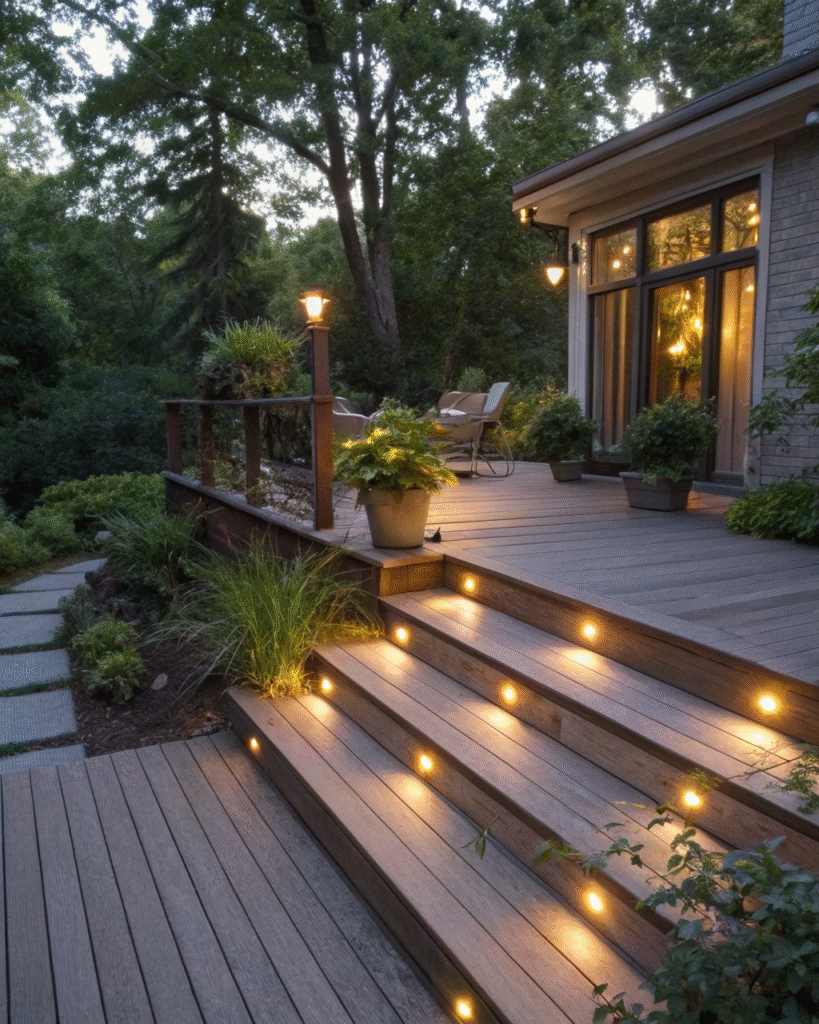
Built-in step lighting improves safety while adding a modern touch.
Pro Tip: Choose soft, warm white lights to keep the look gentle and inviting.
4. Recessed Floor Lights
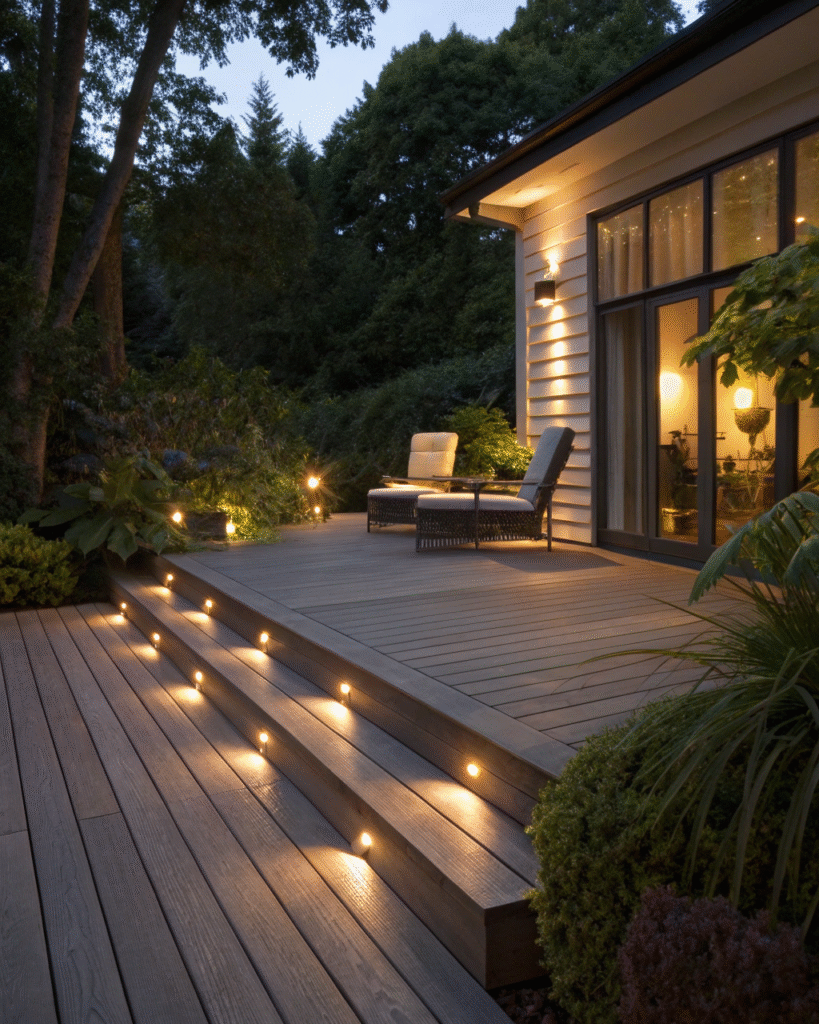
Subtle deck floor lights create a sleek, contemporary aesthetic.
Pro Tip: Space them evenly along pathways or borders for a polished finish.
5. Wall Sconces
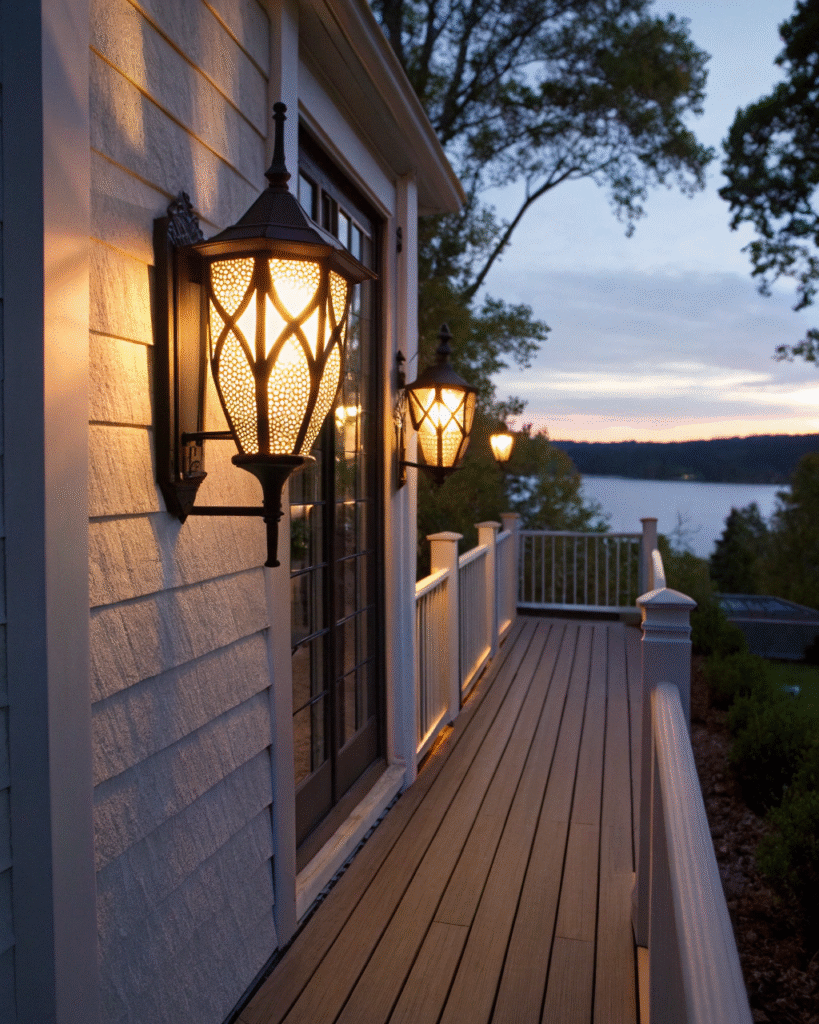
Outdoor wall sconces bring elegance and balanced illumination.
Pro Tip: Match the fixtures to your deck’s style — black matte for modern, brass for classic.
6. Hanging Pendant Lights
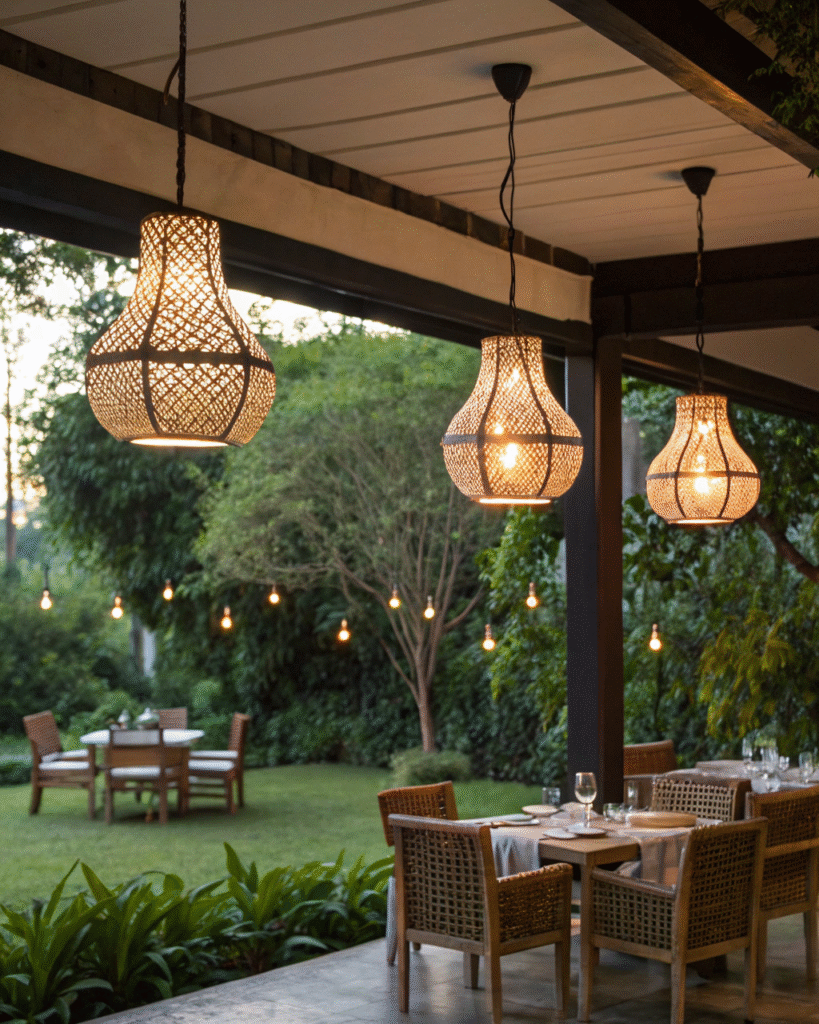
Pendant lights above a dining area make the space feel intimate and stylish.
Pro Tip: Use dimmable bulbs to adjust brightness for different moods.
7. Solar Deck Lights
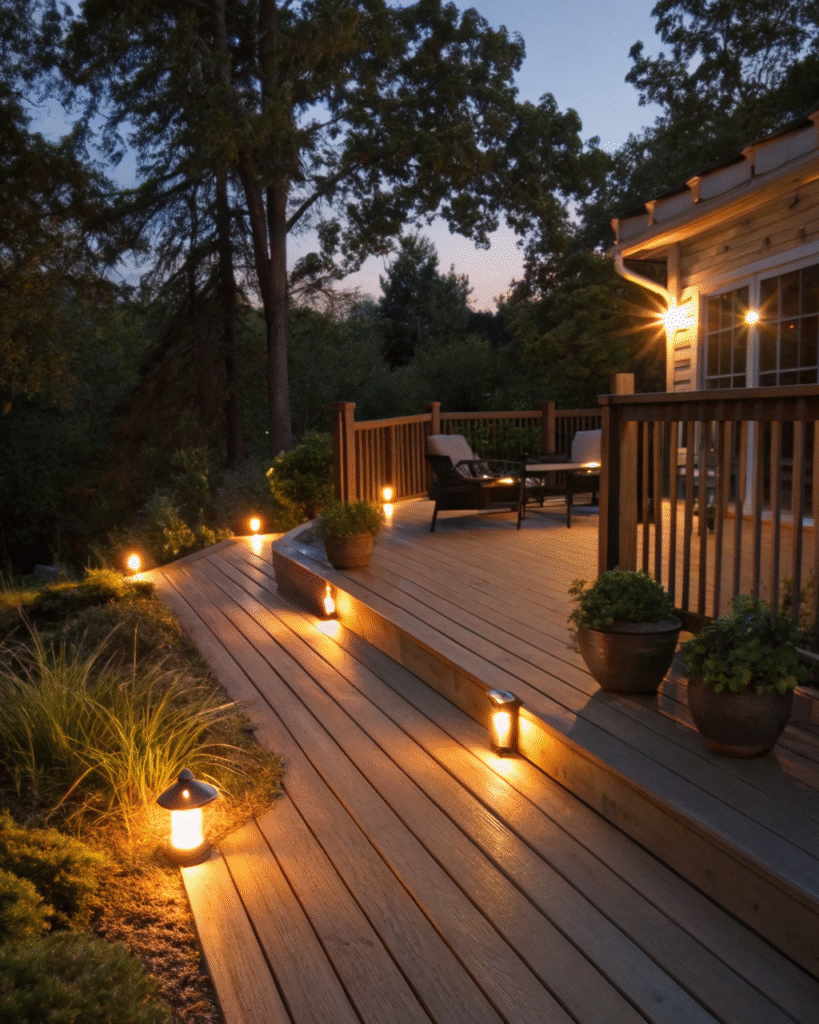
Solar lights are eco-friendly and easy to install anywhere.
Pro Tip: Place them in sunny spots during the day for optimal charging.
8. Fire Pit Glow
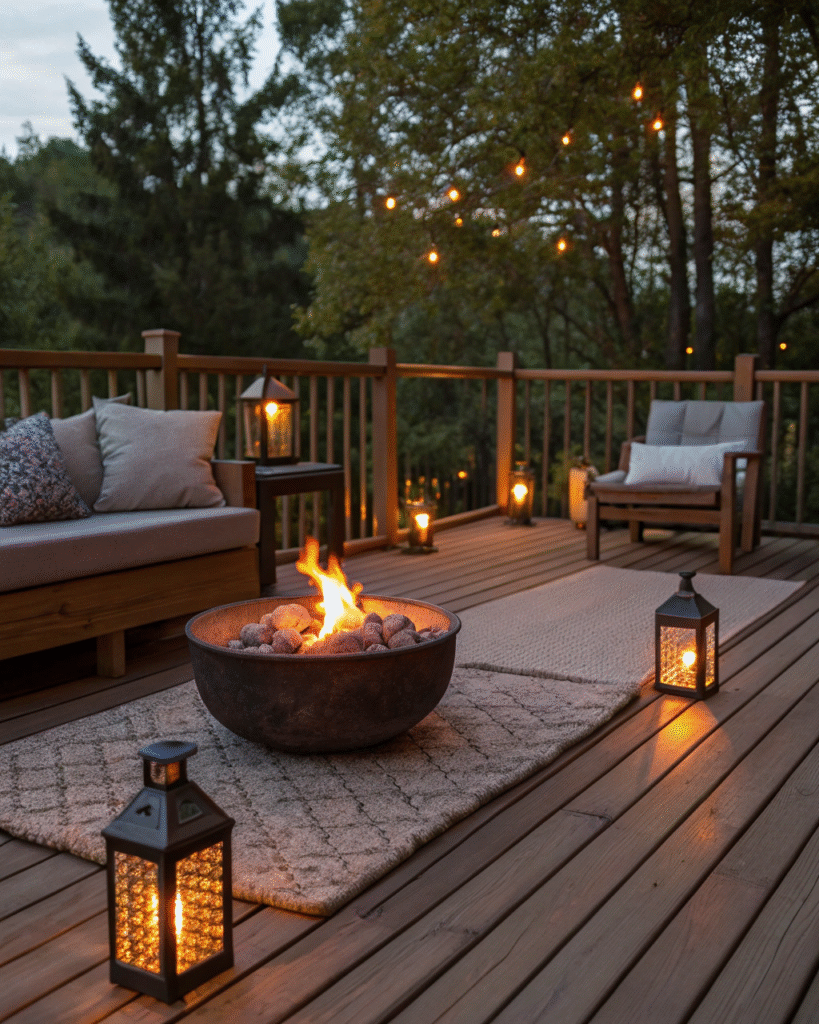
A fire pit adds natural warmth and light that draws people together.
Pro Tip: Surround it with soft accent lighting for an even cozier setting.
9. Fairy Light Fence
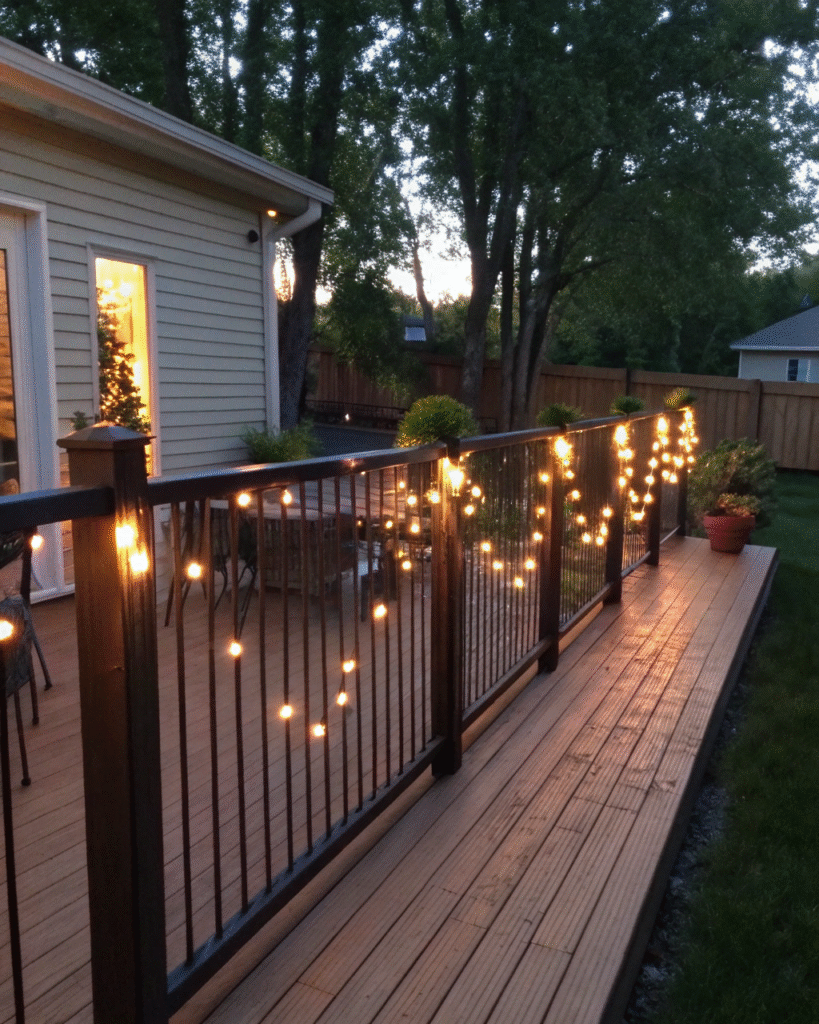
Wrap fairy lights around your railing or fence for subtle sparkle.
Pro Tip: Opt for waterproof varieties to keep them shining all season long.
10. Candle Lanterns
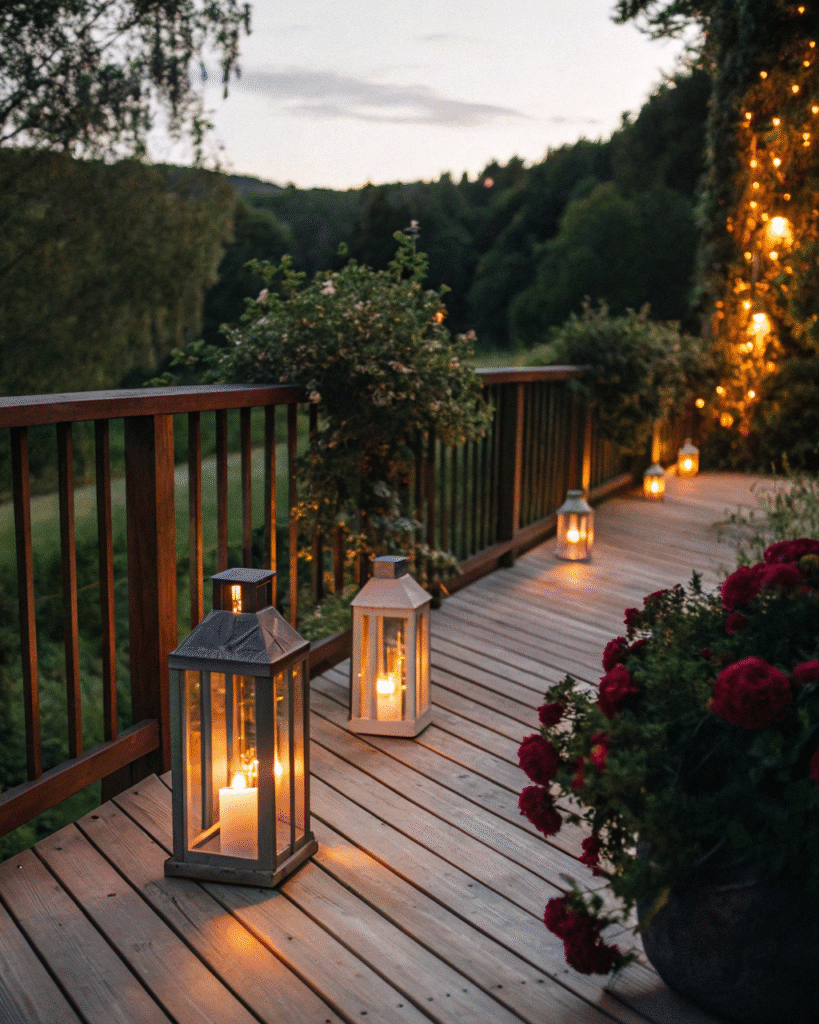
Candlelight brings softness and romance to outdoor evenings.
Pro Tip: Use LED candles for a flicker effect without worrying about wind or wax.
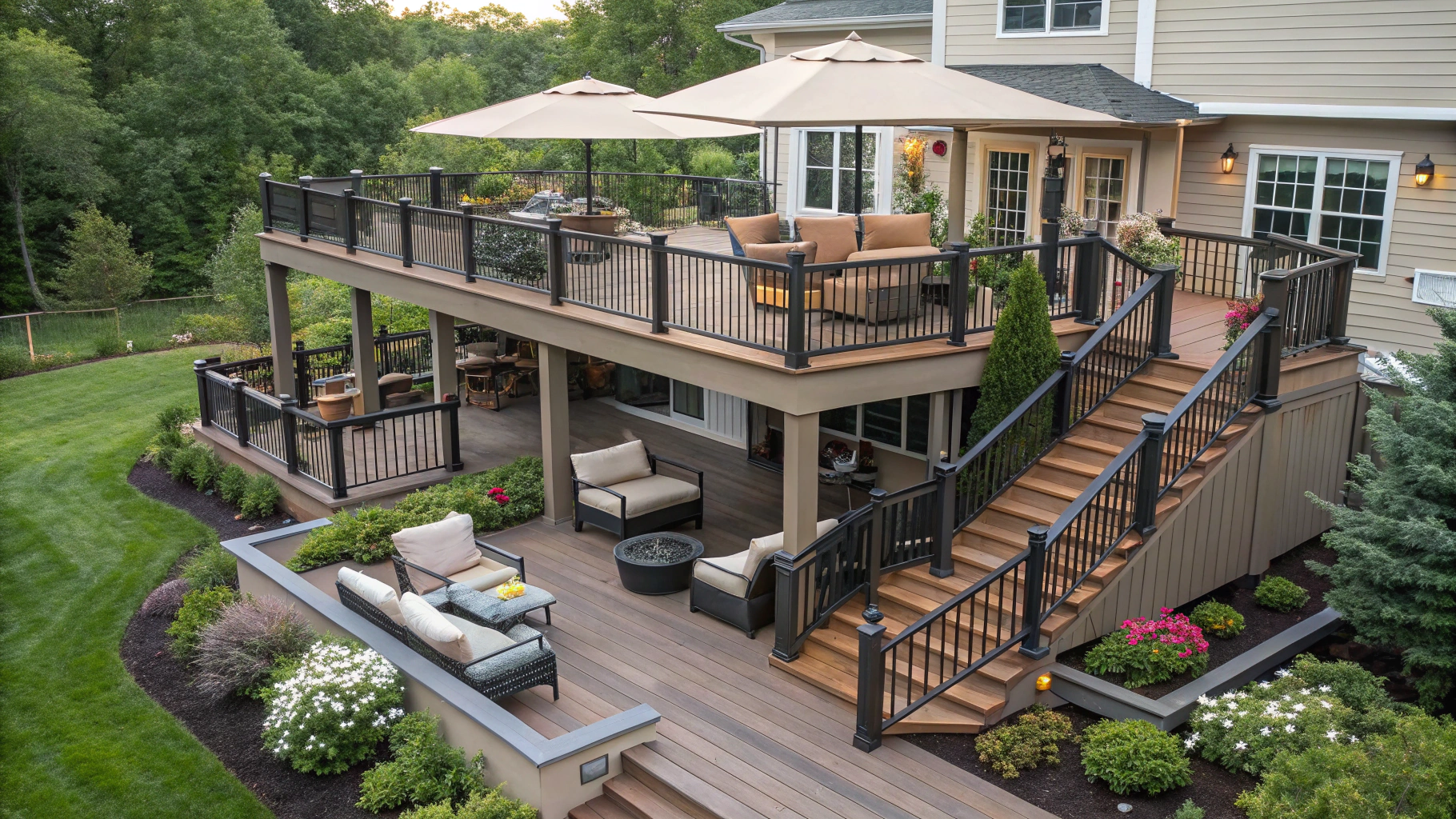
11. Under-Railing Lights
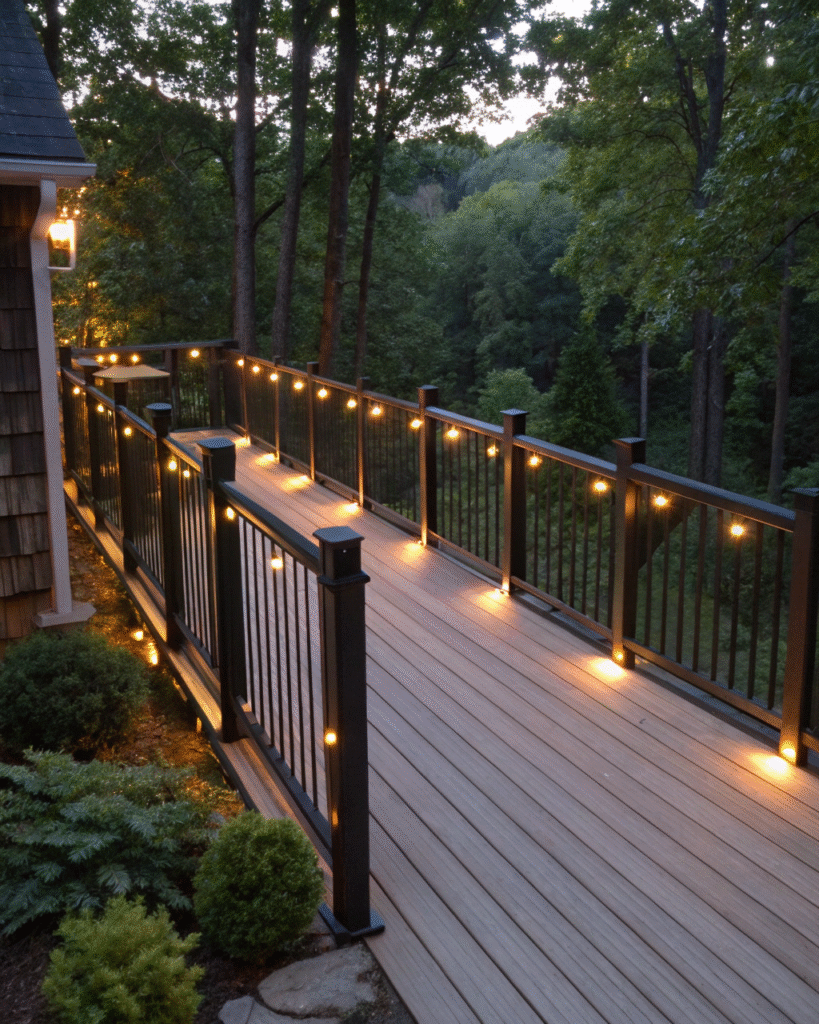
Hidden lights under railings create a soft, floating effect at night.
Pro Tip: Combine them with string lights for balanced, layered illumination.
12. Post Cap Lights
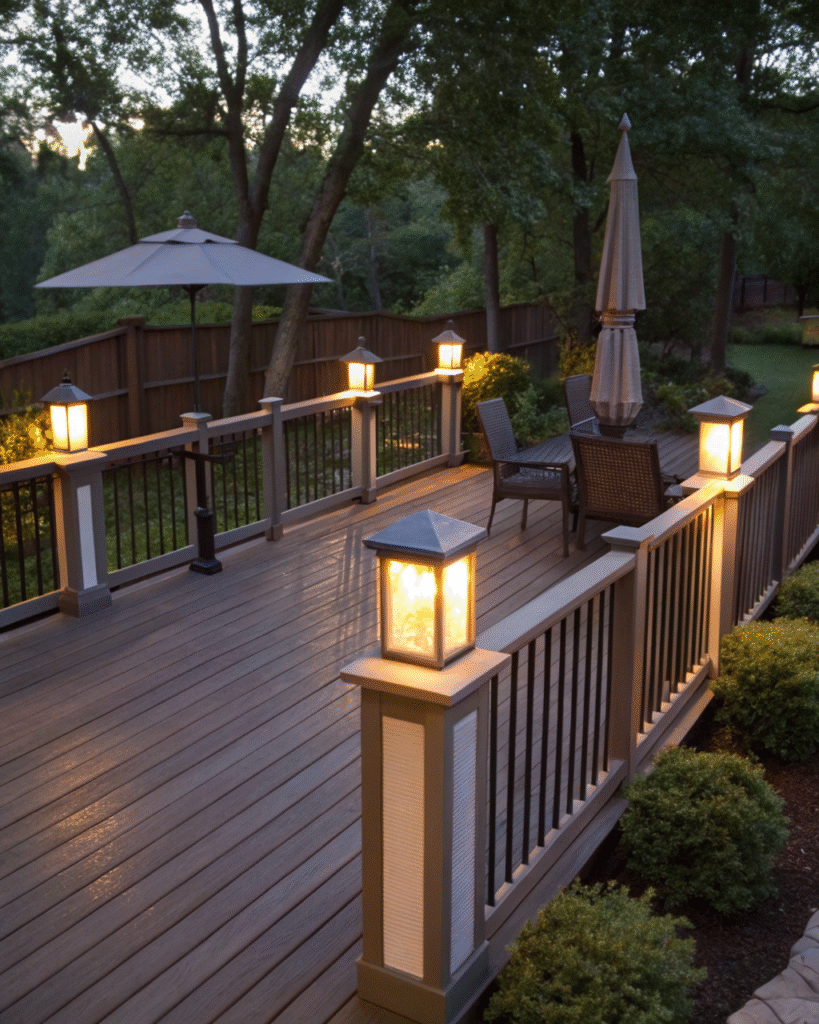
Illuminate your deck posts for a clean, finished look.
Pro Tip: Choose solar post caps for easy installation and low maintenance.
13. Spotlights for Greenery
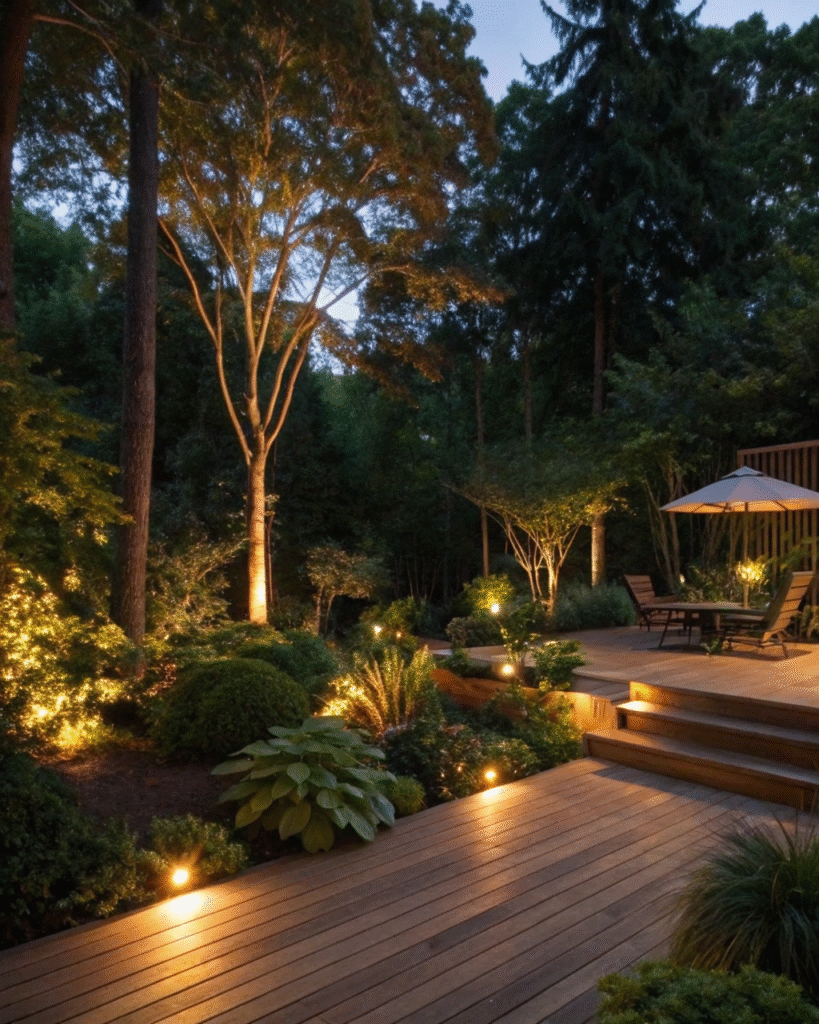
Highlight plants or trees with focused spotlights for a dramatic touch.
Pro Tip: Use adjustable fixtures so you can change the direction and intensity of light.
14. Rope Lighting
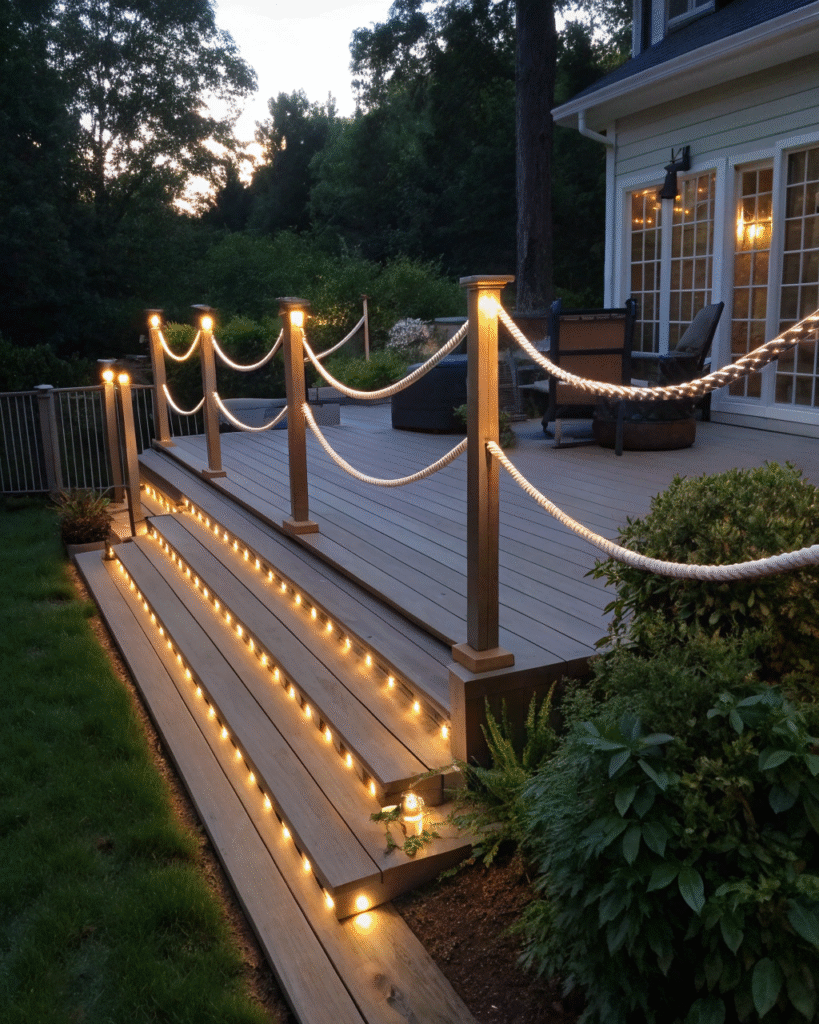
Rope lights along the deck floor or steps add soft definition and safety.
Pro Tip: Conceal them neatly along edges to keep the look subtle and sleek.
15. Hanging Bulb Clusters
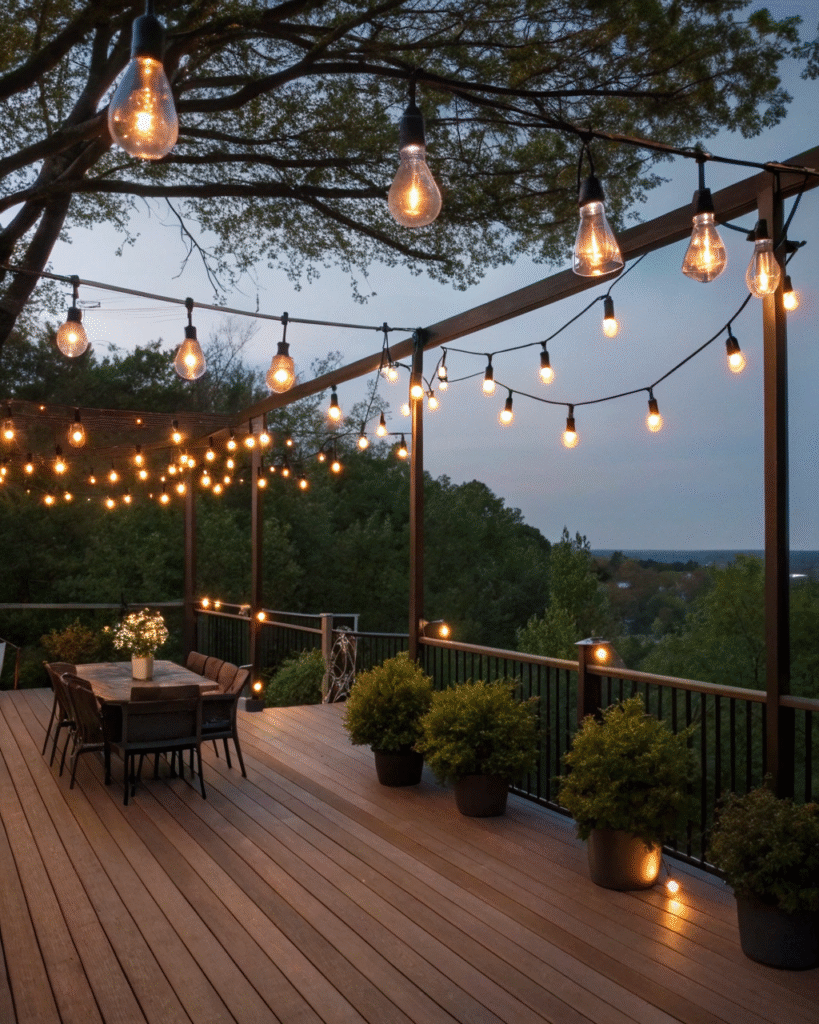
Group hanging bulbs at varying heights for a stylish, café-inspired vibe.
Pro Tip: Choose Edison-style bulbs for a warm, nostalgic glow.
Final Thoughts
Deck lighting is the investment that gives back every single evening of the outdoor season. A deck without it closes at sunset. A deck with the right lighting scheme becomes somewhere you genuinely want to be every evening from the moment the ambient light fades until you finally decide to go inside. Layer your sources, use warm white throughout, plan your controls carefully, and light the deck as thoughtfully as you would light a room inside the house. The result will be an outdoor space that is as beautiful at ten o’clock at night as it is at ten in the morning and one that earns its place in your home every single day.
Frequently Asked Questions
What is the best color temperature for deck lighting?
Warm white at 2700K is the ideal color temperature for deck lighting. This temperature produces a warm, amber-toned glow that is flattering to people, beautiful against natural materials like timber and stone, and creates the inviting atmosphere that makes a deck enjoyable to be on in the evening. Avoid cool white and daylight temperatures above 4000K for any deck application as they produce a harsh, clinical quality that feels uncomfortable outdoors.
Do I need an electrician to install deck lighting?
Any new outdoor electrical circuit, outdoor outlet, or hardwired fixture requires installation by a licensed electrician in most US jurisdictions. Low-voltage systems connected to an existing outdoor GFCI outlet via a transformer can typically be installed by a homeowner without professional electrical work. Solar and battery-powered lights require no electrical work at all. When in doubt about what requires a licensed electrician, consult your local building department.
How do I protect deck lighting from rain and moisture?
All outdoor deck lighting fixtures must carry an appropriate IP rating for their installed position. IP44 is the minimum for covered positions. IP65 or IP67 is required for exposed positions subject to direct rain. Always buy fixtures specifically rated for outdoor use and ensure all connections and junction boxes are also rated for outdoor application. GFCI protection on all outdoor circuits provides additional safety protection against moisture-related electrical faults.
What is the most energy-efficient deck lighting option?
LED lighting in all forms is the most energy-efficient deck lighting choice, using up to 80 percent less energy than incandescent equivalents while lasting significantly longer. Solar LED lights are the most economical to run since they use no grid electricity at all. Low-voltage LED systems running from a transformer are the most efficient hardwired option. Pair LED lights with timers or dusk-to-dawn sensors to ensure lights are only on when needed and not running wastefully through the night.
How many lights do I need for a deck?
There is no universal formula but the principle is to have enough light sources at enough different heights to create layered illumination across the whole deck without any dark zones that feel unsafe or uninviting. A typical 200 square foot deck might include one pendant or string light canopy for ambient light, step lights on all steps, two to four post cap lights, and two to four accent pieces like lanterns or uplights for planting. Scale up or down based on the size and complexity of your deck.
Can I add lighting to an existing deck without major work?
Yes, and this is one of the most common and most rewarding deck improvement projects available. Solar lights, battery-powered fittings, and string lights attached to existing structures all require no electrical work and can be added to any existing deck immediately. For hardwired options, a single new outdoor GFCI outlet installed by an electrician gives you the power access needed to run low-voltage transformers for an entire deck lighting system, and that single electrical installation can typically be done in a few hours.