15+ Patio Border Landscaping Ideas to Define Your Space
A well-designed border can give your patio a finished look while adding texture, color, and natural beauty.
The border is where your patio meets the garden and how you handle that transition makes an enormous difference to how finished, how designed, and how connected to its surroundings the whole outdoor space feels. A well-considered patio border does far more than mark an edge. It defines the character of the space, softens the transition from hard to soft landscaping, and can become one of the most beautiful features of the entire outdoor area.
Why Patio Borders Matter More Than Most People Think
Most patio projects pour all their attention into the surface material, the furniture, and the planting within the patio itself. The border, the zone where the patio edge meets the garden, gets whatever is left over in terms of thought and budget. That is a mistake and here is why.
The Border Is the Visual Frame of the Patio
Just as a picture frame defines and contains the artwork within it, the patio border defines and contains the patio as a design composition. A patio without a clear border looks unresolved and slightly temporary, as if it might expand or contract at any moment. A patio with a well-designed border looks permanent, intentional, and complete. The border is the line that says this is the patio and this is the garden and the quality of that line has an outsized effect on how considered the whole space appears.
It Controls the Transition Between Hard and Soft Landscaping
The relationship between the hard surface of the patio and the soft planting and lawn of the garden is one of the most important design relationships in any outdoor space. Handle it badly and the patio looks like it was dropped into the garden without thought. Handle it well and the patio feels like it grew out of the landscape naturally. The border is the primary tool for managing this relationship and the design of the border determines whether the transition feels abrupt and jarring or gradual and beautiful.
It Prevents Practical Problems
Beyond aesthetics, patio borders serve important practical functions. A proper edging material between the patio paving and adjacent lawn or soil prevents grass and weeds from invading the paving joints, stops gravel from migrating out of the patio area, keeps mulch in planting beds from spreading onto the paving surface, and maintains the clean geometry of the patio edge over time. A border that is purely decorative without any structural edging function will require constant maintenance to keep looking tidy.
It Extends the Design Vocabulary of the Patio Into the Garden
A well-designed patio border that uses materials, plants, or details that relate to the patio itself extends the design language of the outdoor space into the garden and creates a sense of cohesion and continuity that makes the whole property feel more designed and more resolved. A stone edging that echoes the patio paving material, a planted border of lavender that picks up the color of the cushions, a brick border that complements the house brickwork, all of these connections create a level of design cohesion that elevates the whole space.
How to Design a Patio Border That Works
Designing a border that looks great and performs its practical functions well requires thinking through a handful of key questions before you start.
Hard Edging, Soft Planting, or Both?
The most effective patio borders typically combine both hard edging and soft planting. The hard edging, whether stone, brick, metal, or timber, provides the structural containment that keeps materials in place and defines the line cleanly. The soft planting immediately inside or outside the hard edging softens the transition, adds color and seasonal interest, and connects the patio to the garden in a way that purely hard materials cannot. Using both together produces a border that is practical and beautiful simultaneously.
Match the Border to the Patio Style
The materials and planting in the border should relate to the materials of the patio and the style of the house. A contemporary patio in large format porcelain suits clean metal edging or a gravel strip with architectural planting. A cottage-style patio in reclaimed brick suits a planted border with informal flowering perennials and a stone edging. A Mediterranean patio in terracotta tile suits a low lavender hedge or terracotta pot edging. Getting this relationship right is what makes the border feel designed rather than applied.
You May Also Love
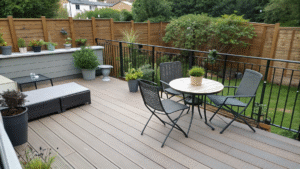
Consider the Width of the Border
Border width is determined by two things: the available space and the plants or materials you want to use within it. A gravel strip border can be as narrow as 6 inches and still be effective. A planted perennial border needs at least 18 to 24 inches to accommodate the plants properly. A mixed planted border with shrubs, perennials, and ground cover looks best at 36 inches or more in depth. Wider borders have more visual impact and more design possibilities but require more maintenance.
Plan for Year-Round Interest
A border that looks beautiful in summer but bare and dead in winter is a missed opportunity. Plan for a mix of planting that provides interest in every season. Evergreen structure plants like box, lavender, ornamental grasses, and low-growing conifers provide the year-round backbone. Seasonal flowering plants add color and variety at specific times of year. This combination ensures the border looks considered and cared-for in every season rather than only at its peak.
Patio Border Landscaping for Different Home Styles
The right border approach depends heavily on the style of the home and the aesthetic of the outdoor space.
For Contemporary and Modern Homes
Clean lines, simple materials, and architectural planting are the defining characteristics of a contemporary patio border. A single row of steel edging with a gravel strip, a clean line of clipped box or ornamental grass, or a raised concrete planter along the patio edge all suit modern architecture with a restraint and precision that more decorative approaches do not. The contemporary border should look as if every element was placed by a set square.
For Traditional and Colonial Homes
A planted border with a mix of flowering perennials, cottage garden plants, and low evergreen structure plants suits traditional homes beautifully. A brick or stone edging that relates to the house materials provides the structural element. The planting should feel generous and slightly informal, as if it has been growing happily for years rather than just installed. Repeat the same plant species at intervals through the border to create rhythm without rigidity.
Don't miss: 14+ Patio Rug Ideas to Complete the Look →
For Cottage and Farmhouse Homes
The cottage patio border is the most relaxed and the most forgiving of informality. Tumbling lavender, trailing rosemary, self-seeding annuals, old-fashioned roses spilling over a low stone edging, and herbs planted informally between structural evergreens all create the pleasantly chaotic, abundantly planted quality that cottage borders do best. The goal is a border that looks as if nature is doing most of the work.
For Mediterranean and Coastal Homes
Low fragrant hedges of lavender, rosemary, and thyme, drought-tolerant grasses and succulents, terracotta pot edging, and pale gravel or crushed limestone strip borders all suit Mediterranean and coastal home styles beautifully. These borders are designed for sun, heat, and minimal water and look most appropriate in climates that share those characteristics.
Patio Border Maintenance: Keeping It Looking Its Best
A beautifully designed border that is not maintained quickly becomes a source of frustration. Here is a practical overview of what ongoing border maintenance involves.
Regular Edging
The line between the patio and the border is only as sharp and clean as how regularly it is edged. A half-moon edging tool or a long-handled border spade used to cut a clean line between paving and planting two or three times per season keeps the border looking crisp and defined. This is a quick and satisfying task that makes an immediate visible difference to the whole patio’s appearance.
Keep Exploring


Weeding
Weeds in a border are inevitable and the frequency with which they need addressing depends on the border design. Mulched borders suppress weeds far more effectively than bare soil borders. Ground cover planting that covers the soil surface densely gives weeds less opportunity to establish. Regular light weeding, little and often, is far easier and more effective than infrequent heavy weeding sessions that allow weeds to become established and difficult to remove.
Seasonal Cutting Back
Most perennial border plants need cutting back once or twice a year to stay healthy and tidy. Late autumn cutback removes the dead growth of the season and tidies the border for winter. Spring cutback removes any remaining dead material and encourages fresh growth. Some ornamental grasses look best left standing through winter for their structure and seed head interest and cut back in early spring just before new growth begins.
Mulching
Applying a fresh layer of bark mulch, garden compost, or decorative gravel to the border surface once a year suppresses weeds, retains moisture in the soil, improves soil health over time, and makes the border look freshly tended and cared for. A mulch layer of 2 to 3 inches deep applied in spring is the most efficient and effective single border maintenance task of the year.
Whether you prefer clean lines, lush greenery, or rustic charm, these landscaping ideas will help you frame your patio beautifully and make it feel complete.
1. Stone Edging
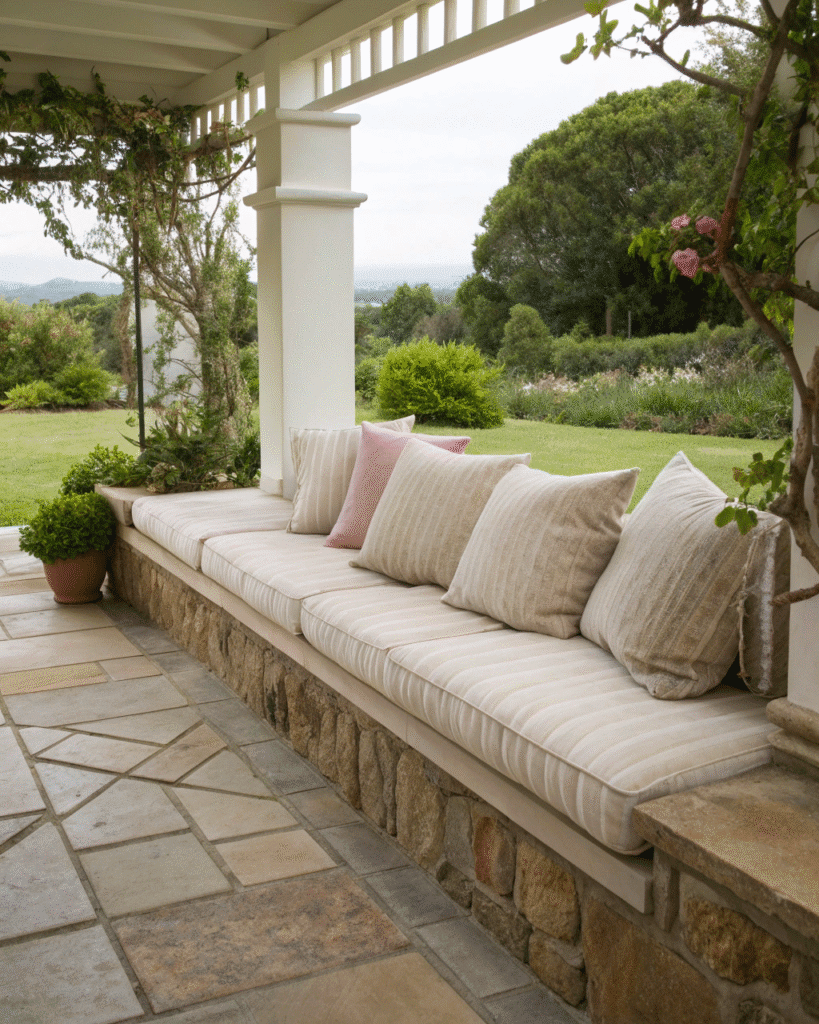
Classic stone edging gives your patio a timeless, structured look.
Pro Tip: Choose stones that complement your patio’s color and texture for a seamless design.
2. Low Garden Beds
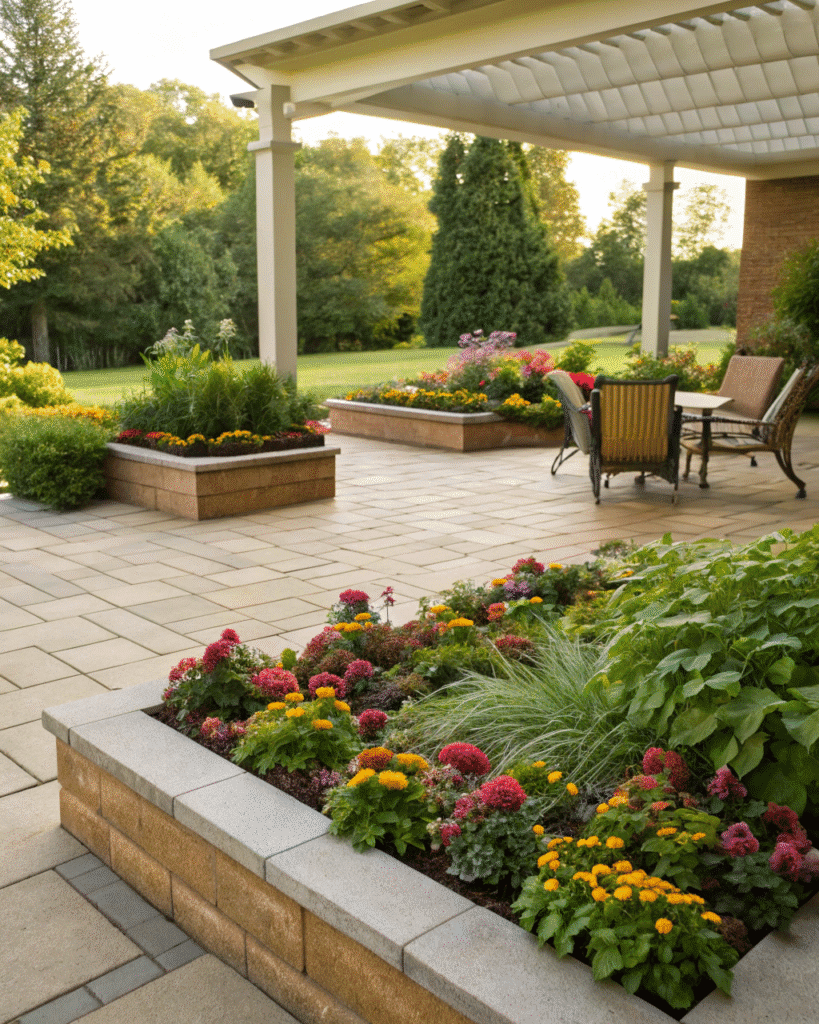
Surround your patio with low flower beds for a soft, inviting border.
Pro Tip: Mix perennial flowers and small shrubs for year-round greenery.
3. Brick Border
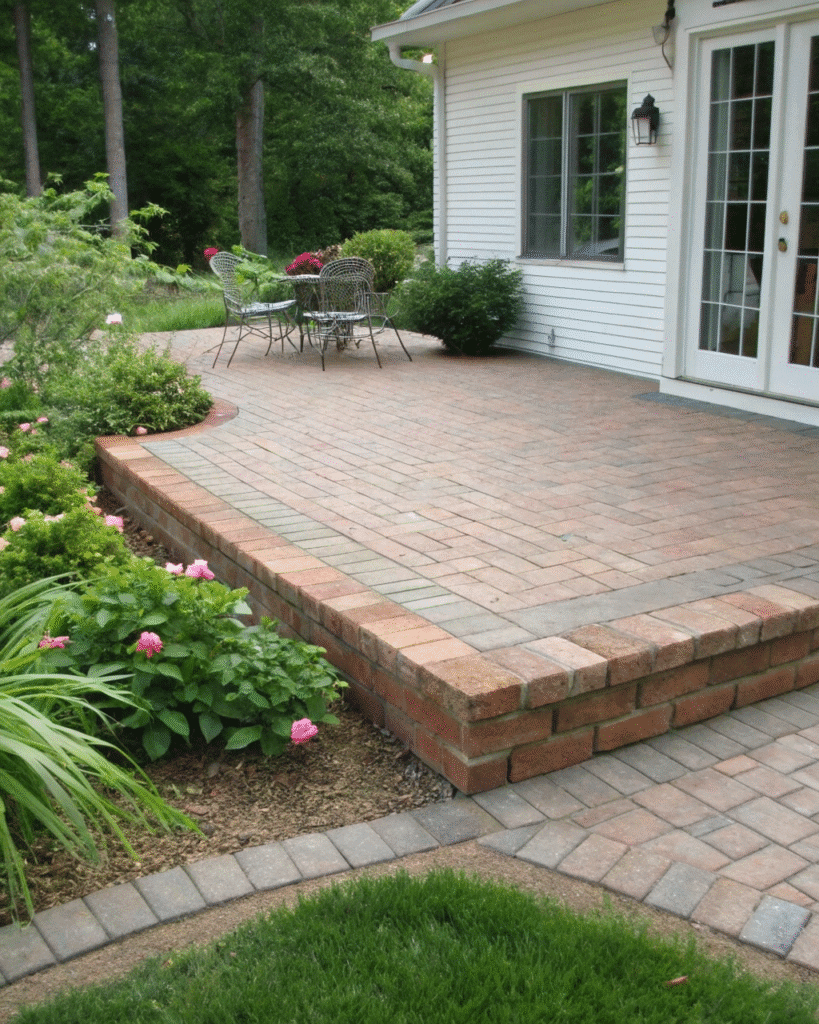
A simple brick edge adds charm and durability to your patio’s outline.
Pro Tip: Use the same brick tone as your house or pathway for visual harmony.
4. Gravel Strip Border
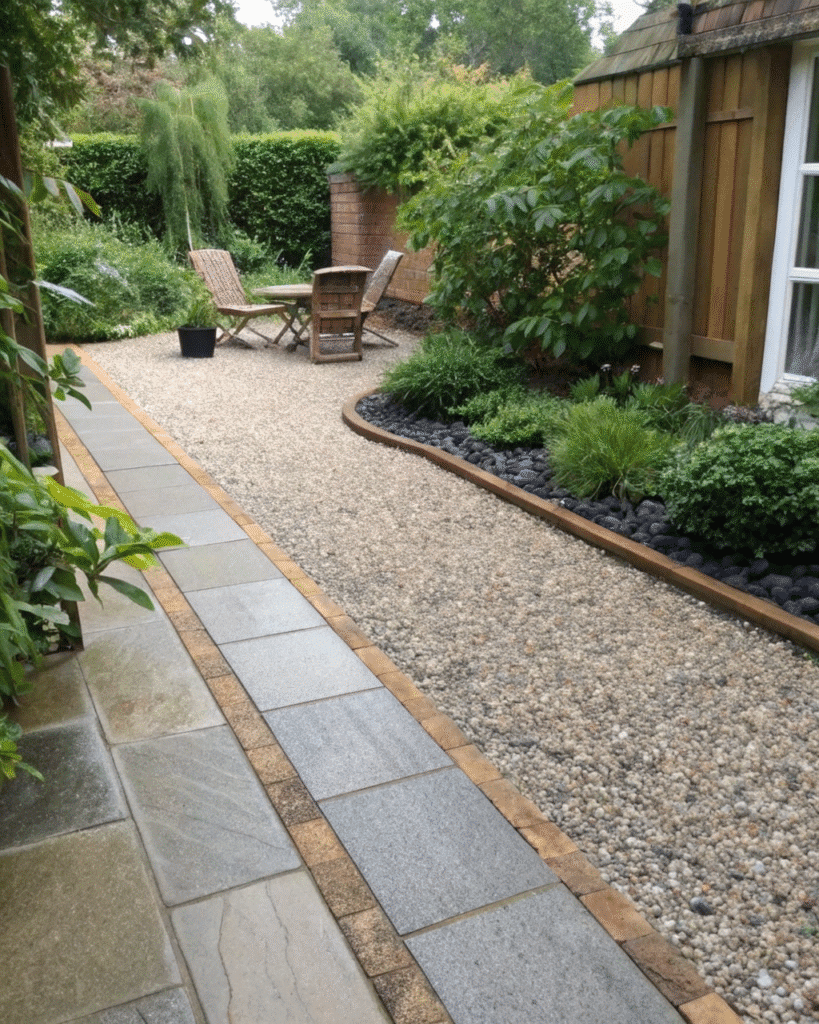
A narrow gravel strip keeps things neat and helps with drainage.
Pro Tip: Choose contrasting gravel colors to highlight your patio edges.
5. Decorative Pavers
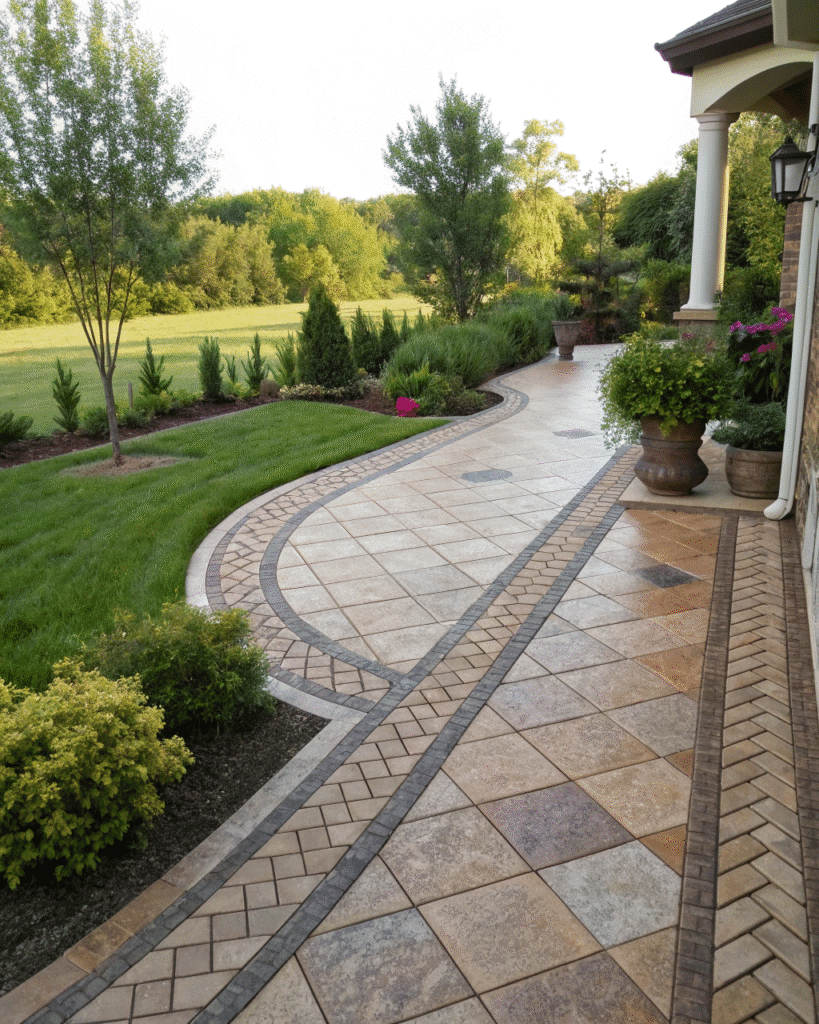
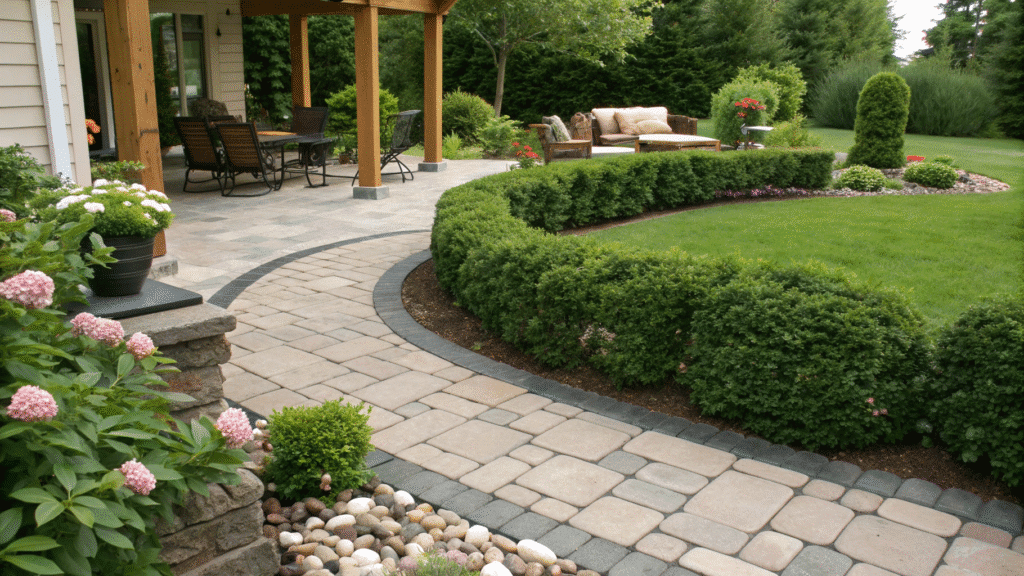
Pavers create a polished look while defining the transition between patio and lawn.
Pro Tip: Lay them in patterns like herringbone or basketweave for added detail.
6. Plant Hedge Edging
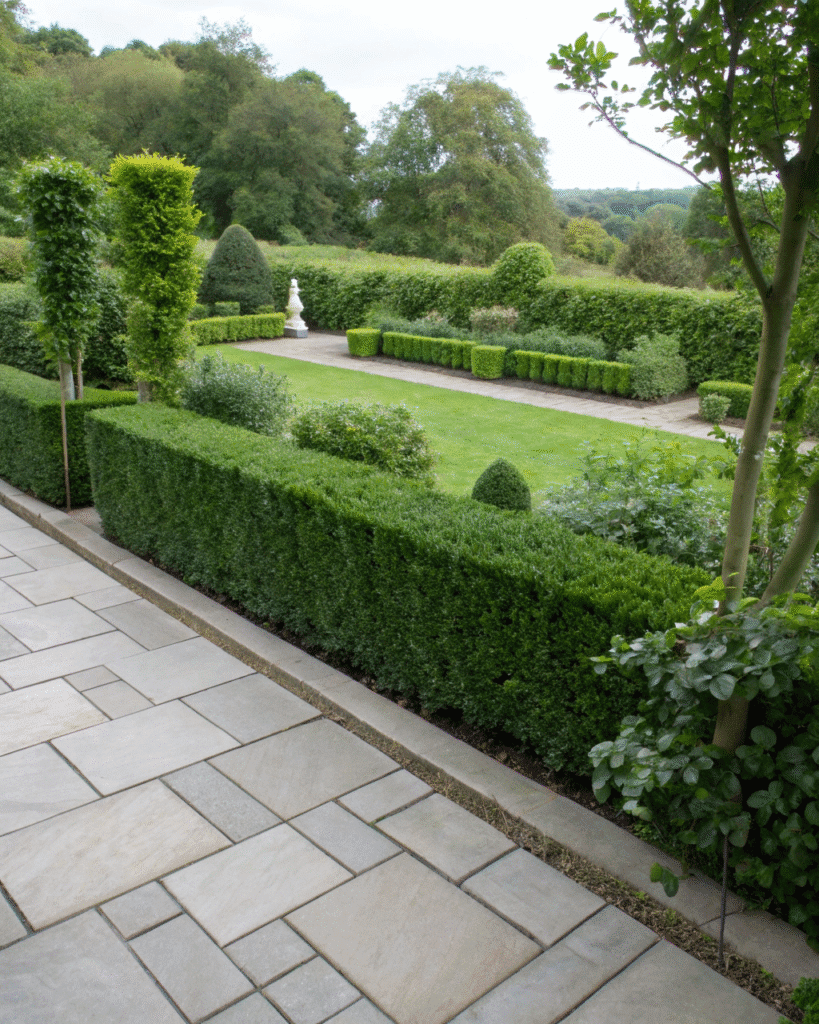
A small hedge adds natural privacy and a touch of formality.
Pro Tip: Choose slow-growing varieties like boxwood for low maintenance.
7. Flower-Filled Border
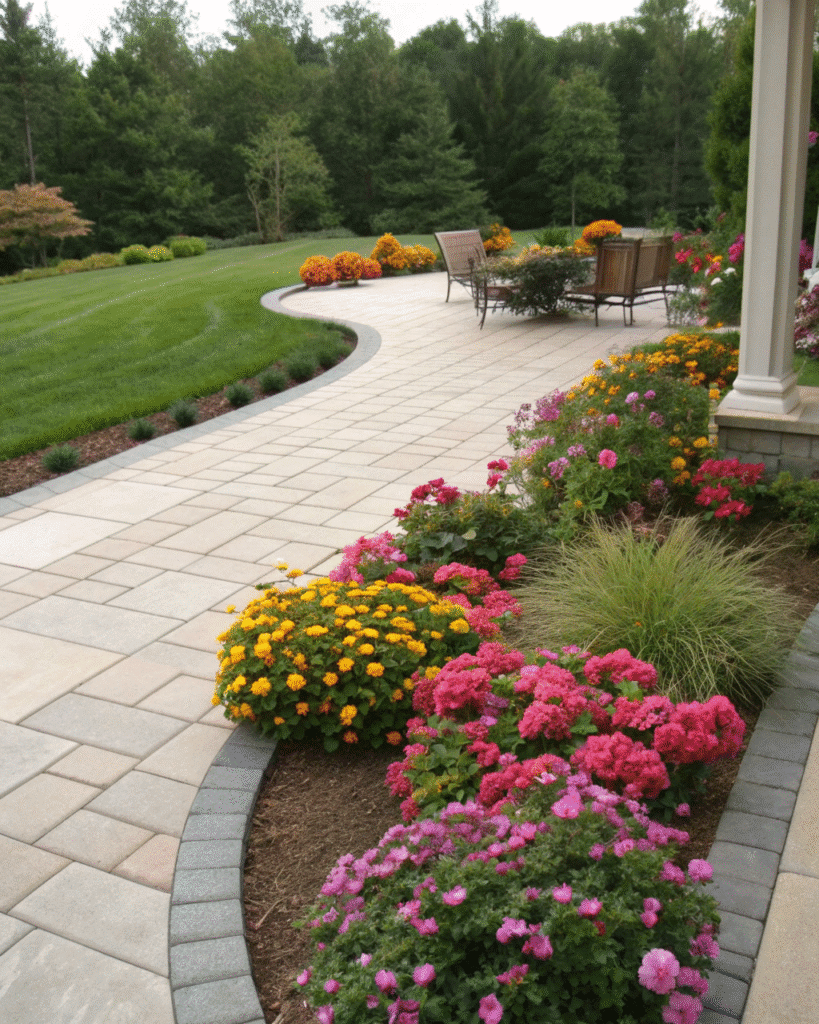
Add colorful blooms to bring life and vibrancy to your patio area.
Pro Tip: Stick to two or three complementary colors for a cohesive palette.
8. Mulch or Bark Lining
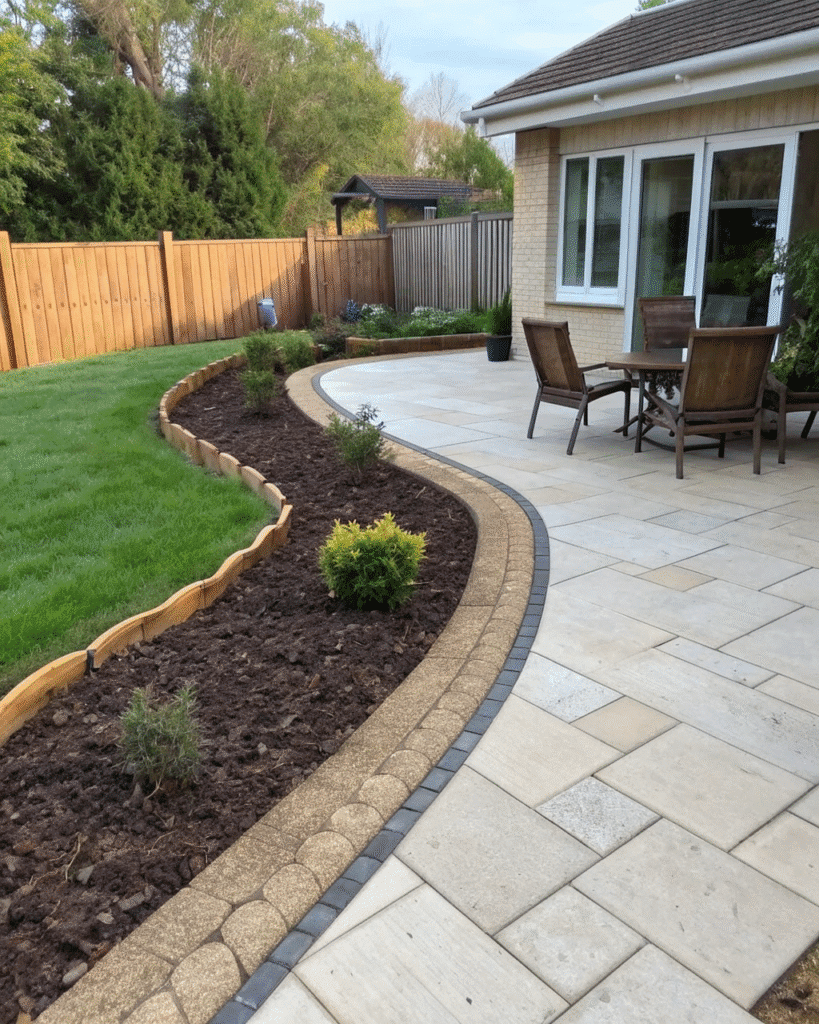
Mulch borders are simple, affordable, and great for defining garden edges.
Pro Tip: Refresh the mulch every season to maintain color and texture.
9. Rock Garden Border
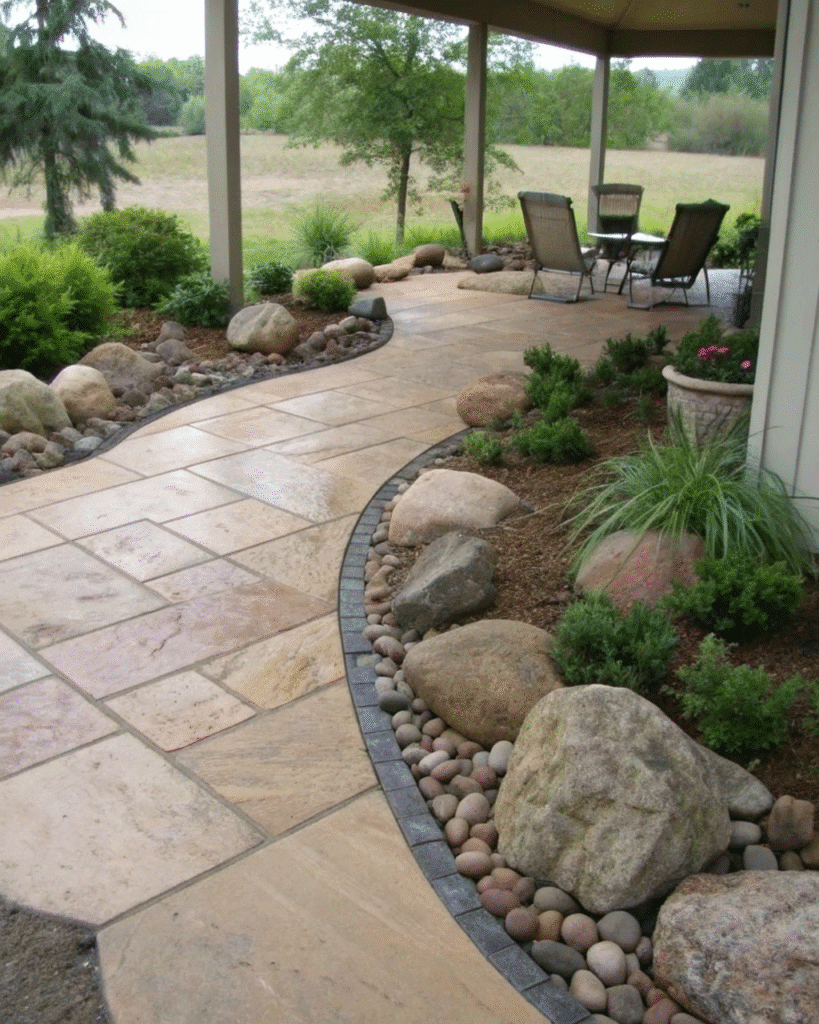
Rocks and small boulders add a natural, organic edge to your patio.
Pro Tip: Mix stones of varying sizes for a balanced, landscape-inspired look.
10. Ground Cover Plants
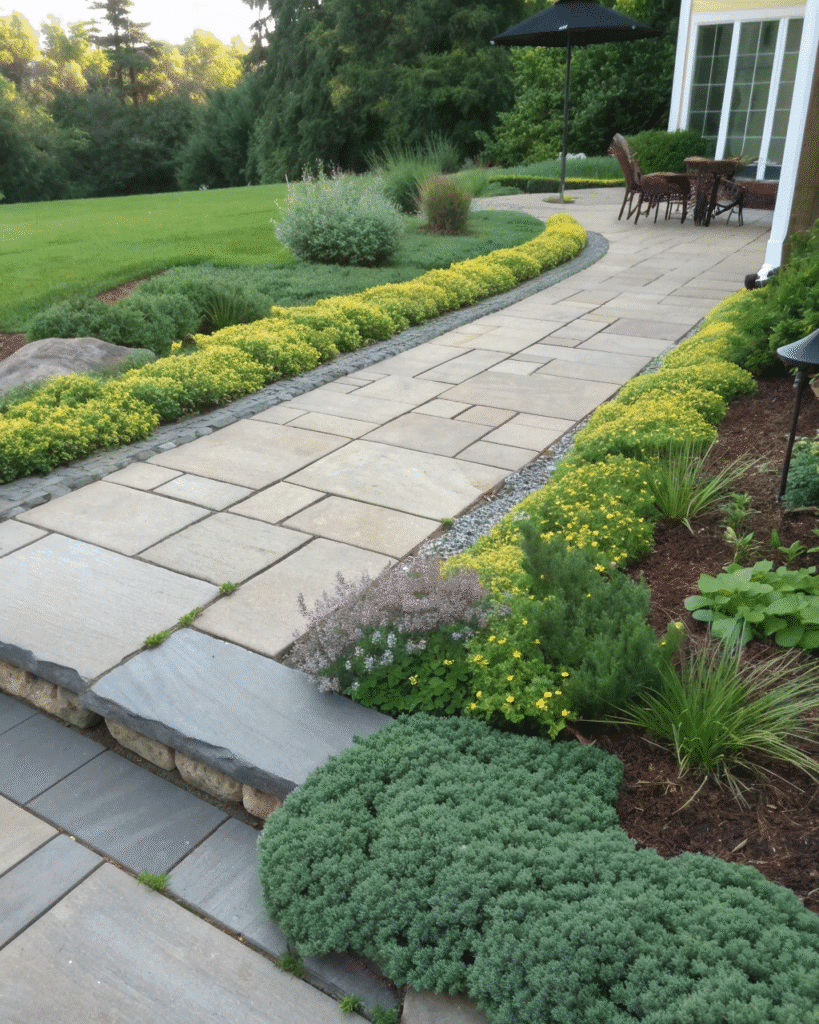
Low-growing plants like thyme or creeping jenny soften patio edges.
Pro Tip: Use aromatic varieties for a pleasant scent as you walk by.
11. Metal Landscape Edging
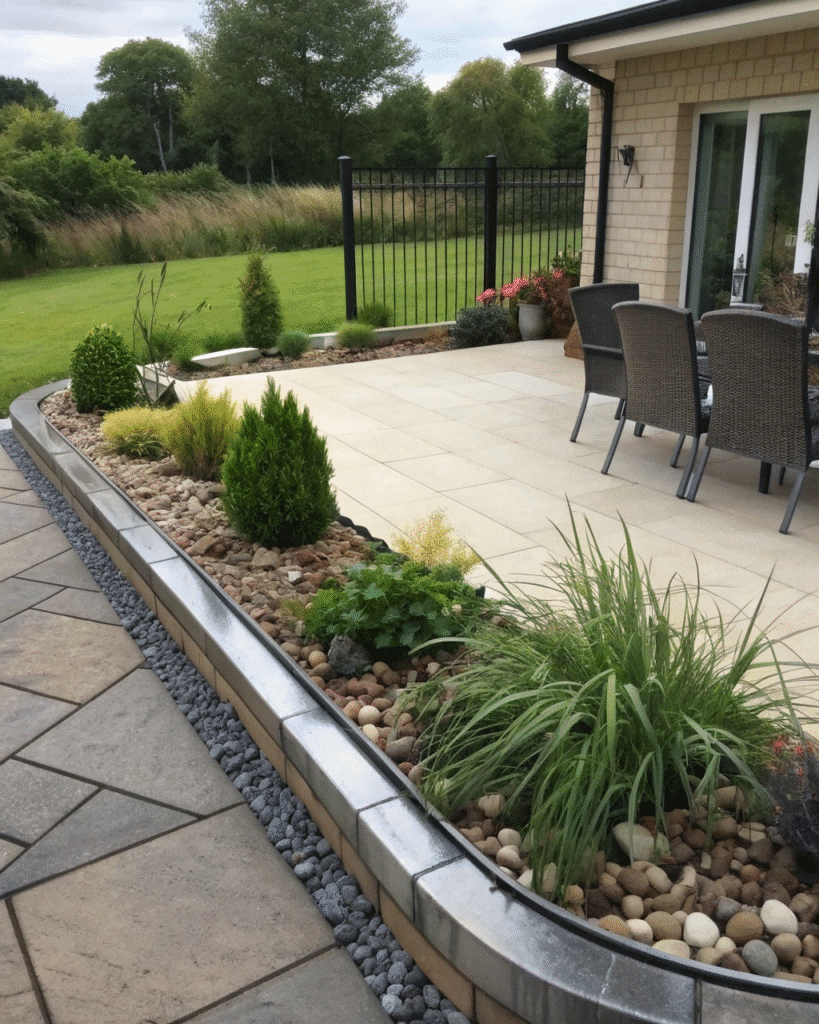
Metal edging offers a clean, modern way to define your patio lines.
Pro Tip: Go for weathered steel or aluminum for a sleek and durable finish.
12. Raised Planters
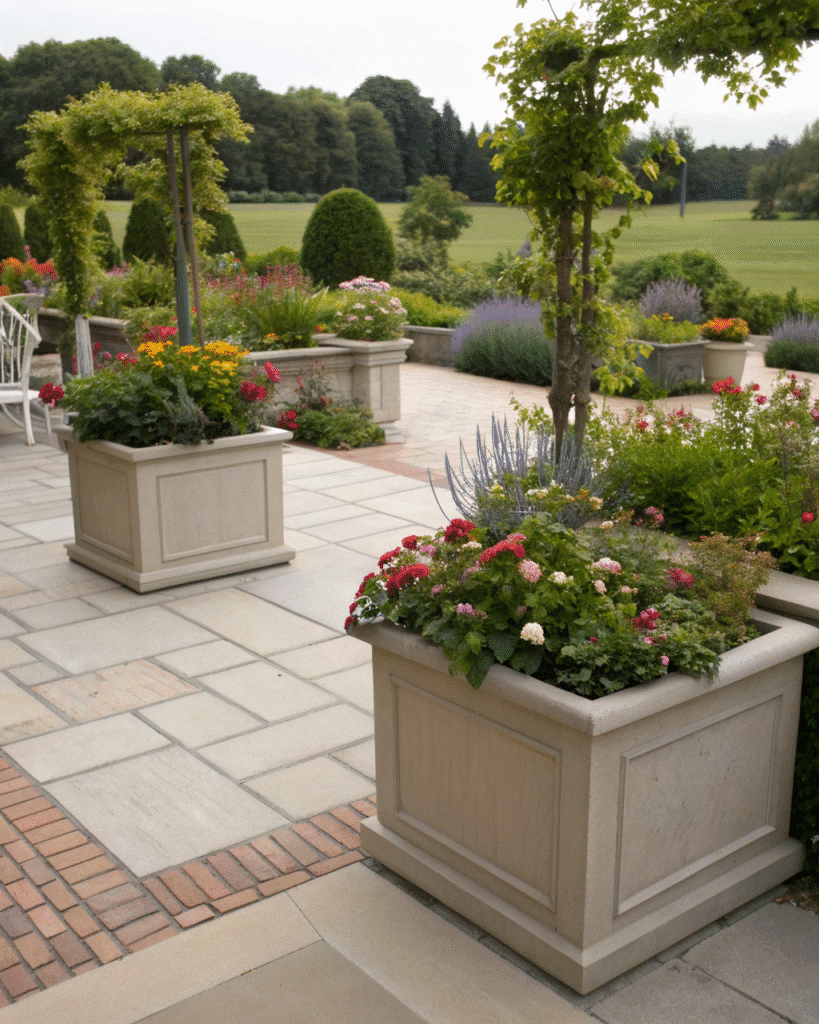
Raised planters frame your patio beautifully while adding height and greenery.
Pro Tip: Combine herbs and flowers for a mix of color and function.
13. Water Feature Edge
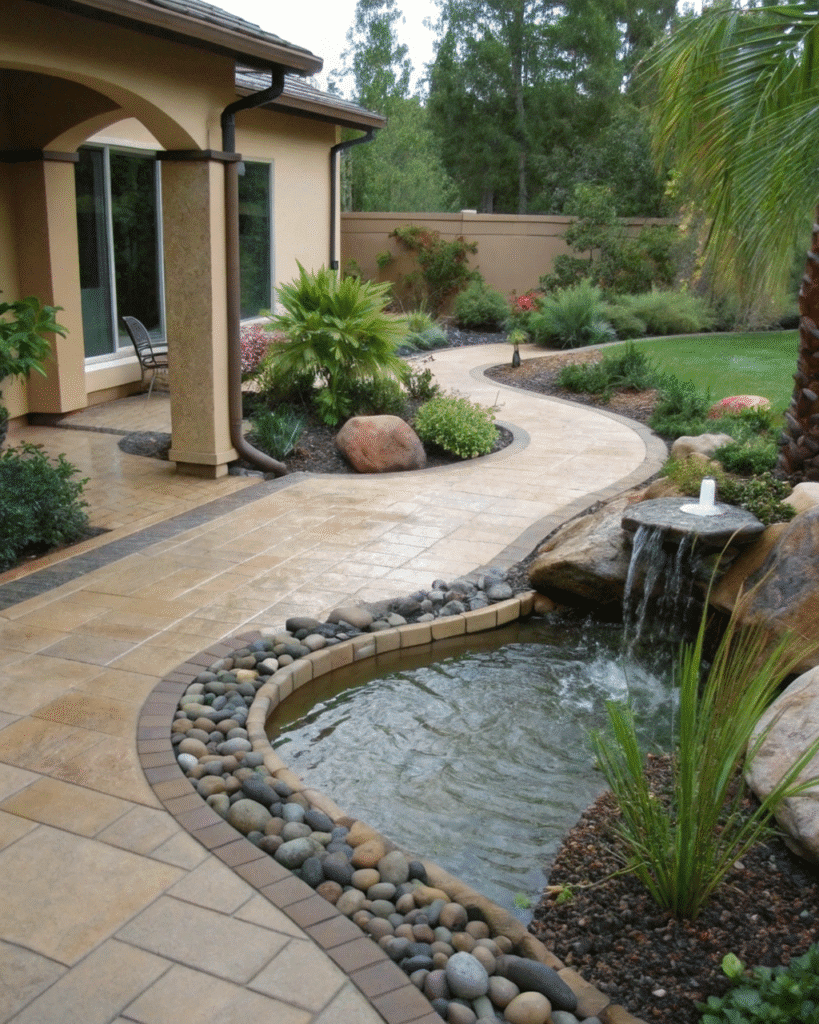
Add a small fountain or stream along one border for a peaceful ambiance.
Pro Tip: Keep plants simple nearby to let the water feature stand out.
14. Mixed Material Border
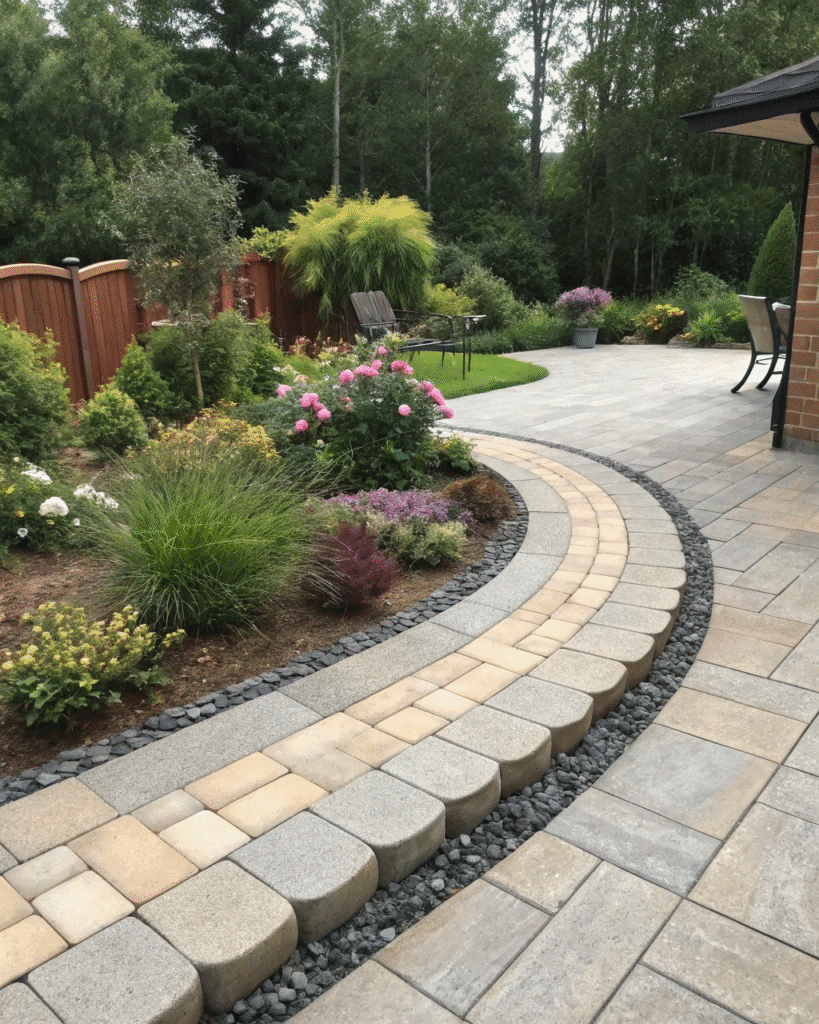
Combine gravel, pavers, and plants for a layered, textured edge.
Pro Tip: Use repeating elements to keep the design visually connected.
15. Wooden Border Frame
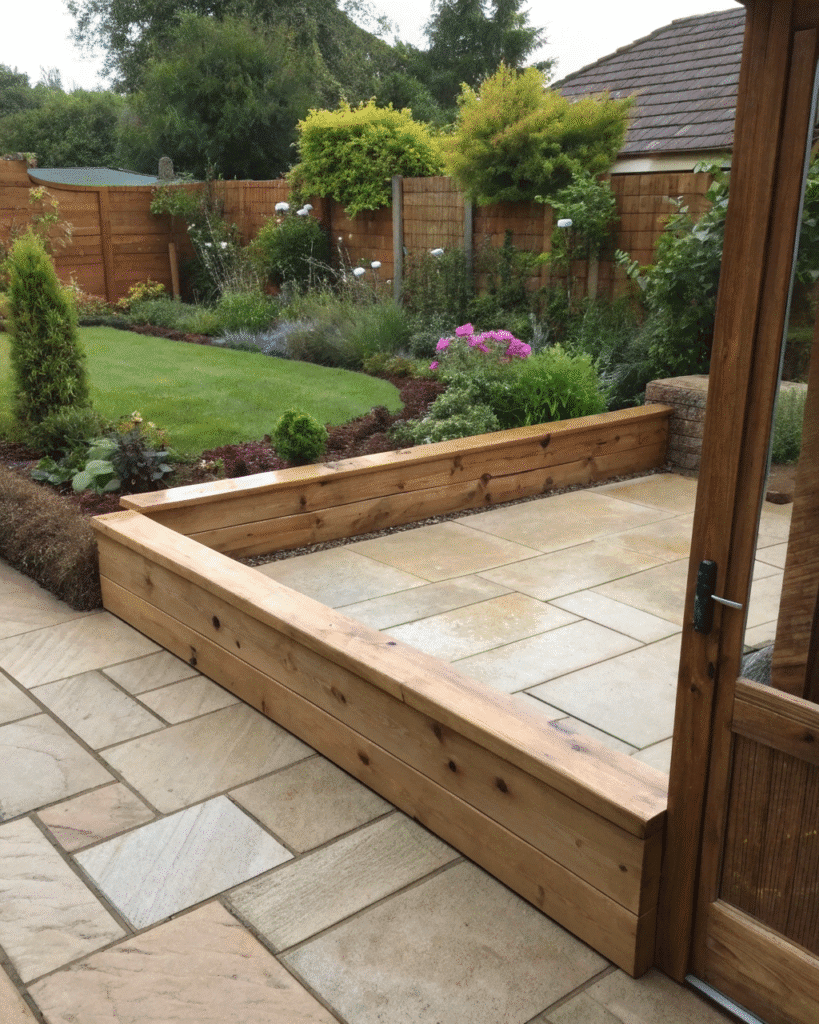
Timber borders bring a natural and rustic finish to your patio.
Pro Tip: Treat the wood with sealant to protect it from moisture and insects.
Final Thoughts
A well-designed patio border is the detail that separates an outdoor space that looks finished and resolved from one that looks like a work in progress.
It frames the patio, softens the transition to the garden, prevents practical maintenance problems, and when done well, becomes one of the most beautiful elements of the whole outdoor space.
Whether you go for the clean precision of metal edging and a gravel strip, the romantic abundance of a flower-filled perennial border, or the dramatic presence of raised stone planters, the right patio border will make everything around it look better and your whole outdoor space feel genuinely complete.
FAQs
What is the best low-maintenance patio border?
A gravel strip with a metal landscape edging at the patio face and a planted evergreen hedge or ground cover behind it is the lowest maintenance combination available. The metal edging keeps the gravel contained and the paving edge crisp. The gravel suppresses weeds between the edging and the planting. The evergreen planting requires only one or two trims per year. Together these three elements create a border that looks tidy and defined year-round with minimal effort.
How do I stop grass growing into my patio border?
A physical barrier between the lawn and the border is the most effective long-term solution. A metal or plastic landscape edging strip set vertically into the ground along the border line creates a root barrier that prevents grass rhizomes from crossing into the border and spreading into the paving joints. This is far more effective and less labor-intensive than regular manual edging alone.
How wide should a patio border be?
Border width depends on what you want to plant in it and the scale of the patio. A purely structural border using edging and gravel can be as narrow as 6 inches. A planted perennial border needs at least 18 to 24 inches to work properly. A mixed shrub and perennial border looks best at 36 inches or more. As a general rule, err on the generous side since narrow borders tend to look skimpy and are harder to maintain well than wider ones.
What plants work best for a patio border?
The best plants for a patio border are those that suit the specific growing conditions of the site, the available light, soil type, and moisture levels, that provide year-round interest through a combination of evergreen structure and seasonal flowering, and that do not grow so vigorously that they constantly encroach on the paving surface. Lavender, ornamental grasses, salvia, agapanthus, box, rosemary, and clipped evergreen shrubs are all reliable and beautiful choices for most patio border situations.
Do I need to use edging in a patio border?
A physical edging is not strictly necessary for every border situation but it is highly recommended for any border that sits adjacent to lawn or gravel paths. Without edging, lawn grass gradually invades the border and paving joints, gravel migrates across the border line, and the clean definition of the patio edge deteriorates over time. The small investment in proper edging installation saves significant maintenance effort over the lifetime of the border.
How do I make a patio border look more designed and less like an afterthought?
The most powerful step is to match the border materials to the patio and house materials rather than choosing them independently. The second most important step is to plant in drifts and repetitions rather than one-offs of many different species. The third is to ensure the border has a clear visual hierarchy with one dominant element, whether planting, edging, or a structural feature, and supporting elements that complement rather than compete with it. These three principles applied consistently produce a border that reads as a designed part of the whole scheme rather than a strip of soil at the edge of the paving.