14+ Patio Bar Ideas for Outdoor Entertaining
A patio bar turns your outdoor space into the ultimate spot for entertaining.
It changes how you entertain outdoors completely. It gives the gathering a focal point, keeps drinks flowing without constant trips inside, and creates the kind of social energy that turns a casual afternoon outside into something genuinely memorable. These ideas cover every size, every budget, and every style so you can find the bar setup that works perfectly for your outdoor space.
Why a Patio Bar Is One of the Best Outdoor Entertaining Investments You Can Make
Most outdoor entertaining setups focus on seating and dining. The bar is treated as an afterthought, a drinks trolley wheeled out when needed and wheeled back in when not. That approach works well enough but it misses the social and design potential of a properly considered outdoor bar. Here is why a dedicated patio bar deserves serious attention.
It Creates a Natural Social Hub
Every great party has a spot where people naturally gravitate. Indoors, it is almost always the kitchen. Outdoors, a bar plays exactly the same role. It gives guests somewhere purposeful to walk toward, somewhere to stand and chat while drinks are poured, and somewhere that signals the gathering is set up for enjoyment. Without a dedicated bar area, outdoor entertaining tends to feel slightly looser and less anchored than it could be.
Love Chic Living Club?
Add us as one of your preferred Google sources and discover more home decor, DIY, outdoor, and lifestyle inspiration from us.
It Keeps the Host Out of the Kitchen
One of the most significant practical benefits of an outdoor bar is that it eliminates the constant need to go inside to fetch drinks, ice, and glasses. Everything needed is at the bar, outside, where the gathering is happening. The host stays connected to the party rather than disappearing inside every fifteen minutes and the whole flow of the entertaining experience improves significantly.
It Works as a Design Feature
A well-designed patio bar is not just a functional element. It is one of the most visually impactful features you can add to an outdoor space. A built-in stone or brick bar with a beautiful countertop, good lighting, and plants on either side becomes an architectural feature that defines the character of the whole patio. Even a well-styled bar cart becomes a decorating moment that adds personality and warmth to the space.
It Extends the Entertaining Season
A covered or partially sheltered bar area gives outdoor entertaining a base that works in a wider range of weather conditions. A bar with a roof overhead, good lighting, and perhaps a heater mounted above it keeps guests comfortable and keeps the party going on evenings that would otherwise send everyone indoors.
Planning Your Patio Bar
Getting the planning right before you build or buy anything saves significant time, money, and frustration. Here is what to think through at the planning stage.
Decide on Fixed or Flexible
The most fundamental decision is whether you want a permanent built-in bar structure or a flexible freestanding setup that can be moved, adapted, or stored. A built-in bar looks the most considered and professional, becomes a permanent architectural feature of the patio, and handles the heaviest use most robustly. A freestanding bar cart or portable bar setup is more affordable, more adaptable, and requires no construction work. Most homeowners start with a freestanding option and upgrade to a built-in when they are confident about the location and specification they want.
Position It Correctly
Bar position is one of the most important planning decisions. The bar should be easily accessible from the main seating and dining areas without requiring guests to cross the main circulation path every time they want a drink. It should be close enough to the entertaining zone to feel part of it but positioned so that the cluster of people around it does not block movement through the space. A corner position is often ideal, keeping the bar out of the main flow while remaining very accessible from every part of the patio.
If you are building a permanent bar, also consider its proximity to the house for service connection purposes. A bar that is close to the house wall is significantly easier and less expensive to connect to water supply, drainage, and power than one positioned in the middle of the patio.
Think About Storage From the Start
A bar without adequate storage becomes cluttered and disorganised very quickly. Plan for under-counter storage for bottles, a dedicated space for glassware, a drawer or shelf for bar tools and accessories, and a covered area for items that need protection from direct sun and rain. Built-in bars have more storage options than freestanding carts but even a bar cart can be augmented with a small storage cabinet or shelving unit alongside it.
Plan for Ice
Ice is the overlooked essential of any outdoor bar. A bar that requires regular trips inside for ice interrupts the flow of entertaining in exactly the way a dedicated bar is supposed to prevent. An outdoor ice bucket built into the counter, a freestanding ice chest positioned near the bar, or an outdoor under-counter ice maker all solve this problem at different budget levels. Plan your ice solution as part of the bar design rather than leaving it as an afterthought.
Consider Lighting Above the Bar
A bar that is well-lit feels inviting and professional in a way that an unlit one simply does not. An overhead pendant light directly above the bar counter, under-shelf LED strip lighting, or recessed lights in a bar overhang all make the bar more functional to use after dark and more visually compelling from across the patio. Plan your bar lighting as part of the initial build or setup rather than trying to add it later.
Patio Bar Materials Guide
The materials you choose for a patio bar determine its durability, maintenance requirements, and aesthetic character. Here is a breakdown of the best options for every part of the build.
For the Bar Structure
Concrete block construction is the most durable and most affordable structural option for a permanent built-in patio bar. It handles outdoor conditions without deterioration, supports heavy countertops and equipment, and can be finished with any cladding material from tile to stone veneer to rendered and painted finishes. Timber framing with cement board cladding is a faster and lighter alternative that suits homeowners with basic carpentry skills and produces a very clean result when tiled or rendered. Prefabricated stainless steel or powder-coated aluminium bar units are available for those who want a built-in look without any construction work.
For the Countertop
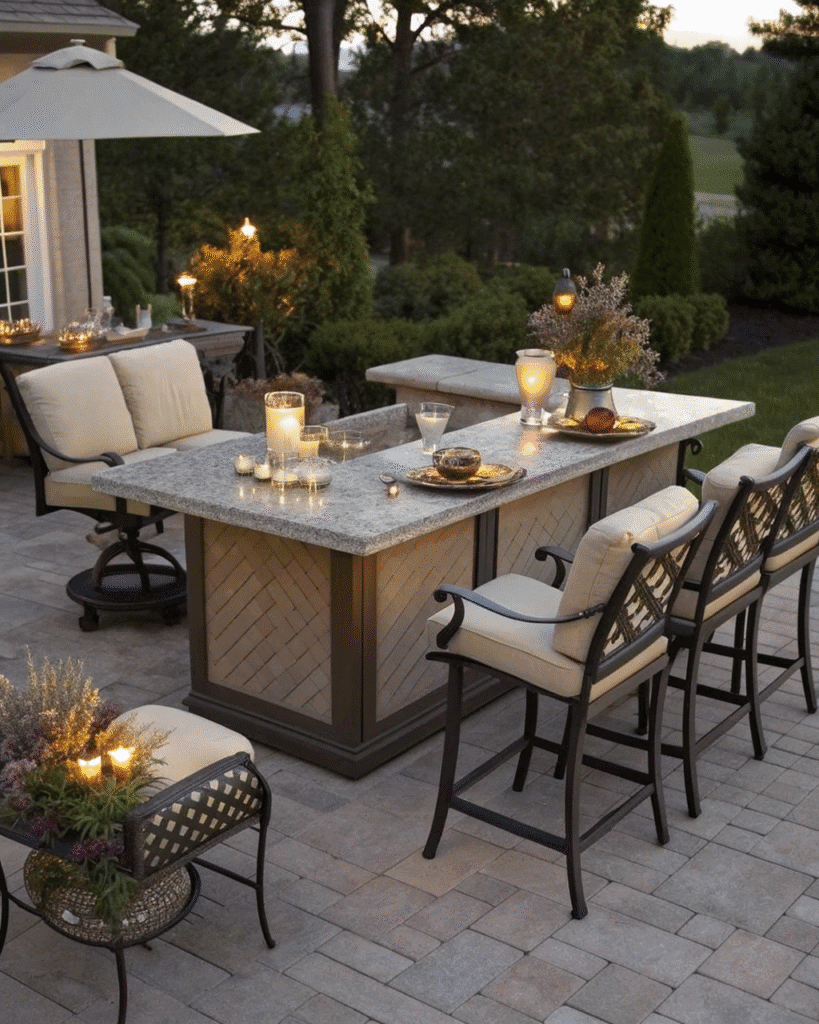
Granite is the most popular outdoor bar countertop material for good reason. It is extremely hard, naturally heat-resistant, virtually scratch-proof, and handles outdoor weather conditions including freeze-thaw cycling without cracking when properly sealed. Porcelain tile over cement board is the most affordable countertop option and is highly practical, stain-resistant, and available in an enormous range of finishes. Poured concrete is the most design-flexible option, formable to any shape and finishable in a range of colors and textures. Sealed hardwood like teak or ipe creates a warm, beautiful bar top but requires more maintenance than stone or tile alternatives.
For Cladding and Finishing
Natural stone veneer, porcelain tile, and rendered and painted block are all excellent exterior cladding choices for a built-in patio bar. Natural stone veneer suits rustic and traditional garden styles. Porcelain tile is the most versatile and practical choice for most situations. Rendered and painted block suits contemporary and minimalist outdoor spaces. Cedar and hardwood cladding creates a warm, natural appearance but requires more regular maintenance than masonry alternatives.
Patio Bar Seating Guide
The seating arrangement around your patio bar has a significant impact on how sociable and how functional it is in use.
Bar Stool Height
The standard relationship between a bar counter and bar stool is a counter height of 42 to 44 inches with a stool seat height of 28 to 30 inches. This proportion creates comfortable seating where the sitter’s forearms rest naturally on the counter. A counter that is too high or too low relative to the stool height creates an uncomfortable seating experience that guests will not want to remain in for long.
How Many Stools
As a general guide, allow 24 inches of counter length per bar stool for comfortable seating with room to move. A 6-foot bar counter comfortably seats three people. An 8-foot counter seats four. For island bars with seating on one side, use the same 24-inch per person guideline. For bars with seating on two sides, allow slightly more, around 26 to 28 inches per person, to account for the reduced circulation on the guest side.
Back Support
Outdoor bar stools with a back support are more comfortable for extended sitting than backless stools, particularly for guests who are not used to balancing on a stool without a back. Backless stools are more compact and look cleaner in a contemporary bar setting. If your bar will be used primarily for quick drinks and casual standing conversations around the counter, backless stools are fine. If guests will be seated at the bar for extended periods, a back support makes a meaningful difference to their comfort.
Outdoor Bar Styling Tips
A bar that is well-built but poorly styled looks professional but feels cold. Here is how to style your patio bar so it looks genuinely inviting and considered.
Display Glassware Openly
Open shelving above the bar counter with glassware displayed openly is one of the best bar styling moves available. It signals that the bar is set up and ready, adds visual interest and height to the bar structure, and makes it easy for guests to help themselves. Use a mix of glass types and heights for the most interesting display.
Group Bottles Intentionally
Bottles displayed on the bar should be grouped by type or by color rather than arranged randomly. Spirits together, wines in a separate section, mixers in their own area. Color-grouping bottles is a more decorative approach that creates visual rhythm and makes the bar feel styled rather than stocked.
Add a Plant
A plant on or beside the bar, whether a trailing plant on an upper shelf, a small potted herb like rosemary or mint that is both decorative and useful for cocktail garnishes, or a larger architectural plant beside the bar structure, immediately makes the bar feel more integrated into its outdoor setting and less like a piece of indoor furniture that has been moved outside.
Light It Well
A pendant light above the bar, LED strip lighting under a shelf, or recessed lights in a covered bar structure makes the bar significantly more atmospheric and inviting after dark. The light should be warm, around 2700K, and positioned so it illuminates the counter surface without creating glare for guests sitting at bar stools.
Whether you love hosting cocktail nights, summer brunches, or casual get-togethers, these patio bar ideas will help you design a stylish and functional setup that fits your space perfectly.
1. Built-In Stone Bar
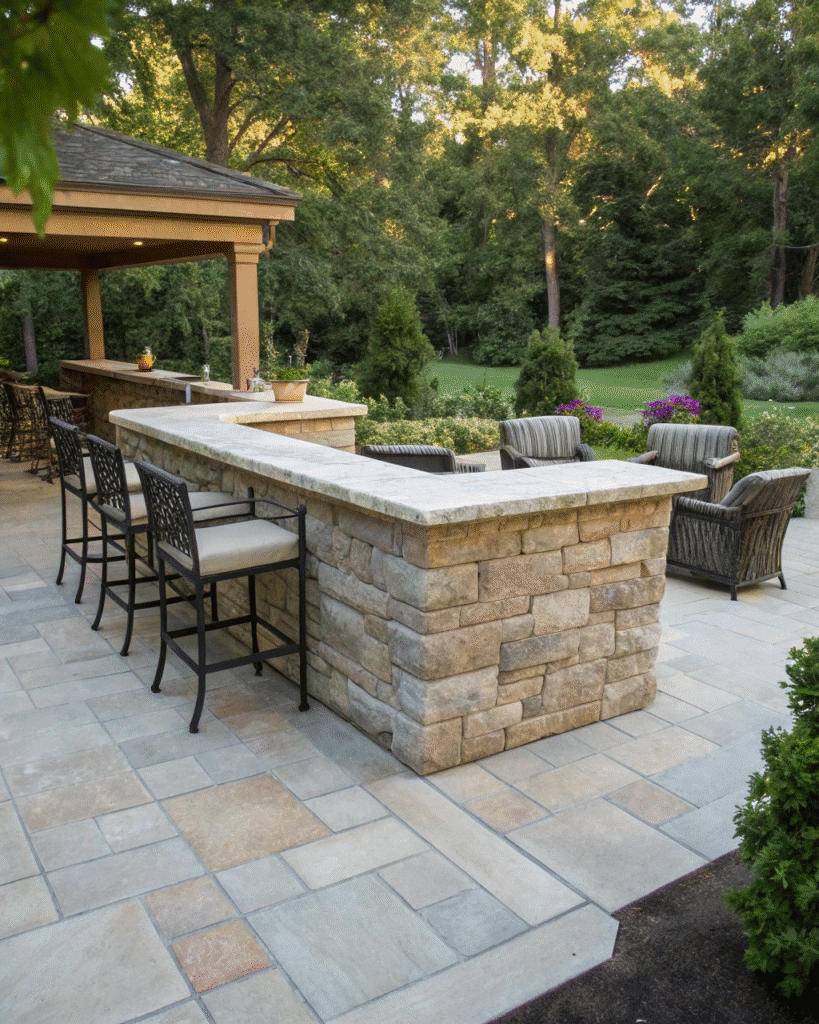
A stone bar adds elegance and blends beautifully with outdoor surroundings.
Pro Tip: Pair it with wooden stools or metal accents for a balanced look.
2. Compact Corner Bar
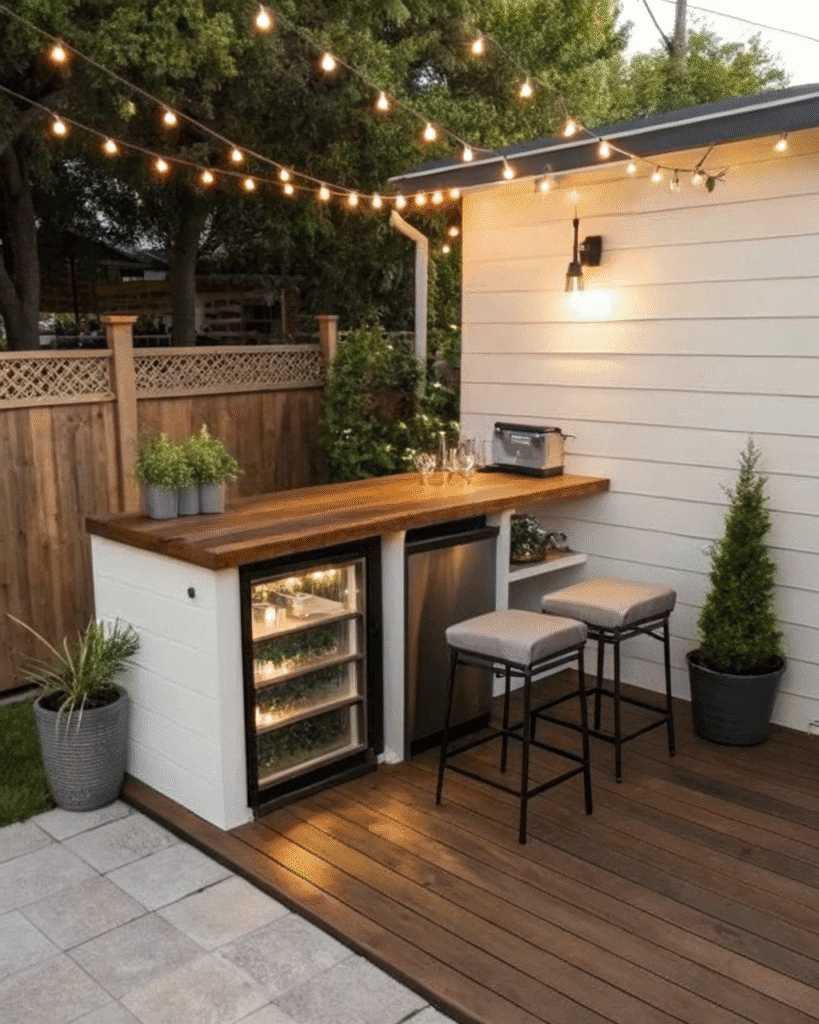
Transform a patio corner into a mini bar for small-space entertaining.
Pro Tip: Add open shelving above to store glasses and drinks neatly.
3. Rolling Bar Cart
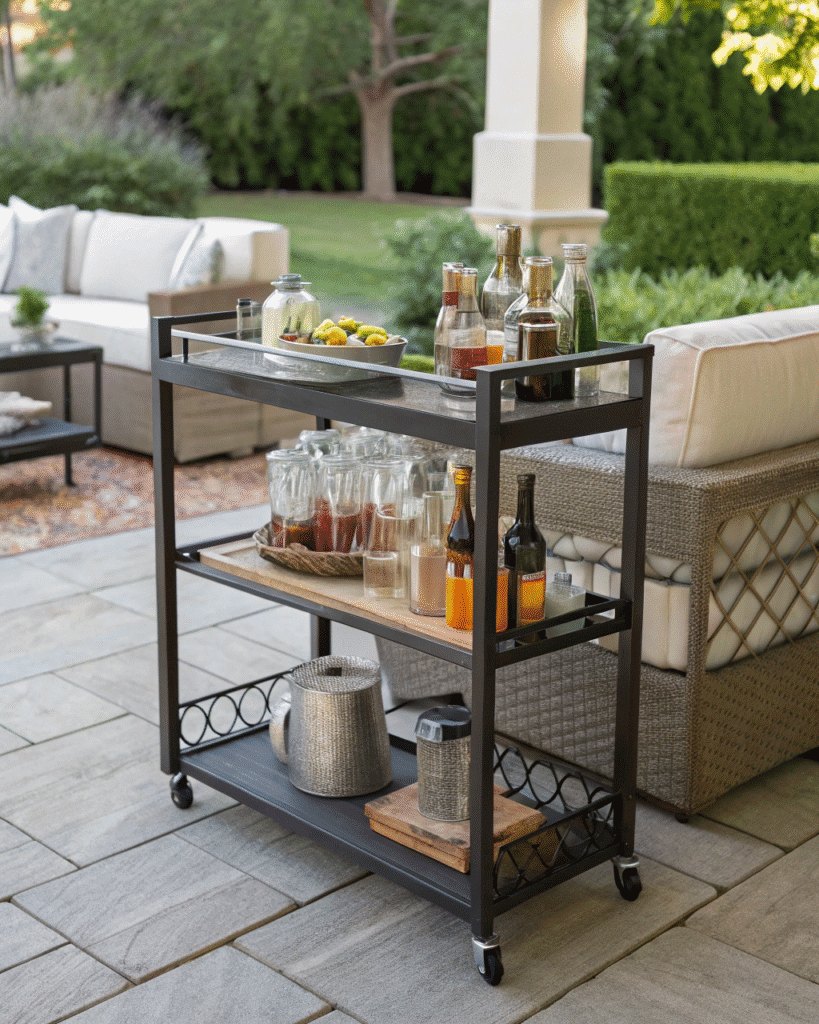
A portable bar cart makes entertaining easy and versatile.
Pro Tip: Stock it with essentials like ice, napkins, and a small snack tray.
4. Wooden Pallet Bar
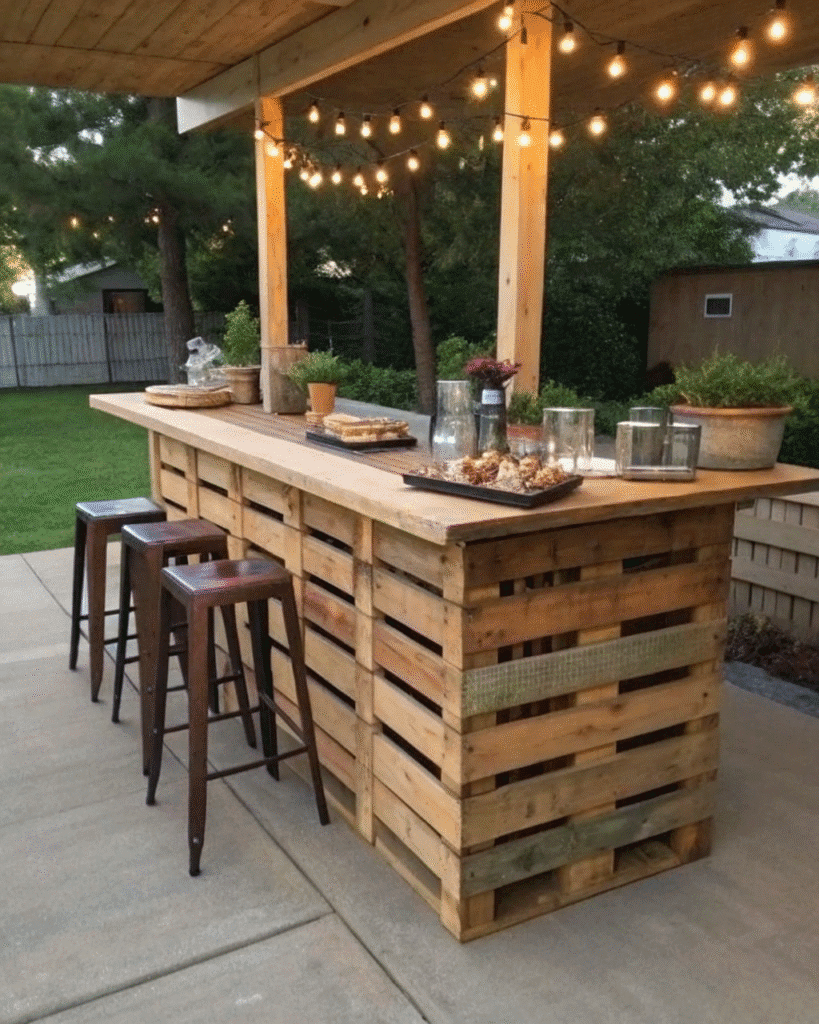
Repurpose wooden pallets into a rustic outdoor bar setup.
Pro Tip: Paint or stain the wood for extra durability and a polished finish.
5. Tile Countertop Bar
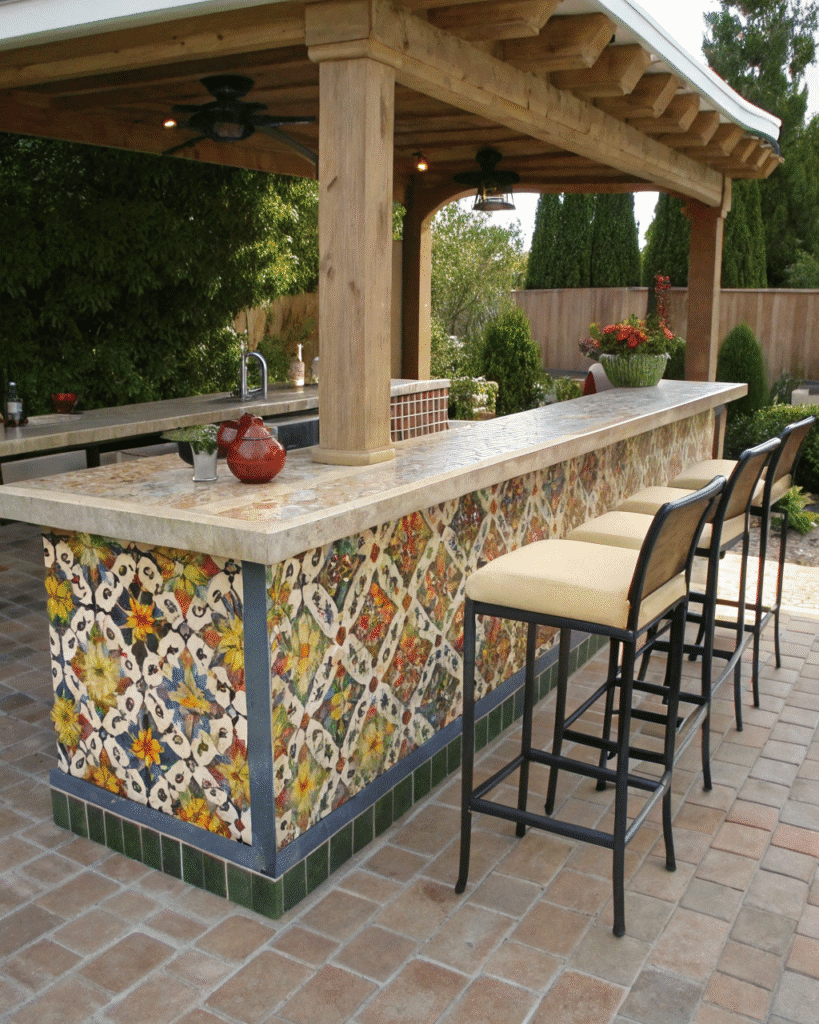
Add a pop of color with patterned or mosaic tiles on your bar counter.
Pro Tip: Choose weather-resistant grout and sealant to keep tiles looking fresh.
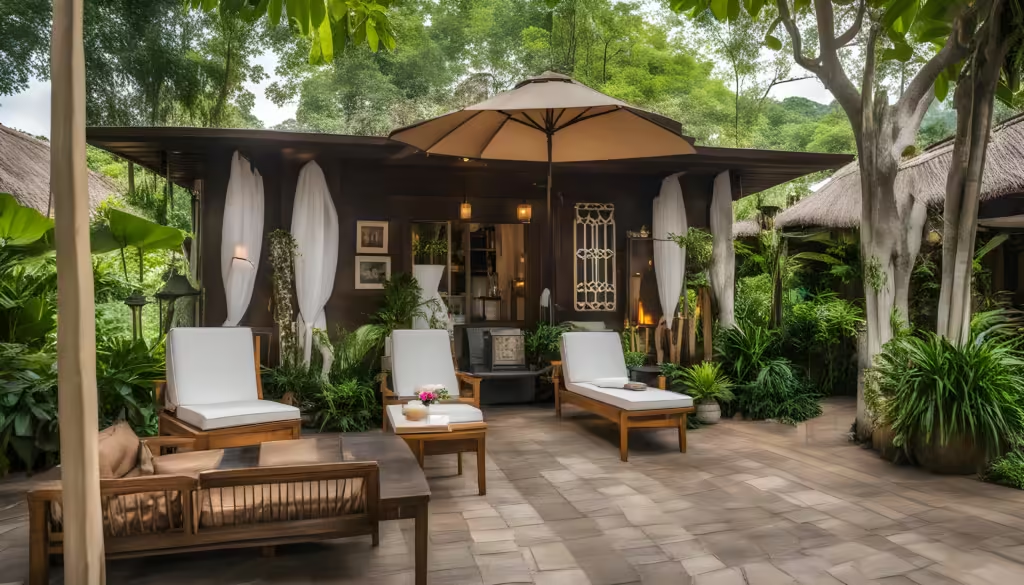
6. Garden-Inspired Bar
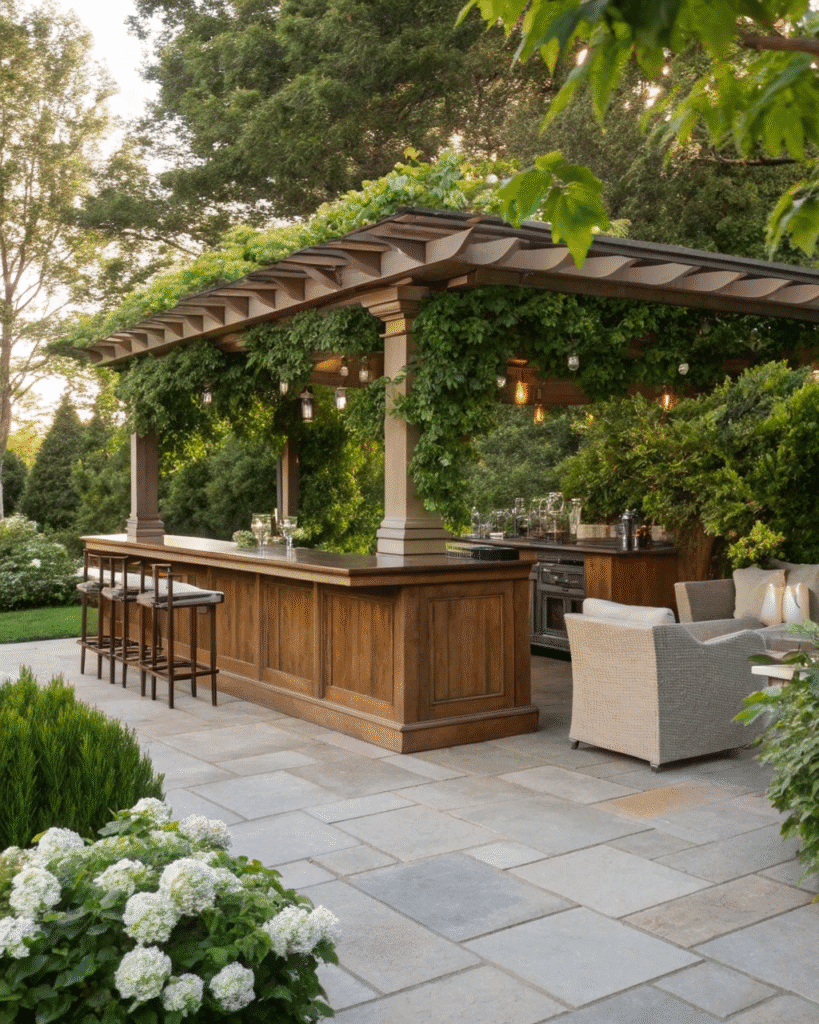
Integrate plants around or on your bar for a natural, refreshing vibe.
Pro Tip: Use potted herbs like mint and basil that double as drink garnishes.
7. Wall-Mounted Fold-Out Bar
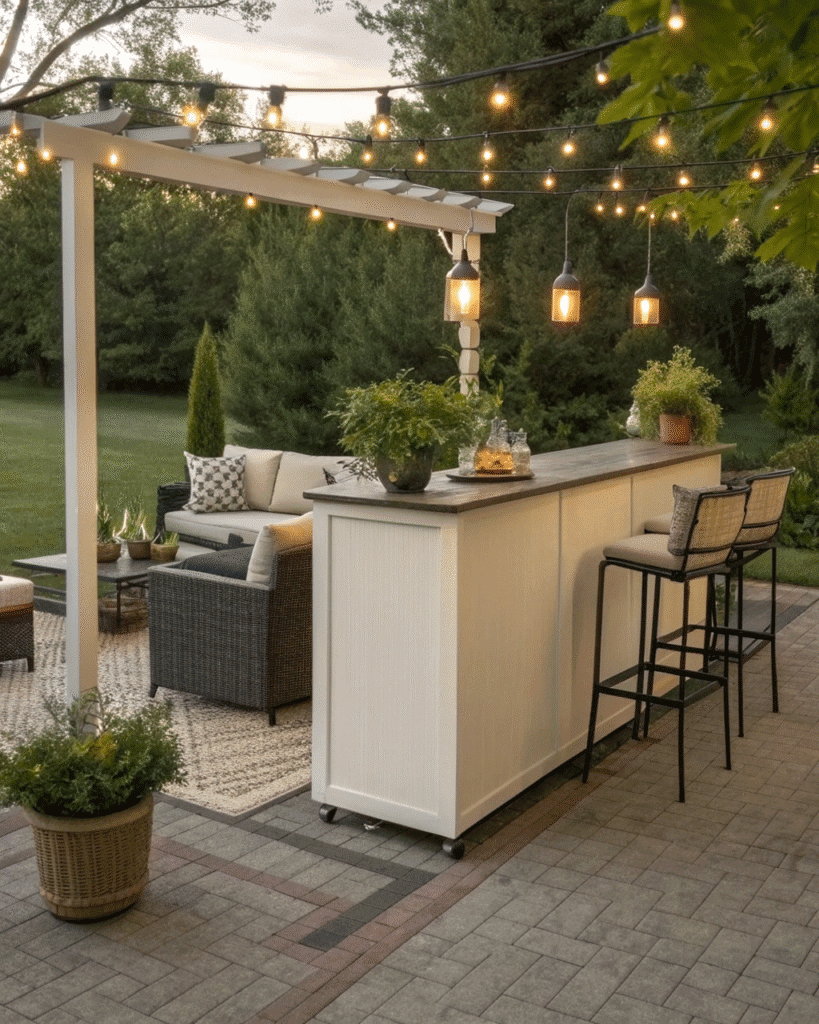
A foldable bar saves space and can be tucked away when not in use.
Pro Tip: Mount it on a sturdy wall and style it with small decorative bottles.
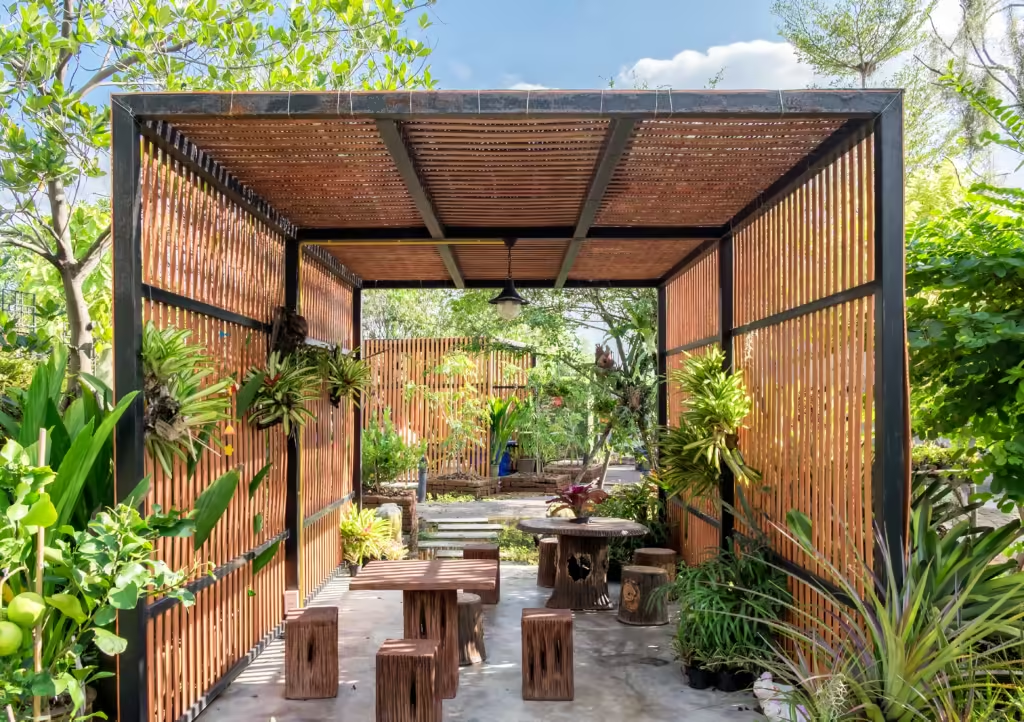
8. Pergola Bar Setup
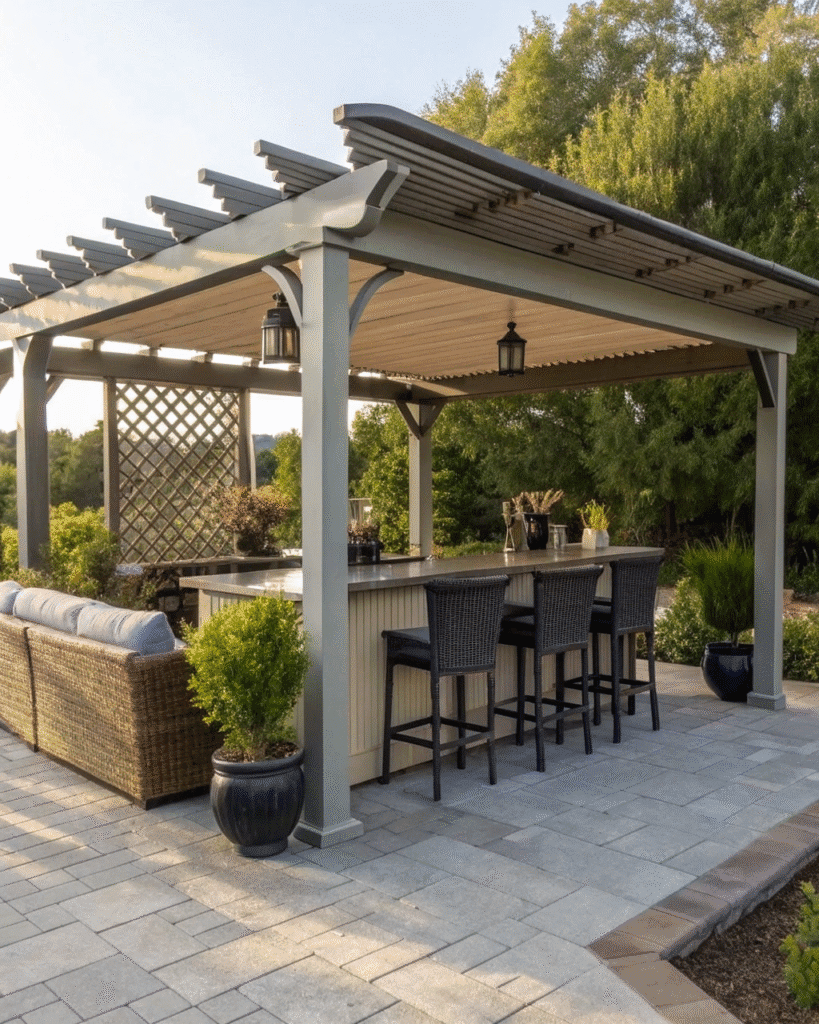
Add a pergola over your bar area for shade and structure.
Pro Tip: Drape string lights across the beams for a festive evening glow.
9. Concrete Counter Bar
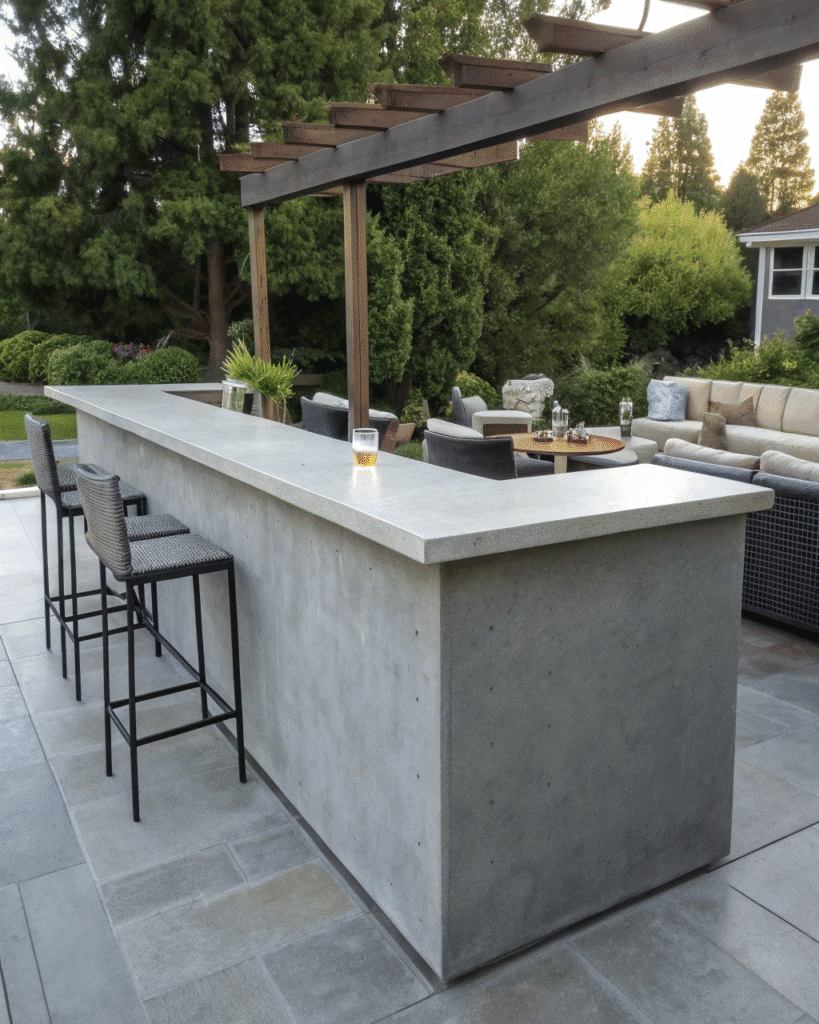
A sleek concrete bar offers a modern and durable design.
Pro Tip: Add wooden stools and warm lighting to soften the industrial look.
10. Bar with Built-In Sink
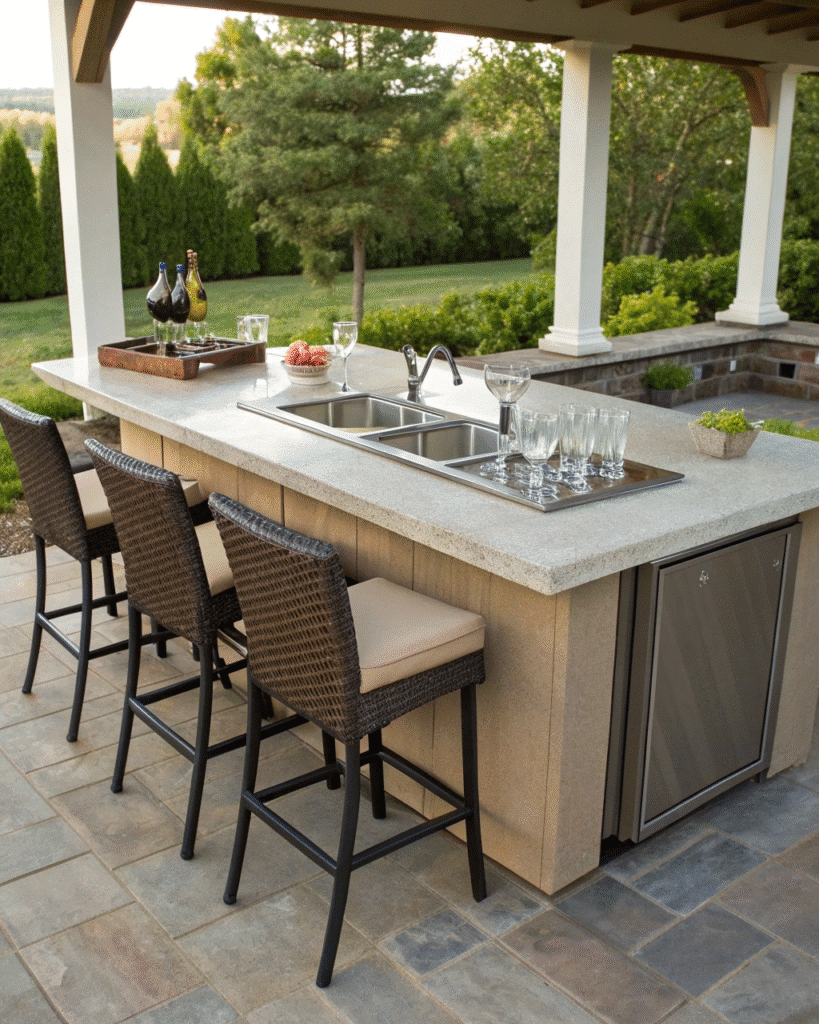
Adding a sink makes your outdoor bar practical for rinsing glasses or prepping drinks.
Pro Tip: Position it near your main water line for easy installation.
11. Coastal Style Bar
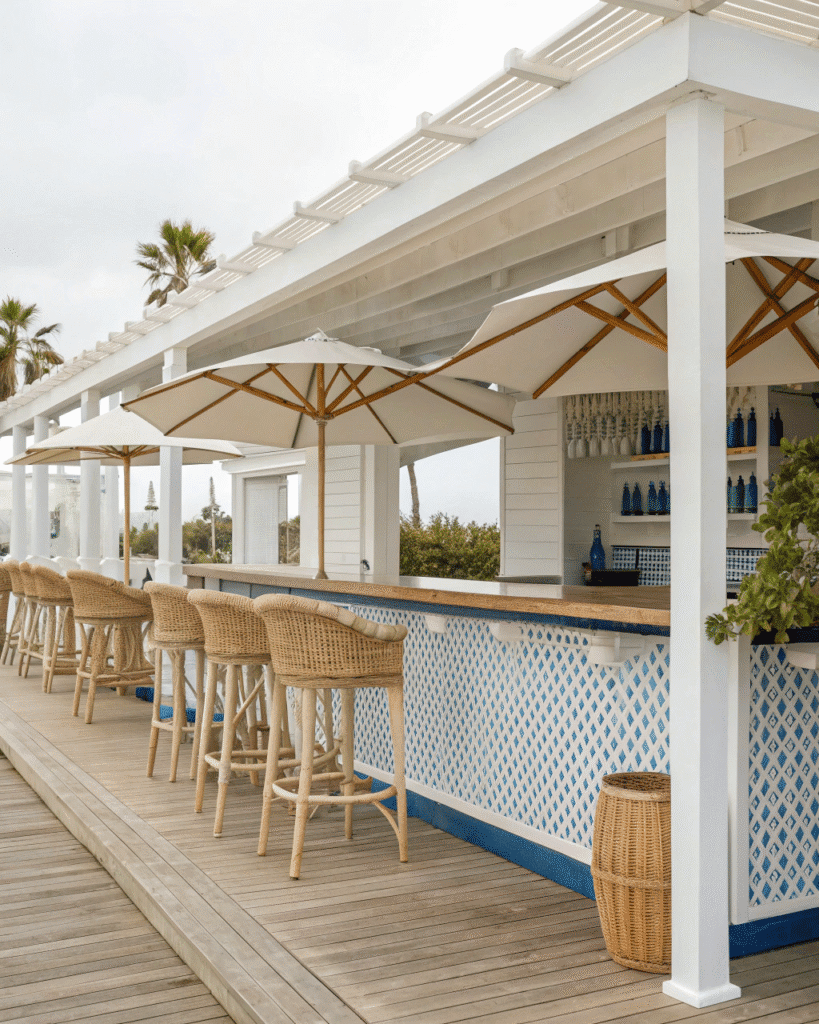
Incorporate white, blue, and rattan elements for a breezy coastal vibe.
Pro Tip: Decorate with shells, candles, or driftwood accents for beachy charm.
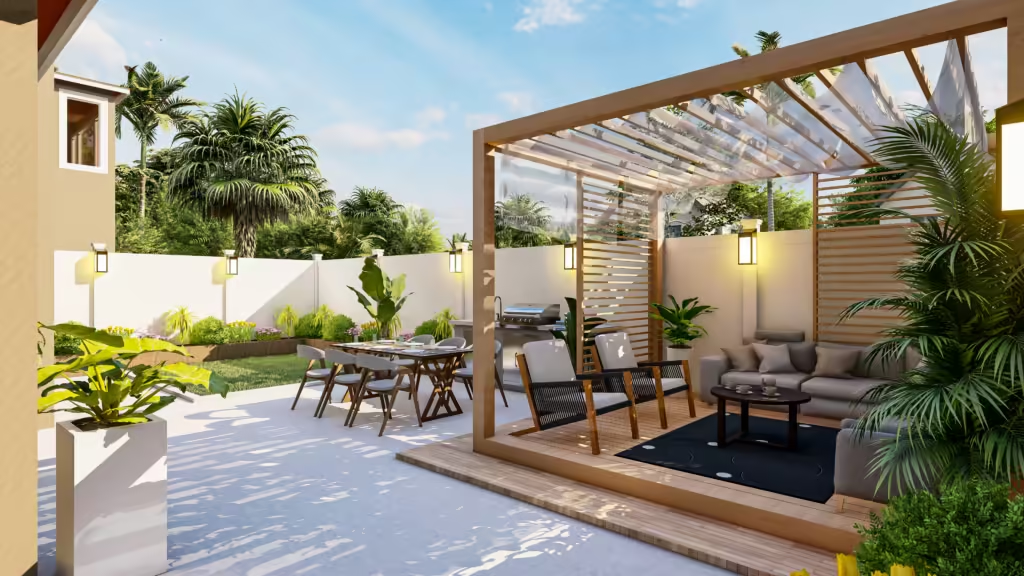
12. Covered Bar Area
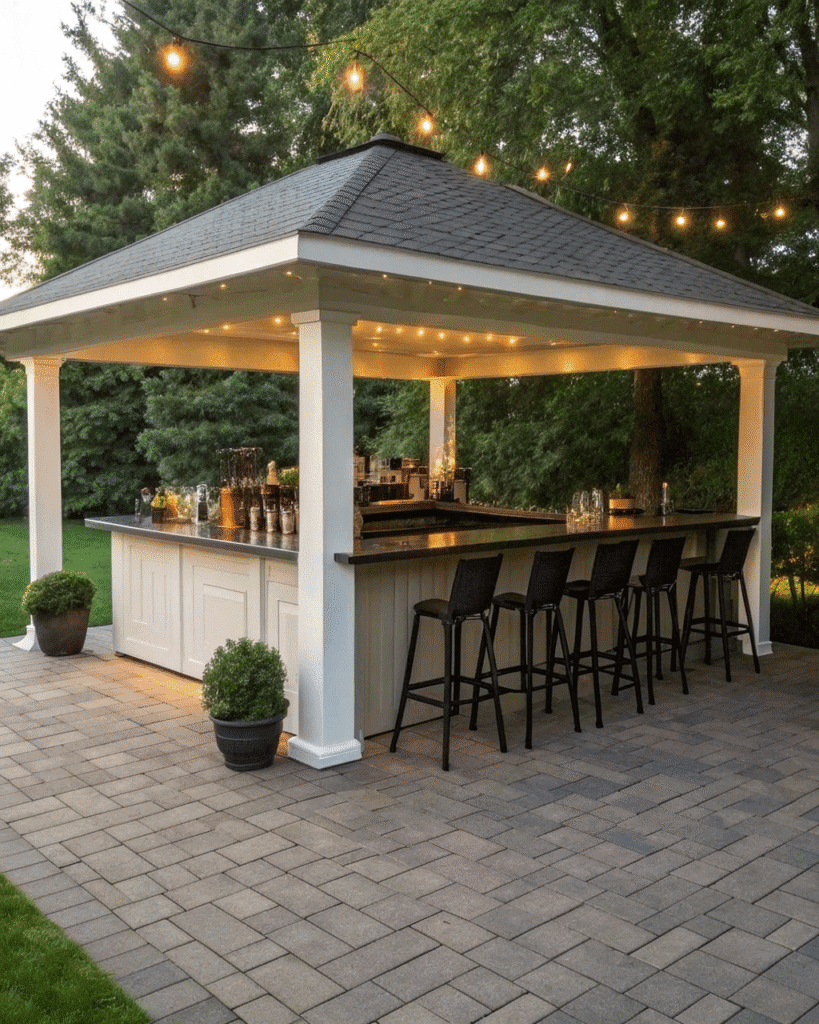
Add a small canopy or roof to protect your bar and seating area.
Pro Tip: Use a transparent cover to allow light in while keeping rain out.
13. Brick Patio Bar
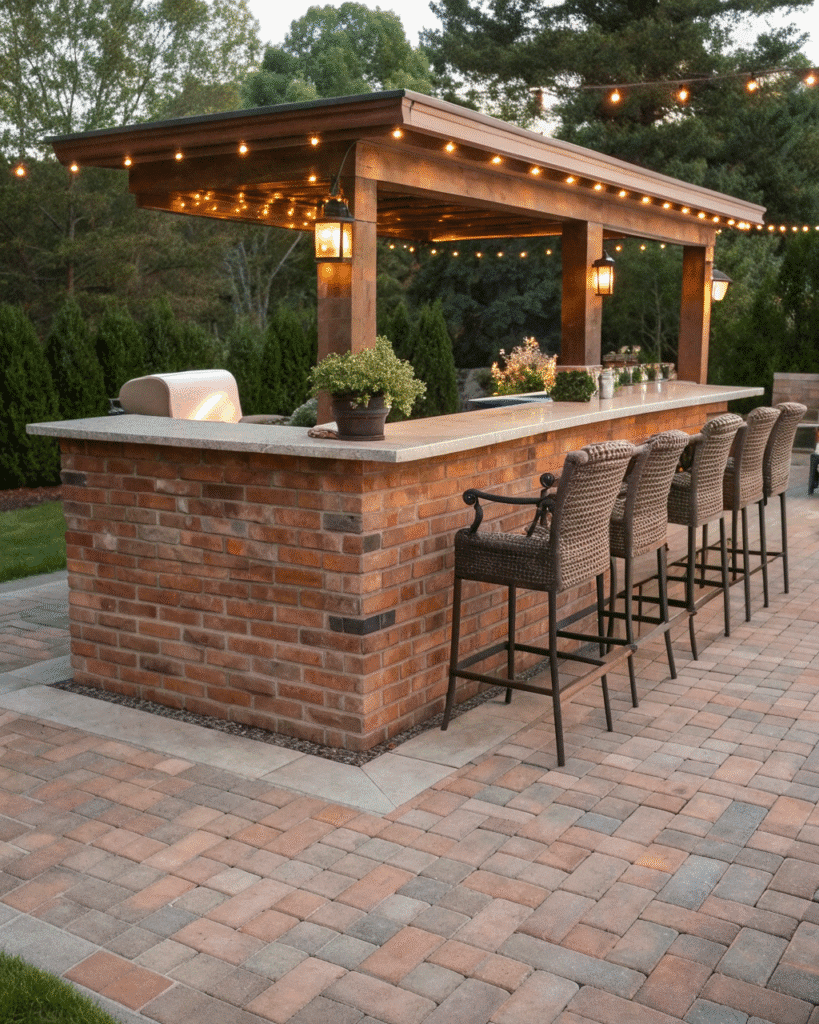
A brick bar offers rustic beauty and timeless appeal for outdoor gatherings.
Pro Tip: Complement it with wrought iron furniture or warm lighting for character.
14. Bar Island with Seating
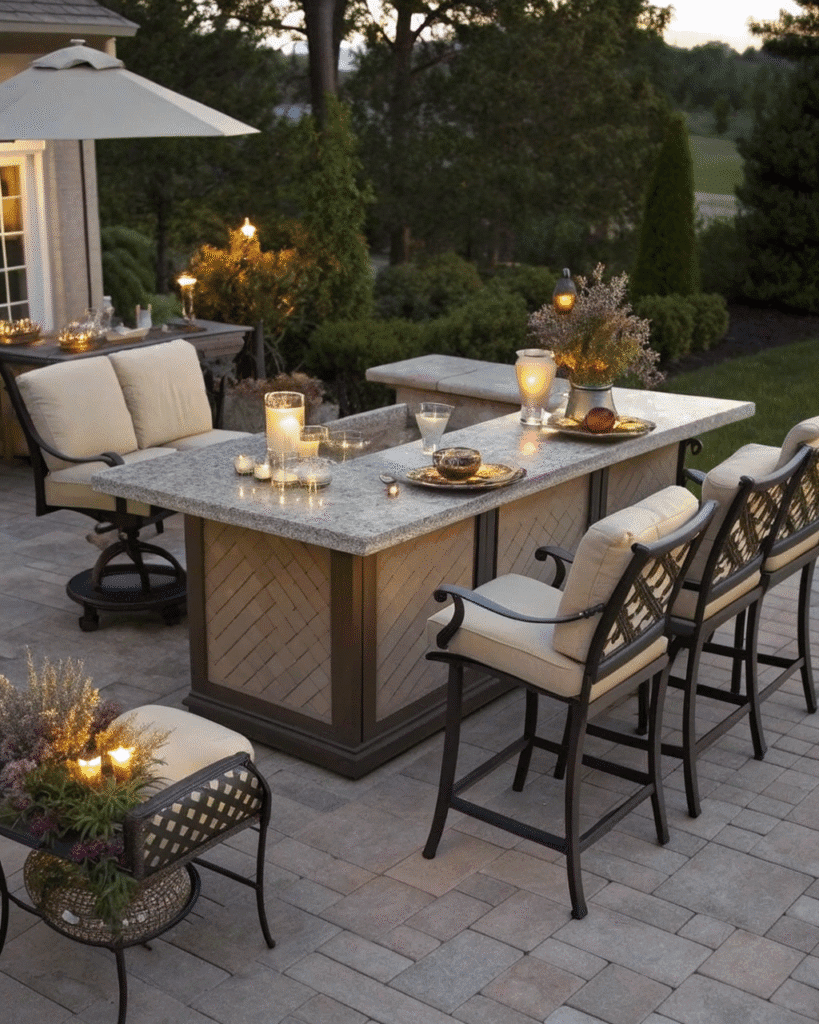
An island bar doubles as a dining space for guests to gather around.
Pro Tip: Add bar stools and hanging lights above for a relaxed, social atmosphere.
Final Thoughts
A patio bar is one of the most sociable and most enjoyable features you can add to any outdoor entertaining space.
Whether you build a permanent stone structure that becomes an architectural statement in your garden or simply style a well-chosen bar cart in the right corner of the patio, the result is the same: a space that functions better for entertaining, looks more considered and complete, and becomes the natural hub of every outdoor gathering you host.
Choose the idea that suits your space, your style, and your budget and start building the outdoor entertaining setup your patio deserves.
FAQs
Do I need a permit to build an outdoor bar?
A freestanding outdoor bar cart or a simple portable bar setup does not require a permit in most US jurisdictions. A permanently built-in bar that includes plumbing connections for a sink, electrical connections for lighting or a refrigerator, or that is attached to the house structure, may require a building permit depending on your local codes. Always check with your local building department before beginning any utility connections for a built-in outdoor bar.
What is the best countertop material for an outdoor bar?
Granite is the best all-around outdoor bar countertop material for its combination of hardness, heat resistance, weather resistance, and longevity. Porcelain tile is the most affordable practical option with excellent durability and stain resistance. Sealed concrete offers the most design flexibility for those who want a custom look. All three significantly outperform timber and composite materials for bar use where spills, heat, and outdoor exposure are constant factors.
How do I keep an outdoor bar organised?
Dedicated zones for different bar categories keep an outdoor bar functional and uncluttered. Spirits in one section, wines in another, mixers grouped separately, glassware on open shelving above, and bar tools in a dedicated drawer or caddy. A tray on the counter surface groups the active setup together and makes it easy to move items or clear the counter between uses. Regular editing of what lives at the bar permanently versus what only comes out for specific occasions prevents the gradual accumulation of clutter that makes outdoor bars feel messy over time.
What lighting works best above an outdoor bar?
A warm pendant light hung directly above the bar counter at around 30 to 36 inches above the counter surface creates the most inviting and functional bar lighting. For bars without an overhead structure, LED strip lighting under a shelf or cabinet mounted above the bar is the most practical alternative. In all cases, use warm white LEDs at around 2700K rather than cool white or daylight temperature. Warm light is flattering, atmospheric, and appropriate for an entertaining setting in a way that cool light never is outdoors.
How do I protect an outdoor bar from the weather?
A permanent built-in bar in concrete block with tile or stone cladding and a properly sealed countertop needs virtually no weather protection beyond basic maintenance. A timber or composite freestanding bar benefits from a waterproof bar cover when not in use. Any bar with electronic components like a refrigerator, lighting, or a blender outlet needs those components specified for outdoor damp or wet location use rather than standard indoor appliances. Covering the bar between uses and during extended periods of bad weather extends the life of all materials and finishes significantly.
How do I protect an outdoor bar from the weather?
A permanent built-in bar in concrete block with tile or stone cladding and a properly sealed countertop needs virtually no weather protection beyond basic maintenance. A timber or composite freestanding bar benefits from a waterproof bar cover when not in use. Any bar with electronic components like a refrigerator, lighting, or a blender outlet needs those components specified for outdoor damp or wet location use rather than standard indoor appliances. Covering the bar between uses and during extended periods of bad weather extends the life of all materials and finishes significantly.
What is the ideal size for a patio bar?
The ideal size depends on how many people you typically entertain and how much space your patio provides. A bar that seats three to four guests at the counter requires a minimum counter length of 6 feet. A bar designed primarily as a serving station rather than a seating bar can be as compact as 3 to 4 feet long and 18 to 24 inches deep. The minimum practical counter depth for a working bar with space for a bottle, a glass, and a workspace in front is around 24 inches. Less than this and the bar feels cramped in use regardless of its length.