10+ Patio Fire Pit Ideas to Warm Up Your Nights
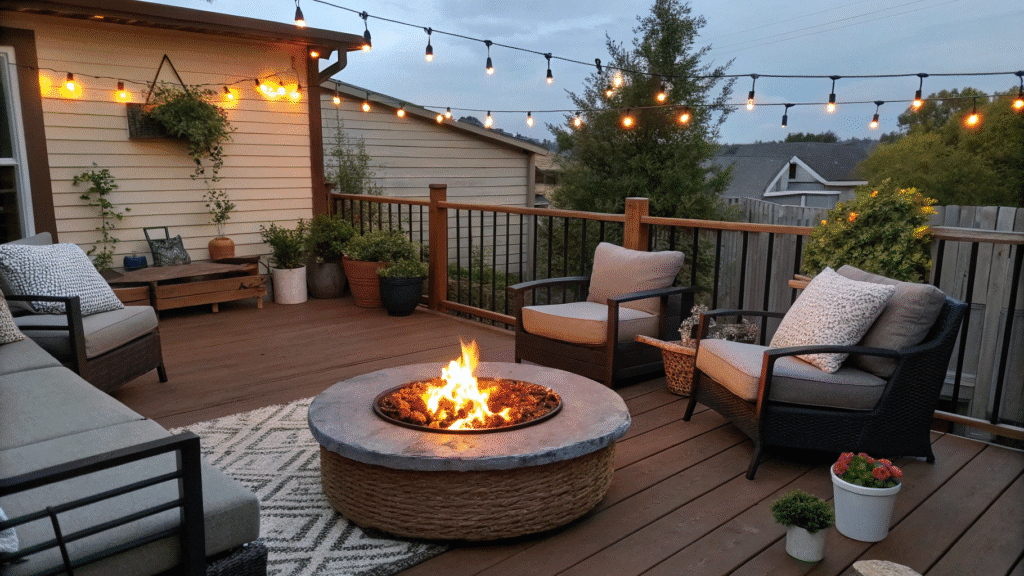
There is a moment that happens on every patio with a fire pit. The sun goes down, the temperature drops, someone lights the fire, and suddenly nobody wants to go inside. Conversations get longer. Drinks get refilled. The evening stretches in the best possible way. A fire pit does not just add warmth to a patio. It adds the kind of atmosphere that turns an ordinary evening into one people actually remember.
If you have been thinking about adding a fire pit to your patio but are not sure which direction to go, you are in the right place. The options available today range from simple portable metal bowls that cost less than a hundred dollars to fully built-in gas fire features that become permanent architectural elements of your outdoor space. Whatever your budget, your patio size, and your design aesthetic, there is a fire pit setup on this list that will work for you.
Why a Fire Pit Is One of the Best Patio Investments You Can Make
A patio fire pit does more for the quality of your outdoor living than almost any other single upgrade. Here is why it consistently tops the list of the most valued outdoor home improvements among homeowners across the United States.
It extends your outdoor season dramatically. Without a heat source, most patios in the United States become uncomfortable from October through April. Add a fire pit and suddenly those shoulder-season evenings in September, October, March, and April become some of the best times to be outside. The fire creates a warm microclimate around the seating area that makes the patio genuinely comfortable in temperatures that would otherwise send everyone indoors.
Love Chic Living Club?
Add us as one of your preferred Google sources and discover more home decor, DIY, outdoor, and lifestyle inspiration from us.
It creates a gathering point. Every outdoor space needs a focal point, something that draws people in and gives them a reason to settle rather than drift. A fire pit is the most powerful gathering point available for a patio because it appeals to something very fundamental in human nature. People are drawn to fire the way they are drawn to very little else. A lit fire pit pulls a group of people together and keeps them there in a way that even the most beautifully designed patio without one simply cannot achieve.
It adds genuine value to your home. Built-in fire pit features consistently appear on lists of outdoor upgrades that positively affect home resale value. Even a well-chosen portable fire pit can make a patio photograph and show significantly better when a home is listed for sale.
Wood Burning vs Gas Fire Pits: Which Is Right for You?
This is the most important decision you will make about your patio fire pit and it is worth thinking through carefully before you invest in any specific setup.
Wood Burning Fire Pits
A wood burning fire pit gives you the real thing. The crackle of logs, the smell of woodsmoke, the organic unpredictability of a natural fire. For many people this is non-negotiable because the experience of sitting around a real wood fire is categorically different from sitting around a gas flame and no amount of convenience can fully compensate for that difference.
Wood burning fire pits are also typically less expensive to purchase and install than gas alternatives because they require no fuel line connection and no ignition system. A quality wood burning fire pit bowl or built-in ring can be installed in an afternoon with no professional help required.
The trade-offs are real though. Wood burning fires produce smoke, which is a genuine issue for neighbors, for guests with respiratory sensitivities, and for covered patio situations where smoke has nowhere to escape. They require a supply of dry firewood, they produce ash that needs to be cleaned out regularly, and they cannot be turned on and off instantly the way a gas fire can. In many urban and suburban areas, local ordinances also restrict or prohibit wood burning fires, so checking your local rules before investing in a wood burning setup is essential.
You May Also Love

Gas Fire Pits
A gas fire pit, whether connected to a natural gas line or fueled by a propane tank, offers instant ignition, adjustable flame height, no smoke, no ash, and the ability to turn the fire off completely in seconds. For families with young children, for patios in areas with smoke restrictions, and for anyone who wants the ambiance of fire without the management of wood, gas is a genuinely compelling choice.
The limitations are cost and authenticity. Gas fire pit setups are more expensive to install, particularly if a natural gas line needs to be run to the patio. The flame of a gas fire, while beautiful, does not crackle, does not smell like woodsmoke, and does not evolve and change the way a wood fire does. For purists, this matters. For pragmatists, it often does not.
Don't miss: 13+ Deck Planter Ideas to Bring Nature Closer →
Propane vs Natural Gas
If you choose a gas fire pit, you then need to decide between propane and natural gas. Propane fire pits run from a portable tank, typically a standard twenty-pound propane cylinder, which gives you flexibility in positioning but requires tank refills when the propane runs out. Natural gas fire pits connect directly to your home’s gas line, which means unlimited fuel and no tanks to manage, but it also means a permanent installation at a fixed location on your patio and a professional gas line installation.
Keep Exploring
Fire Pit Safety: What Every Patio Owner Needs to Know
A fire pit is a genuinely wonderful addition to any patio but it is also an open flame and it deserves to be treated with the appropriate level of respect and care. Here are the most important safety considerations for any patio fire pit setup.
Clearance is everything. A wood burning fire pit should be positioned a minimum of ten feet from any structure including your house, fence, pergola, or overhead tree branches. Gas fire pits have their own clearance requirements specified by the manufacturer and these should be followed exactly. Never position a fire pit beneath a covered patio roof or pergola unless the fire feature is specifically rated for covered outdoor use, which most gas fire pit tables are not.
Never burn treated wood, painted wood, plywood, or construction lumber in a wood burning fire pit. These materials release toxic chemicals when burned. Use only dry, seasoned firewood from untreated hardwood species.
Keep a fire extinguisher or a bucket of sand within easy reach of any wood burning fire pit. Water should not be used to extinguish a fire pit fire as it can crack stone or concrete fire pit materials and cause a cloud of steam and ash that creates its own hazards.
Never leave a fire pit unattended with children or pets present and always extinguish the fire completely before leaving the patio for the night. A wood fire should be allowed to burn down to ash and then doused with water. A gas fire should be turned off at both the burner and the fuel source.
What Surface Can You Put a Fire Pit On?
The surface beneath your fire pit matters significantly for both safety and the longevity of the surface material.
Concrete and stone paving are the safest and most durable surfaces for a fire pit. They are non-combustible, they do not trap embers, and they are easy to clean after fire pit use. Concrete is susceptible to cracking from the thermal stress of direct heat exposure over time, so using a fire pit pad or a layer of pea gravel between the fire pit base and the concrete surface extends the life of both.
Composite and wood decking require a specific fire pit pad or deck protector designed for use with fire pits. Never place a wood burning fire pit directly on composite or wood decking without a substantial heat-resistant barrier between the fire pit base and the deck surface. Sparks and radiant heat from a wood burning fire pit can ignite deck material at a distance that most people underestimate.
Gravel is an excellent surface for a fire pit area because it is non-combustible, allows excellent drainage, and looks beautiful as a defined fire pit surround. A gravel pad of at least a six-foot radius around a wood burning fire pit provides a practical and attractive safety buffer.
Grass and lawn areas are generally not appropriate surfaces for permanent fire pit placement. Grass under and around a fire pit will die quickly from the heat, the surface is uneven, and the combustible nature of dry grass in the immediate vicinity of an open fire is a genuine safety concern.
These 10+ ideas cover every style and every situation so you can find the fire pit that fits your patio and starts creating those long warm evenings as soon as possible.
1. Classic Stone Fire Pit
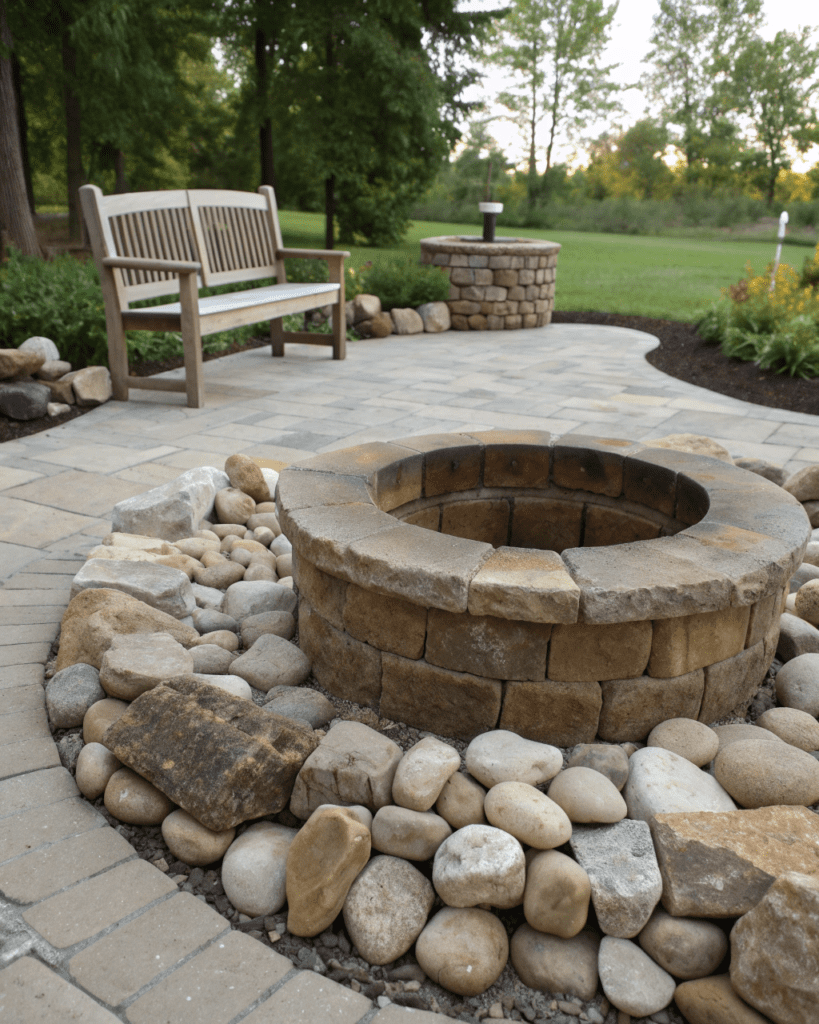
A circular stone fire pit brings a rustic, timeless appeal to your patio.
Pro Tip: Use natural stones in neutral shades for a look that blends beautifully with your landscape.
2. Modern Concrete Bowl
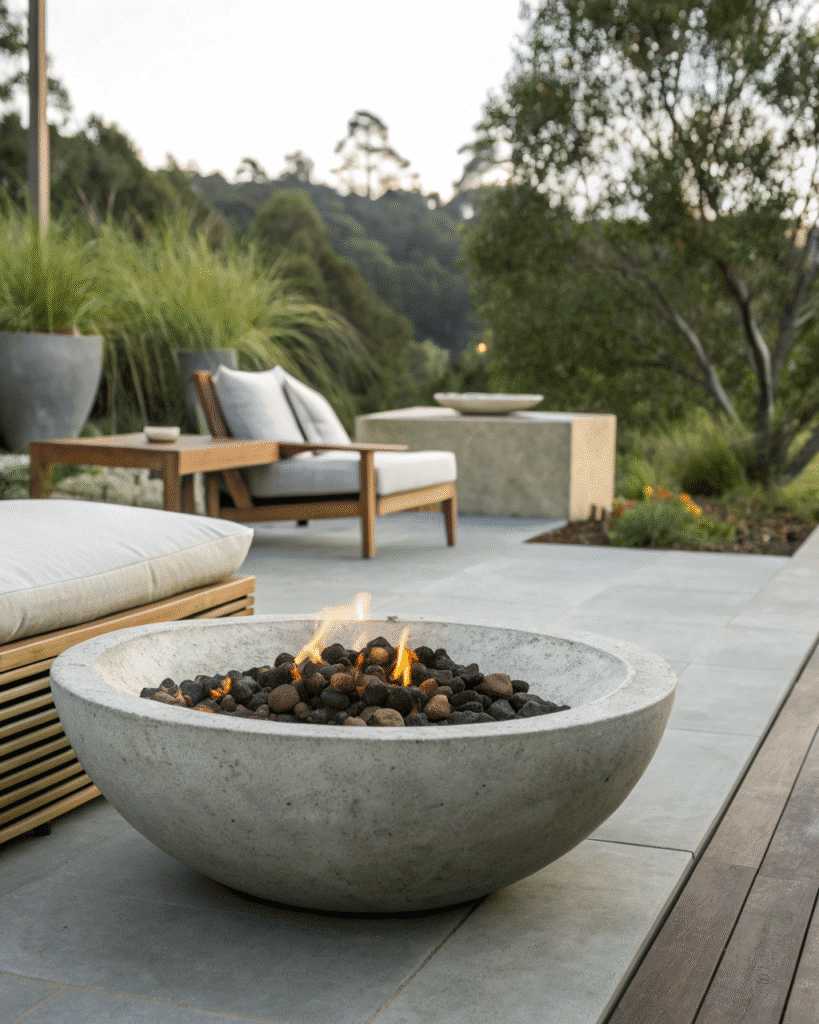
A sleek concrete fire bowl adds a minimalist and contemporary touch.
Pro Tip: Pair it with metal or wood furniture for a clean, balanced style.
3. Built-In Fire Pit Table
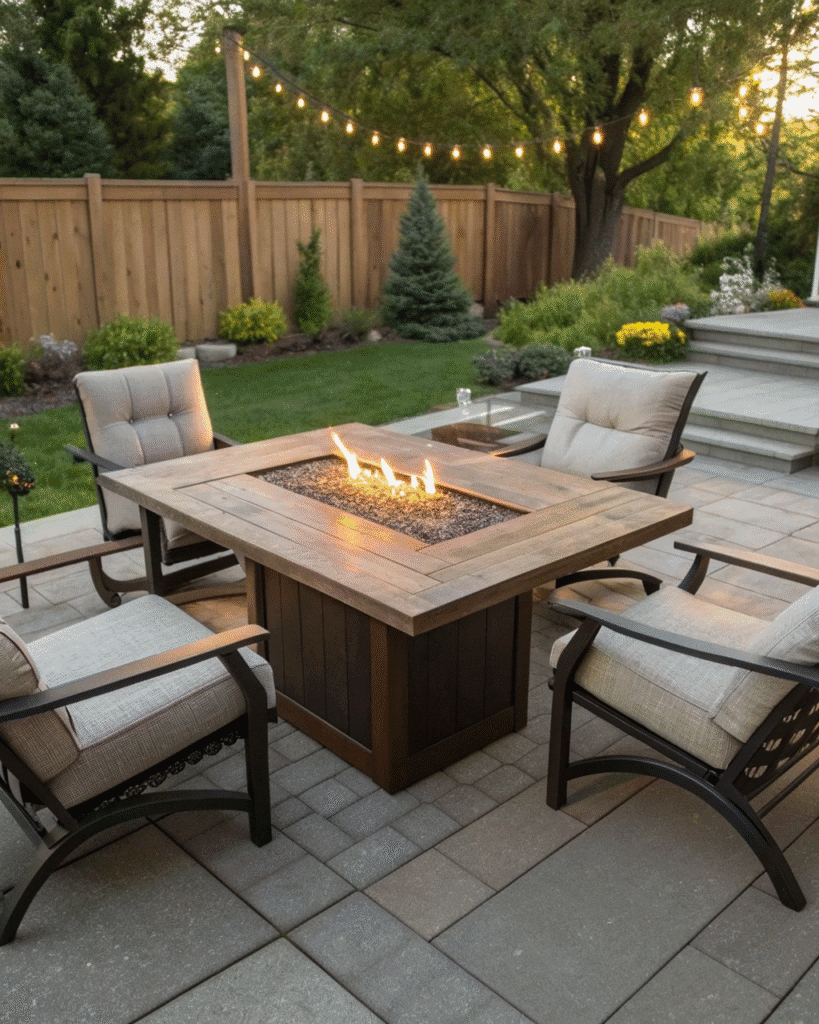
Combine warmth and function with a fire pit built into a patio table.
Pro Tip: Choose a propane-fueled design for easy lighting and low maintenance.
4. Portable Metal Fire Pit
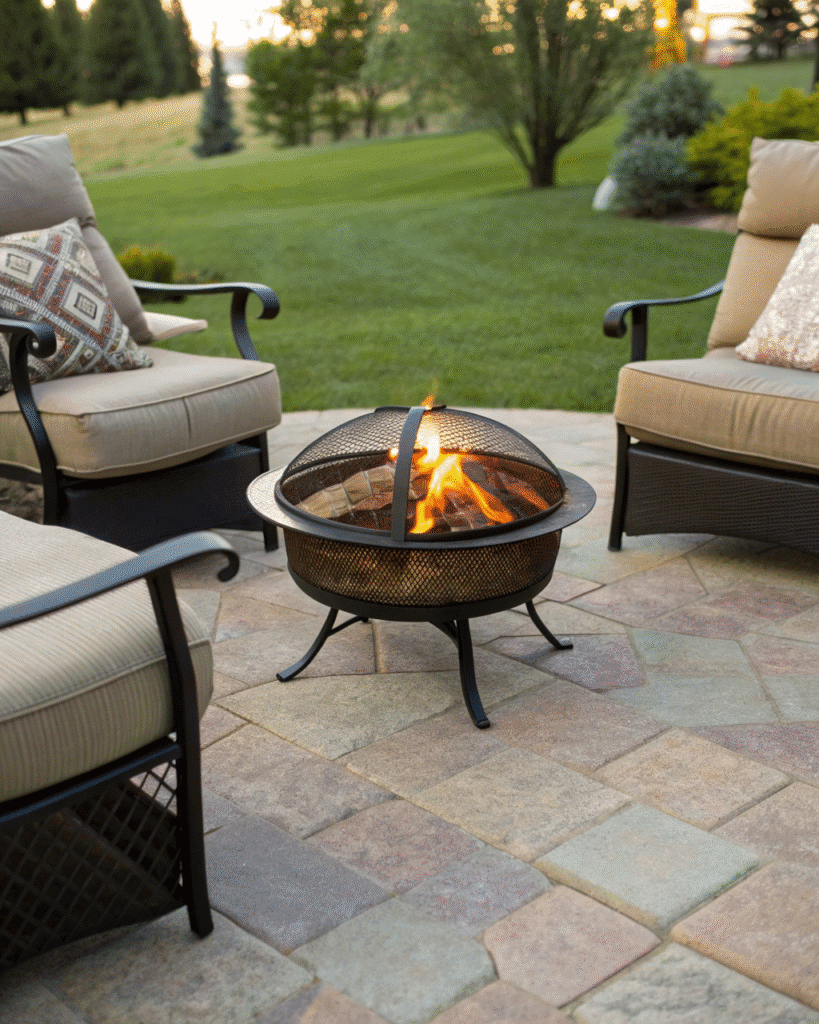
A compact, movable fire pit makes it easy to rearrange your patio setup.
Pro Tip: Go for a lightweight steel model with handles for added convenience.
5. Sunken Fire Pit Area
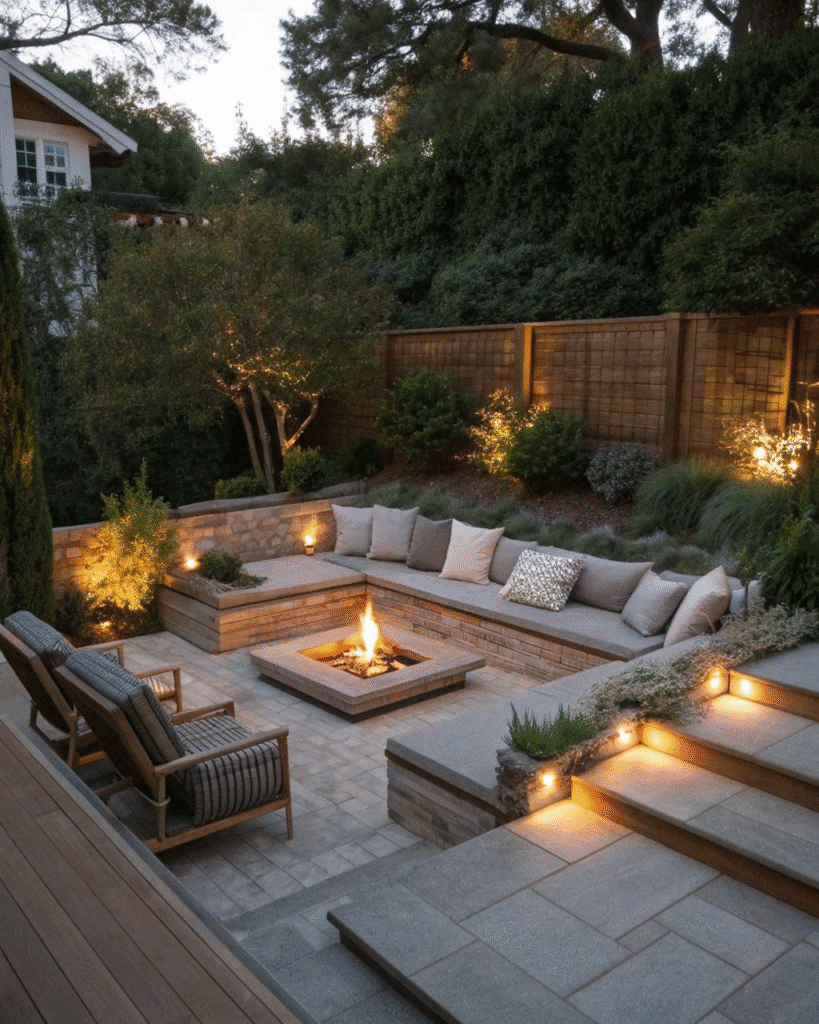
Create a cozy sunken seating area around a built-in fire pit.
Pro Tip: Add stone steps and soft cushions to make it inviting and comfortable.
6. Fire Glass Feature
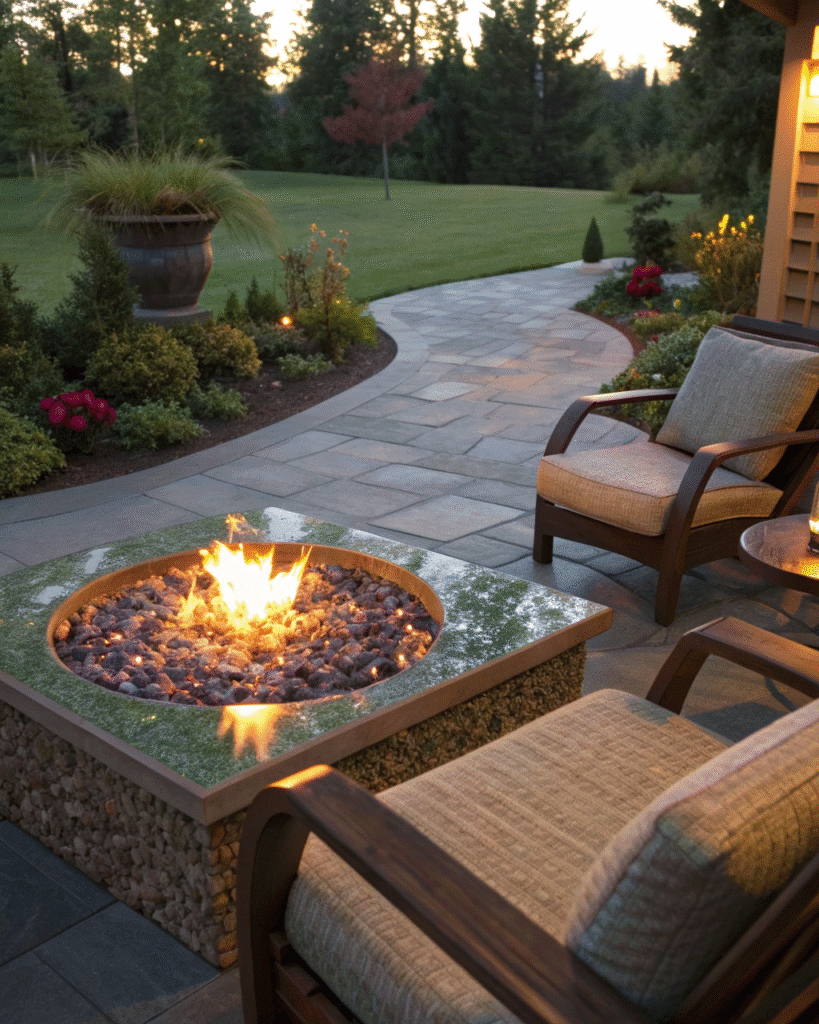
Swap traditional logs for reflective fire glass that shimmers beautifully at night.
Pro Tip: Choose colors like amber or blue to match your patio’s color palette.
7. Brick Fire Pit
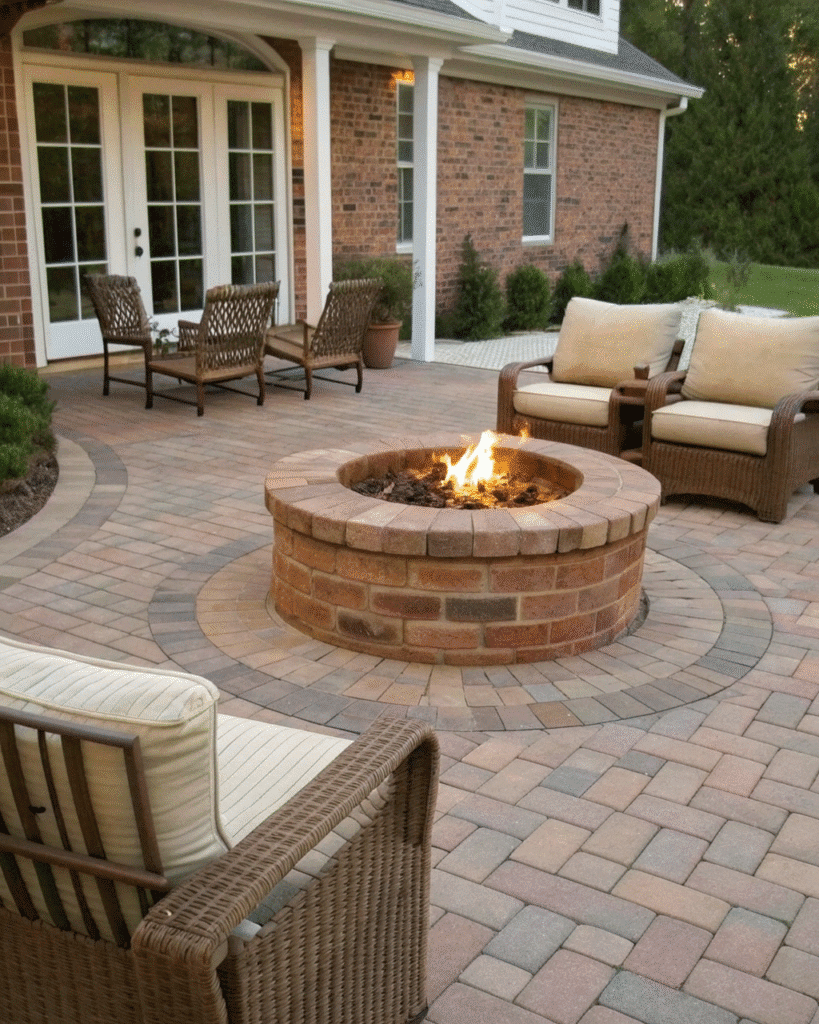
Brick fire pits add charm and warmth with a classic, handcrafted feel.
Pro Tip: Use fire-rated bricks and mortar to ensure safety and longevity.
8. Gas Fire Column
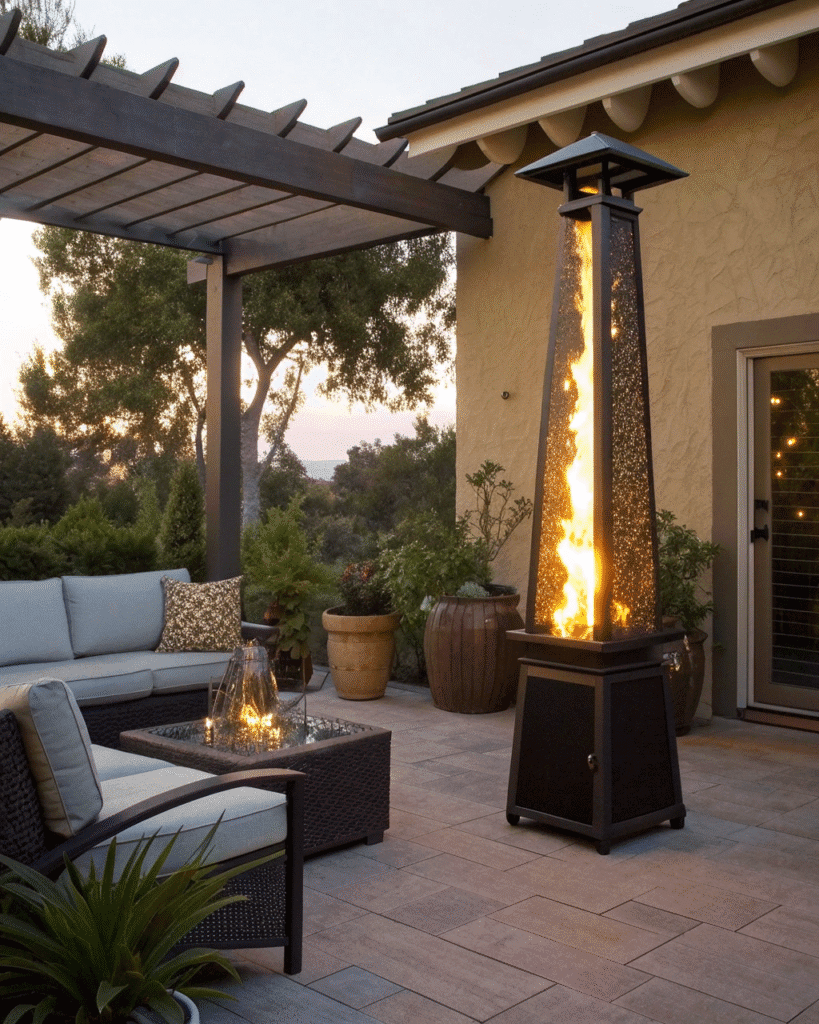
Tall fire columns create a dramatic visual and give off just the right amount of heat.
Pro Tip: Position them near seating areas or entryways for ambient lighting.
9. Fire Pit with Built-In Seating
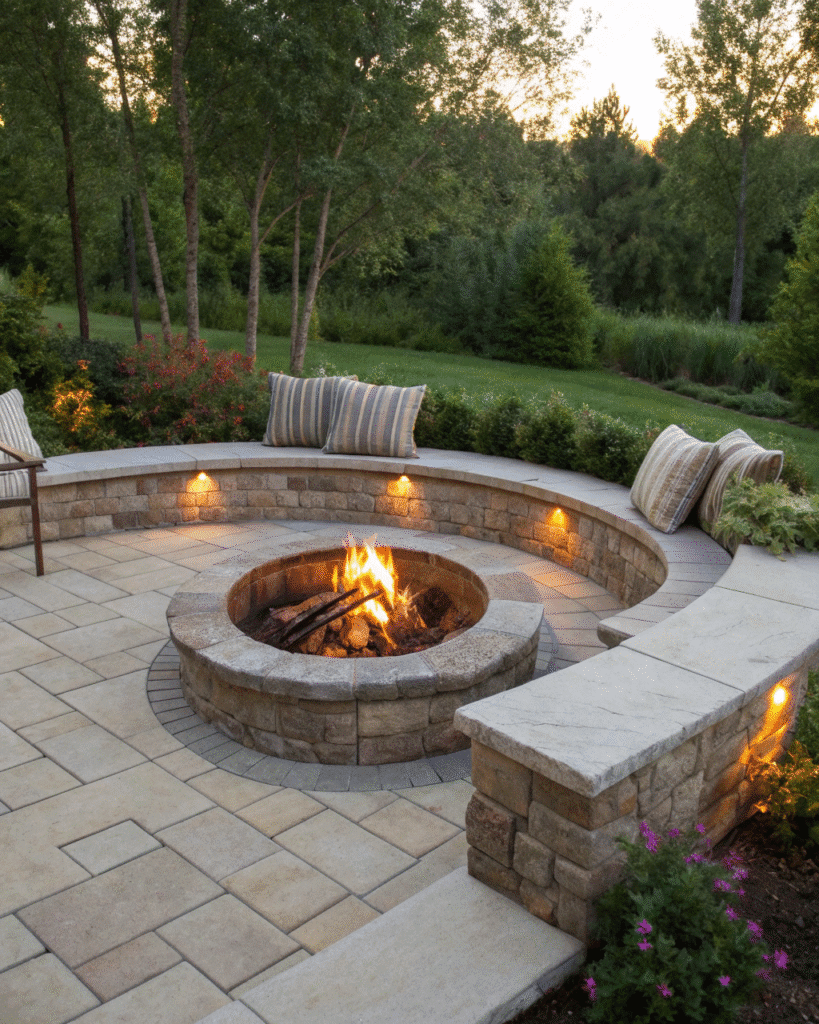
Design a stone or concrete bench around your fire pit for seamless comfort.
Pro Tip: Add cushions or throws to make your seating area cozy and stylish.
10. Tabletop Fire Bowl
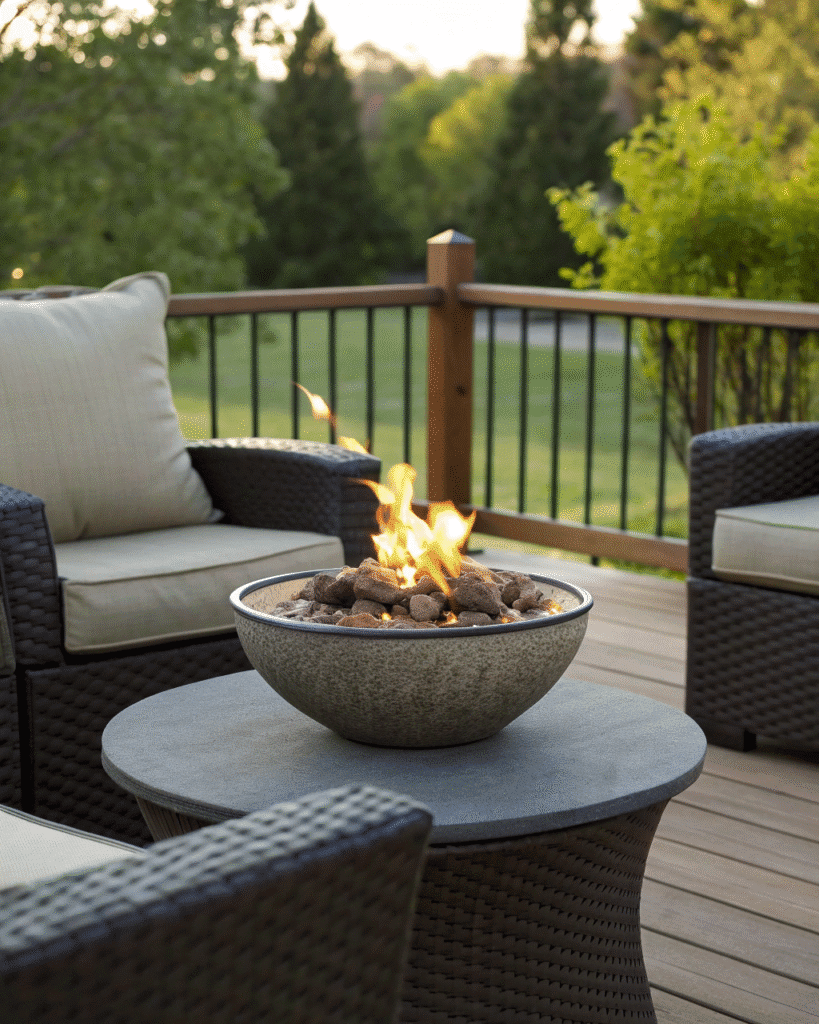
A small tabletop fire pit is perfect for intimate patios or balconies.
Pro Tip: Use gel fuel for a clean, smokeless flame that’s easy to manage.
11. Fire Pit with Water Feature
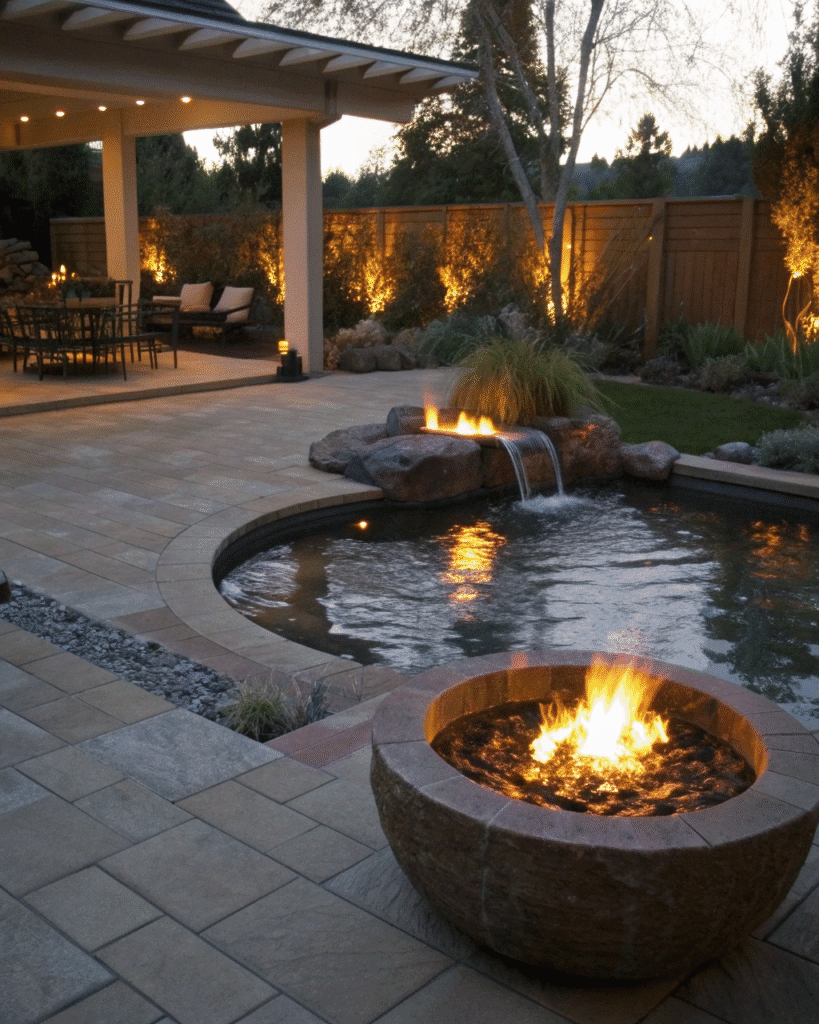
Combine fire and water for a stunning visual contrast and relaxing sound.
Pro Tip: Keep the design simple so both elements stand out beautifully.
Final Thoughts
A fire pit transforms your patio from a space you use into a space you live in. It is the element that pulls people together, extends the evening, and makes every ordinary night feel a little like something worth remembering.
Whether you build a permanent stone ring into your patio design, invest in a sleek gas fire table, or simply add a well-chosen portable bowl to an existing setup, the return on that investment shows up every single time someone pulls their chair a little closer to the flame and decides to stay outside a little longer. Start with the fire pit that fits your patio and your budget today and let the evenings take care of themselves from there.
Frequently Asked Questions
How far should a fire pit be from the house?
The general recommended minimum distance for a wood burning fire pit is ten feet from any structure including your house wall, fence, pergola, and overhead trees. Gas fire pits have specific clearance requirements stated by the manufacturer that should be followed exactly as these vary between products and installation configurations. Always check local ordinances in addition to manufacturer guidelines as some municipalities have stricter requirements than the general recommendation.
Do I need a permit for a patio fire pit?
It depends on your location and the type of fire pit. In many US cities and counties, built-in fire pit structures require a building permit. Wood burning fire pits are prohibited entirely in some urban areas and during high fire risk weather conditions in fire-prone regions. Gas fire pit installations that involve running a new gas line typically require a permit and a licensed contractor. Always check with your local building and fire authorities before installing any fire pit feature.
What is the best wood to burn in a patio fire pit?
Seasoned hardwoods produce the best fire pit experience. Oak, hickory, maple, and cherry are all excellent choices that burn hot, produce minimal smoke relative to their heat output, and create a good bed of long-lasting coals. Avoid softwoods like pine and cedar for prolonged fire pit use as they produce significantly more smoke, more sparks, and more creosote buildup than hardwoods. Never burn wood that has been treated, painted, or chemically processed.
How do I put out a fire pit safely?
Allow the wood to burn down to ash as much as possible rather than extinguishing an active fire. Spread the remaining coals and ash with a metal poker to expose them to air and speed cooling. Slowly pour water over the ash and coals, stirring as you go, until no steam rises and the ash is cool to the touch. Never leave a fire pit until you are certain the fire is completely out. For gas fire pits, turn off the burner valve and then close the fuel supply valve at the tank or gas line before leaving the area.
Can I use a fire pit on a wood deck?
A wood burning fire pit should never be used directly on a wood or composite deck without a substantial fire-rated deck protector pad beneath it. The radiant heat from the fire pit base and the risk of falling embers make wood burning fires a genuine fire hazard on combustible deck surfaces even with a pad. Gas fire pit tables are generally safer on deck surfaces but always check the manufacturer’s clearance requirements for deck installation specifically. When in doubt, position the fire pit on a non-combustible patio surface rather than on the deck.