12+ Patio Hammock Ideas for Lazy Afternoons
Some outdoor furniture asks you to sit up straight, stay present, and be productive. A hammock asks you to do the opposite. To let your weight settle in, to let the gentle sway take over, and to stop thinking about whatever you were thinking about before you climbed in. There is no outdoor furniture on earth that is more effective at enforcing genuine rest than a hammock and that is precisely why it belongs on your patio.
A hammock is also one of those additions that changes the entire personality of an outdoor space the moment it goes up. A patio with a hammock is a patio that has an opinion about how time should be spent. It says that this is a place for slow afternoons, for afternoon naps with a book sliding off your chest, for watching clouds move and feeling the breeze and doing absolutely nothing of consequence. That is not a small thing. That is exactly the kind of outdoor space most people are trying to create and never quite manage to.
Why a Hammock Is the Best Thing You Can Add to Your Patio
The case for a patio hammock goes beyond comfort, though the comfort case is already extremely strong. A hammock does something for an outdoor space that no other piece of furniture can replicate. It creates a dedicated space for rest that is completely separate from the functional spaces of the patio. The dining table is for eating. The seating area is for conversation. The hammock is for nothing in particular and everything restorative.
There is also genuine science behind why hammock rest feels so different from lying on a couch or sitting in a recliner. The gentle swinging motion of a hammock has been shown to synchronize brain waves in a way that promotes the transition into deeper, more restorative sleep. The same rhythmic motion that makes rocking chairs calming is amplified in a hammock because the movement involves the whole body rather than just the chair beneath you. Twenty minutes in a hammock on a warm afternoon can feel more genuinely restoring than an hour on a sofa indoors.
Love Chic Living Club?
Add us as one of your preferred Google sources and discover more home decor, DIY, outdoor, and lifestyle inspiration from us.
From a design perspective, a hammock adds height, movement, and a sense of relaxed personality to a patio in a way that no static piece of furniture can. It moves in the breeze. It changes shape depending on who is in it. It invites interaction from every guest who sees it. A well-placed hammock is always the most photographed and most commented-upon element of any patio, which tells you something about how powerfully it resonates with people’s idea of the perfect outdoor space.
What to Know Before You Buy a Patio Hammock
Choosing the right hammock for your specific patio situation requires thinking through a few practical considerations before you fall in love with a particular style or color.
Hanging Method
The single most important question to answer before buying a hammock is how you are going to hang it. A hammock requires two anchor points a specific distance apart at a specific height and those anchor points need to be strong enough to bear the dynamic load of a person settling into and moving in the hammock. Your options are trees, posts, a pergola frame, a purpose-built hammock stand, or wall-mounted hardware on a covered porch. The right hammock style and size is determined largely by which hanging method your patio can accommodate.
Size and Weight Capacity
Hammocks come in single, double, and family sizes. A single hammock is typically designed for one adult up to about 250 pounds. A double hammock accommodates two adults or one adult who wants maximum spreading-out room, with weight capacities typically from 400 to 500 pounds. Always choose a hammock with a weight capacity rated significantly above the actual load you plan to put on it because hammocks experience dynamic loading from the movement of getting in, moving around, and getting out that exceeds the static weight of the occupant.
You May Also Love
Material
The material of your hammock determines its comfort level, its weather resistance, and how much maintenance it requires. Cotton hammocks are the softest and most comfortable against bare skin but require more care in wet conditions. Polyester and nylon hammocks are more weather-resistant and faster drying but can feel rougher against skin in warm weather. Rope hammocks in cotton or polyester provide excellent airflow which is a significant comfort advantage in hot climates. Fabric or Mayan-weave hammocks in treated polyester are the most practical choice for hammocks that will live outdoors permanently as they handle moisture, UV, and mildew far better than natural fiber options.
Don't miss: 12+ Stunning Pergola Patio Ideas for Shade →
Hanging Distance and Height
Most standard hammocks require hanging points between twelve and fifteen feet apart. The height of the anchor points above the ground determines how high the center of the hammock will hang when occupied. For a standard hammock, hanging points at a height of five to six feet typically produce a comfortable seated-entry height in the center of approximately eighteen inches from the ground when the hammock is loaded. Lower anchor points produce a lower slung hammock that feels more enveloping and is easier to get in and out of for most people.
Keep Exploring
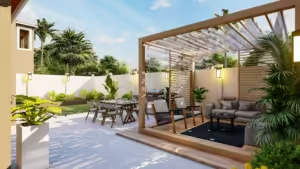
How to Hang a Hammock Safely
A hammock that is improperly hung is a genuine safety risk. Here is what to do to make sure yours is secure.
Always use hardware rated for the weight you plan to put on the hammock. Eye bolts, hammock hooks, and tree straps should all be rated for at least twice the maximum expected load because of the dynamic forces involved in hammock use. Hardware store eye bolts rated for static loads only are not appropriate for hammock hanging.
For tree hanging, use wide tree straps rather than rope or wire directly around the trunk. A rope or wire cuts into tree bark and damages the tree over time. Tree straps designed for hammock use are wide enough to distribute the load without harming the tree and most are rated for very high loads. Wrap the strap around the trunk at the appropriate height and use a carabiner or hammock hook to connect the hammock end to the strap loop.
For post or structure hanging, use lag screws or through-bolts rather than screws driven into surface wood. A lag screw with a hook end driven into a solid pergola post or deck post provides a very secure anchor point for a hammock. Always check that the post itself is structurally sound and firmly anchored before hanging a hammock from it.
For wall mounting on a covered porch, locate wall studs and use appropriate structural anchors rated for hammock use. A hammock anchor that pulls out of a wall during use is extremely dangerous and the failure mode of an improperly anchored wall hook is sudden rather than gradual.
How to Style a Hammock on Your Patio
A hammock is already a beautiful object but a few thoughtful additions can turn it into a genuinely styled patio feature rather than just a piece of equipment.
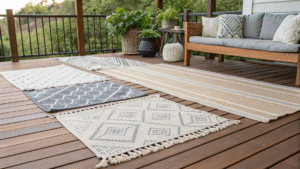
An outdoor rug placed beneath the hammock area grounds the space and creates a defined zone that feels like a room within the larger patio. Choose a rug that extends beyond the swing arc of the hammock on both sides so the whole lounging area has a defined floor.
A small side table or tree stump side table placed within reach of the hammock gives you somewhere for your drink, your book, your sunglasses. The small practical detail of having somewhere to set things down makes the hammock significantly more usable for extended lounging rather than just quick naps.
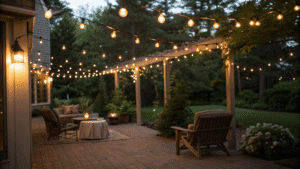
String lights or fairy lights woven through the hanging ropes or draped overhead above the hammock create a beautiful evening atmosphere. There is something particularly magical about lying in a hammock after dark with warm lights glowing above you and the night air moving around the space.
A few throw pillows and a light outdoor blanket tucked into the hammock complete the look and make it significantly more comfortable for long sessions. Outdoor throw pillows in weather-resistant fabric add color and personality to the hammock and give you something to prop your head on without bringing inside cushions outside.
These 12 ideas cover every type of hammock setup from a simple freestanding option for a small patio to a fully styled boho pergola installation, so you can find the right fit for your space and your version of a perfect lazy afternoon.
1. Classic Rope Hammock
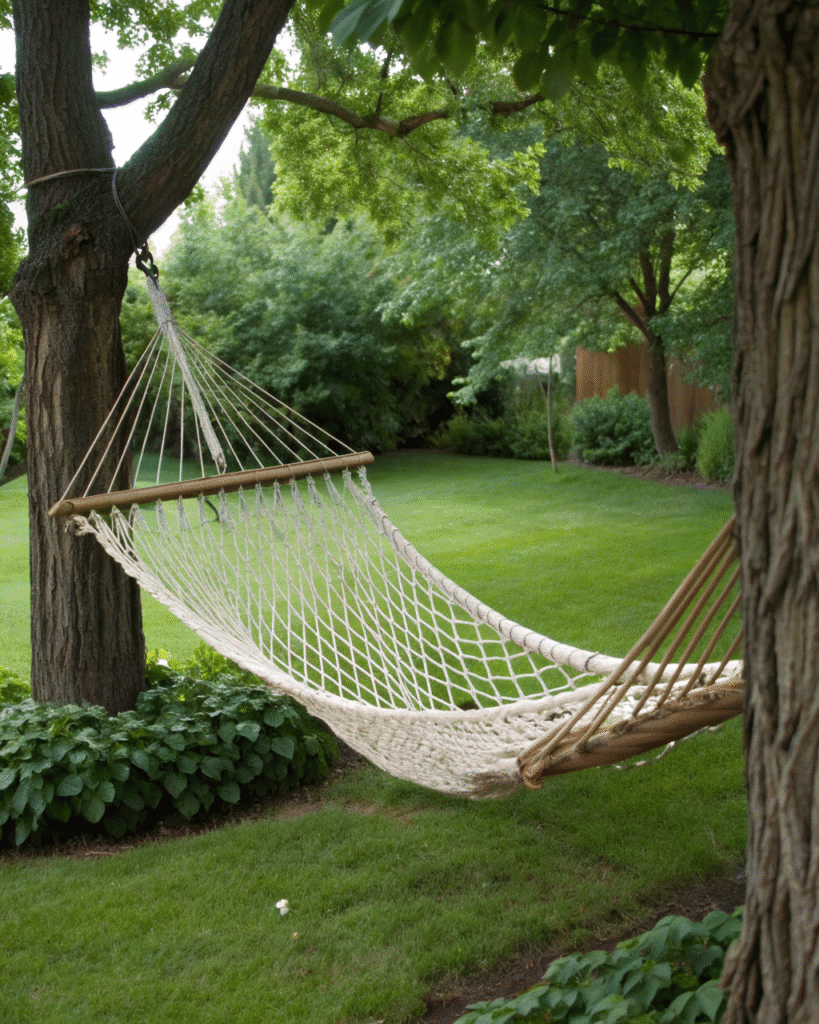
A traditional rope hammock offers a breezy, timeless look perfect for any patio.
Pro Tip: Add a soft cushion or throw to make it cozier for long naps.
2. Fabric Hammock with Stand
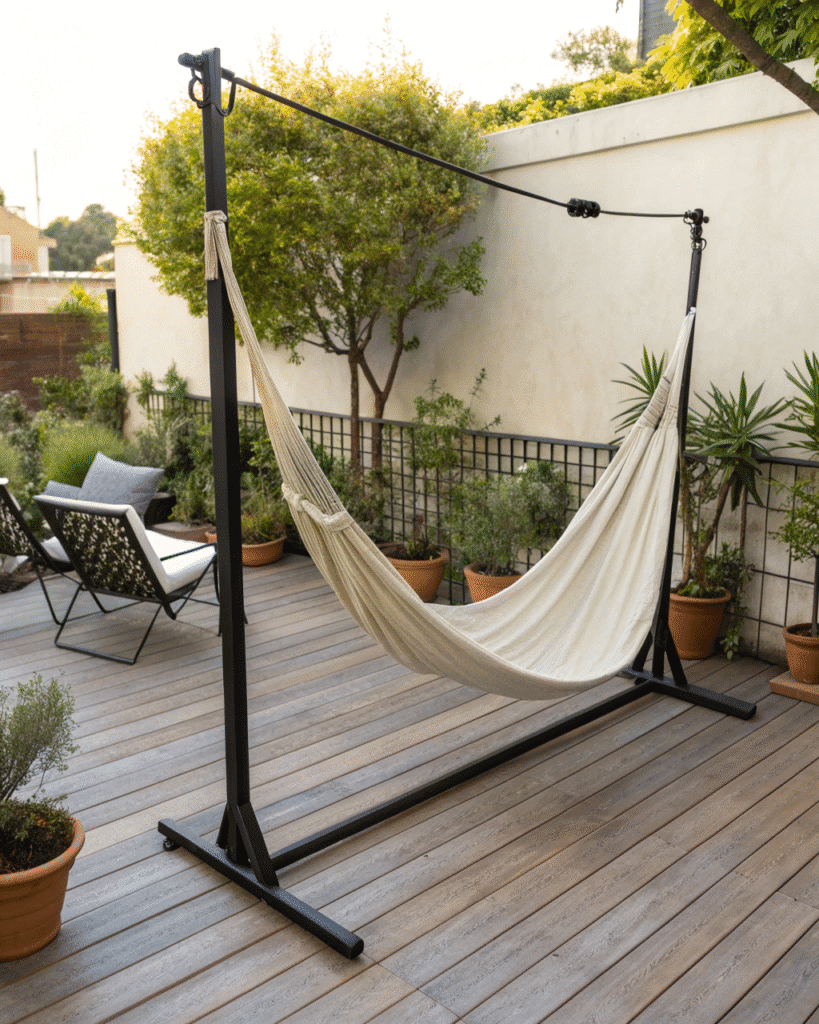
A freestanding hammock works beautifully when you don’t have trees or posts.
Pro Tip: Choose a neutral or striped fabric that complements your patio decor.
3. Hammock Chair Swing
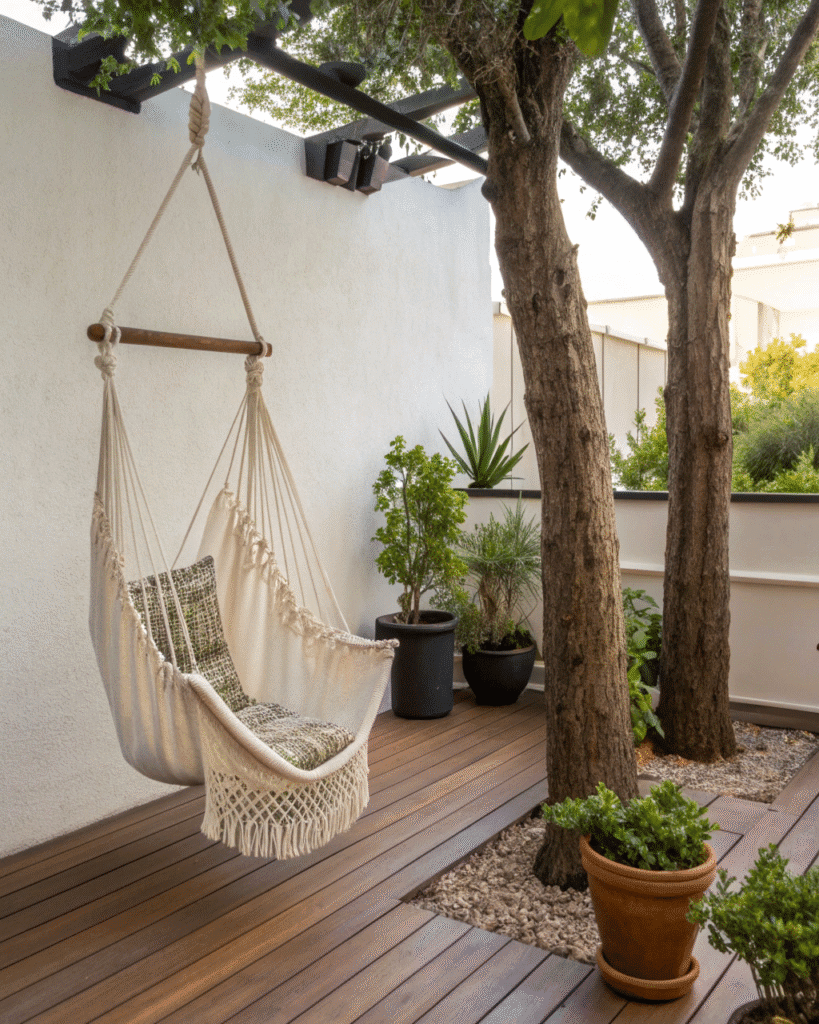
A hanging chair-style hammock saves space while offering the same comfort.
Pro Tip: Hang it from a pergola or sturdy beam for gentle, relaxing swings.
4. Double Hammock for Two
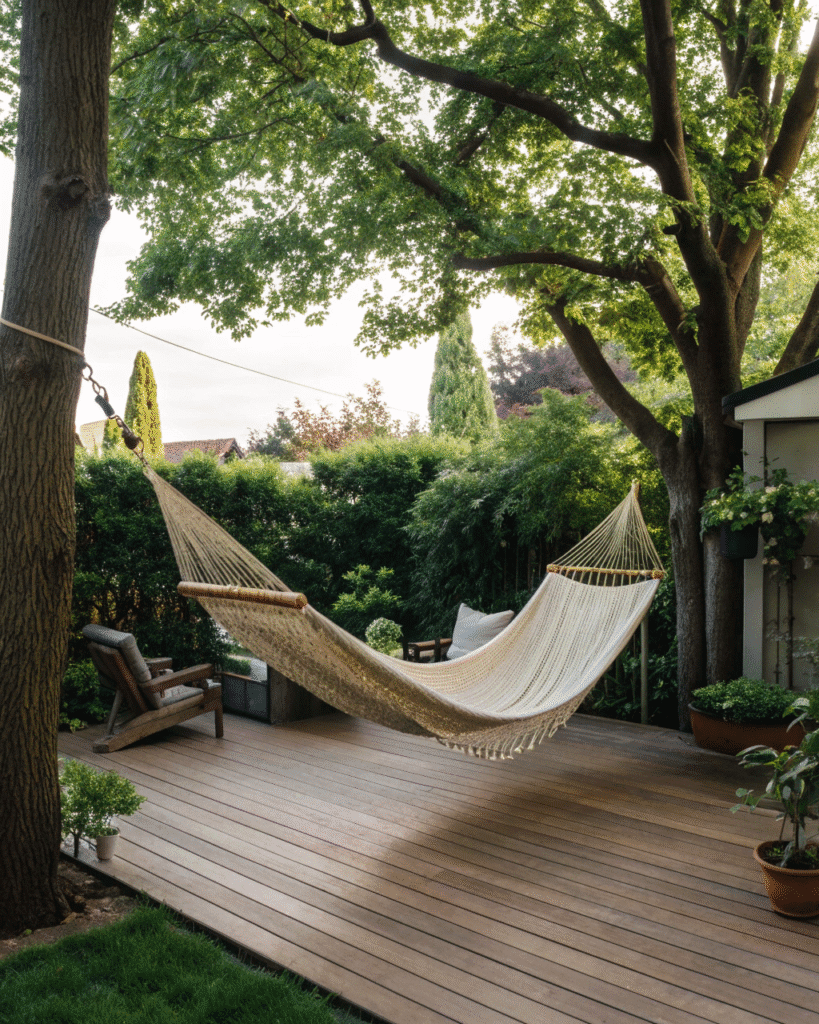
A large double hammock is perfect for sharing or sprawling out solo.
Pro Tip: Place it in a shaded spot and add side tables for drinks or books.
5. Hammock with Canopy
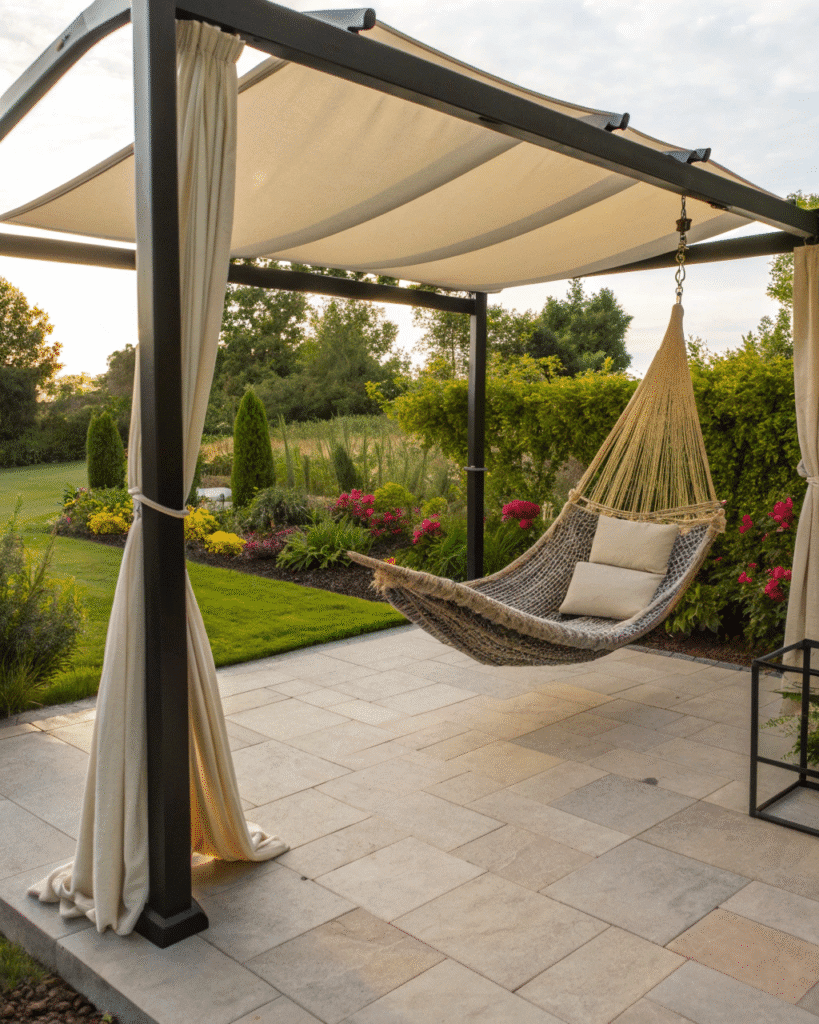
A canopy hammock provides shade and style for sunny afternoons.
Pro Tip: Choose light-colored fabric to keep it cool and airy in warmer months.
6. Boho Macrame Hammock
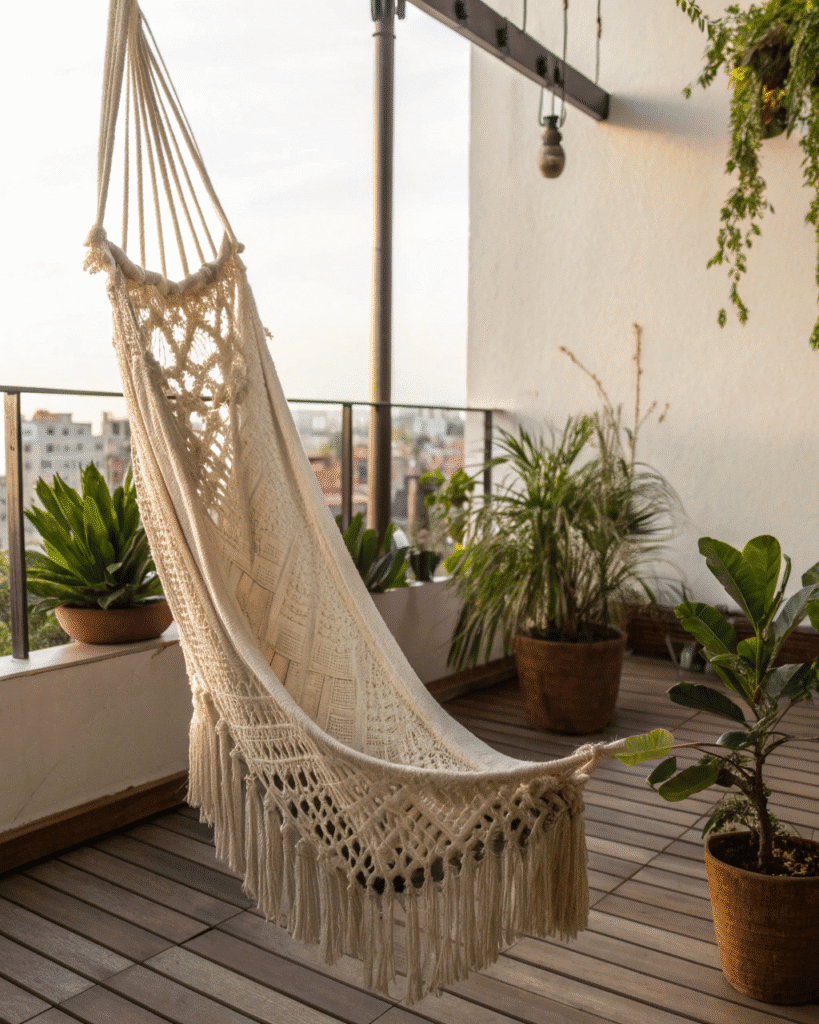
A macrame hammock brings a soft, handmade touch to your patio.
Pro Tip: Pair it with patterned cushions and potted plants for a boho-inspired setup.
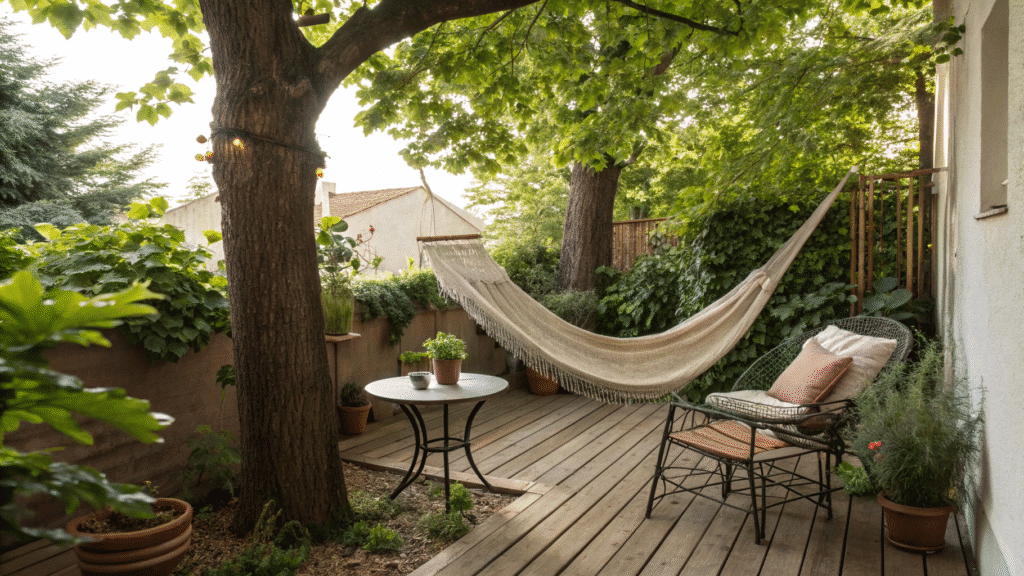
7. Hammock Between Trees
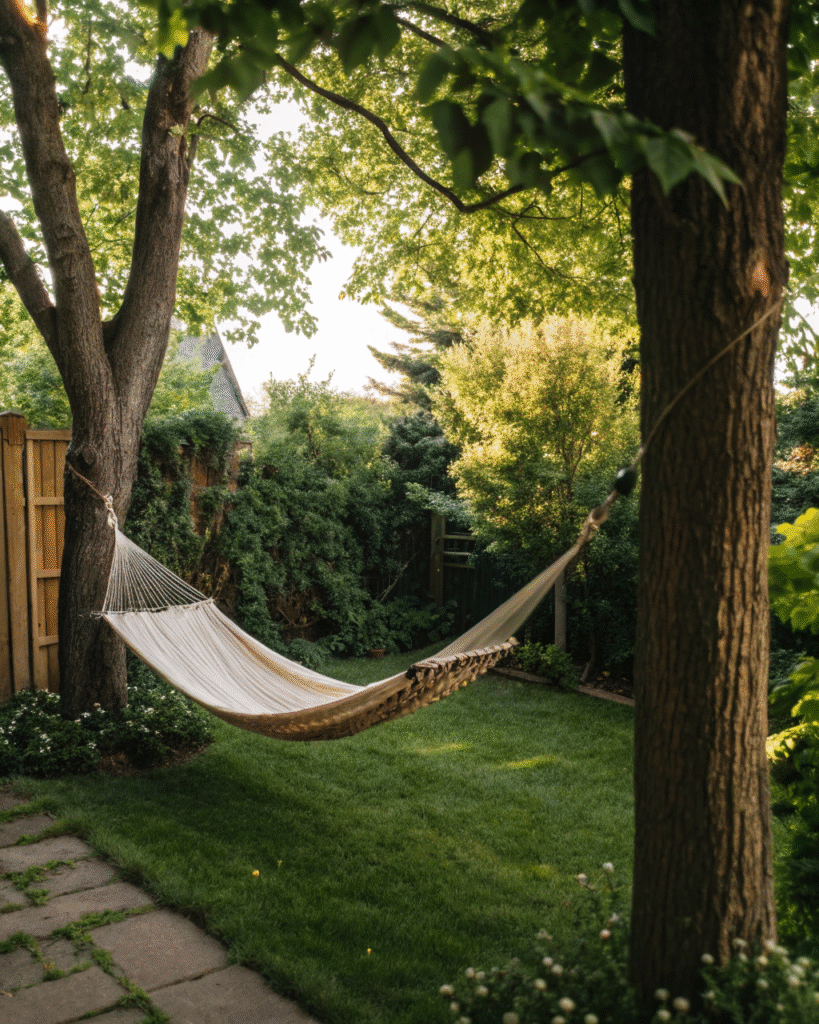
If you have trees nearby, hang your hammock for the most natural, relaxing feel.
Pro Tip: Ensure both trees are sturdy and evenly spaced for proper balance.
8. Hammock Over a Rug
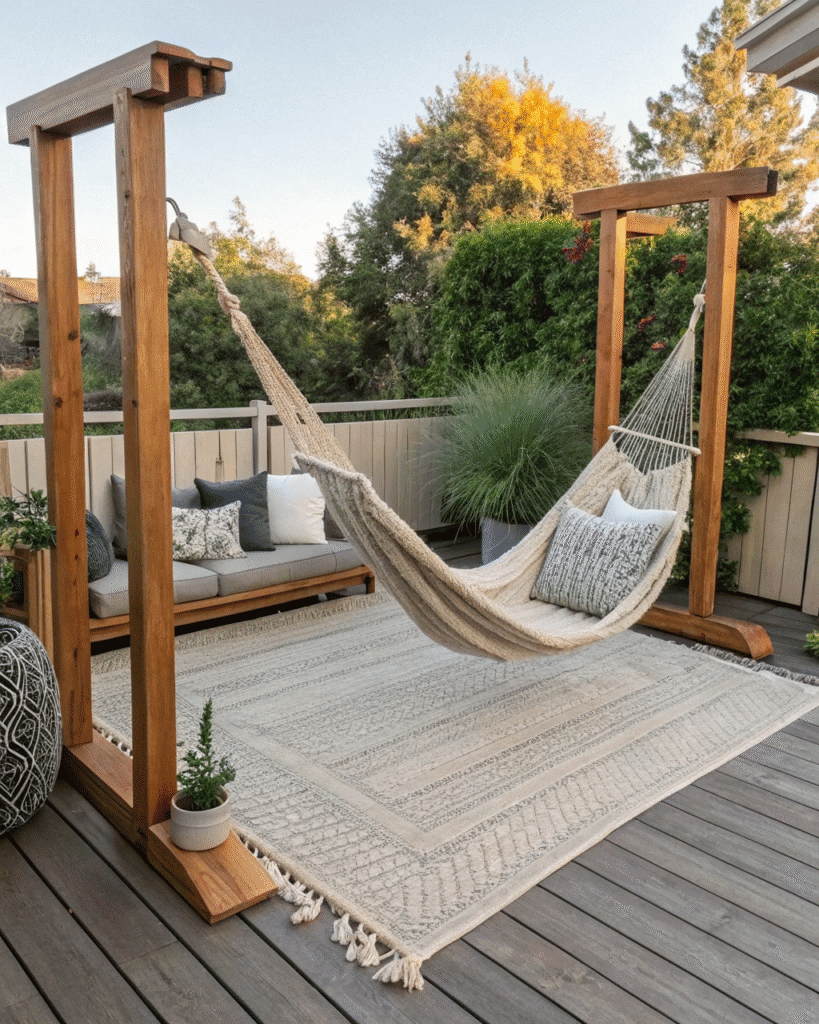
Layer a hammock over an outdoor rug to create a cozy lounging zone.
Pro Tip: Choose earthy tones or soft pastels for a peaceful outdoor palette.
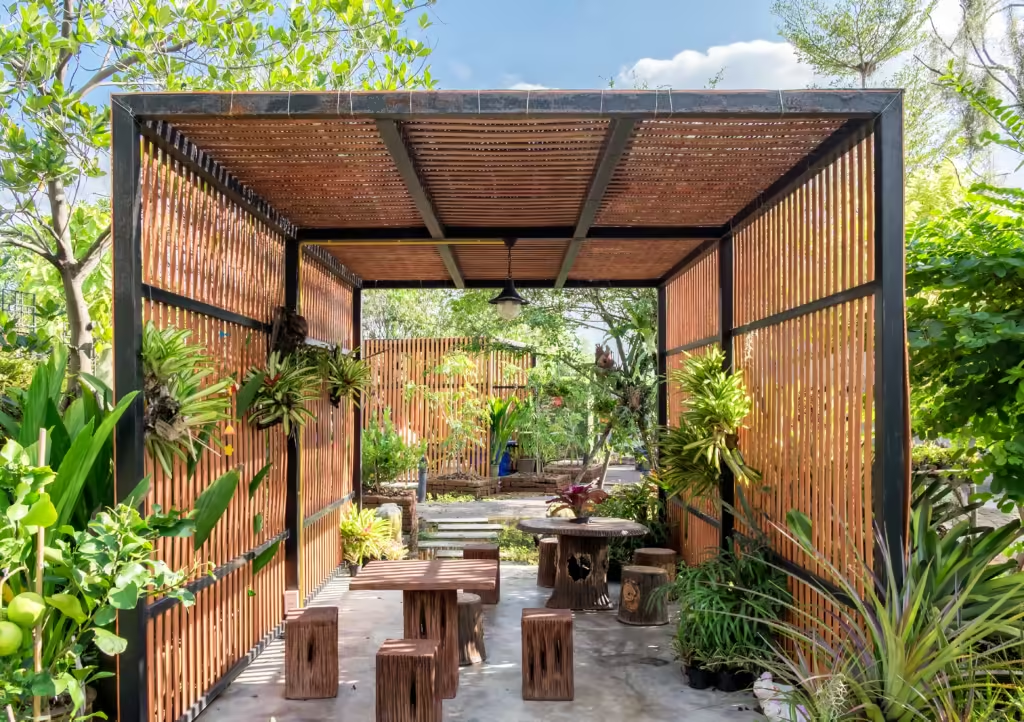
9. Hammock Under a Pergola
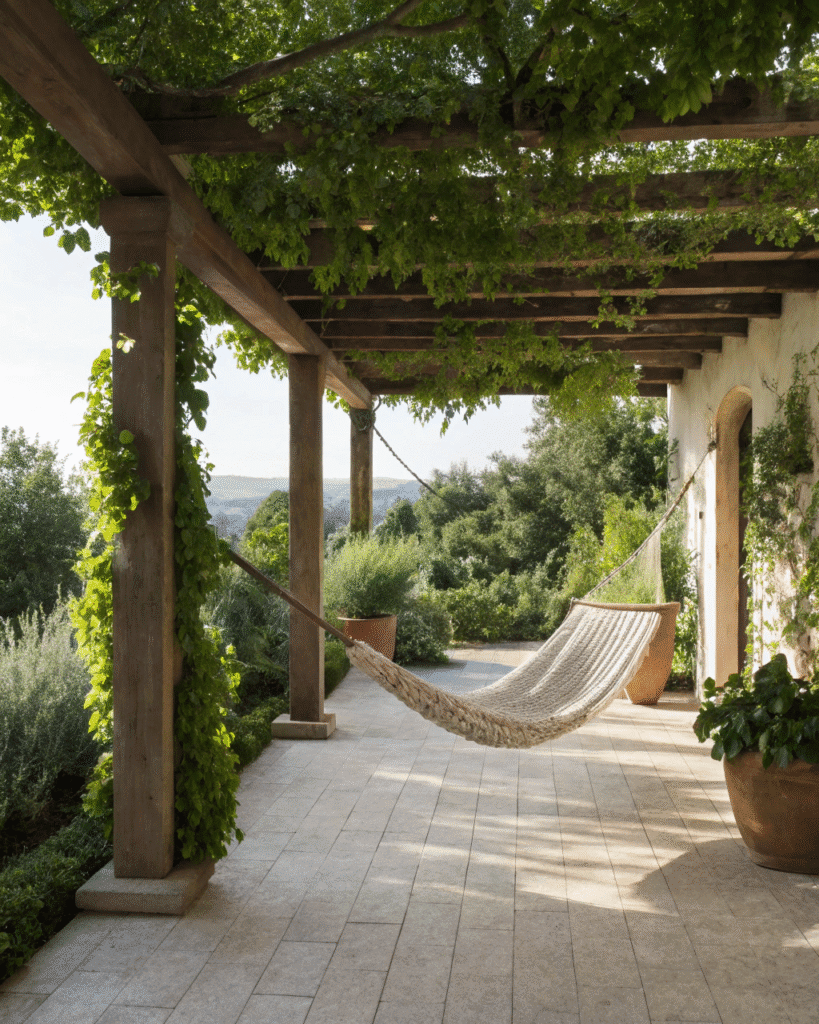
Hanging a hammock under a pergola adds shade and structure to your space.
Pro Tip: String fairy lights along the beams for a magical evening look.
10. Hammock Between Posts
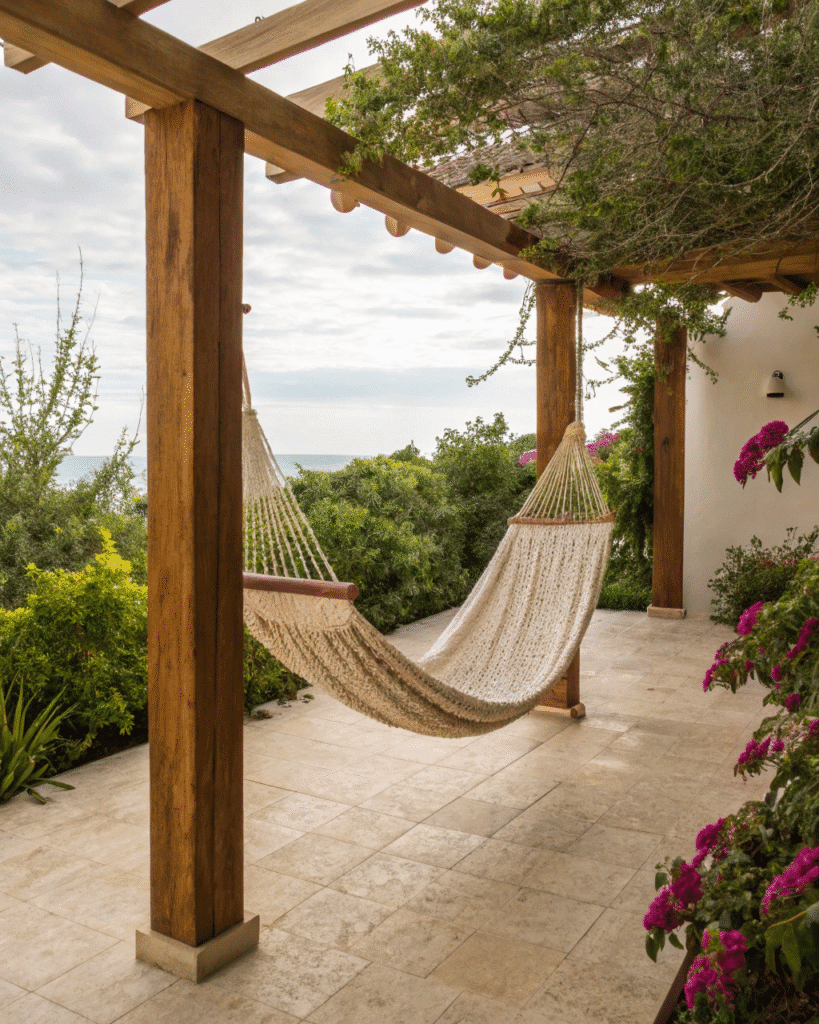
Install two wooden or metal posts for a sturdy, dedicated hammock area.
Pro Tip: Add climbing plants around the posts to create a lush, natural feel.
11. Quilted Hammock
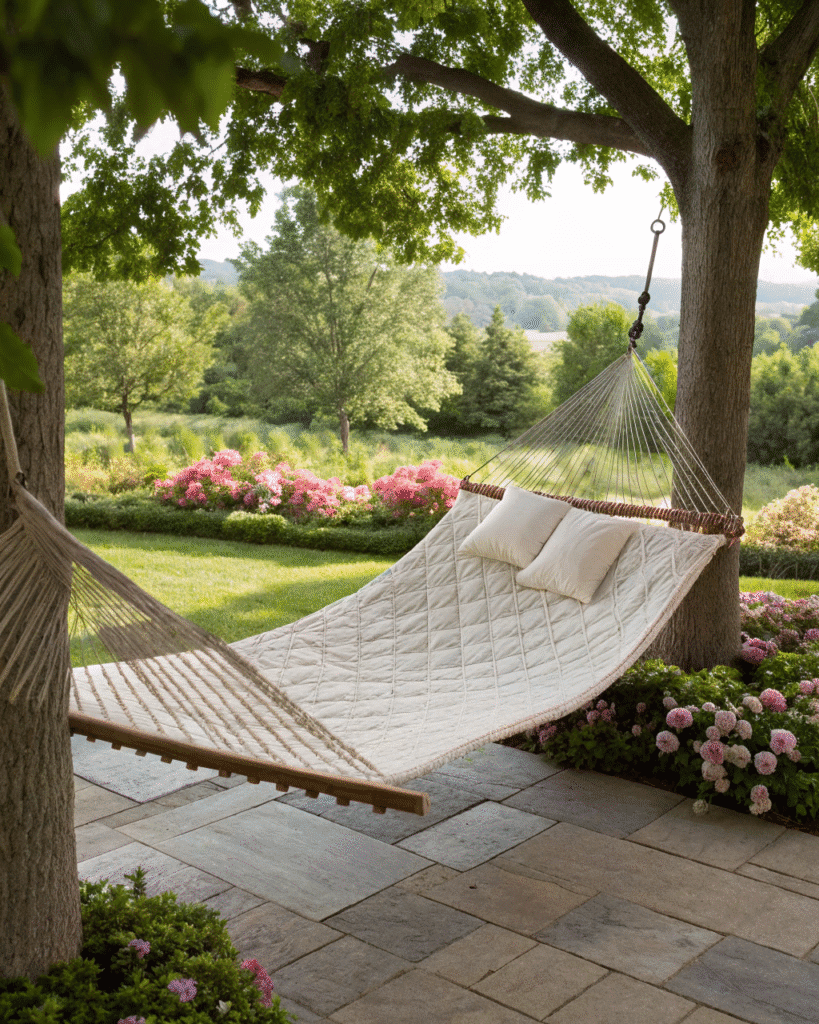
A quilted hammock offers extra comfort and a touch of elegance.
Pro Tip: Go for weather-resistant fabric to keep it soft and fresh all season.
12. Colorful Caribbean Hammock
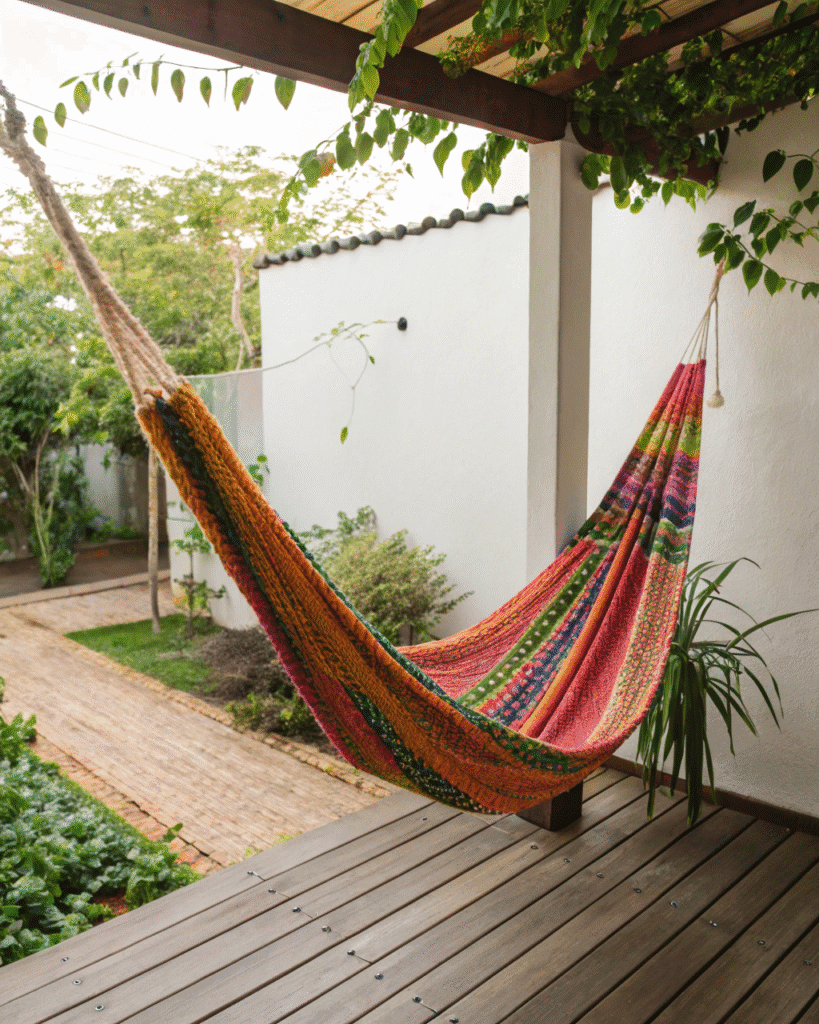
Bright woven hammocks add energy and vacation vibes to your patio.
Pro Tip: Keep surrounding decor neutral so the colors become the focal point.
Final Thoughts
A hammock on your patio is not just a piece of furniture. It is a standing invitation to stop and rest properly in the way that outdoor living at its best is supposed to encourage. The afternoons you spend in it reading, napping, watching the light change through the leaves overhead, those are the afternoons that make a patio worth having.
Pick the hammock setup that fits your space and your vision of a perfect slow afternoon, get the hanging hardware right, add a rug and a side table and a few cushions, and then use it as often as you possibly can. The garden will be there when you wake up. The afternoon is not in any particular hurry either.
Frequently Asked Questions
How far apart should hammock posts or trees be?
Most standard single and double hammocks require hanging points between twelve and fifteen feet apart for an optimal hang angle and comfort level. The specific hammock you purchase will have a recommended hanging distance specified by the manufacturer and that recommendation should take precedence over the general guideline. Always account for the fact that the hammock will stretch slightly under load which effectively shortens the distance between the attachment points.
Can I hang a hammock on my apartment balcony?
It depends on the size of the balcony and the structural capability of the walls or railings. A hammock chair on a single ceiling hook is the most practical hammock solution for a standard apartment balcony. Full horizontal hammocks require more horizontal space than most balconies provide. Always consult with your building management before drilling into balcony walls or ceilings for hammock hardware as most apartment leases have restrictions on structural modifications.
How do I keep from flipping out of a hammock?
Getting in and out of a hammock safely is a learned skill that becomes instinctive with practice. Always approach a hammock from the side rather than the end, sit down in the center first and then swing your legs up rather than trying to jump or lie into it from standing. Spreader bar hammocks are significantly more stable and flip-resistant than gathered-end designs because the spreader bars keep the hammock open and flat rather than allowing it to roll.
What is the most comfortable hammock style?
Brazilian and Mayan woven fabric hammocks consistently rate highest for all-day comfort because the tight woven fabric molds to the body shape of the occupant, distributes weight evenly across the full surface, and has no pressure points from rope patterns or seams. For maximum comfort, look for a hammock that is wide enough to allow you to lie at a slight diagonal angle to the centerline, which produces a much flatter and more comfortable lying position than lying straight along the centerline.
How do I store a hammock for winter?
Clean the hammock thoroughly before storing by rinsing with fresh water and allowing to dry completely in the sun. Roll or loosely fold the hammock rather than compressing it tightly which can damage fibers and distort the weave. Store in a breathable fabric bag or pillowcase rather than a sealed plastic bag which can trap residual moisture and cause mildew. Keep in a cool dry indoor location away from direct sunlight which can fade and degrade fabric even in storage.