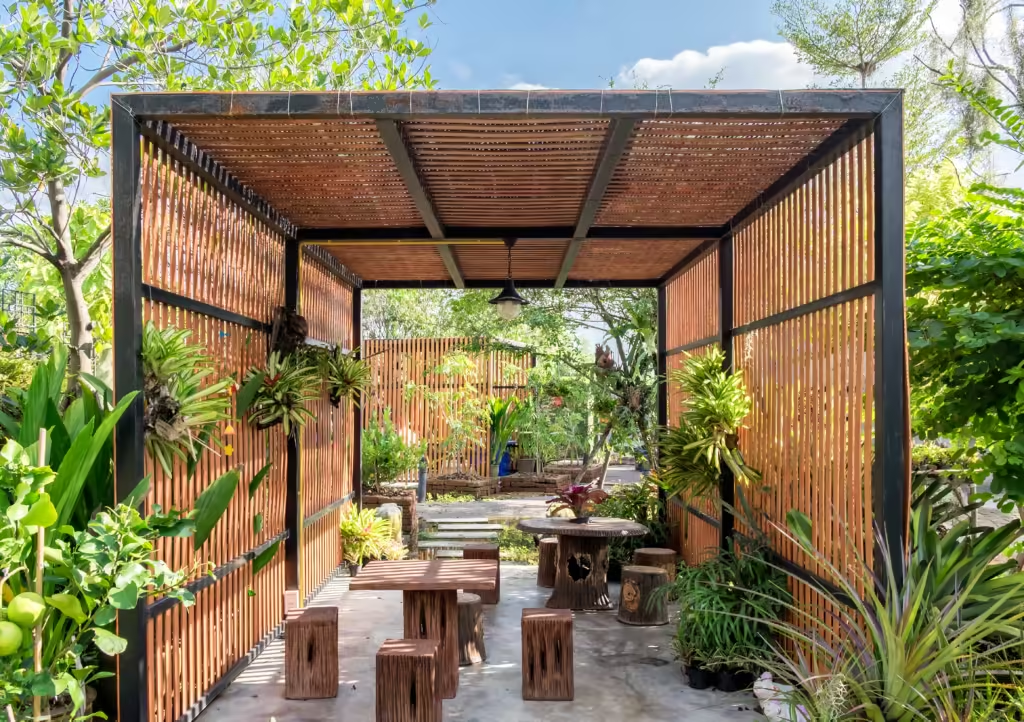
13+ Patio Kitchen Garden Ideas for Fresh Cooking
There is a particular satisfaction that comes from cooking with something you grew yourself. It is not just the flavor, though the flavor genuinely is better. It is the connection between the garden and the kitchen, the sense that you are participating in the full cycle of growing and eating rather than simply consuming what someone else grew somewhere far away. A patio kitchen garden makes that experience available to anyone, regardless of whether they have a dedicated vegetable garden, a yard, or anything more than a sunny balcony and a few good containers.
A kitchen garden on the patio is also one of the most practical garden setups possible because it puts your most frequently used plants exactly where you need them. Fresh herbs within arm’s reach of the grill. Salad leaves a few steps from the kitchen door. Cherry tomatoes that you can grab on the way through to the dining table. The proximity of a patio kitchen garden to your actual cooking is what separates it from a vegetable patch at the bottom of the garden that you have to remember to visit and harvest from.
Why a Patio Kitchen Garden Changes the Way You Cook
A kitchen garden on the patio does not just supply ingredients. It changes your relationship with cooking in ways that are difficult to fully appreciate until you have experienced them.
It makes you cook differently. When you have fresh basil, thyme, and rosemary growing a few feet from your grill, you use them constantly because they are there and they are free and they are at their best. You add a handful of fresh herbs to things you would never have bothered buying herbs for at the grocery store. Your cooking becomes more spontaneous, more fragrant, and more genuinely seasonal in a way that a jar of dried herbs in a kitchen cabinet never inspires.
Love Chic Living Club?
Add us as one of your preferred Google sources and discover more home decor, DIY, outdoor, and lifestyle inspiration from us.
It also connects you to the season in a way that supermarket shopping actively discourages. A patio kitchen garden tells you exactly what time of year it is through what is ready to harvest. The first spring lettuce, the summer abundance of tomatoes and basil, the autumn richness of squash and climbing beans, the winter hardiness of rosemary and sage. Cooking from your own patio garden grounds your kitchen in the actual season you are living in rather than the artificial seasonlessness of a refrigerated produce aisle.
The economic argument is also genuinely compelling. A single packet of basil from the grocery store costs as much as a healthy basil plant in a pot that will provide continuous harvests all summer. The same is true for most culinary herbs and many salad crops. The return on a modest investment in a patio kitchen garden measured in fresh produce over a season is significant.
What You Need to Start a Patio Kitchen Garden
Before you plant anything, getting the fundamentals right ensures that your patio kitchen garden thrives rather than simply survives.
Light Assessment
Sun is the single most important resource for a productive kitchen garden. Most food-producing plants require a minimum of six hours of direct sun daily to grow productively. Herbs, tomatoes, peppers, and most fruiting vegetables need full sun to perform at their best. Salad leaves, spinach, and some herbs like mint, parsley, and coriander tolerate and even prefer partial shade and can be grown successfully with three to four hours of direct sun.
Before you commit to any plants, spend a day observing exactly which parts of your patio receive direct sun and for how long. This observation will completely determine which plants will thrive in your specific space and which ones will struggle regardless of how well you care for them. Matching plant to light condition is the most important single decision in any kitchen garden setup.
You May Also Love



Soil and Compost
Container-grown kitchen garden plants are entirely dependent on the soil you give them because they cannot send roots in search of nutrients and moisture the way ground-planted crops can. Standard multipurpose potting compost is a reasonable starting point but a mix of multipurpose compost with added perlite for drainage and a slow-release granular fertilizer blended through it before planting gives kitchen garden plants a significantly better start.
For raised beds, a mix of topsoil, compost, and perlite in roughly a sixty-thirty-ten ratio creates a productive, free-draining growing medium that supports both ornamental and edible plants very well. Never use straight garden soil in containers or raised beds as it compacts, drains poorly, and harbors weed seeds and soil-borne diseases at much higher levels than purpose-made growing media.
Don't miss: 18+ Stunning Small Patio Ideas for Tiny Backyards →
Watering Consistency
Consistent moisture is more important than any other ongoing care factor for kitchen garden plants, particularly herbs and salad crops that bolt quickly when they experience water stress. Container plants on a sunny patio in summer may need watering daily or even twice daily during heat waves. Setting up a simple drip irrigation system connected to a timer is the single most effective thing you can do to improve the consistency of your watering and the health of your plants while reducing the daily time commitment of maintaining a patio kitchen garden.
Keep Exploring



The Best Herbs to Grow in a Patio Kitchen Garden
Herbs are the foundation of any patio kitchen garden because they are the most immediately useful, the most reliably productive in containers, and the most dramatic in terms of the difference between fresh and dried or shop-bought.
Basil is the summer herb that transforms a patio kitchen garden. Grown in a warm, sunny position in a generous container with consistently moist but well-drained soil, a healthy basil plant will provide continuous harvests of fragrant leaves all summer long for pasta, pizza, salads, and any dish that benefits from fresh herbal brightness. Pick from the tips regularly to prevent flowering and maintain the most productive and bushy growth habit.
Rosemary is the most structurally beautiful culinary herb and one of the most drought-tolerant, which makes it an ideal choice for a patio kitchen garden where watering consistency is sometimes difficult to maintain. It grows as a handsome evergreen shrub that suits the aesthetic of a patio as well as the functional needs of the kitchen and in a large enough container it will provide continuous harvests year after year with minimal care.
Thyme, oregano, and sage are the Mediterranean trio that form the flavor backbone of a huge range of cuisines and all three thrive in exactly the same hot, sunny, well-drained conditions that a sunny patio provides. Grouped together in individual pots or in a long shared trough, these three herbs create a beautiful aromatic display that earns its space on the patio both visually and practically.
Mint is one of the most useful herbs in the kitchen garden and one of the most vigorous growers. Kept in its own individual container to prevent it from overwhelming neighboring plants, a single mint plant will provide abundant harvests for drinks, sauces, tabbouleh, and a hundred other uses from spring through autumn. Spearmint and peppermint are the most versatile culinary varieties but Moroccan mint, apple mint, and chocolate mint all offer interesting flavor profiles worth exploring.
Chives are one of the easiest and most reliable herbs for a patio kitchen garden. They grow readily from seed or transplant, require minimal care, produce beautiful purple pompom flowers in early summer that are themselves edible and beautiful in salads, and provide a continuous harvest of mild onion-flavored leaves that suit eggs, salads, soups, and almost any savory dish throughout the season.
The Best Vegetables and Fruits for a Patio Kitchen Garden
Beyond herbs, a well-chosen selection of vegetables and fruits can turn a patio kitchen garden into a genuinely productive food-growing space.
Cherry tomatoes are the most rewarding patio kitchen garden crop available. Compact varieties like Tumbling Tom, Balcony, and Sweet Million are specifically bred for container growing and produce extraordinary quantities of intensely flavored fruit from a single plant in a generously sized container. The flavor difference between a homegrown cherry tomato picked ripe from the vine and a supermarket cherry tomato is significant enough that anyone who grows their own for a season is typically committed to doing it every year thereafter.
Salad leaves are the most space-efficient kitchen garden crop per harvest. Cut-and-come-again salad mixes, individual lettuce varieties, rocket, spinach, and Asian leaves like pak choi and mizuna all grow quickly in shallow containers and can be harvested continuously by cutting individual leaves rather than the whole plant. A forty-centimeter window box of mixed salad leaves in a partially shaded position will provide fresh salad greens for a household several times a week through spring and autumn.
Climbing beans, including both runner beans and French climbing beans, are extraordinarily productive kitchen garden crops for a patio because they grow vertically rather than spreading horizontally, which means they produce a large amount of food from a small ground footprint. Trained up a bamboo wigwam in a deep container or a raised bed, a single planting of climbing beans will produce abundant harvests of pods all summer with regular picking encouraging continuous new flower and pod production.
Strawberries are perfectly suited to container growing and the combination of beautiful flowers, ornamental fruit, and exceptional flavor makes them one of the most desirable patio kitchen garden plants. Alpine strawberries are particularly well suited to smaller containers and partially shaded positions while standard garden strawberry varieties need full sun and a generous container for the best fruit production.
These 13 ideas cover every approach to patio kitchen gardening from a simple wall of herb pots to a full edible landscape, so you can build the setup that fits your space, your cooking style, and your level of gardening ambition.
1. Herb Planter Wall
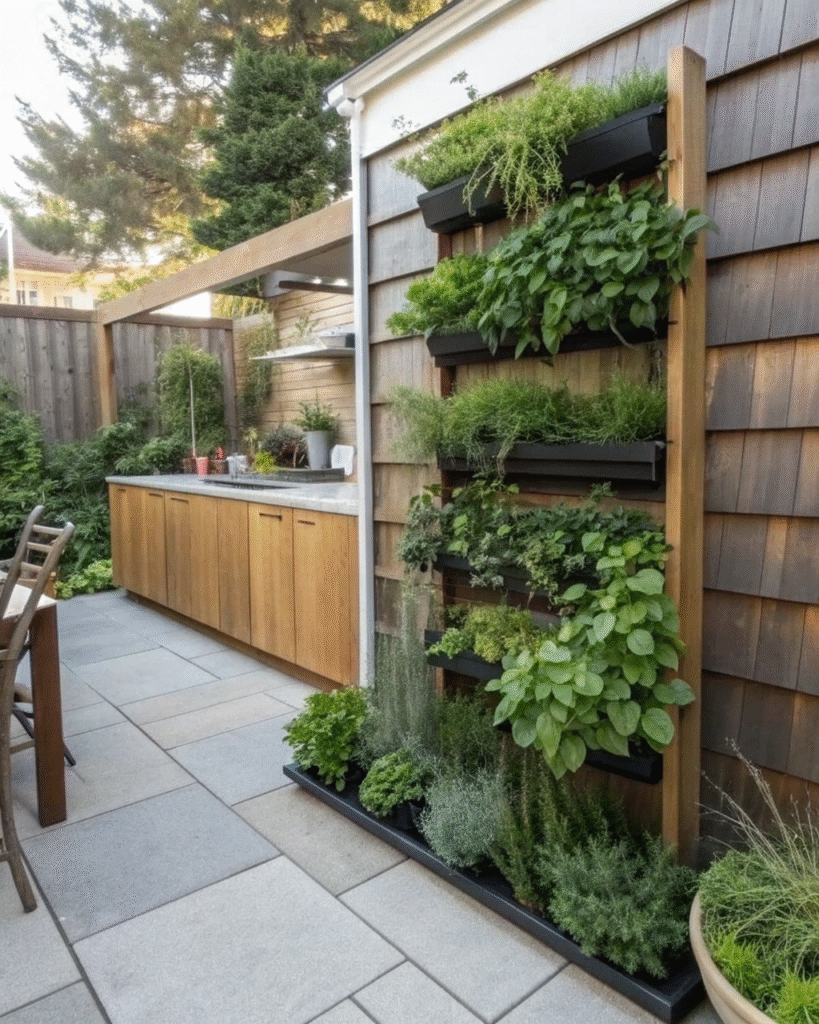
Install a vertical planter wall to grow fresh herbs close to your kitchen space.
Pro Tip: Mix fragrant herbs like basil, mint, and thyme for easy harvesting and variety.
2. Raised Garden Beds
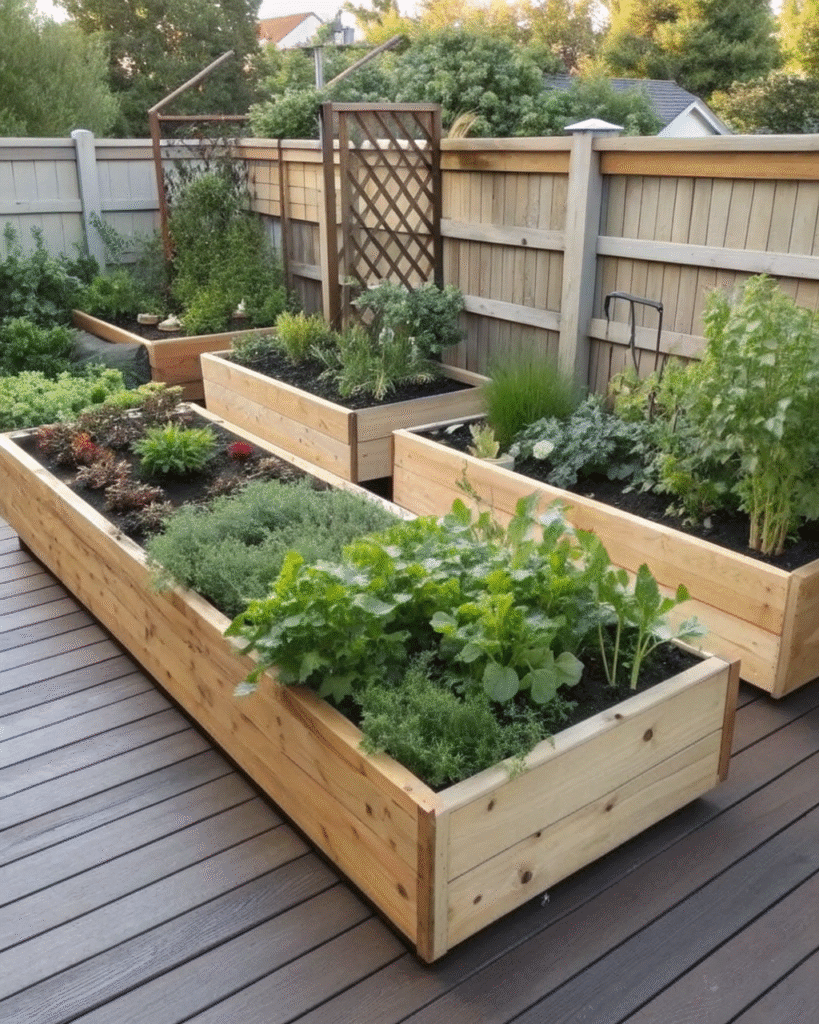
Raised beds make planting, watering, and harvesting simple and comfortable.
Pro Tip: Use untreated wood or metal planters and fill them with nutrient-rich soil for healthy growth.
3. Container Gardening
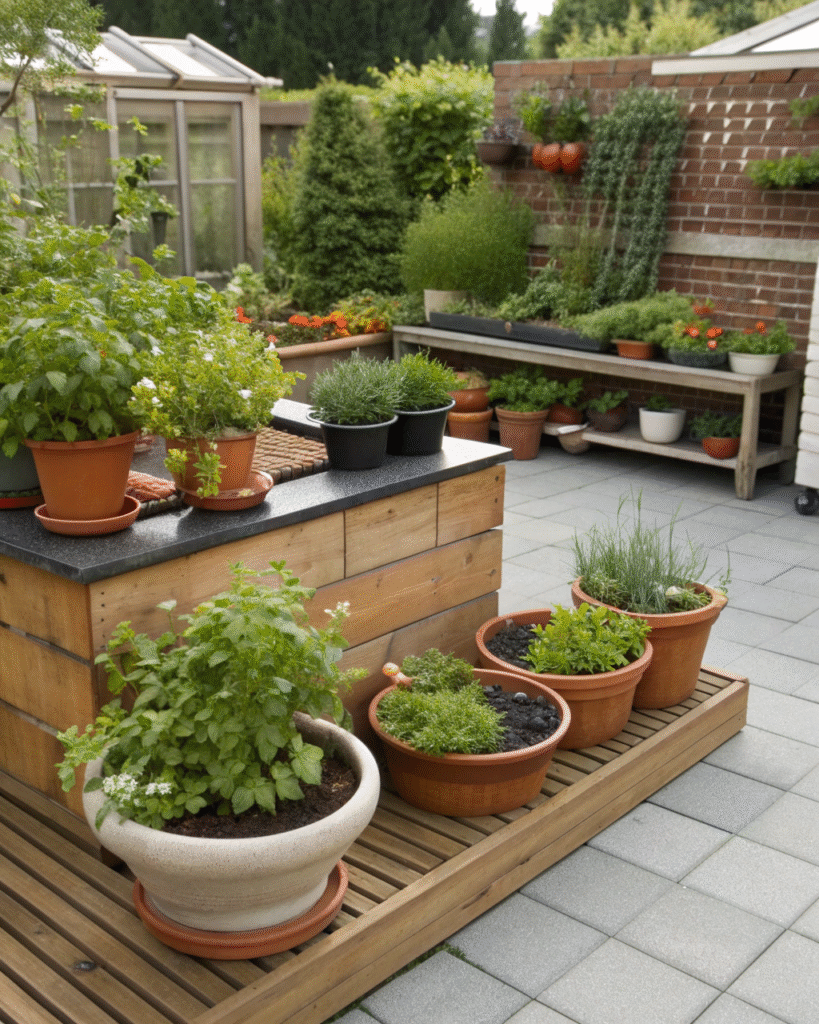
Use pots and planters of different sizes for flexible planting arrangements.
Pro Tip: Choose lightweight containers with good drainage to move them easily when needed.
4. Tiered Garden Shelf
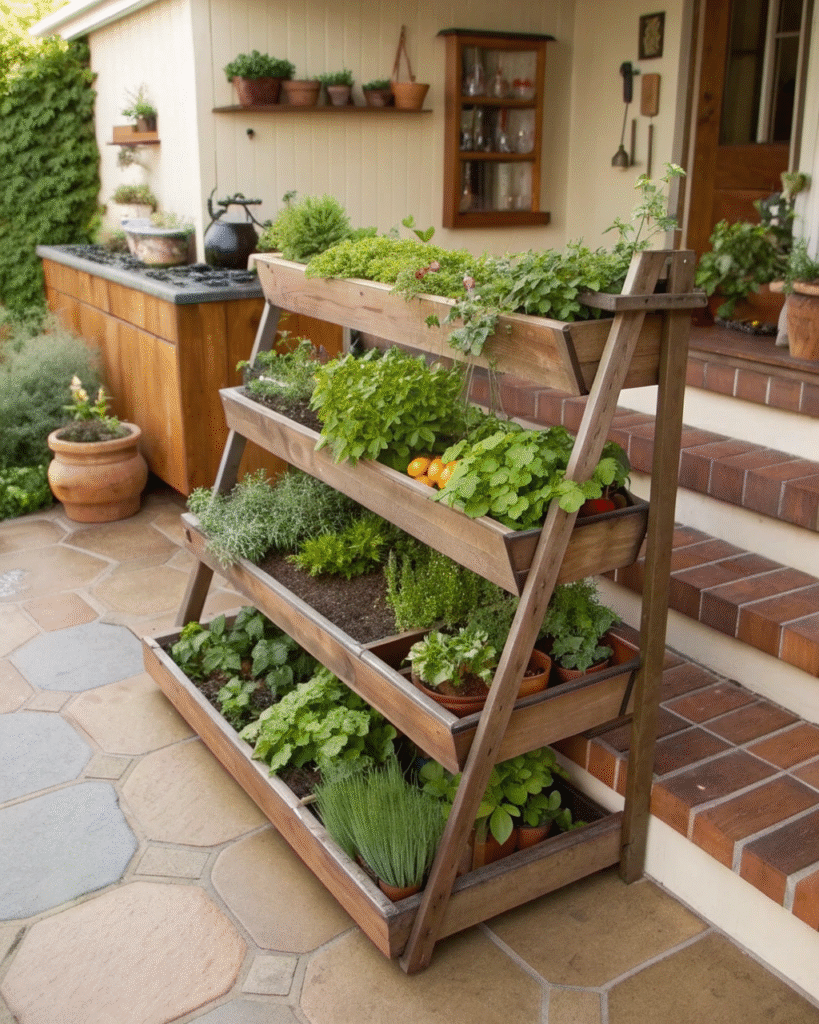
A multi-level shelf helps you maximize space while keeping plants organized.
Pro Tip: Place sun-loving herbs like rosemary on the top tier and shade-tolerant ones below.
5. Hanging Herb Baskets
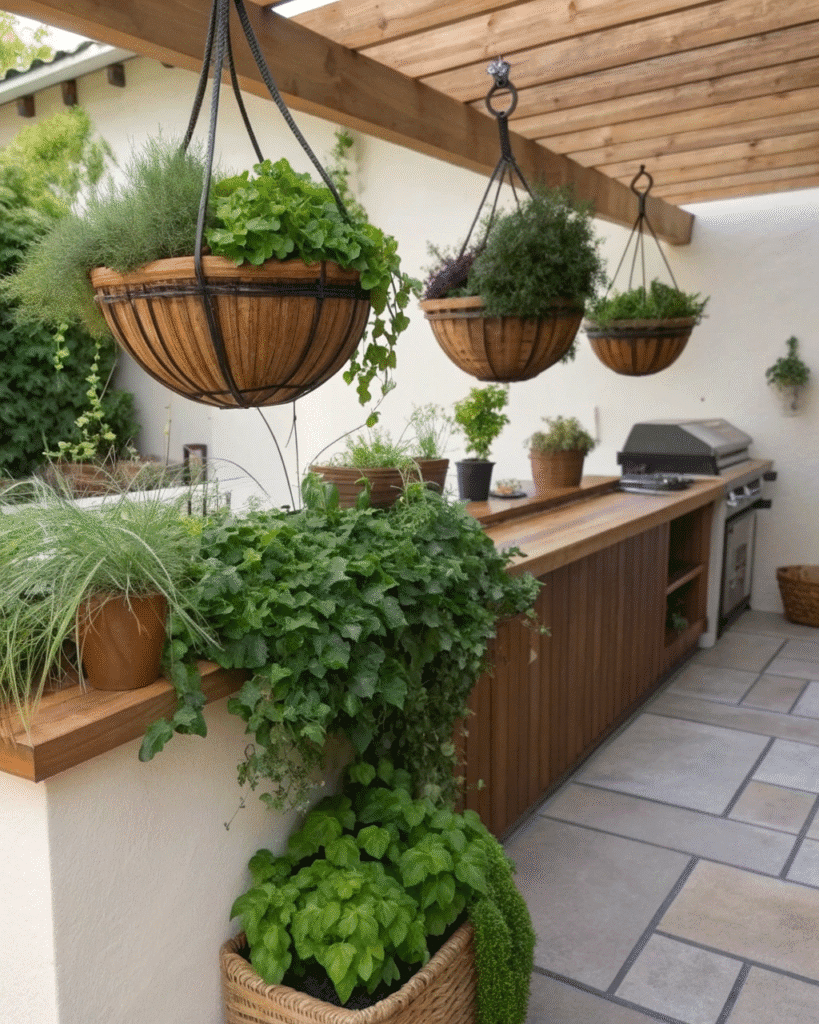
Hanging baskets save floor space and look charming over a kitchen counter or bar.
Pro Tip: Water regularly and trim herbs often to encourage fuller growth.
6. Potted Citrus Trees
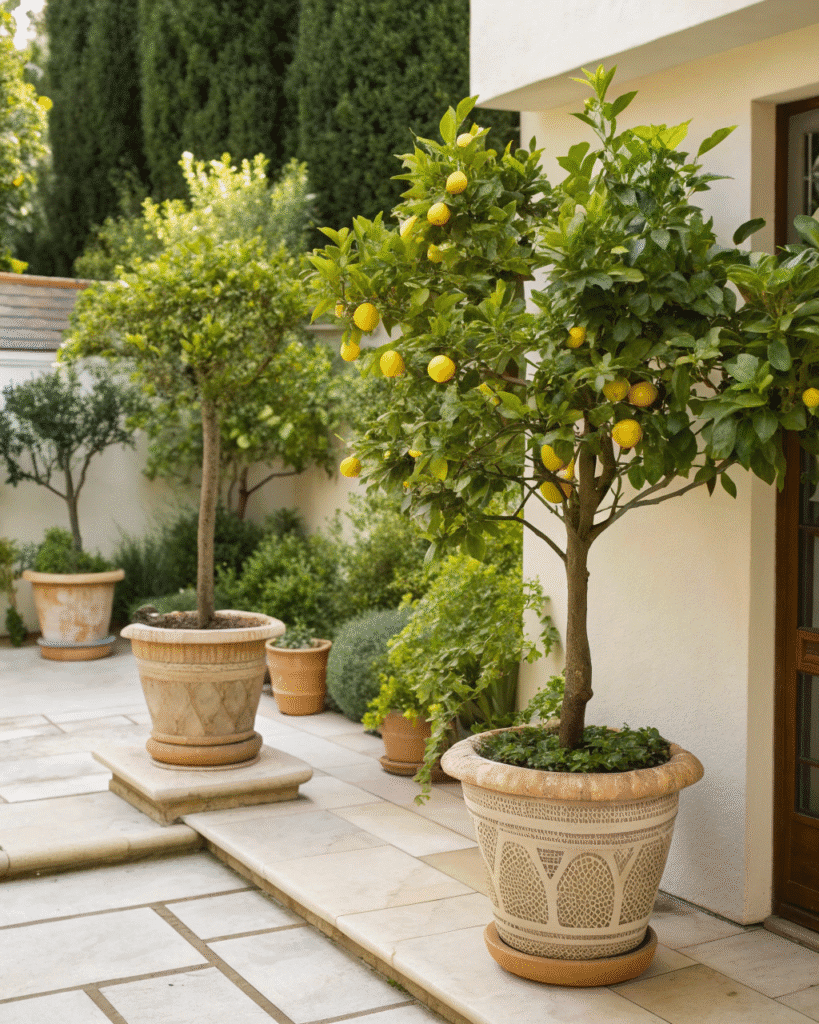
Small lemon or lime trees add a burst of freshness and fragrance to your patio.
Pro Tip: Choose dwarf varieties that thrive in containers and full sun.
7. Edible Flower Planters
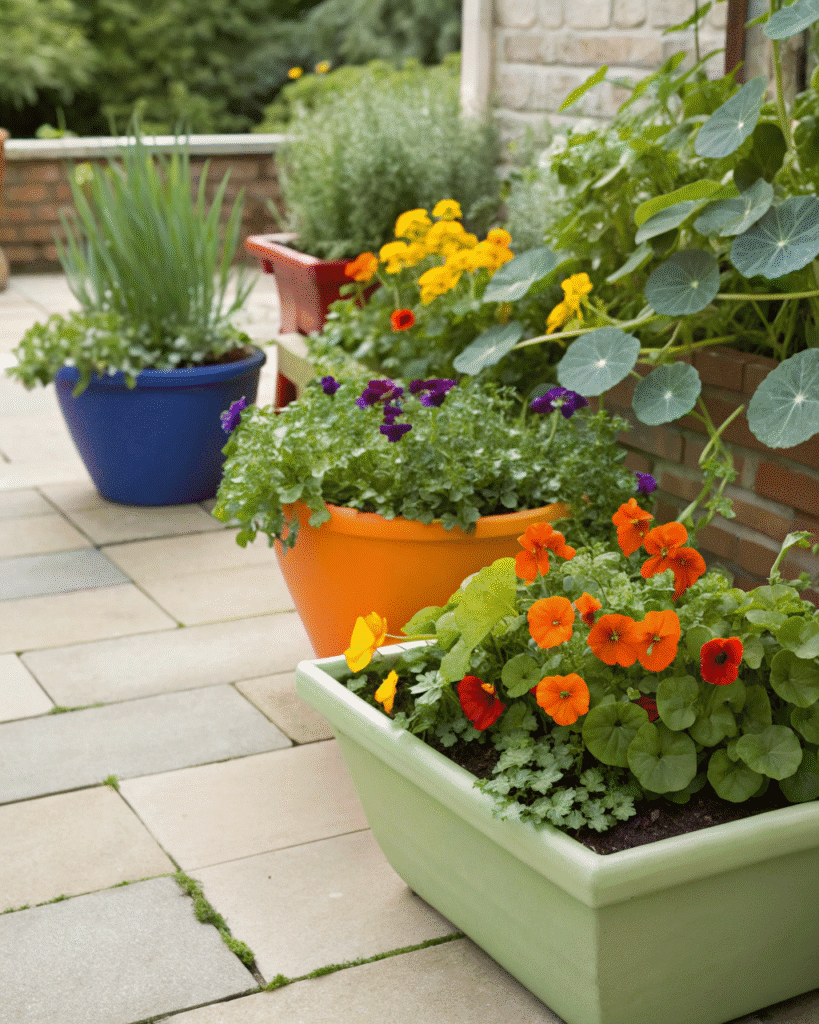
Grow edible flowers like nasturtiums or pansies to add color and flavor to dishes.
Pro Tip: Mix them with herbs for a vibrant and practical mini garden.
8. Built-In Counter Garden
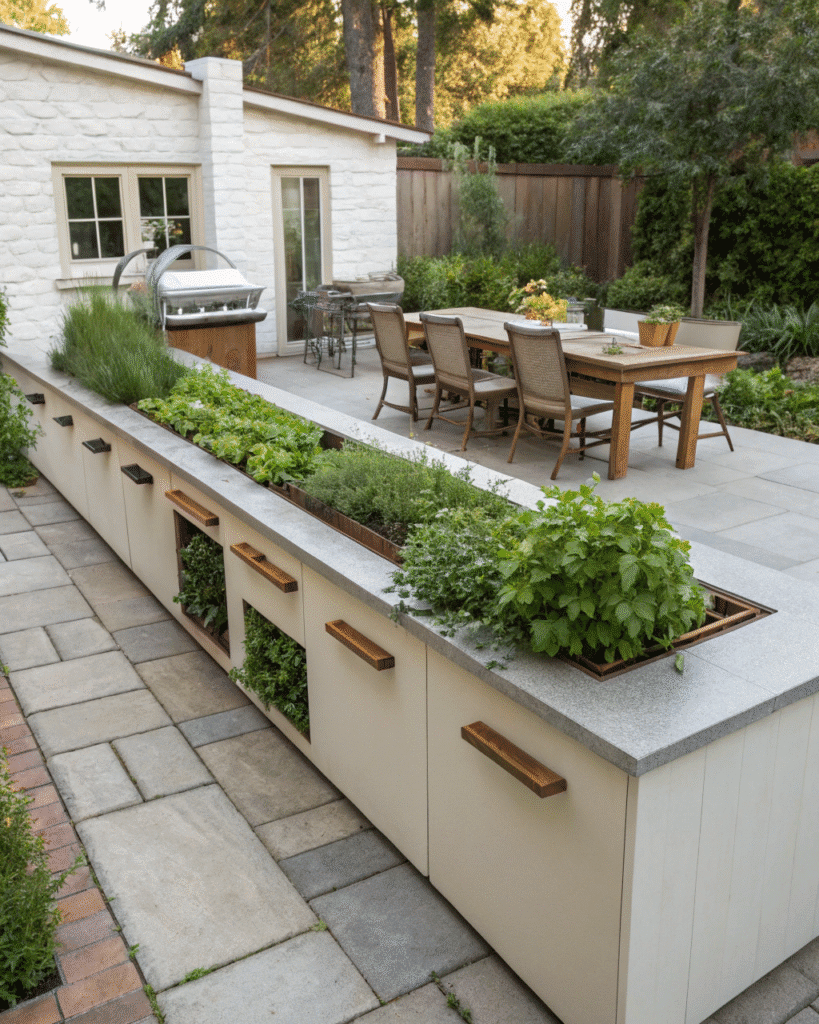
Integrate small planter boxes into your outdoor countertop for easy access while cooking.
Pro Tip: Plant fast-growing herbs that can handle frequent cutting and replanting.
9. Vertical Pipe Garden
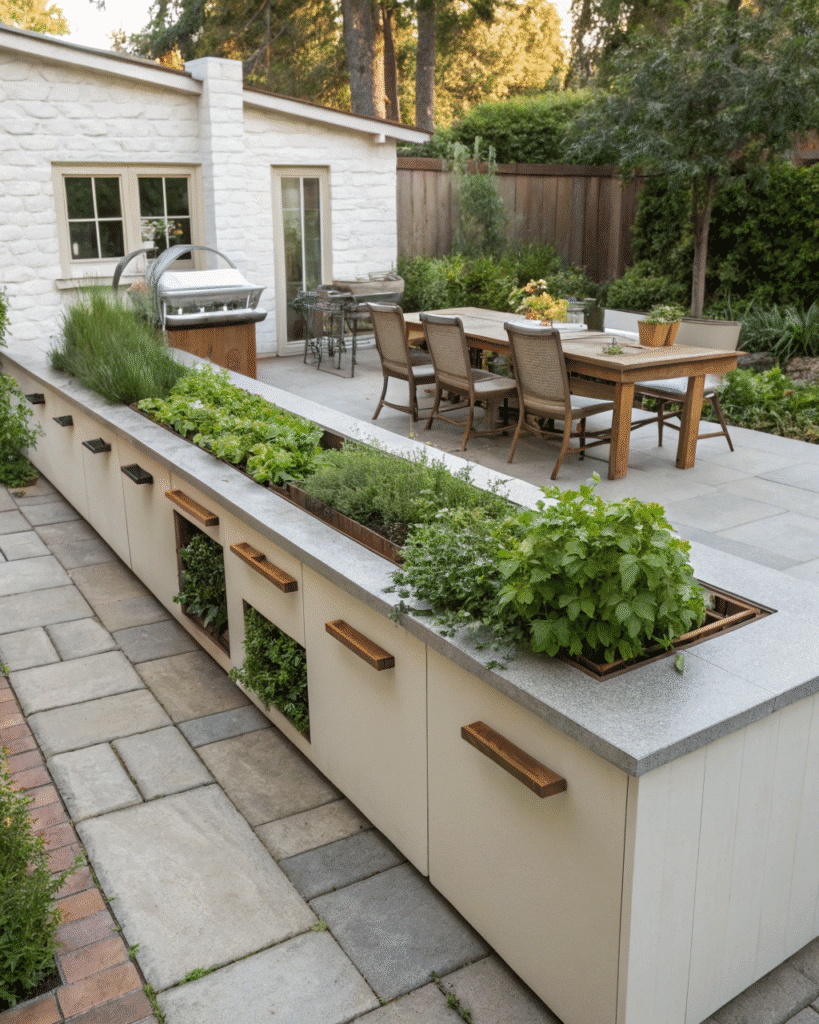
Use vertical PVC pipes or recycled containers for a creative garden wall.
Pro Tip: Drill holes for drainage and space plants evenly to ensure proper airflow.
10. Greenhouse Corner
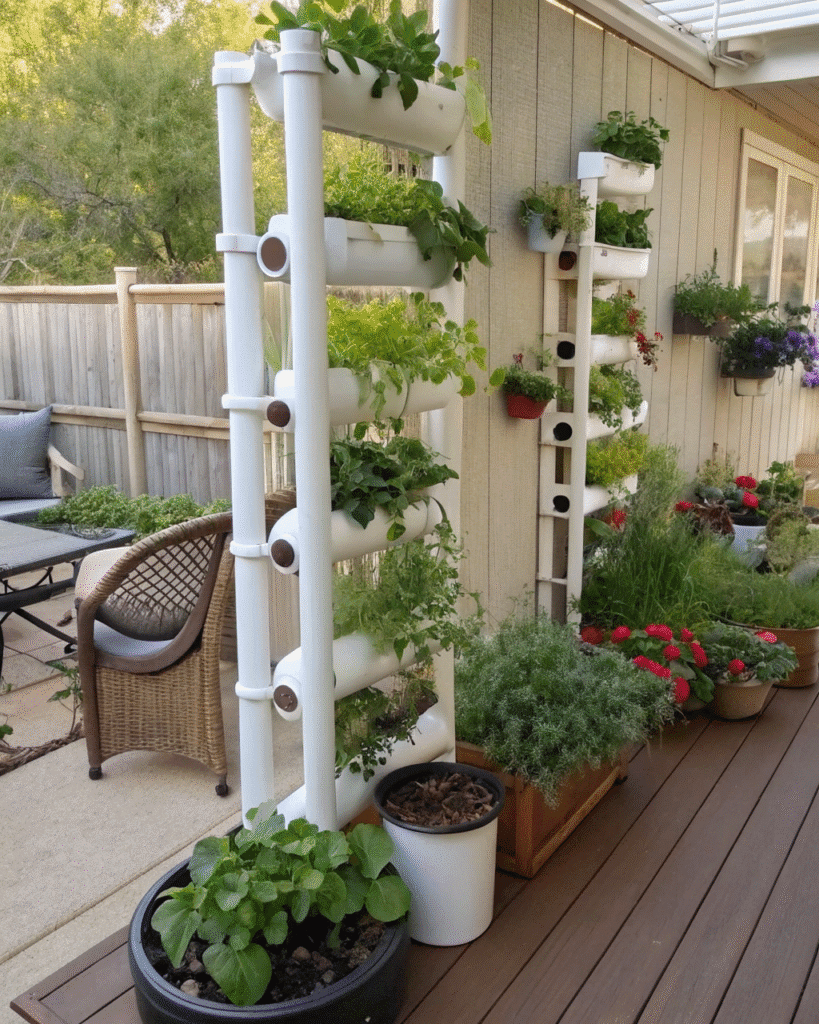
Add a small glass or polycarbonate greenhouse to extend your growing season.
Pro Tip: Use it for delicate herbs and seedlings that need extra warmth and care.
11. Salad Garden Section
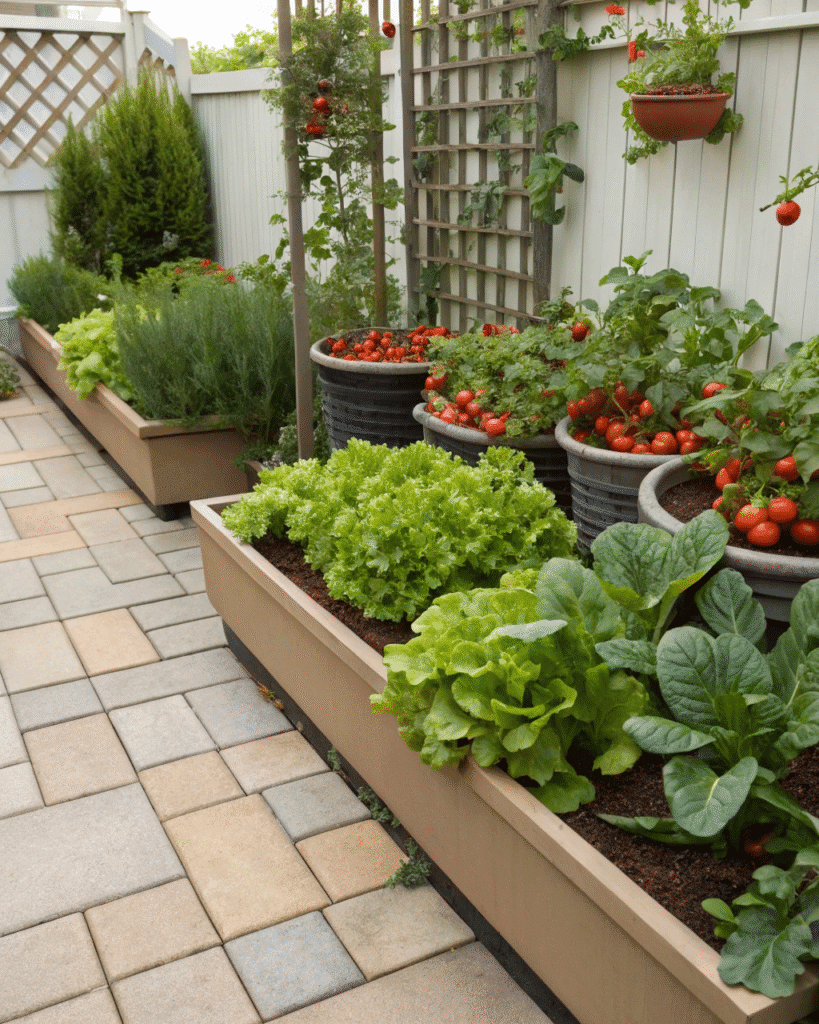
Grow lettuce, spinach, and cherry tomatoes for quick, fresh salads.
Pro Tip: Harvest smaller leaves regularly to encourage new, tender growth.
12. Aromatic Plant Zone
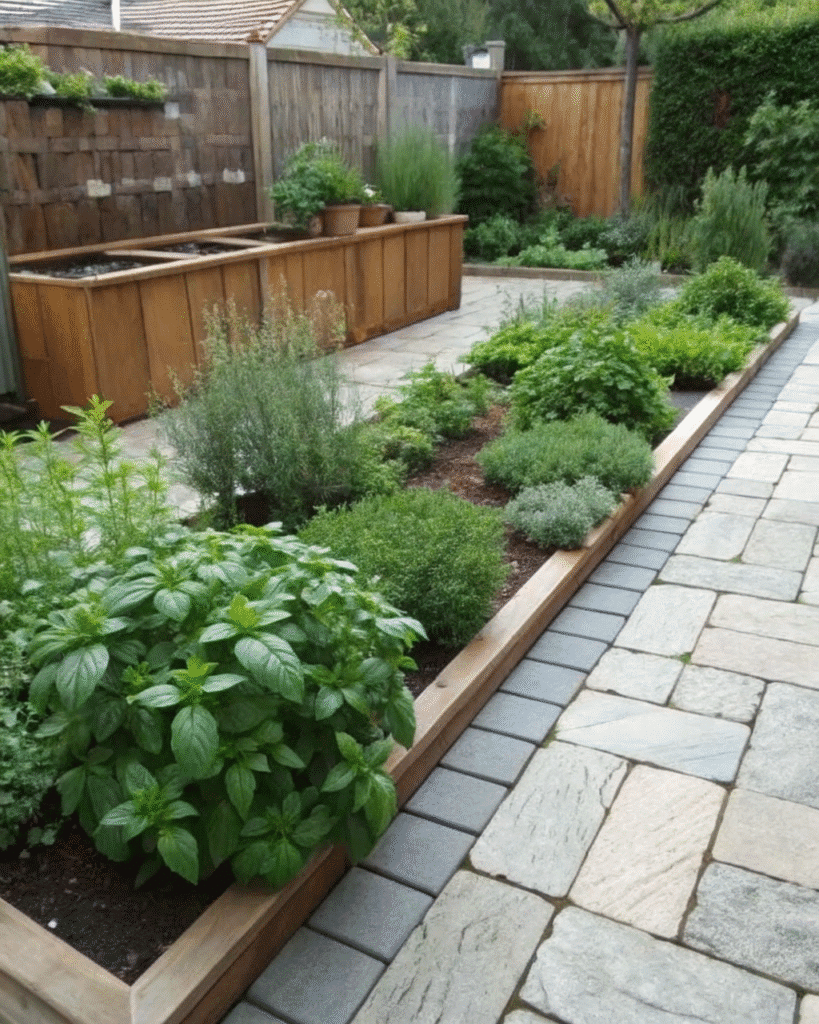
Dedicate one area to aromatic herbs that boost the ambiance and your recipes.
Pro Tip: Combine lavender, sage, and mint for a relaxing scent and useful kitchen ingredients.
13. Companion Planting
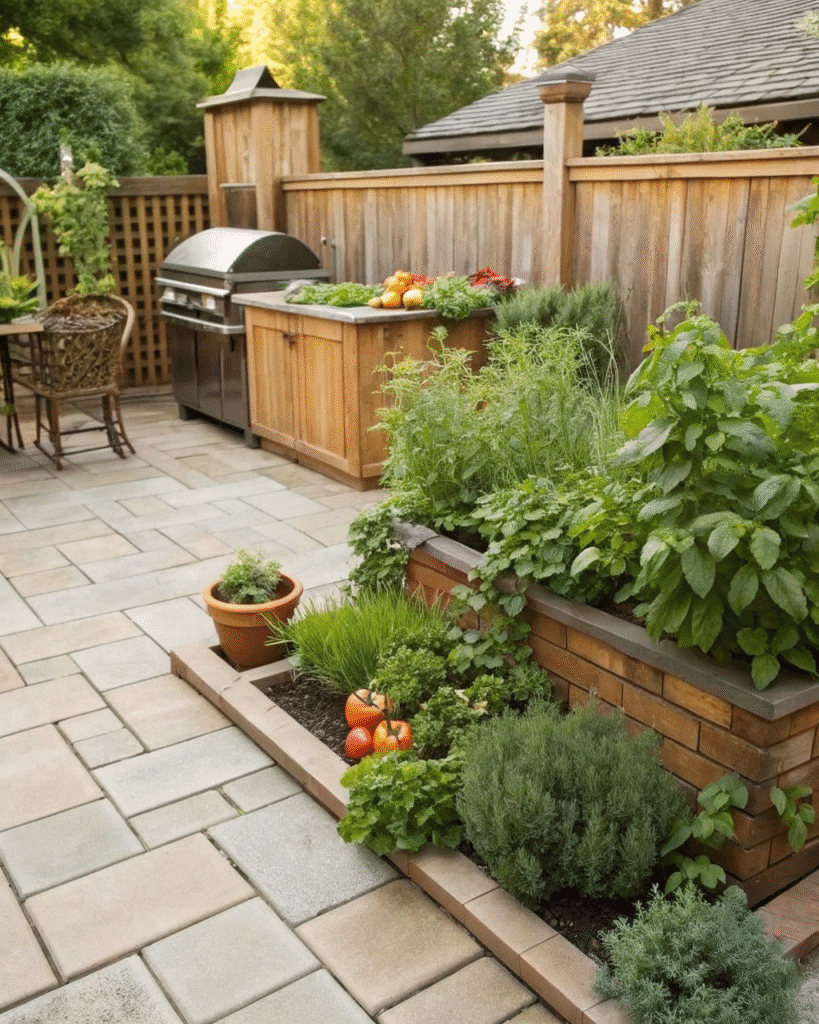
Pair compatible herbs and vegetables to promote natural growth and repel pests.
Pro Tip: Try basil near tomatoes or rosemary near beans for better yield and flavor.
Final Thoughts
A patio kitchen garden is not about growing all your own food. It is about having the right food growing in the right place, close enough to your cooking to actually change how you cook and what you cook with every single day.
Start with the herbs you use most. Get them growing well and harvesting them regularly. Then add one or two vegetable crops that genuinely excite you. Let the garden grow with your confidence and your cooking ambition from there. By the end of your first season you will have a growing list of things you cannot imagine cooking without and a patio that smells as good as anything you will cook in it.
Frequently Asked Questions
What are the easiest herbs to grow for cooking on a patio?
Chives, mint, rosemary, thyme, and basil are the five easiest and most reliably productive culinary herbs for patio container growing. Chives and mint are nearly indestructible. Rosemary and thyme are extremely drought-tolerant and require minimal attention once established. Basil is more demanding about warmth and consistent moisture but rewards that attention with abundant harvests of the most universally useful fresh herb in any kitchen.
How much sun does a patio kitchen garden need?
Most productive kitchen garden plants need a minimum of six hours of direct sun per day. Fruiting crops like tomatoes, peppers, and cucumbers need the most sun and perform best with eight or more hours. Leafy crops like salad leaves, spinach, and some herbs like parsley, coriander, and mint tolerate partial shade and can grow productively with three to four hours of direct sun. A north-facing patio with no direct sun is not suitable for most kitchen garden crops, though salad leaves and mint will manage in bright indirect light.
Can I grow a kitchen garden on a shaded patio?
A partially shaded patio, meaning three to four hours of direct sun daily, can support a productive kitchen garden of shade-tolerant crops. Salad leaves, spinach, rocket, mint, parsley, coriander, chives, and some Asian vegetables like pak choi all grow well in partial shade. A fully shaded patio with no direct sun is genuinely limiting for food production but some salad leaves, mint, and parsley will manage in bright indirect light if you adjust your expectations about yield accordingly.
How do I keep pests off patio kitchen garden plants?
Regular inspection of plants for early signs of infestation is the most effective pest management strategy for a patio kitchen garden. Catching aphids, spider mites, and caterpillars early, before populations build, prevents the kind of serious damage that requires chemical intervention. A strong blast of water from a hose removes aphid colonies from stems effectively. Companion planting with nasturtiums, marigolds, and chives deters many common garden pests naturally. For persistent infestations, insecticidal soap spray is effective against soft-bodied pests like aphids and whitefly without leaving harmful residues on edible crops.
When should I start a patio kitchen garden?
In most of the United States, the best time to start a patio kitchen garden is after the last frost date for your specific USDA hardiness zone, which ranges from late February in the warmest southern regions to late May in the coldest northern ones. Hardy crops like salad leaves, spinach, chives, and peas can be planted out several weeks before the last frost date. Tender crops like tomatoes, basil, peppers, and cucumbers should not go outside until nighttime temperatures reliably stay above 50 degrees Fahrenheit as they are damaged by cold temperatures even without frost.