15+ Urban Balcony-to-Deck Transformations That Feel Expansive
A small urban balcony does not have to feel like a small urban balcony.
With the right approach, even the most compact outdoor space can feel like a proper deck, somewhere you actually want to spend time, not just somewhere you step out to briefly and then go back inside.
These ideas will show you how to transform your balcony into a space that feels significantly bigger, more comfortable, and more like a real outdoor room than you ever thought possible.
Why Small Balconies Feel Small and How to Fix It
Before choosing any furniture or accessories, it helps to understand why small balconies feel limiting and what design decisions actually make a difference to the perceived size of the space.
Love Chic Living Club?
Add us as one of your preferred Google sources and discover more home decor, DIY, outdoor, and lifestyle inspiration from us.
The Floor Makes the Biggest Difference
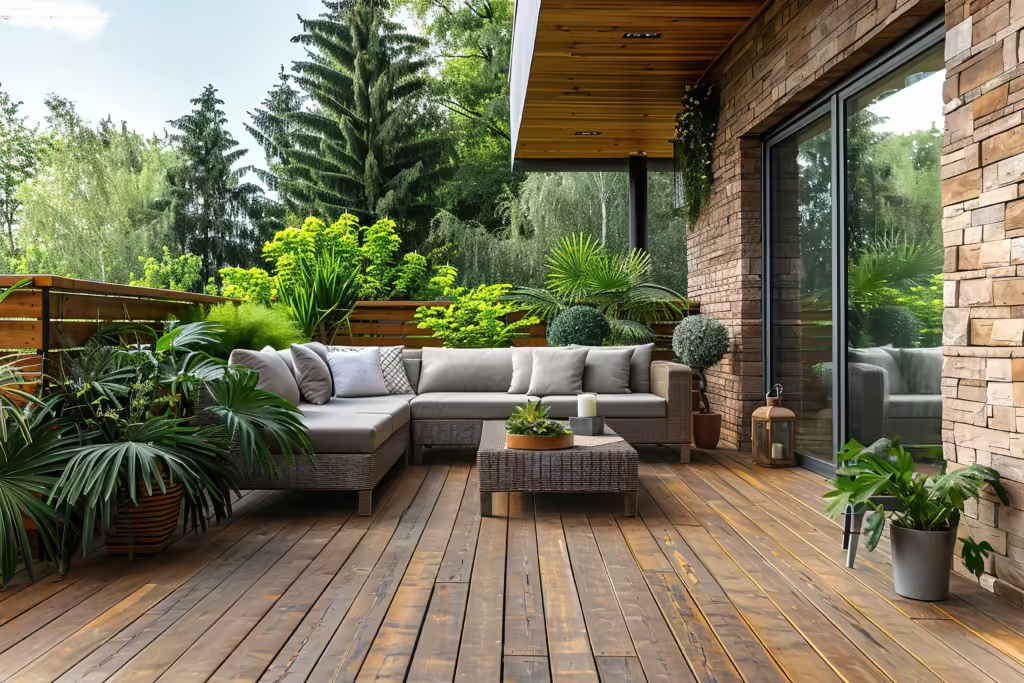
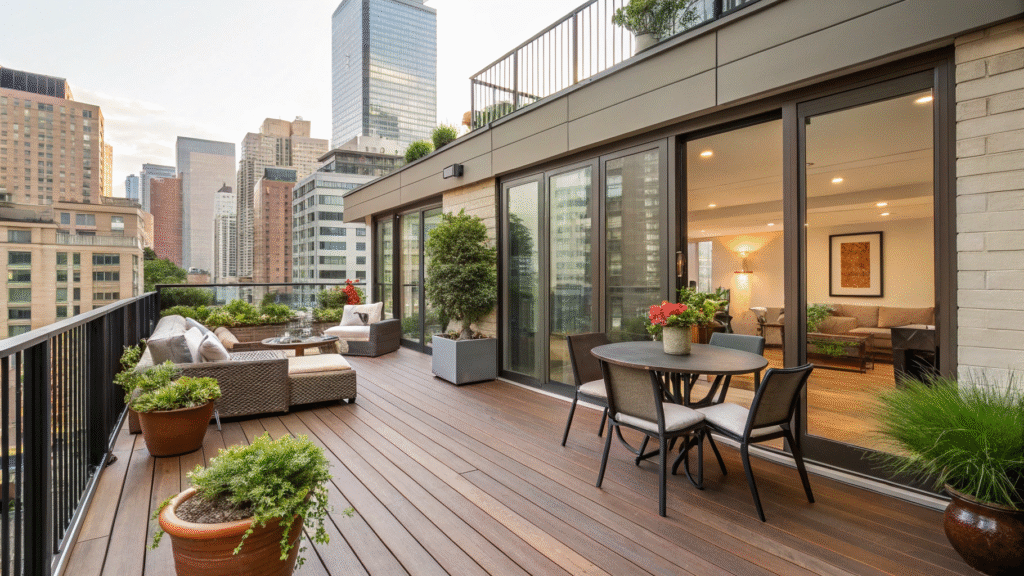
The single biggest factor in how large a balcony feels is what is on the floor. A bare concrete balcony floor looks exactly like what it is, a small concrete slab. The same floor covered with warm timber deck tiles or pale stone-effect porcelain looks completely different. It looks like a considered outdoor space rather than an afterthought, and that shift in character makes it feel significantly larger and more welcoming even before any furniture is added.
Visual Clutter Shrinks the Space
On a small balcony, every object is visible from every other point in the space simultaneously. Too many items, too many colors, too many different materials, create visual noise that makes the space feel even smaller and more cramped than it actually is. The most successful small balcony transformations are always edited ones. Fewer pieces, better chosen, in a consistent palette, always beat a crowded collection of individually attractive items.
The Railing Defines the Visual Boundary
The railing of a balcony is one of the most important design elements because it is the physical boundary between the balcony and the city beyond. A solid or visually heavy railing closes the balcony in and makes it feel like a box. A glass panel railing, a cable railing, or a widely spaced railing opens the balcony to the view beyond and makes the space feel like part of a much larger visual field. If you have any ability to change or upgrade the railing, it will have a greater impact on the perceived size of the space than almost anything else you can do.
The Connection to Indoors Matters
A balcony that flows naturally from the interior of the apartment or home, with a matching or complementary floor tone, a door that opens fully, and furniture that relates to the indoor style, feels like an extension of the living space rather than a separate, smaller space. This connection is one of the most powerful tools for making a small balcony feel expansive and it costs very little to achieve through thoughtful material and color choices.
You May Also Love
Balcony Load and Safety Considerations
Before making any structural changes or adding significant weight to a balcony, there are important practical considerations to address.
Check the Load Limit
Every balcony has a maximum load capacity and it is essential to know what this is before adding heavy furniture, large planters, or structural elements like deck tile systems. Load limits for residential balconies in the US typically range from 40 to 60 pounds per square foot but this varies by building age and construction type. Your building management or a structural engineer can confirm the load limit for your specific balcony. Heavy stone or ceramic planters, timber deck tile systems, and large furniture all add significant weight and must be within the balcony’s rated capacity.
Check Your Lease or Building Rules
If you rent your apartment, check your lease before making any changes to the balcony. Many leases prohibit structural modifications, heavy planters, certain types of flooring, and even specific furniture types. Building management companies often have rules about the external appearance of balconies that restrict what can be placed on them and what is visible from the street. Always get clarification before spending money on elements that may need to be removed.
Weight Distribution
On a balcony, weight should be distributed as evenly as possible rather than concentrated in one area. A very heavy planter in one corner creates uneven stress on the balcony structure. Spreading the same weight across multiple smaller planters distributed around the perimeter distributes the load more safely and often looks better as well.
Don't miss: 11+ Gorgeous Side Yard Patio Ideas →
How to Make a Balcony Feel Like a Deck
The transformation from balcony to deck-like space comes down to a handful of specific design moves that work on spaces of any size.
Create a Defined Floor Zone
The most important step is establishing a clear, warm, defined floor surface that covers as much of the balcony area as possible. Interlocking deck tiles, outdoor rugs, or modular flooring systems all achieve this and the difference between a bare concrete floor and a covered one is immediately and dramatically visible. Cover the floor first. Everything else builds on this foundation.
Use the Walls and Railings
On a small balcony, the walls and railing surfaces are as valuable as the floor. A vertical garden on one wall, a wall-mounted folding table, railing-mounted planters, a mirror on the wall behind the seating, all of these use the vertical surfaces productively without using any floor space. On a very small balcony, the vertical dimension is more valuable than the horizontal one.
Keep Exploring

Choose a Single Style Direction
Picking a single clear aesthetic direction, whether that is minimal and contemporary, warm and Scandinavian, lush and botanical, or relaxed and coastal, and sticking to it consistently across every element of the balcony, makes the space feel coherent and considered rather than assembled from whatever was available. A consistent style reads as intentional design. A mix of unrelated styles reads as visual chaos, which always makes a small space feel smaller.
Think About How You Will Actually Use It
The most useful question to ask before designing a small balcony is what you actually want to do out there. Morning coffee for one. Dining for two. A place to grow herbs. An evening reading spot. A social space for a small group. Each of these uses calls for a completely different furniture arrangement and the best small balcony designs are organized around one or two primary uses rather than trying to accommodate every possible activity in a space that cannot realistically support all of them.
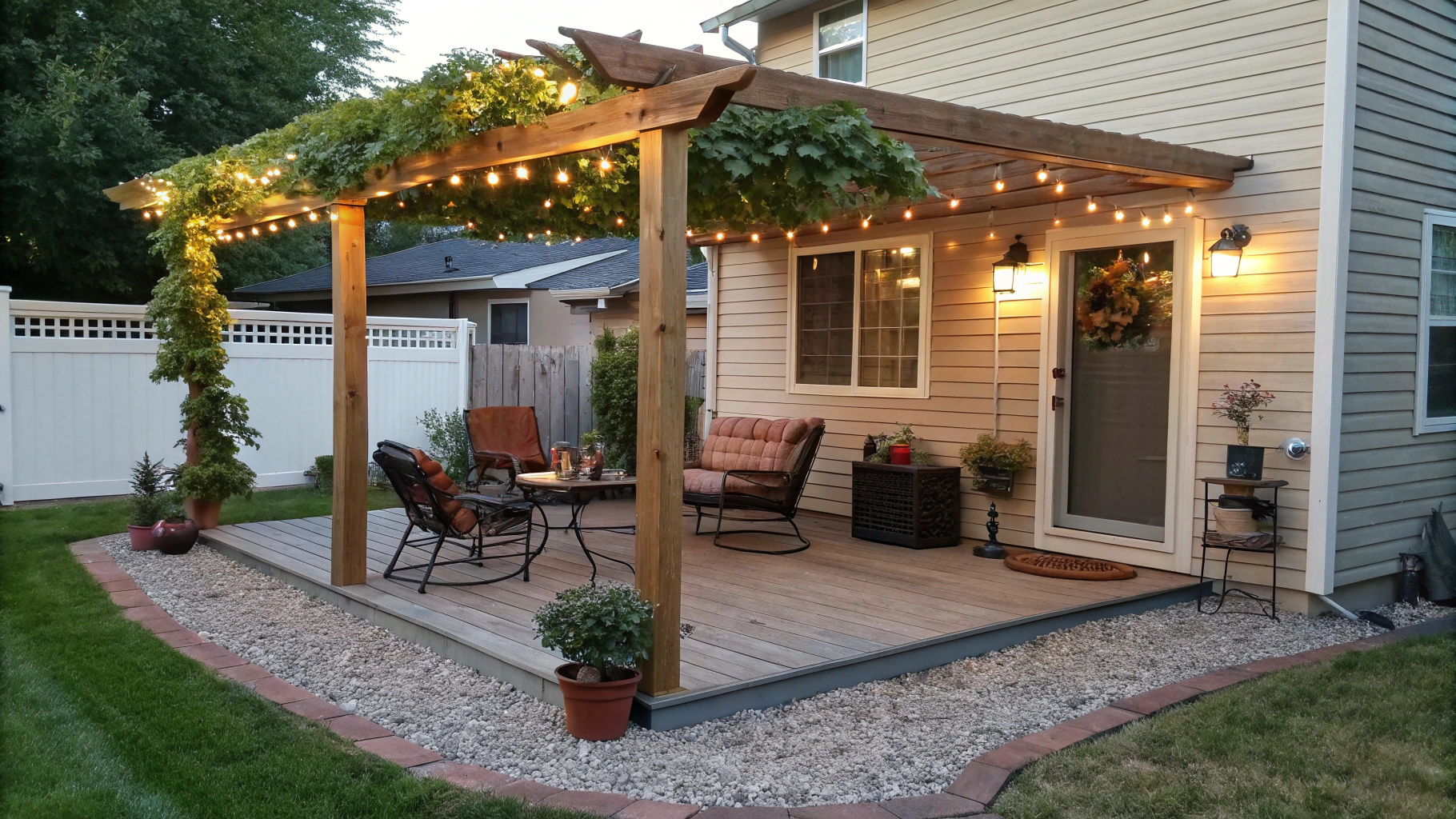
1. Wood Deck Tiles
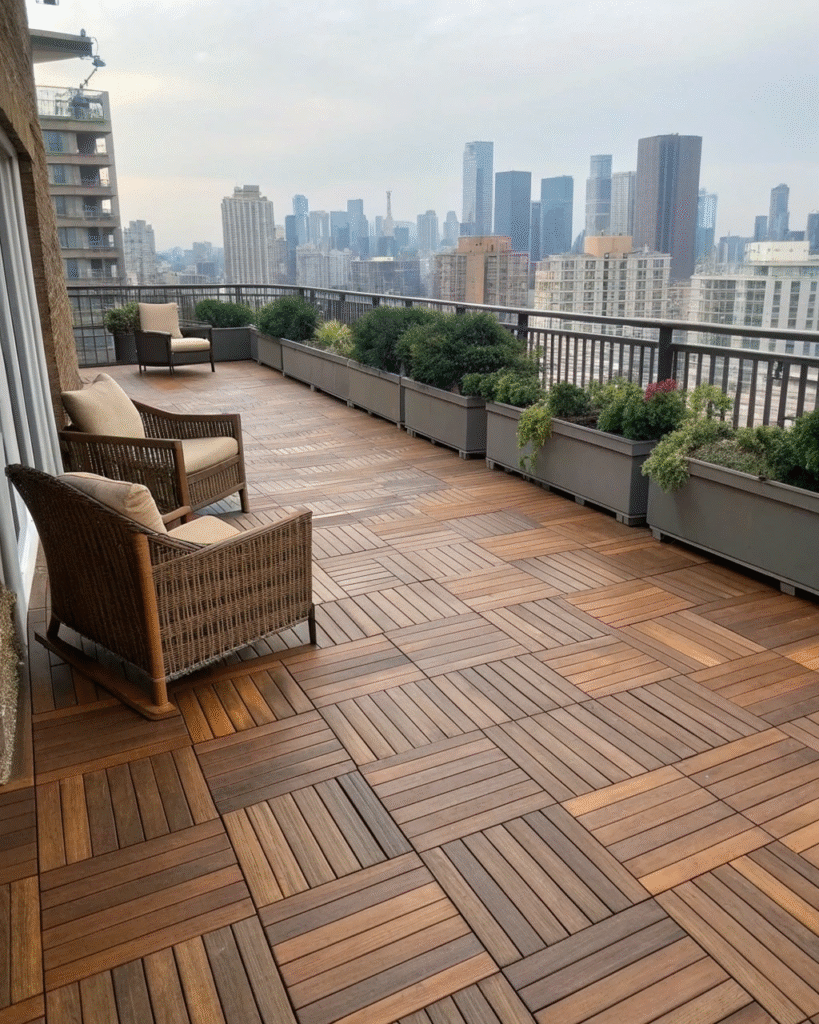
Interlocking wood tiles instantly turn concrete balconies into warm, deck-like spaces.
Pro Tip: Choose light-toned tiles to visually expand the area and keep it feeling airy.
2. Foldable Furniture

Slim, foldable tables and chairs keep things flexible and clutter-free.
Pro Tip: Opt for matching tones to maintain a cohesive and organized look.
3. Built-In Bench Seating
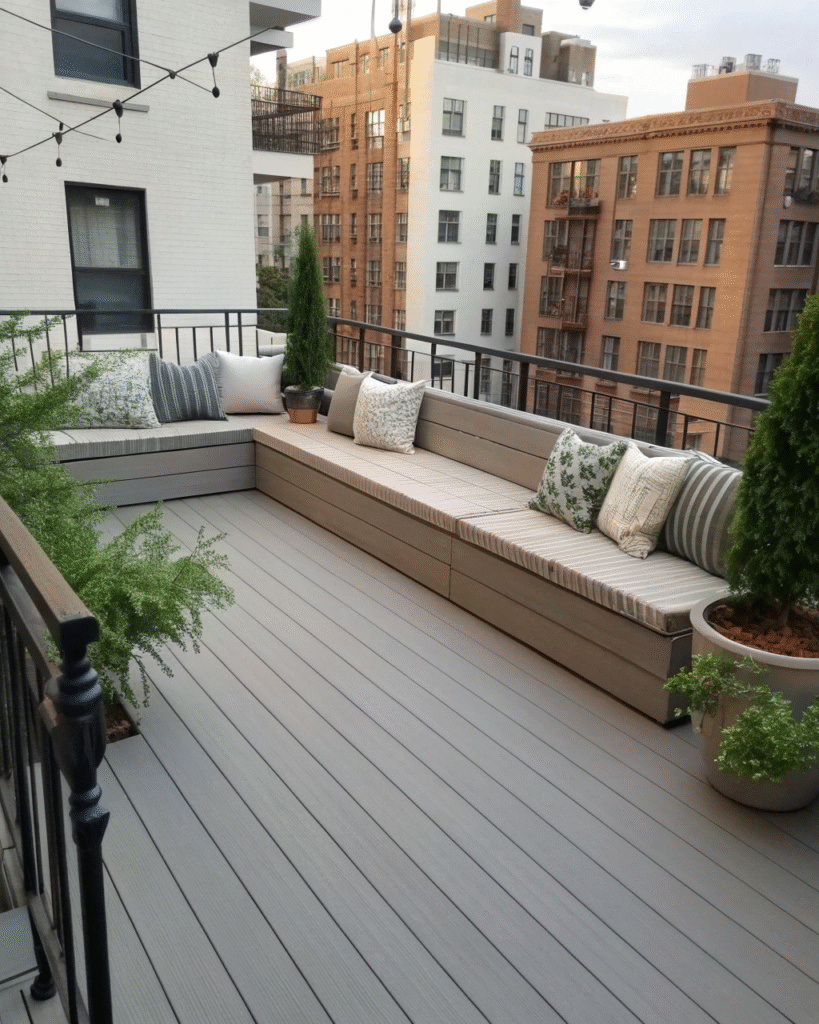
Built-in seating maximizes space while creating a cozy, deck-inspired vibe.
Pro Tip: Add weatherproof cushions and store essentials inside the bench base.
4. Vertical Green Walls
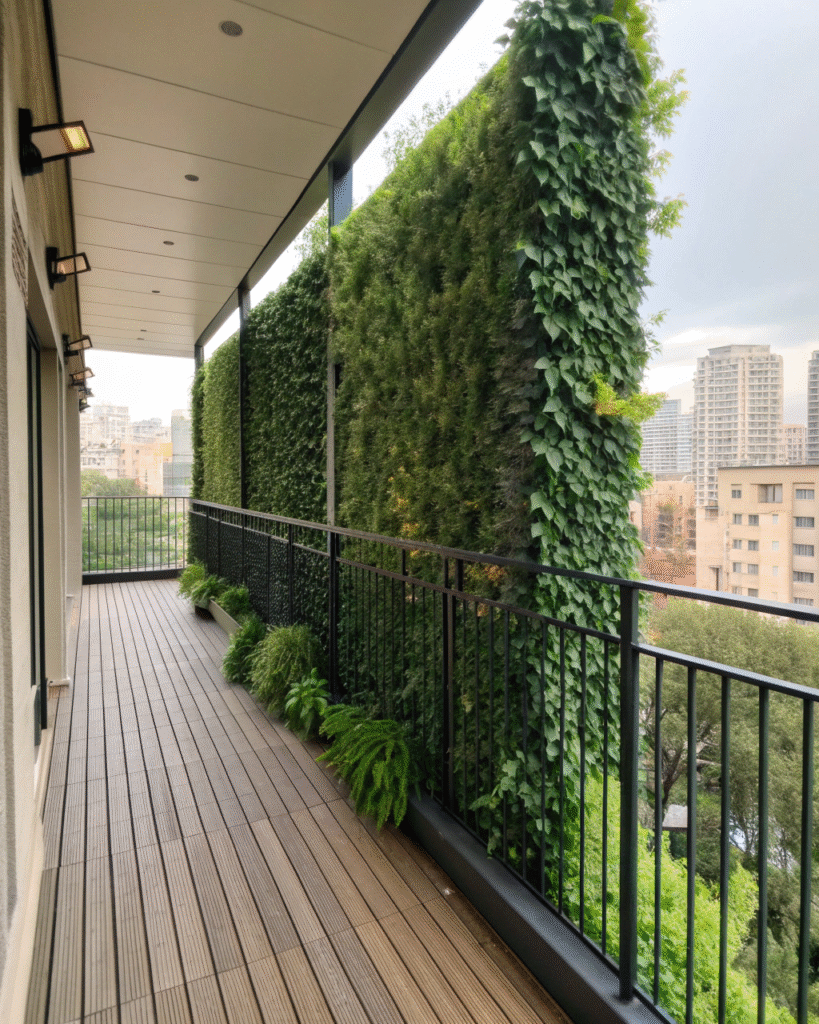
A wall of greenery brings life to small balconies and adds natural privacy.
Pro Tip: Use lightweight planters and easy-care plants like pothos or ivy.
5. Neutral Color Palette
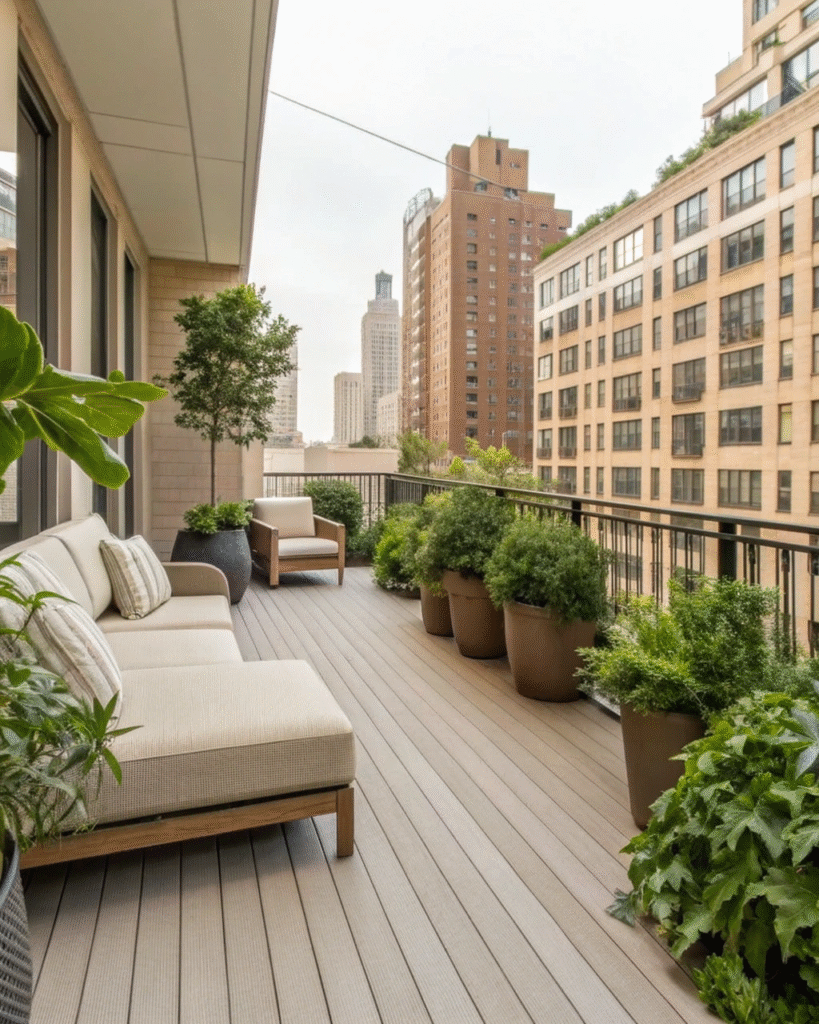
Soft neutrals make tight spaces feel open and cohesive.
Pro Tip: Layer shades of beige, gray, and white for subtle depth and modern calm.
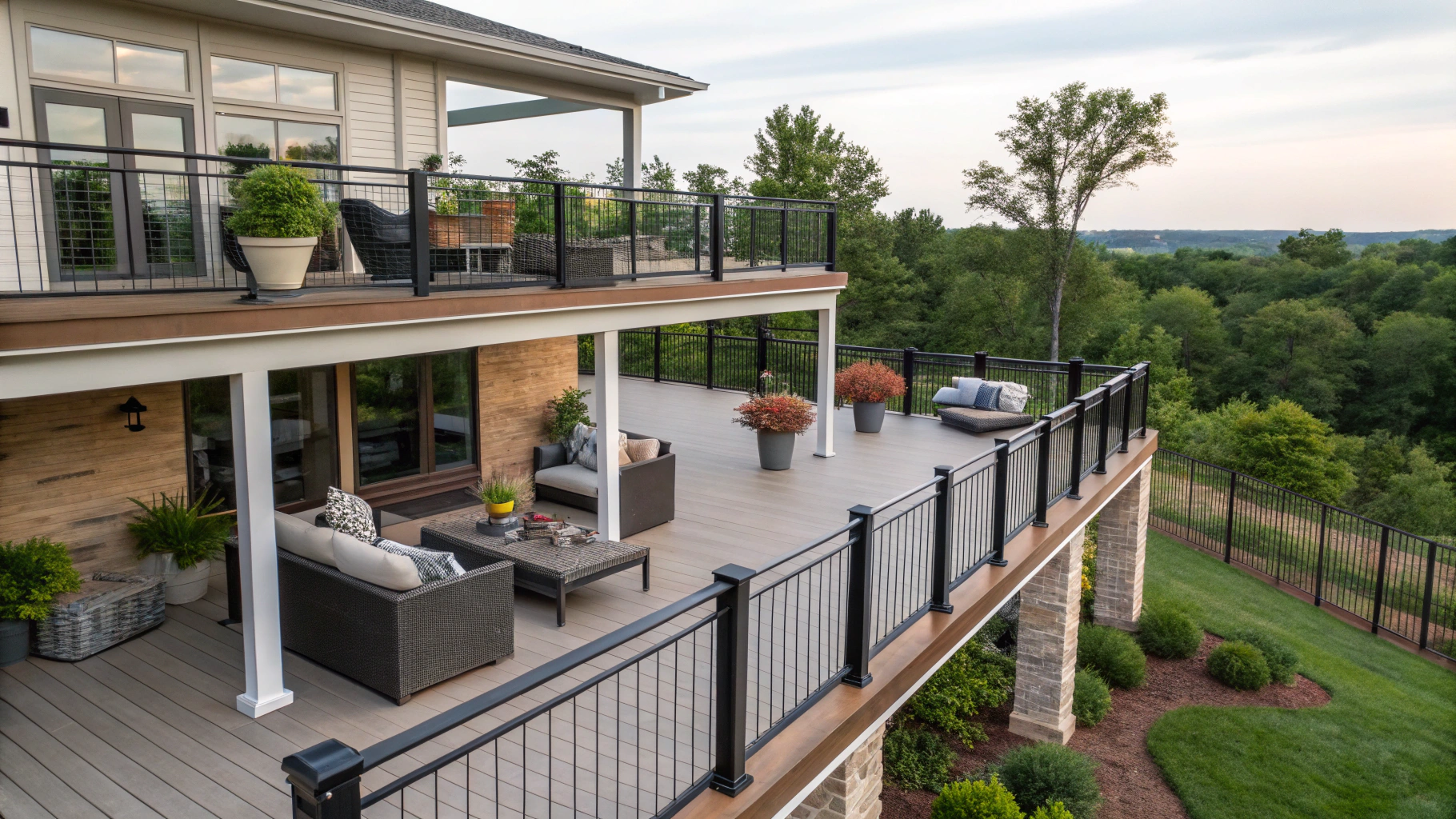
6. Glass or Cable Railings

Clear railings open up the view and make small spaces feel expansive.
Pro Tip: Keep frames slim and clean to avoid visual clutter.
7. Built-In Lighting
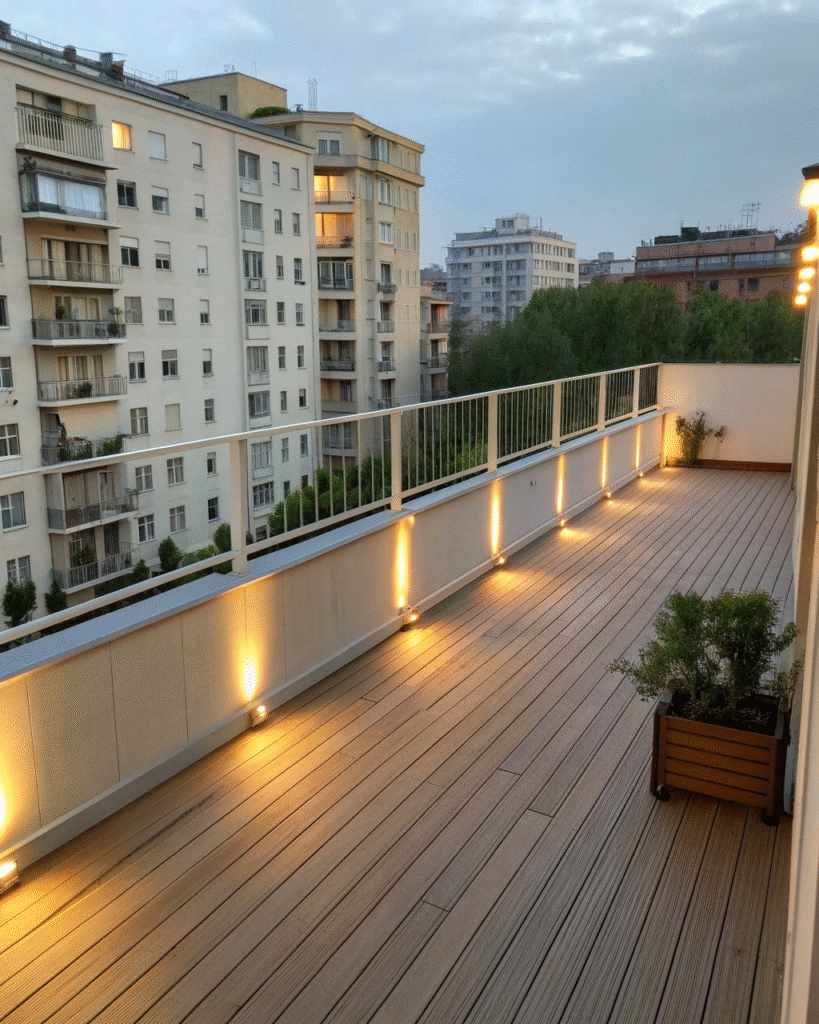
Integrated floor or wall lighting creates ambiance without taking up space.
Pro Tip: Use soft, warm lights to make your balcony glow like a cozy deck retreat.
8. Multi-Functional Furniture
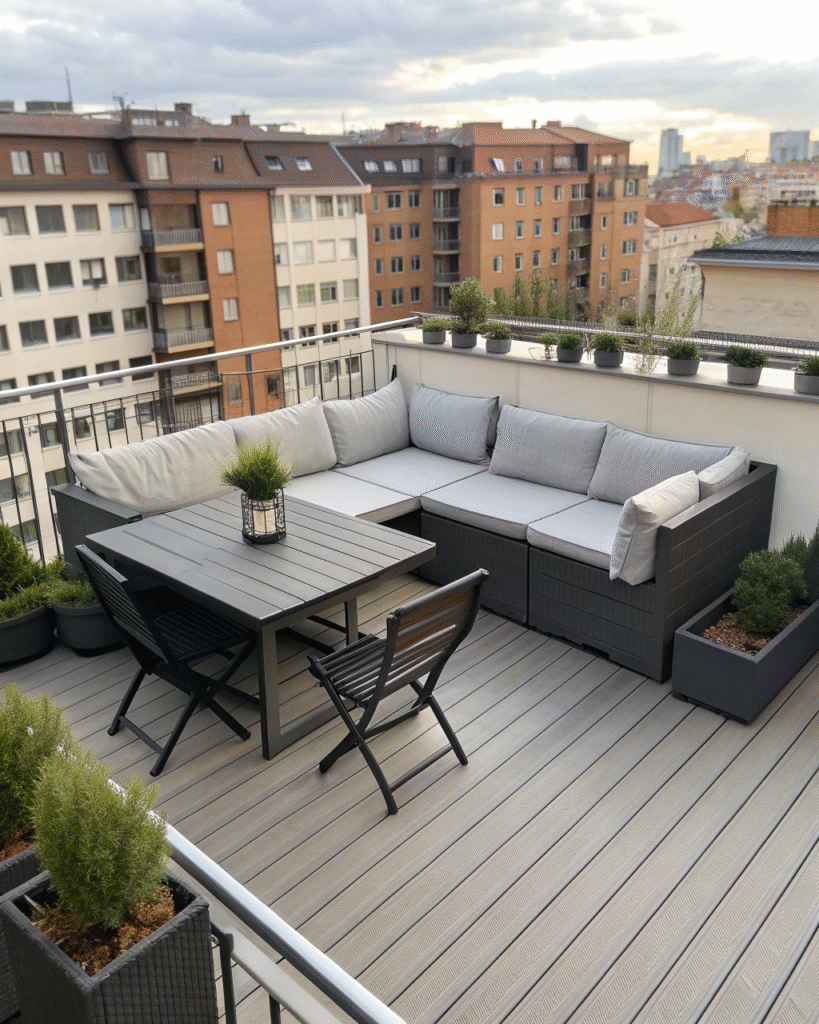
Pieces that serve multiple purposes save space and simplify your layout.
Pro Tip: Try a storage ottoman that doubles as a seat or small coffee table.
9. Elevated Flooring
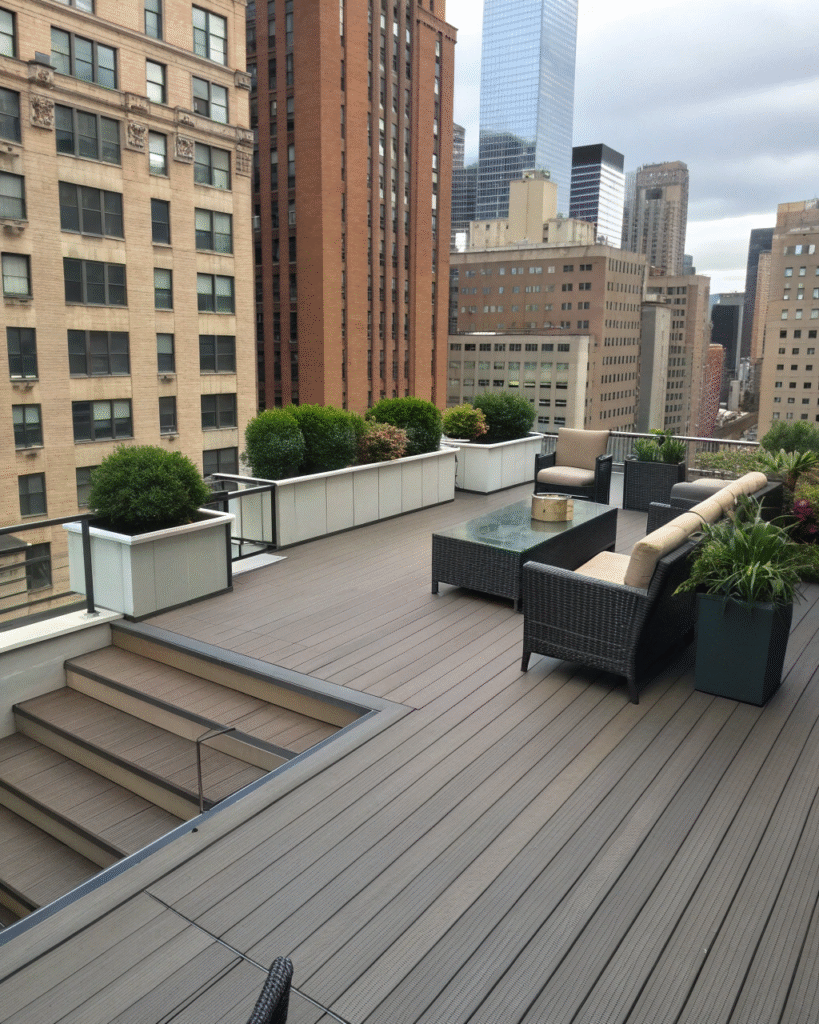
Adding a slightly raised deck platform brings texture and the illusion of depth.
Pro Tip: Use composite or bamboo decking for a clean, low-maintenance finish.
10. Cozy Textiles
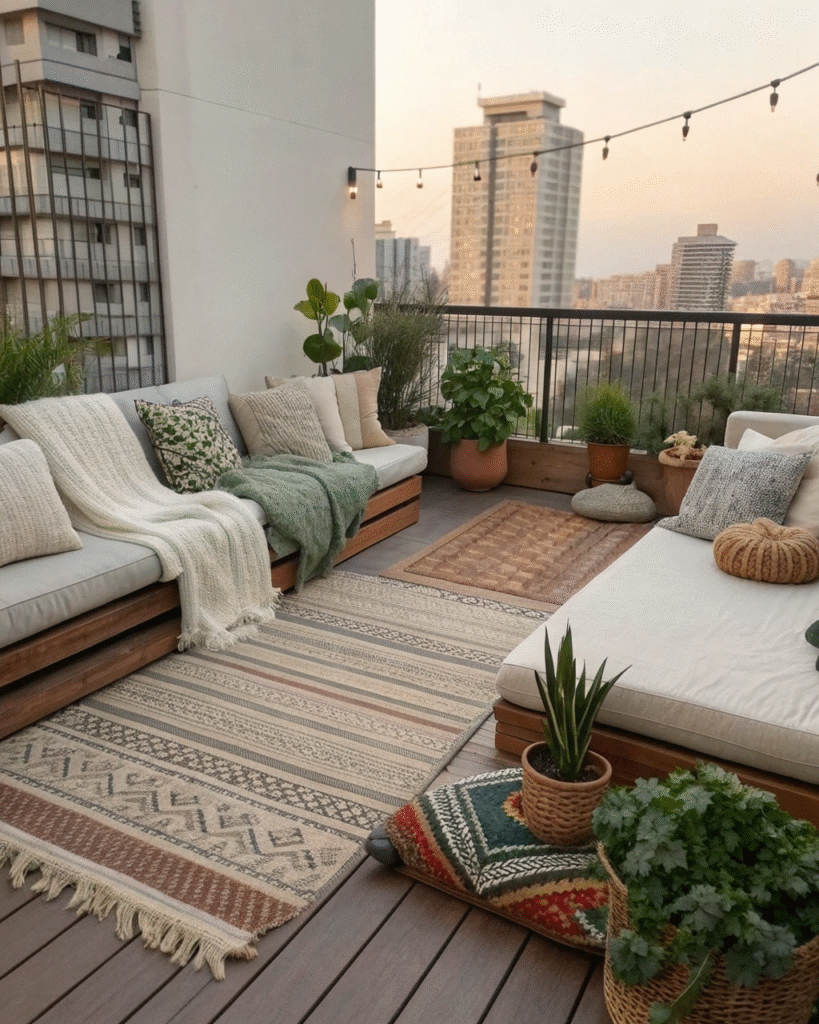
Layer rugs, cushions, and throws to soften the look and add warmth.
Pro Tip: Choose outdoor-friendly fabrics that resist fading and moisture.
11. Compact Planters
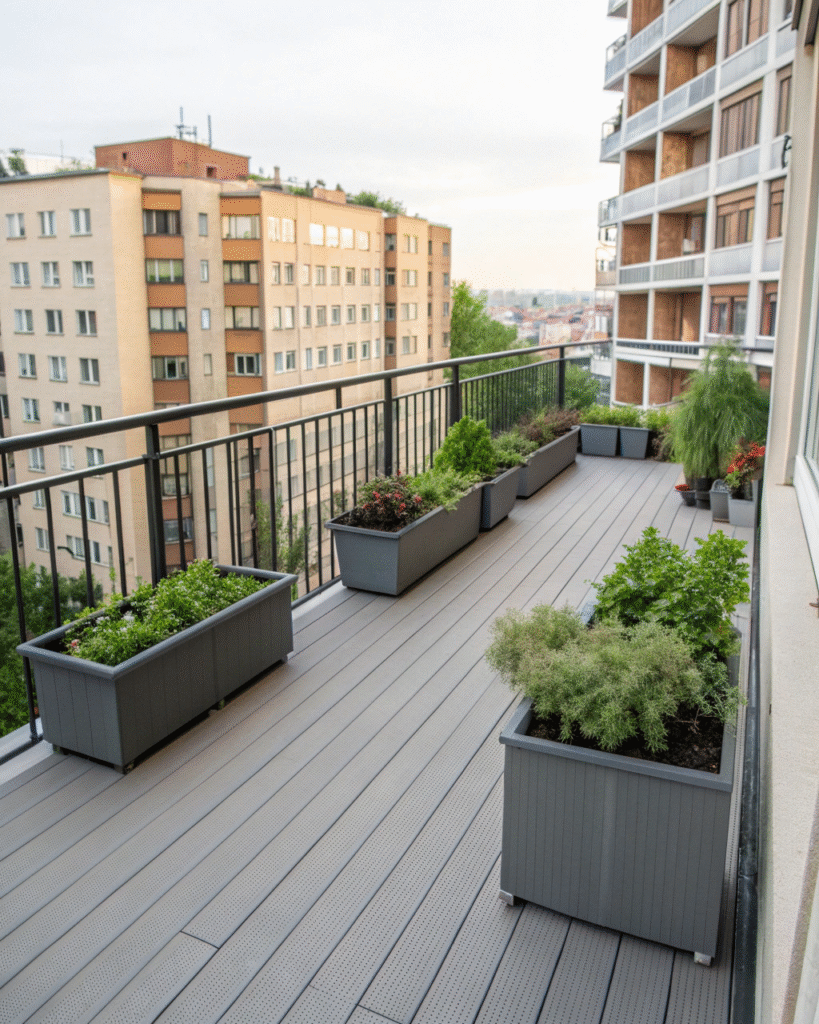
Small planters or railing-mounted boxes bring greenery without crowding the floor.
Pro Tip: Mix herbs with decorative plants for both beauty and practicality.
12. Hanging Lighting Fixtures
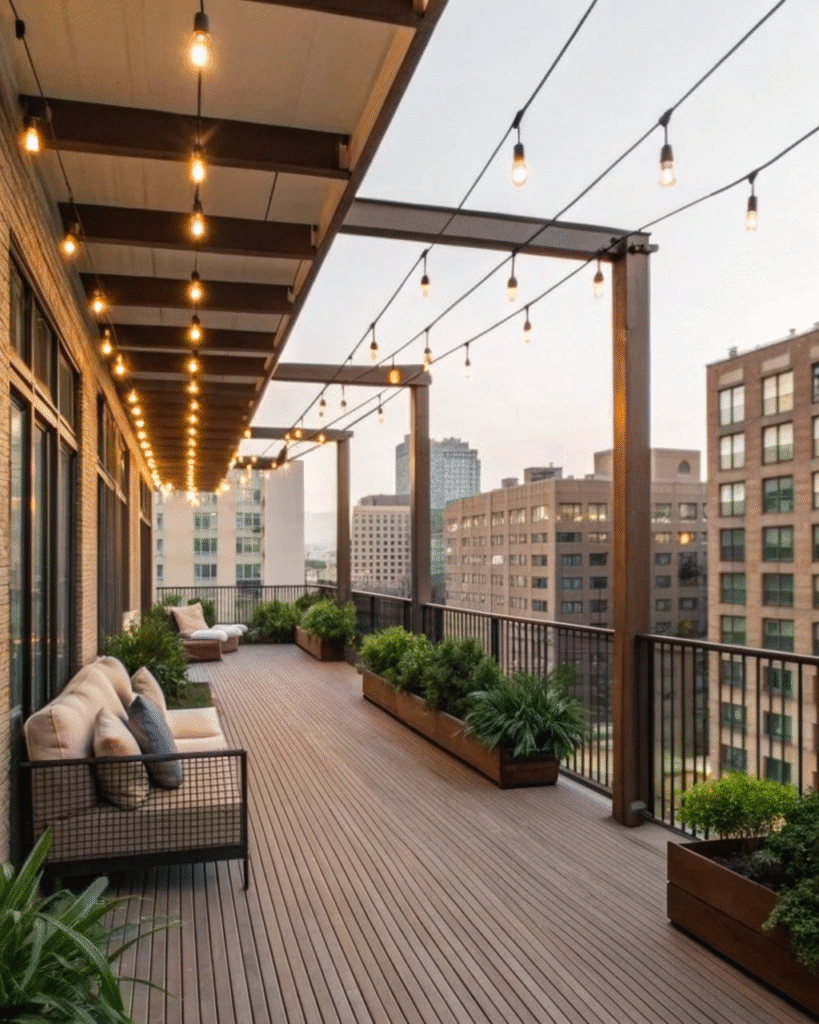
Pendant or string lights draw the eye upward and add a spacious feel.
Pro Tip: Go for a few large fixtures instead of many small ones to keep the design clean.
13. Fold-Down Bar Table
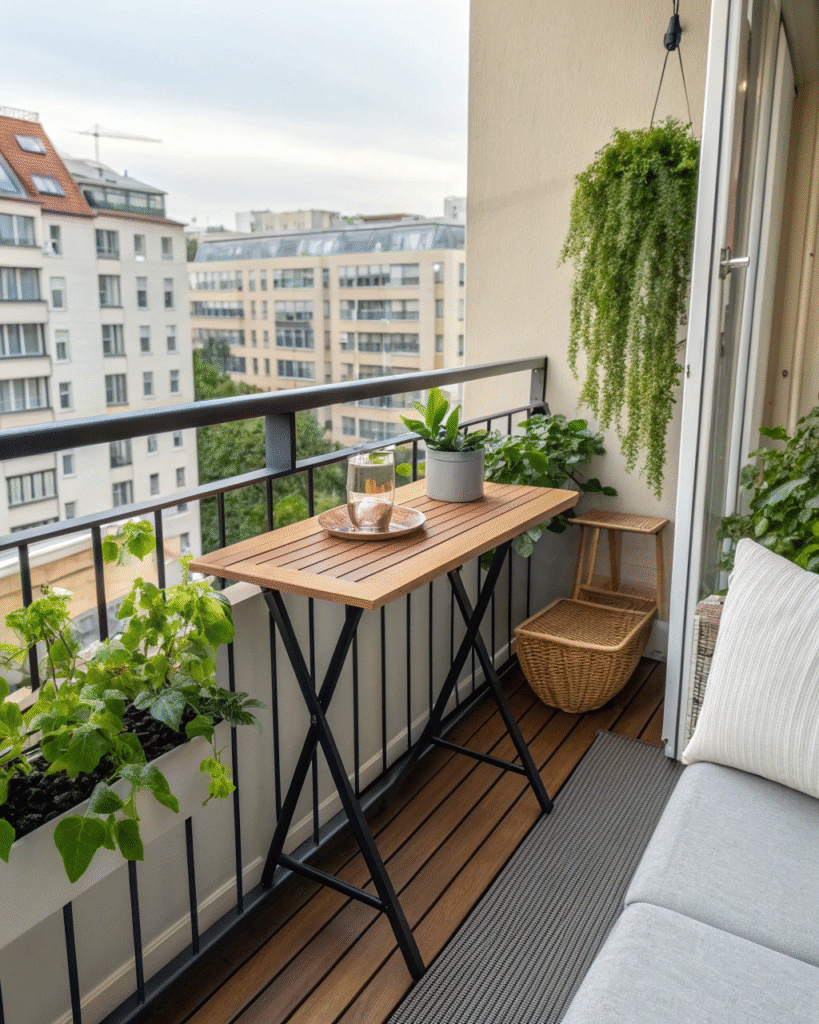
Attach a foldable bar table to the railing for a mini outdoor dining zone.
Pro Tip: Pair it with slim stools for a sleek, space-efficient setup.
14. Reflective Surfaces

Mirrors or glossy planters help bounce light and make your balcony feel larger.
Pro Tip: Position them opposite windows or light sources for maximum brightness.
15. Minimalist Layout
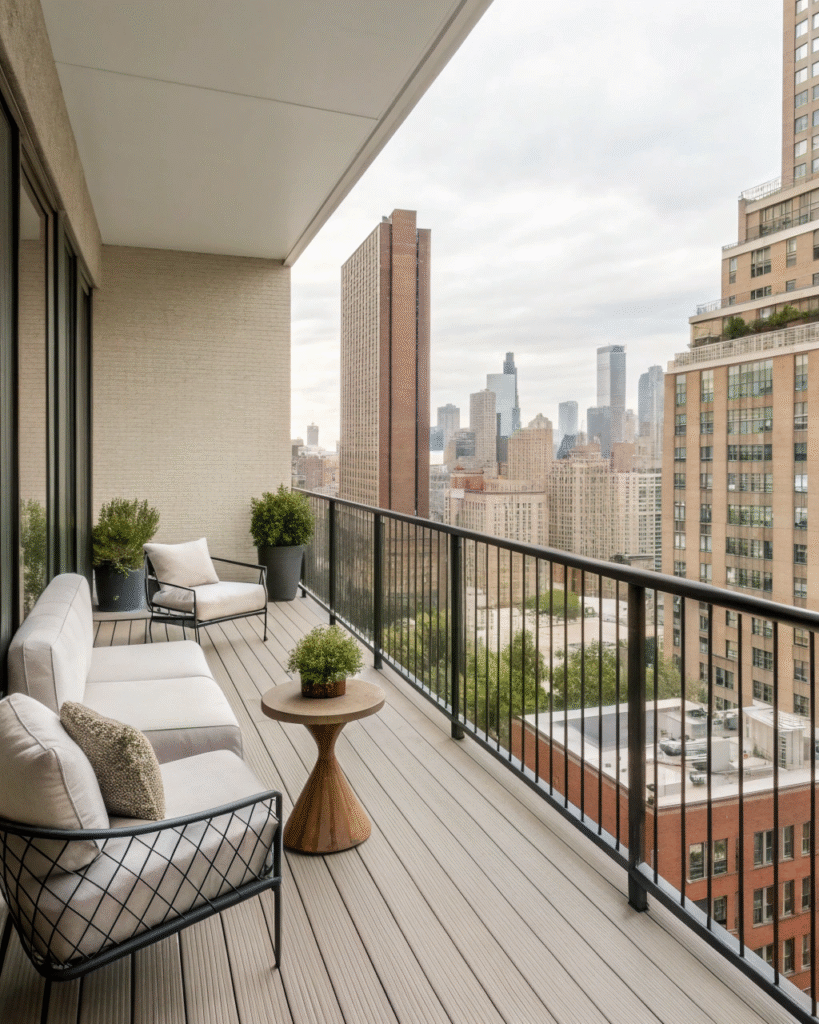
Keep furniture and decor minimal to preserve openness and easy movement.
Pro Tip: Choose low-profile seating and clean lines to maintain a modern, urban look.
Final Thoughts
A small urban balcony transformed well is one of the most rewarding projects you can take on because the results are immediate, the impact is large relative to the effort, and the daily benefit of having a proper outdoor space, however compact, genuinely improves the quality of daily life in an urban apartment. Start with the floor, add a consistent colour palette, choose furniture that earns its place, use every vertical surface, and light it warmly for the evenings. Your balcony can feel like a proper deck. It just needs a plan.
Frequently Asked Questions
Can I put a deck on my balcony?
You can install interlocking deck tiles or a modular deck flooring system on most balconies without structural modification, permanent attachment, or building permission, subject to the balcony’s load limit and any building management rules about the use of the space. True structural decking built on a frame is a different matter that typically requires permission and professional assessment. Always check your lease and building rules before making any changes.
What is the best flooring for a small balcony?
Interlocking composite or timber deck tiles are the best choice for most small urban balconies. They require no adhesive or permanent installation, can be taken with you when you move, are available in a wide range of tones and finishes, are lightweight relative to stone or porcelain alternatives, and immediately transform the character of a bare concrete balcony floor. Pale or mid-toned colours are more space-expanding than dark ones.
How do I make a small balcony feel bigger?
Use a consistent light neutral colour palette throughout, choose furniture with slim profiles and visible floor space beneath, install a glass or cable railing if possible, cover the floor with warm deck tiles, use vertical surfaces for planting and storage rather than the floor, and edit ruthlessly. The single biggest mistake on small balconies is having too many things. Remove two or three items from your current arrangement and reassess before adding anything new.
What furniture works best on a very small balcony?
A wall-mounted fold-down table, one or two folding chairs that store flat when not in use, and a storage ottoman that functions as a seat and a surface are the most versatile and most space-efficient furniture choices for a very small balcony. A single hanging chair suspended from a ceiling hook eliminates the need for any floor-based seating furniture entirely and creates a genuinely comfortable sitting spot with a minimal floor footprint.
How do I add privacy to a balcony without making it feel smaller?
Tall railing-mounted planters with screening plants like bamboo or ornamental grasses provide meaningful privacy at seated height without blocking the view from standing height. A trellis panel with climbing plants on one or two sides screens specific sightlines without fully enclosing the space. Outdoor curtains hung from a simple wire above the railing add privacy when drawn and open fully when not needed. All of these approaches provide privacy while keeping the space feeling open and connected to the environment beyond.
Do I need planning permission to transform my balcony?
For a rental property, you need your landlord’s permission rather than planning permission for most balcony changes. For owned apartments, check with your building management as many developments have rules about the external appearance of individual balconies. True structural changes, permanent railing modifications, and anything that affects the building’s external appearance may require formal permission from the relevant authority. Reversible changes like deck tiles, freestanding furniture, and potted plants almost never require formal permission but always check your specific building rules first.