16+ Beautiful Wildflower Garden Landscaping Ideas
Wildflower gardens bring natural beauty, color, movement, and biodiversity into outdoor spaces while creating landscapes that feel relaxed, vibrant, and full of life. Unlike highly structured flower beds, wildflower landscaping embraces a softer and more natural appearance with layered blooms, pollinator-friendly planting, and seasonal texture that changes beautifully throughout the year.
Whether you want a cottage-inspired backyard, a meadow-style front yard, a low-maintenance pollinator garden, or a colorful natural retreat, these beautiful wildflower garden landscaping ideas will help you create an outdoor space that feels lively, peaceful, and effortlessly charming.
Why Wildflower Landscaping Is So Popular
Wildflower gardens combine beauty with sustainability, making them one of the most eco-friendly landscaping choices for modern homes.
Benefits of wildflower landscaping include:
Love Chic Living Club?
Add us as one of your preferred Google sources and discover more home decor, DIY, outdoor, and lifestyle inspiration from us.
- Attracts bees and butterflies
- Requires less maintenance
- Reduces watering needs
- Adds natural movement and texture
- Supports biodiversity
- Creates long-lasting seasonal color
Wildflower gardens also work beautifully in cottage gardens, modern natural landscapes, rustic yards, and meadow-inspired designs.
Best Wildflowers for Landscaping
| Wildflower | Best For | Landscape Benefit |
| Coneflowers | Pollinator gardens | Bright long-lasting blooms |
| Black-Eyed Susans | Sunny landscapes | Bold seasonal color |
| Cosmos | Cottage gardens | Soft airy texture |
| Coreopsis | Meadow gardens | Low-maintenance color |
| Lupines | Vertical accents | Height and structure |
How to Make Wildflower Gardens Look Intentional
Mix Flower Heights
Layering flowers creates depth and prevents flat-looking landscapes.
Use Defined Borders
Stone edging, gravel paths, or mowed edges help organize natural-looking gardens.
Repeat Flower Types
Repeating plants throughout the space creates visual cohesion.
Add Pathways & Seating
Hardscaping helps wildflower gardens feel more functional and inviting.
1. Create a Meadow-Style Wildflower Garden
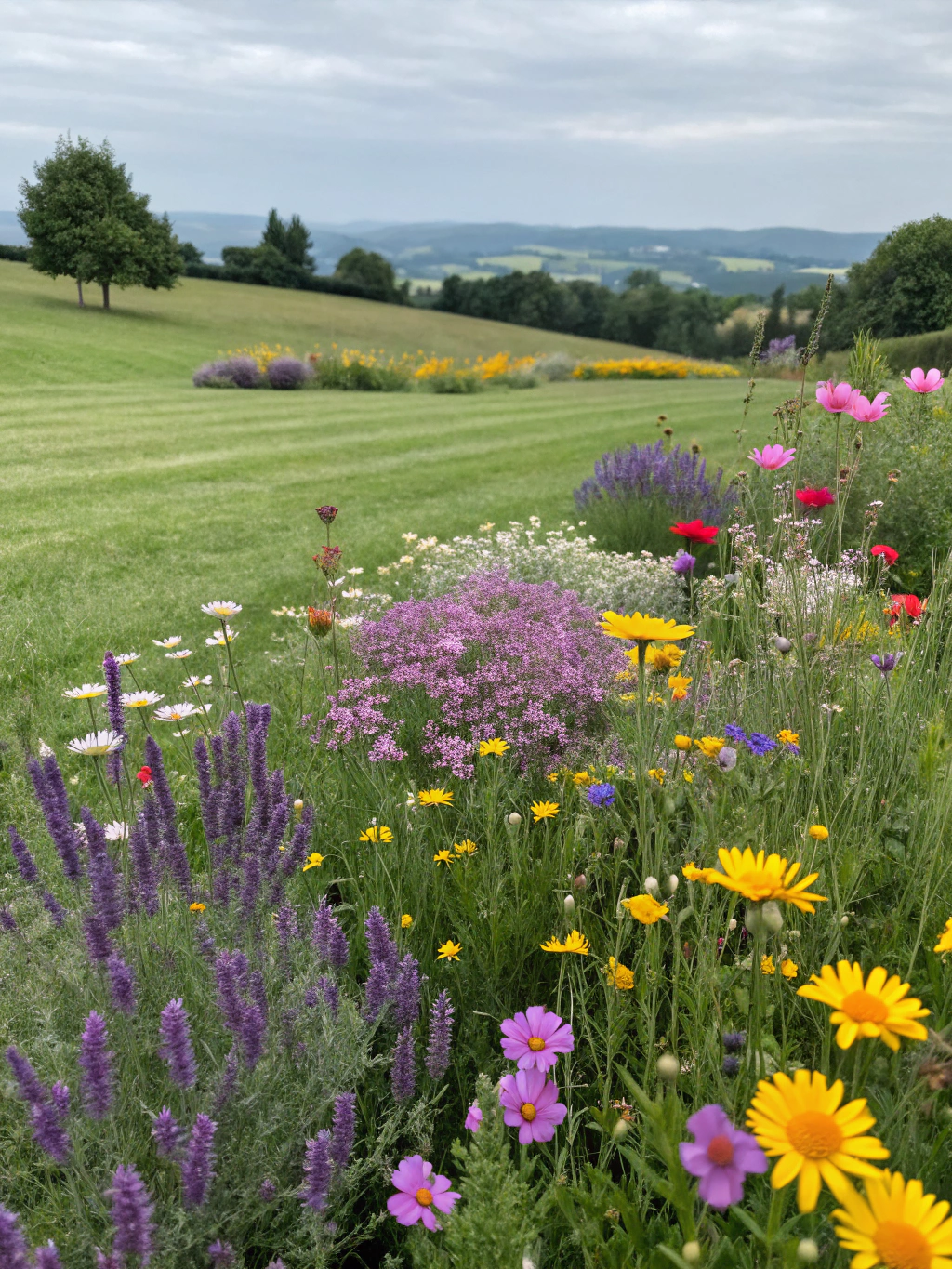
Meadow gardens create a soft and natural landscape filled with layered blooms.
Best Meadow Wildflowers
- Black-eyed Susans
- Coreopsis
- Coneflowers
- Yarrow
Why It Works
- Feels natural and relaxed
- Attracts pollinators
- Requires less mowing
Design Tip
Mix ornamental grasses with flowers for added texture and movement.
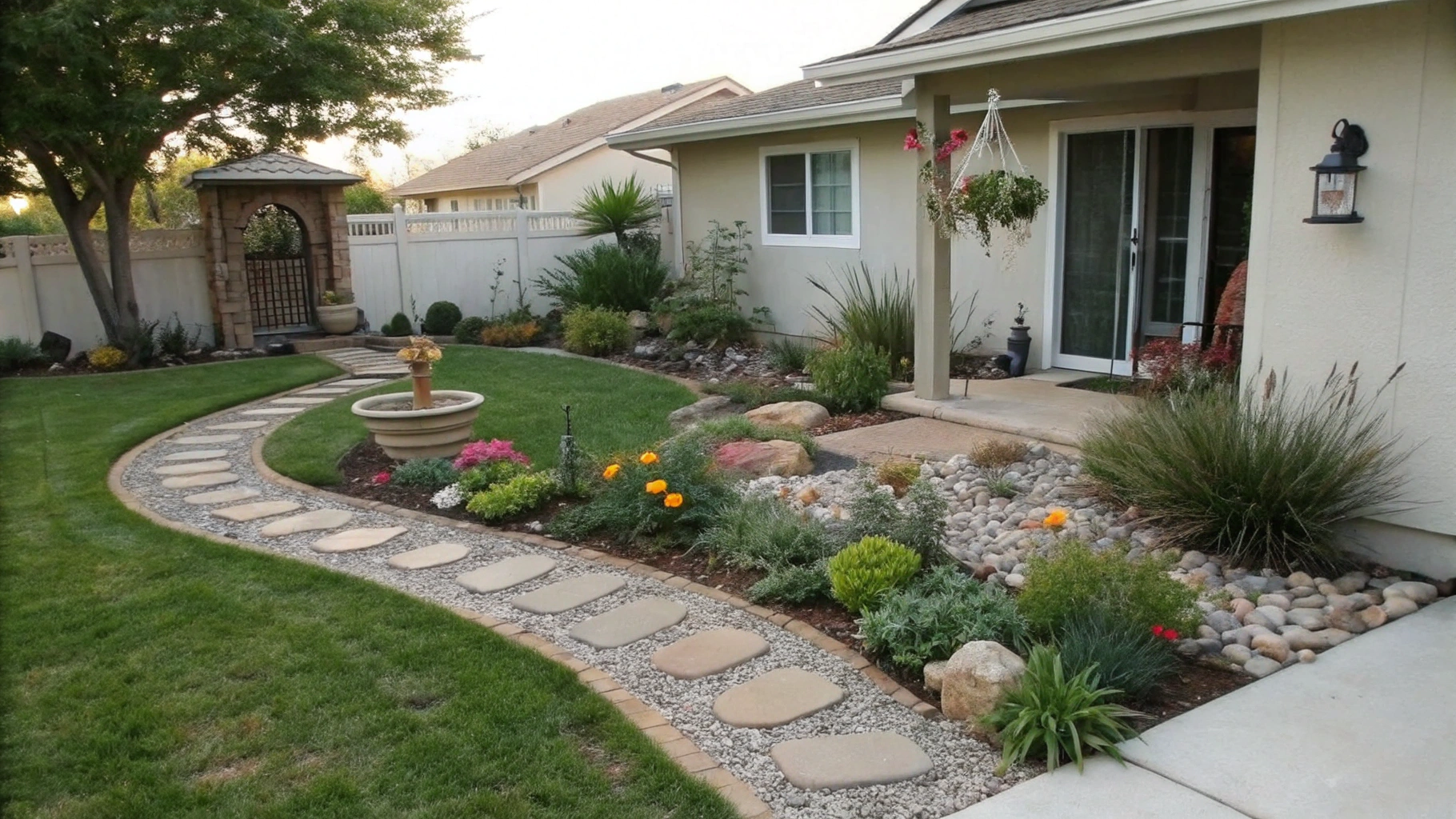
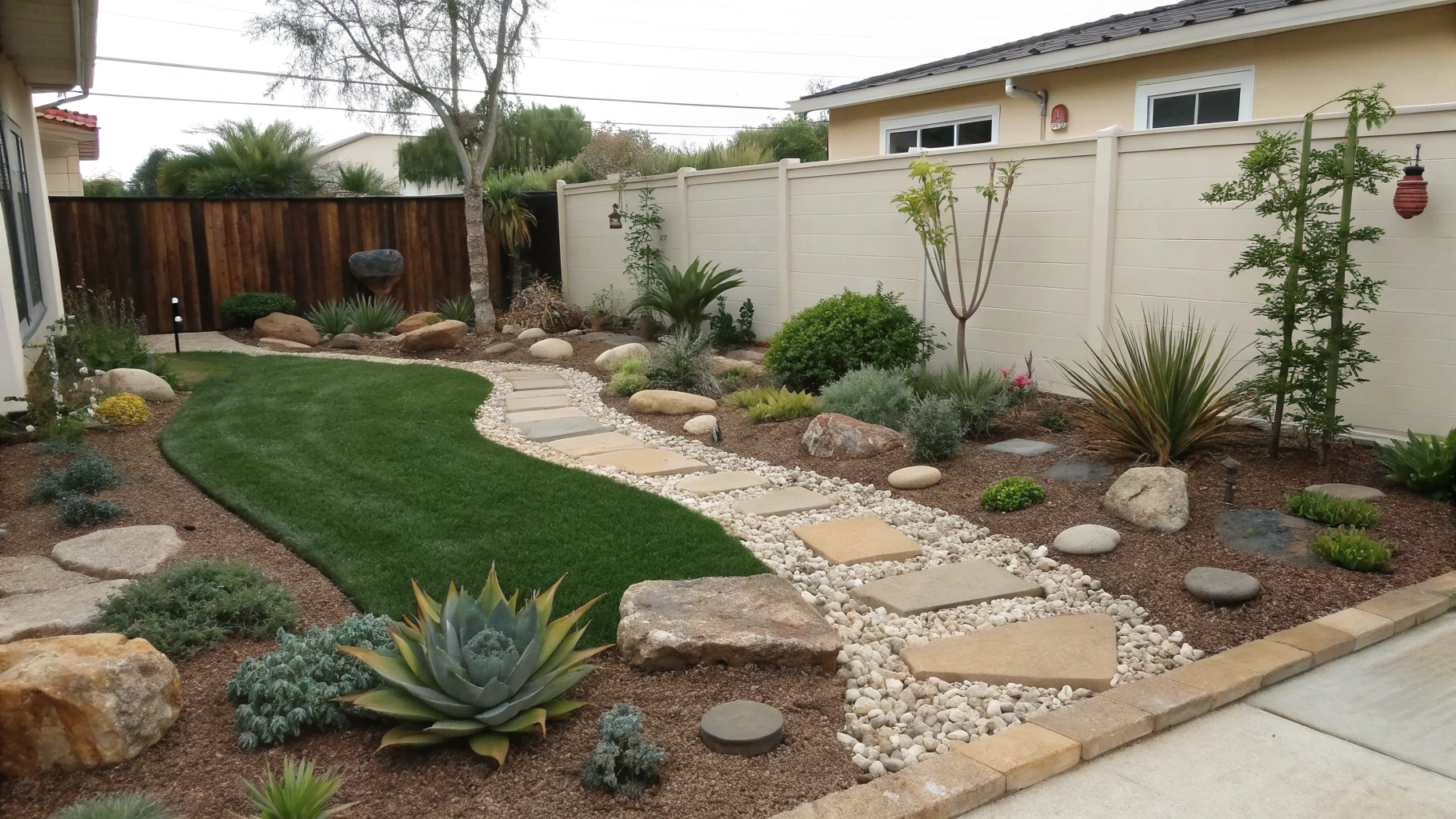
2. Add Curved Gravel Pathways Through Wildflowers
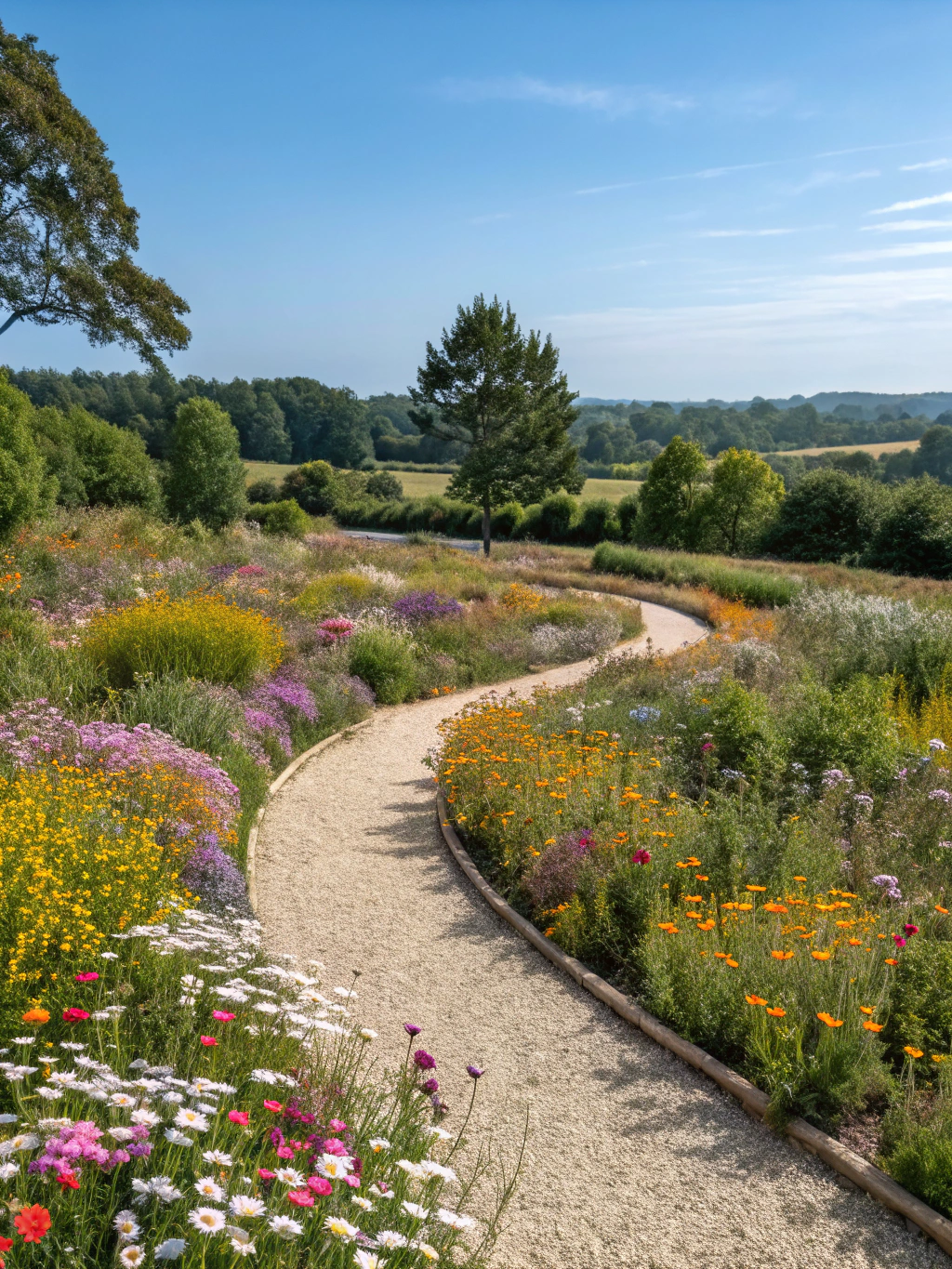
Pathways help organize wildflower gardens while encouraging exploration.
Best Pathway Materials
- Pea gravel
- Flagstone
- Mulch pathways
- Stepping stones
Why Homeowners Love It
- Adds structure
- Improves accessibility
- Creates visual flow
Design Insight
Curved paths feel more natural than straight lines in wildflower gardens.
3. Create a Pollinator-Friendly Backyard Garden
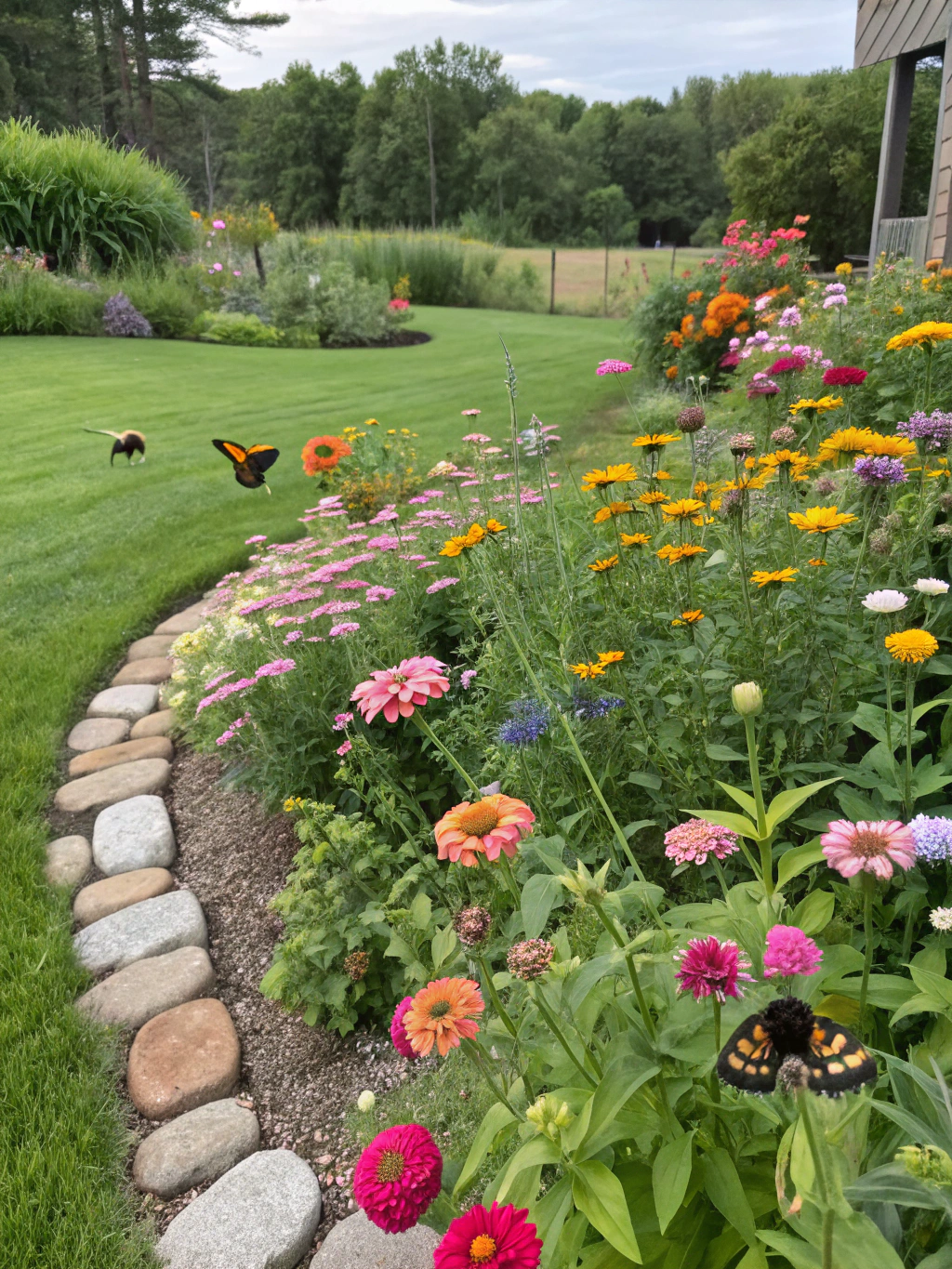
Wildflowers are one of the best ways to support bees, butterflies, and hummingbirds.
Best Pollinator Flowers
- Bee balm
- Milkweed
- Salvia
- Coneflowers
- Lavender
Why It Works
Pollinator gardens feel vibrant, colorful, and environmentally beneficial.
4. Add a Wildflower Border Along Fences or Pathways
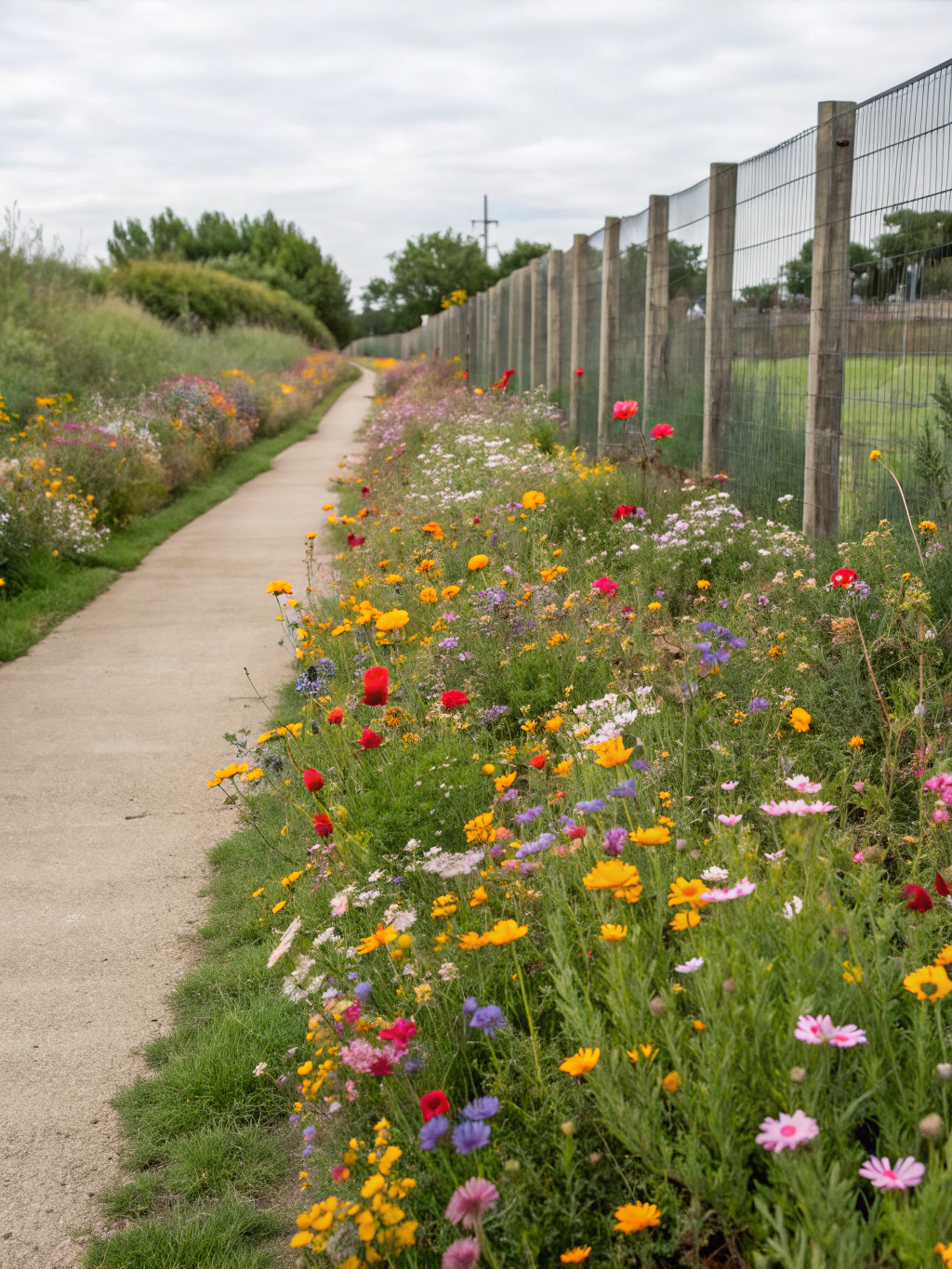
Wildflower borders soften hard edges and improve curb appeal naturally.
Best Border Flowers
- Cosmos
- Daisies
- Lavender
- Black-eyed Susans
Why It Works
Layered flowers create softness and seasonal texture.
5. Use Native Wildflowers for Low-Maintenance Landscaping
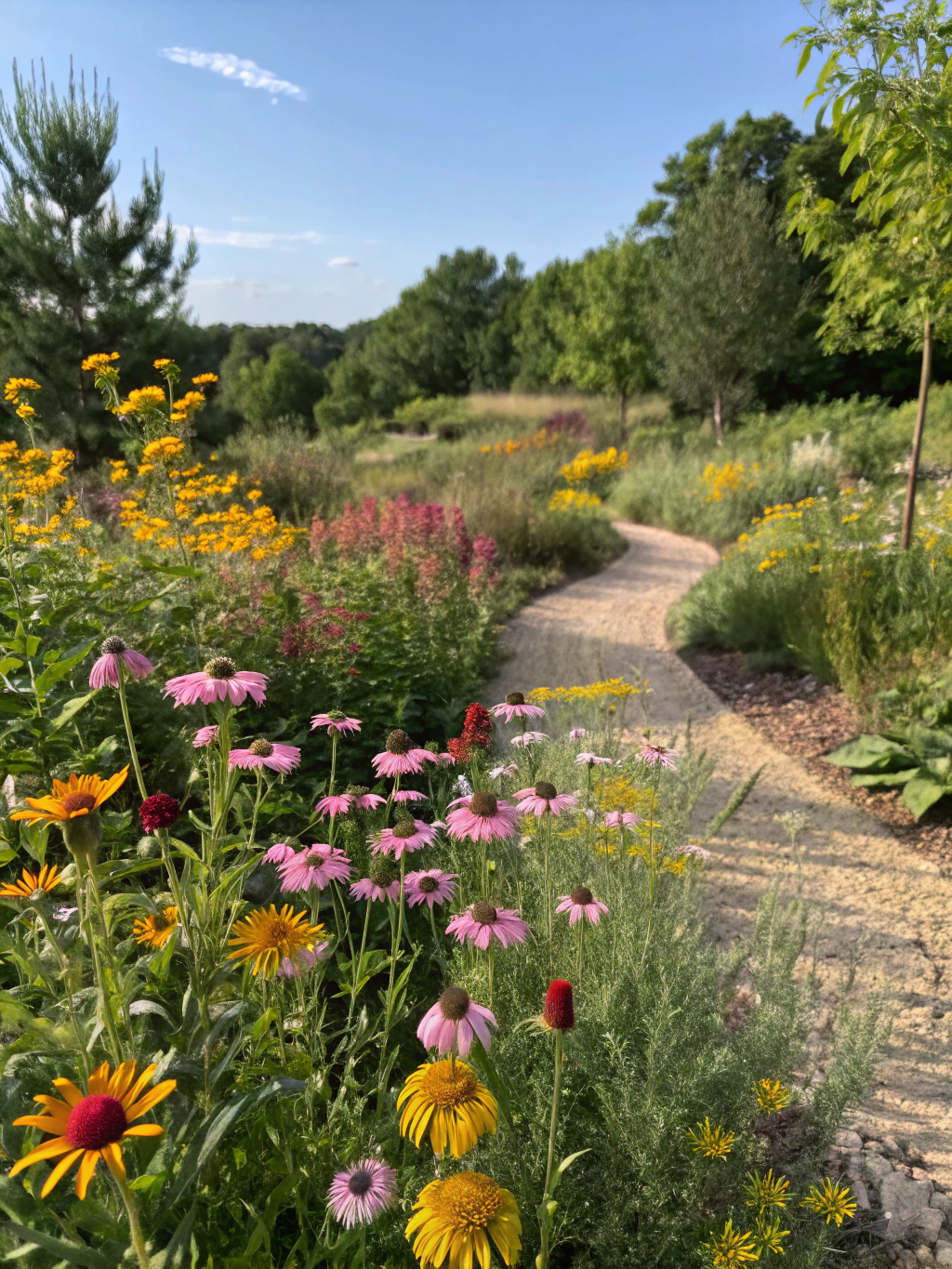
Native plants thrive naturally and require less maintenance over time.
Best Native Wildflowers
- Blanket flower
- Purple coneflower
- Lupines
- Goldenrod
Why It Works
Native flowers adapt better to local weather and soil conditions.
6. Create a Cottage-Style Wildflower Garden
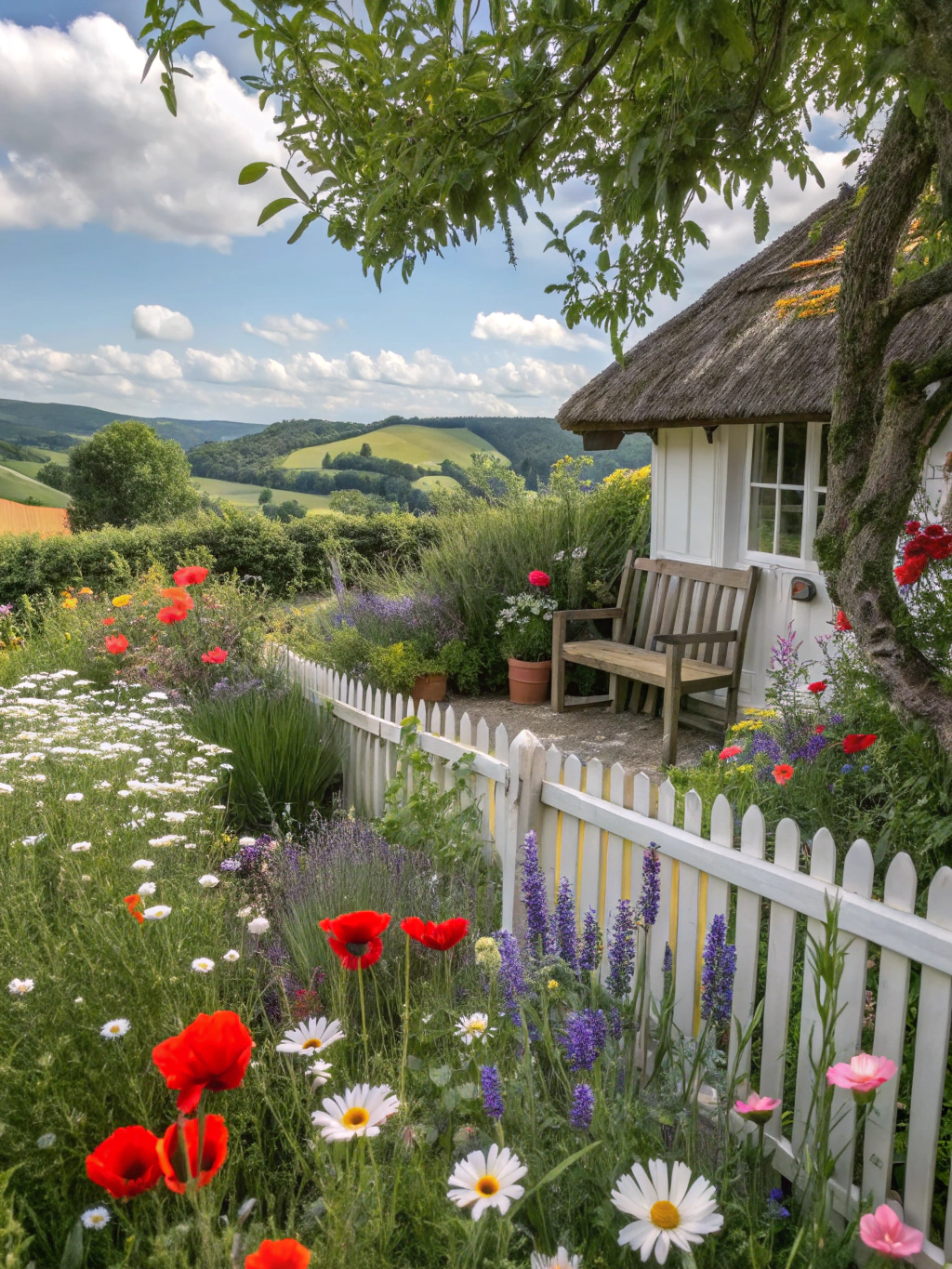
Wildflowers pair beautifully with cottage-inspired landscaping.
Best Cottage Wildflowers
- Foxgloves
- Cosmos
- Delphiniums
- Hollyhocks
Why It Works
Layered flowers create a romantic and storybook-like atmosphere.
7. Add Ornamental Grasses for Soft Texture
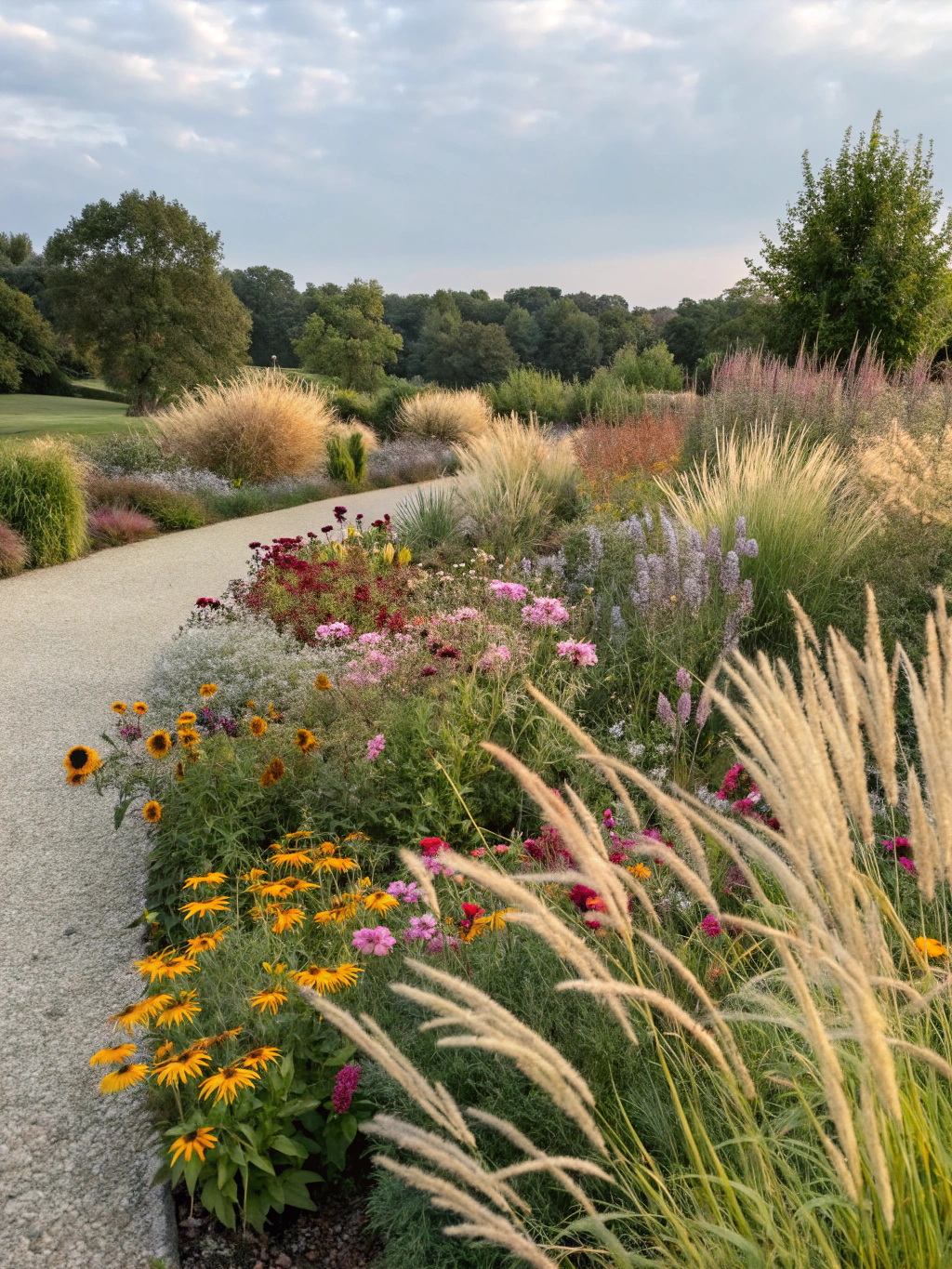
Grasses create movement and help balance colorful blooms.
Best Ornamental Grasses
- Fountain grass
- Feather reed grass
- Blue fescue
Why It Works
Grasses soften flower-heavy landscapes beautifully.
8. Create a Wildflower Garden Around a Seating Area
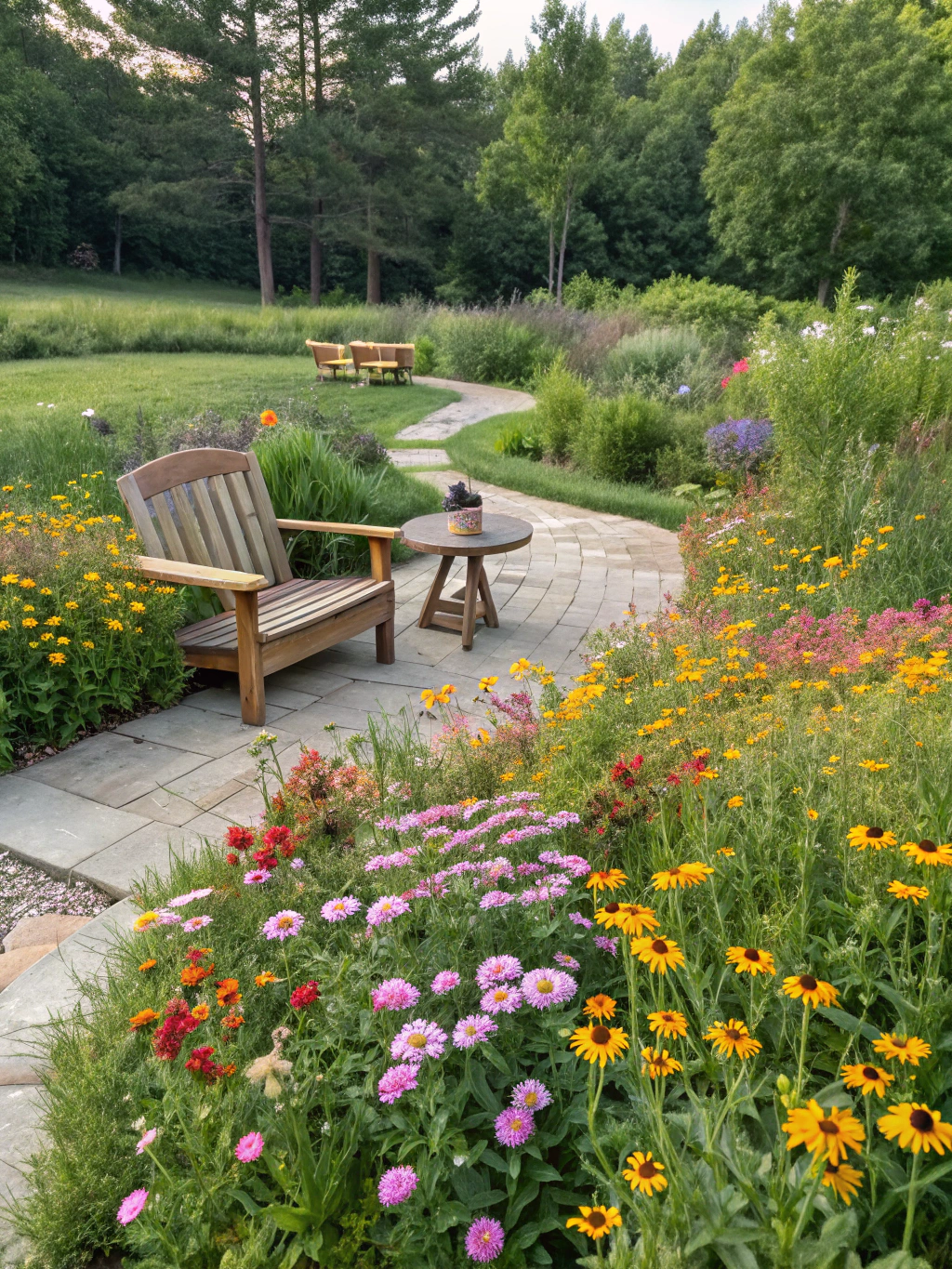
Seating areas surrounded by flowers feel peaceful and immersive.
Best Seating Ideas
- Wooden benches
- Bistro sets
- Hammocks
- Adirondack chairs
Why It Works
Seating spaces encourage people to enjoy the landscape more fully.
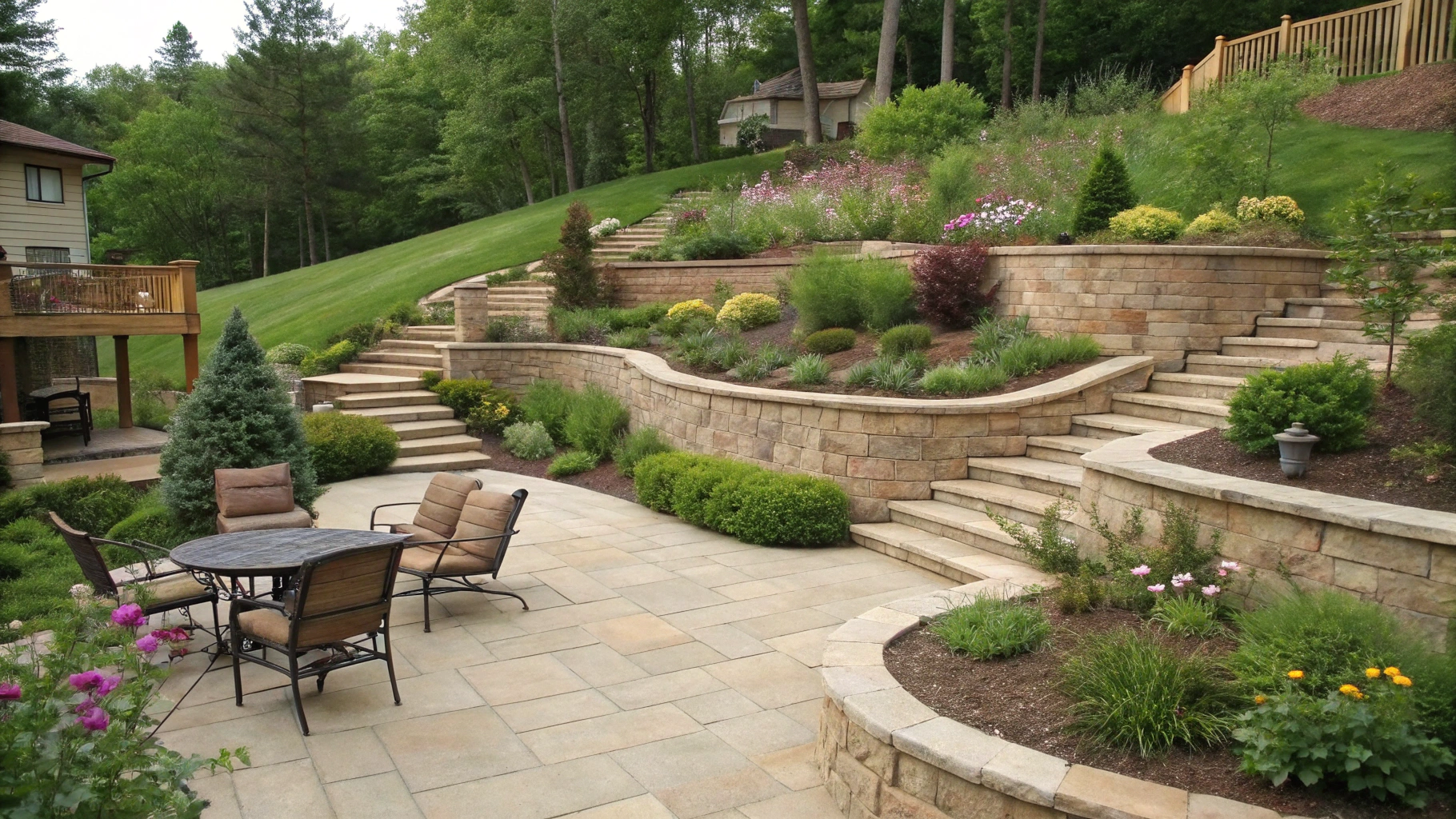
9. Add Raised Wildflower Beds for Cleaner Structure
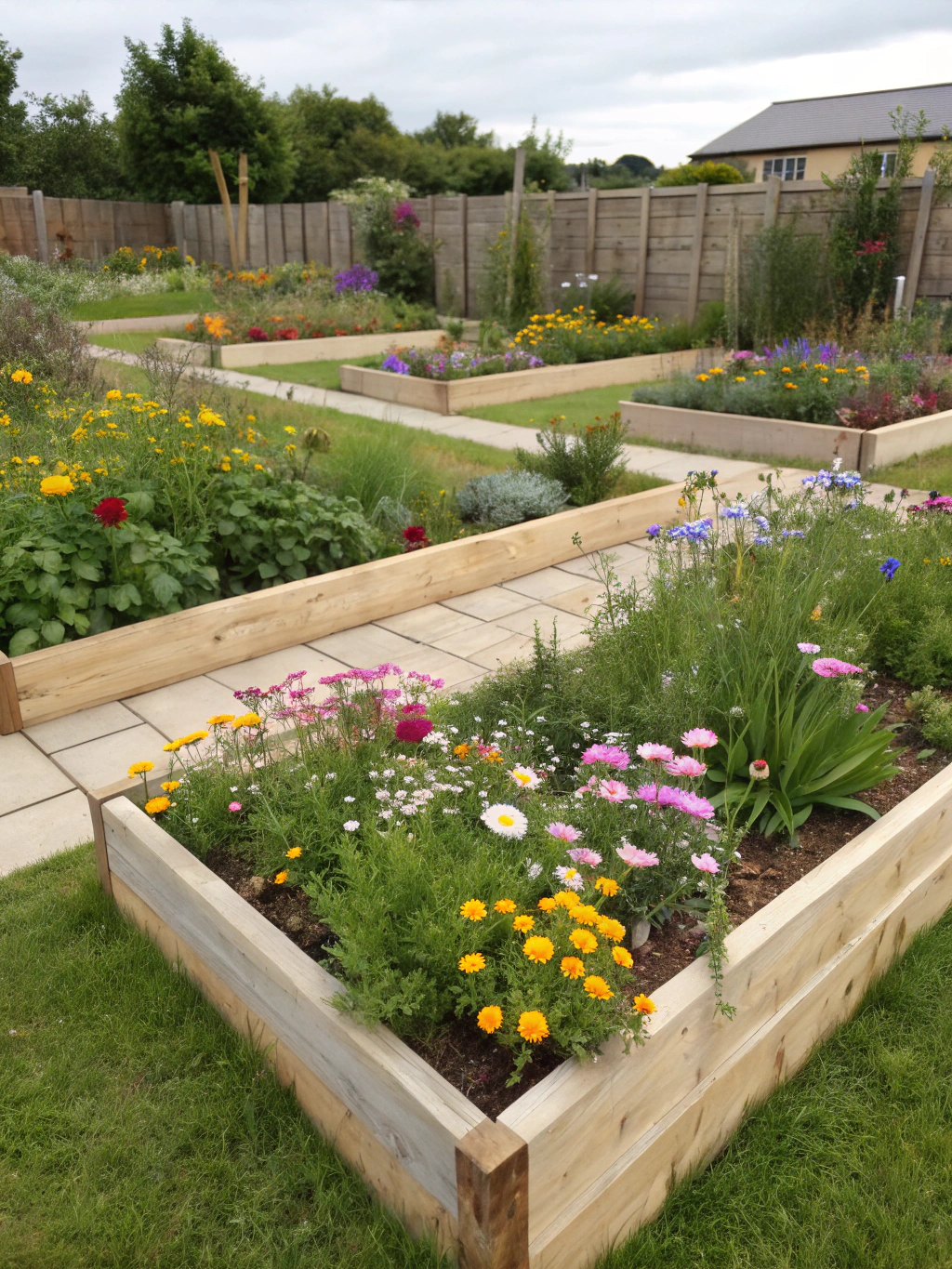
Raised beds help organize wildflower gardens while improving drainage.
Best Raised Bed Materials
- Natural stone
- Cedar wood
- Brick
Why It Works
Raised beds make natural landscapes feel more polished.
10. Create a Modern Wildflower Landscape
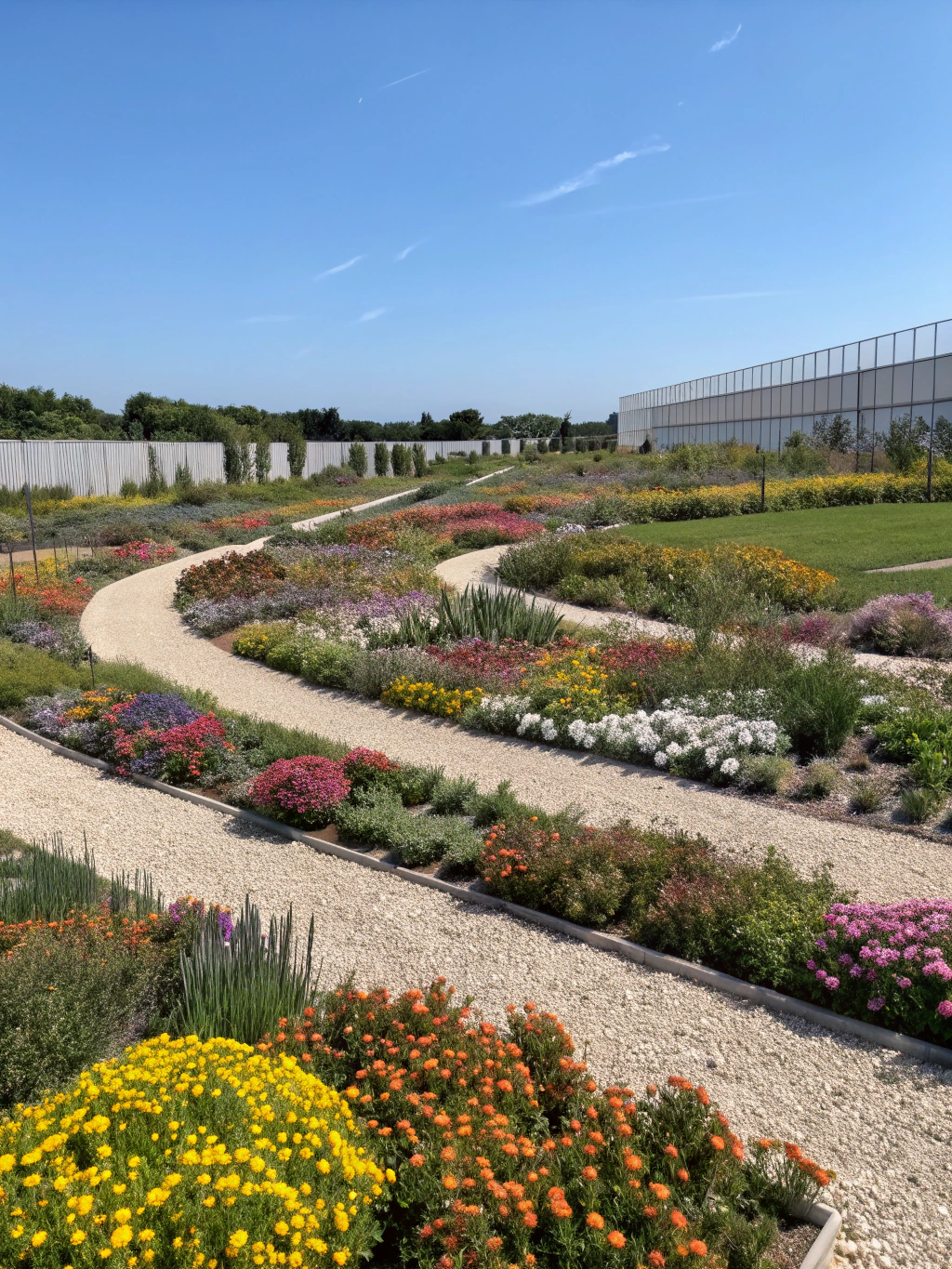
Wildflowers can also work beautifully in modern outdoor spaces.
Key Modern Features
- Geometric pathways
- Minimalist hardscaping
- Repeated flower groupings
- Neutral gravel
Why It Works
Structured layouts balance the softness of wildflowers.
11. Add a Water Feature Within the Wildflower Garden
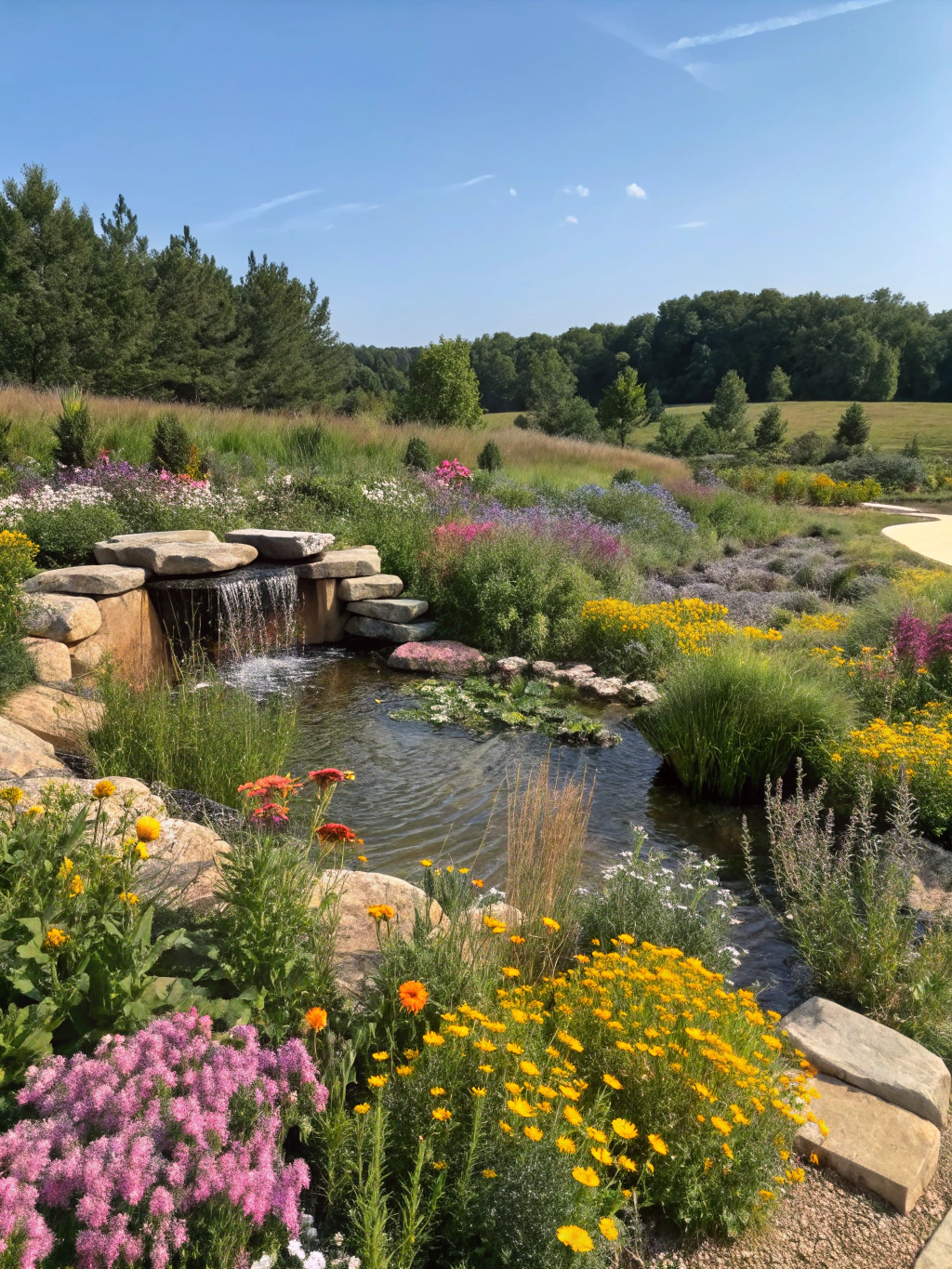
Water features enhance the peaceful atmosphere of natural landscapes.
Best Water Features
- Birdbaths
- Small fountains
- Pondless waterfalls
- Reflecting bowls
Why It Works
Water creates movement and attracts additional wildlife.
12. Use Wildflowers on Slopes & Hillsides
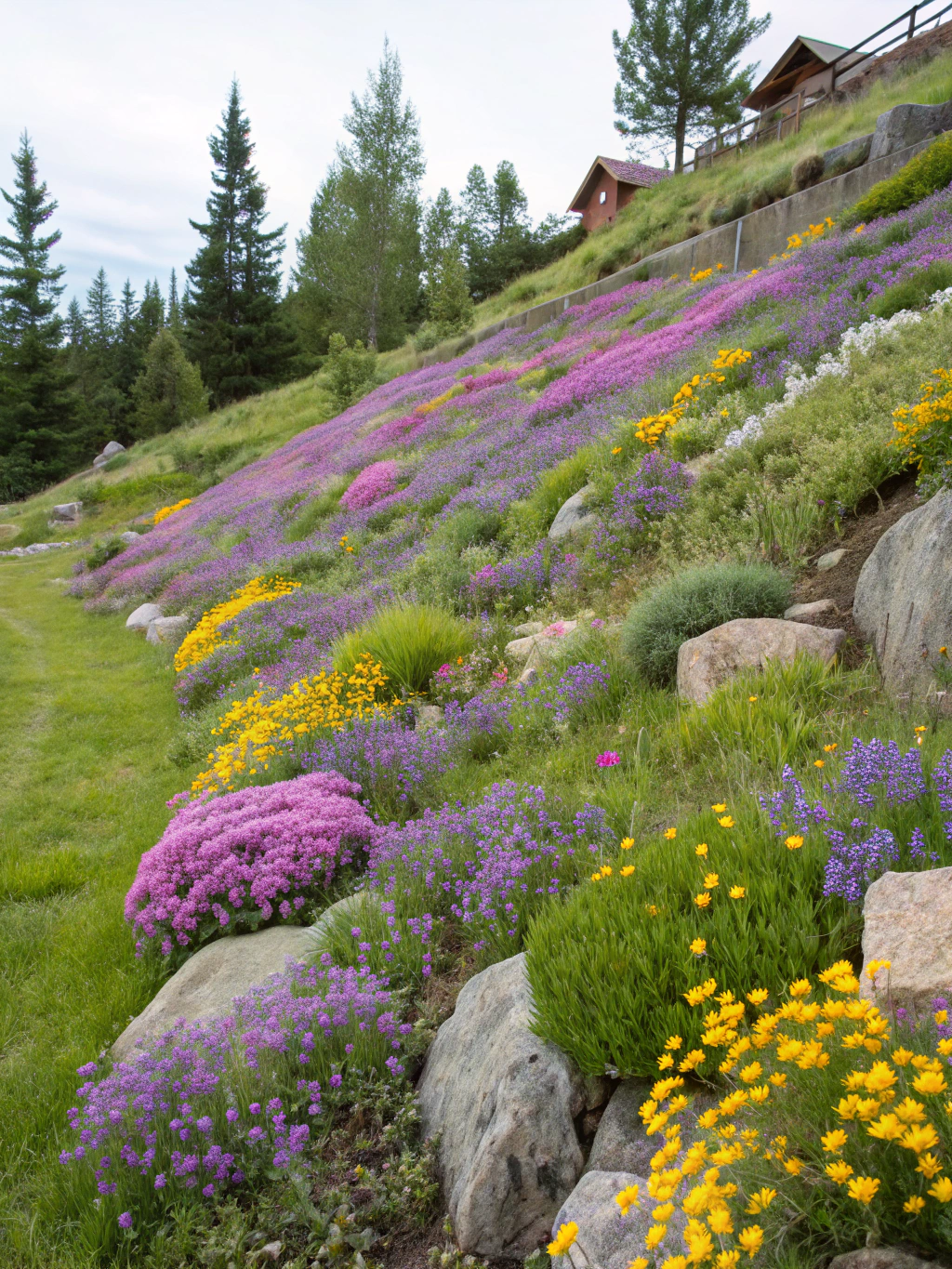
Wildflowers help stabilize soil while adding natural beauty.
Best Hillside Wildflowers
- Coreopsis
- Yarrow
- Black-eyed Susans
- Lupines
Why It Works
Dense planting reduces erosion while softening slopes.
13. Add Rustic Wooden Features Throughout the Garden
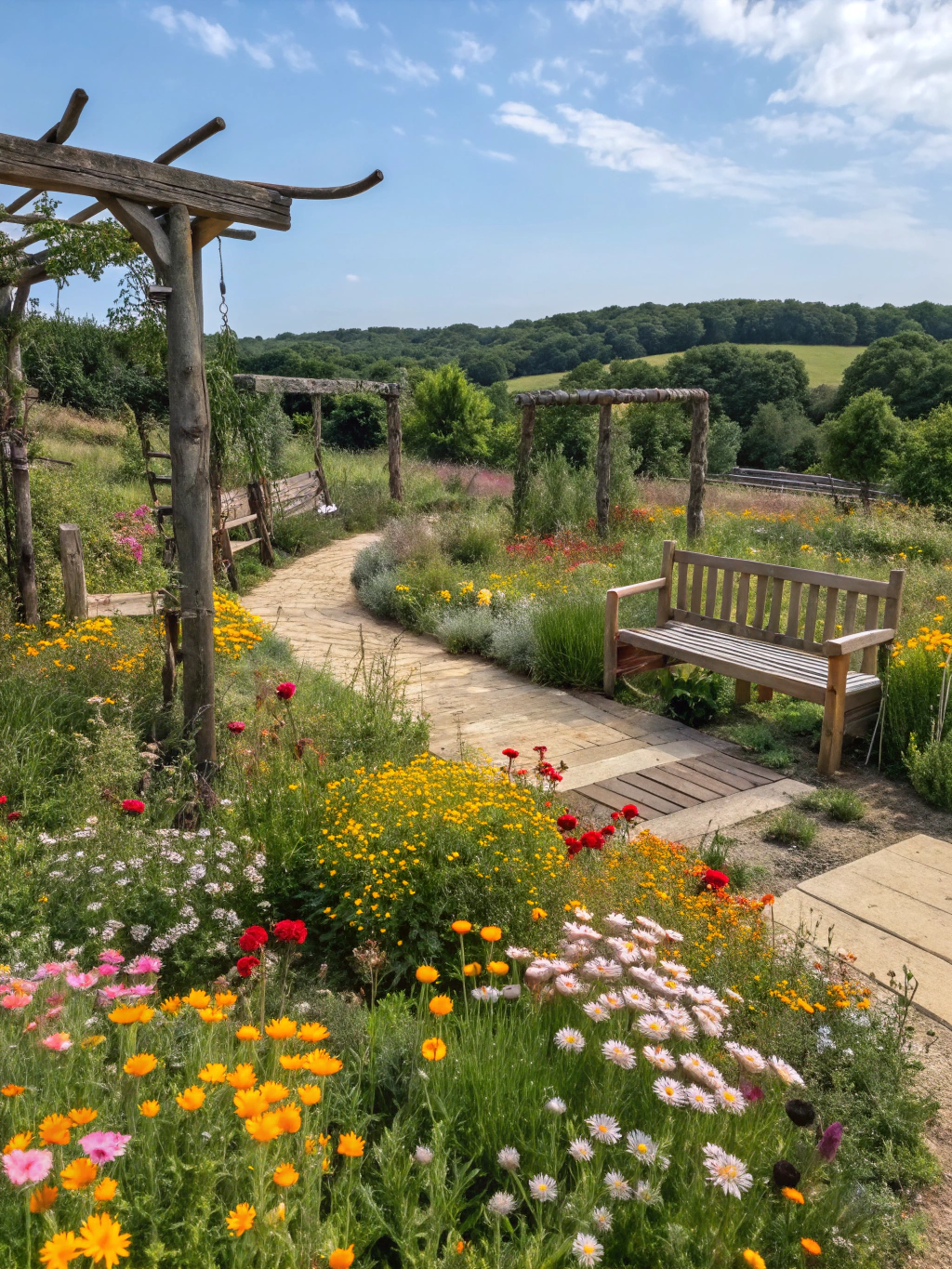
Wood elements complement natural wildflower landscapes beautifully.
Best Wooden Features
- Pergolas
- Arbors
- Benches
- Raised planters
Why It Works
Wood adds warmth and rustic charm.
14. Create a Seasonal Wildflower Mix for Continuous Blooms
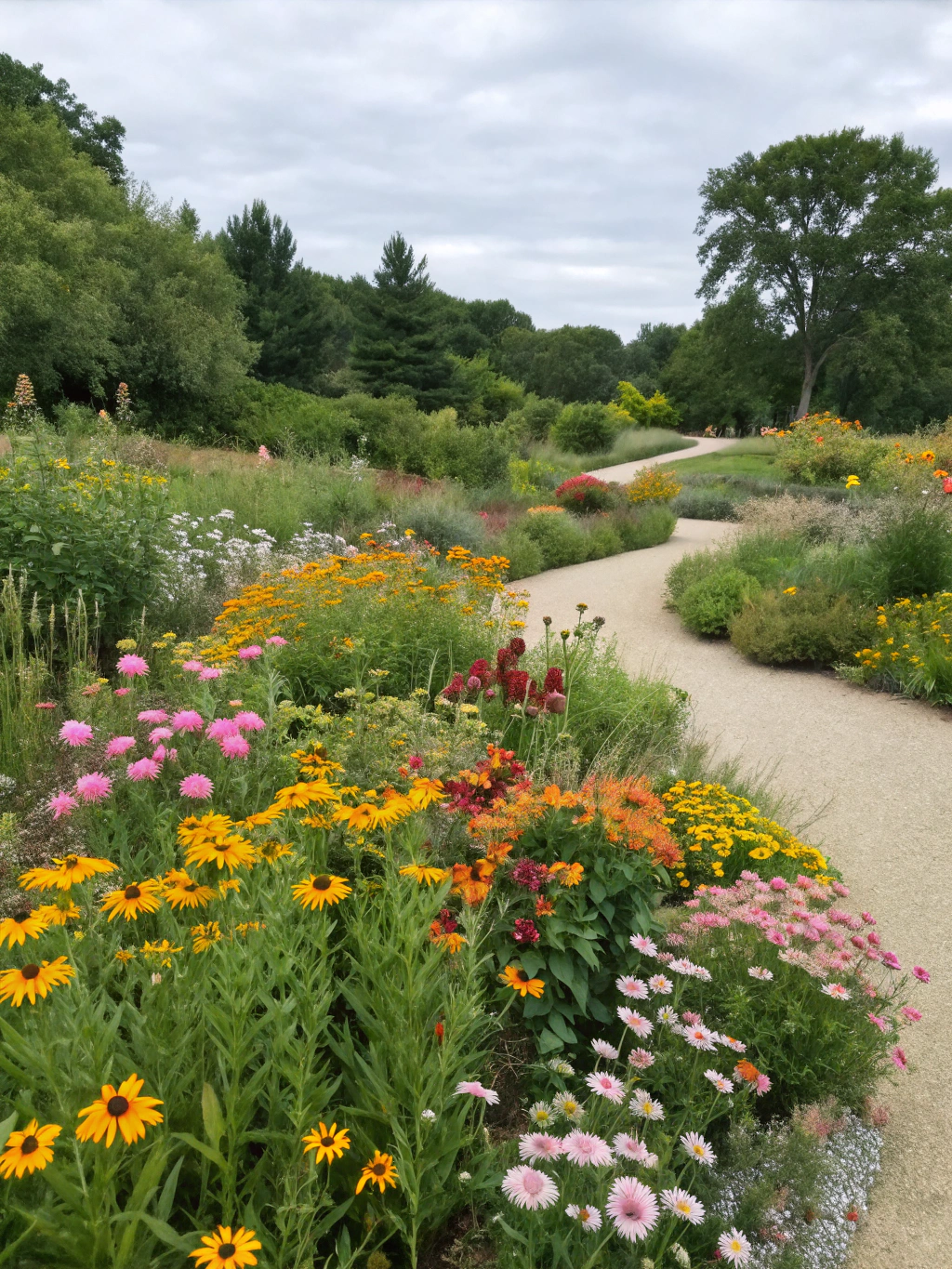
Mixing flowers with different bloom times keeps gardens colorful longer.
Best Seasonal Flower Pairings
- Spring: Lupines and daisies
- Summer: Coneflowers and cosmos
- Fall: Goldenrod and asters
Why It Works
Seasonal layering creates year-round visual interest.
15. Add Lighting Throughout the Wildflower Garden
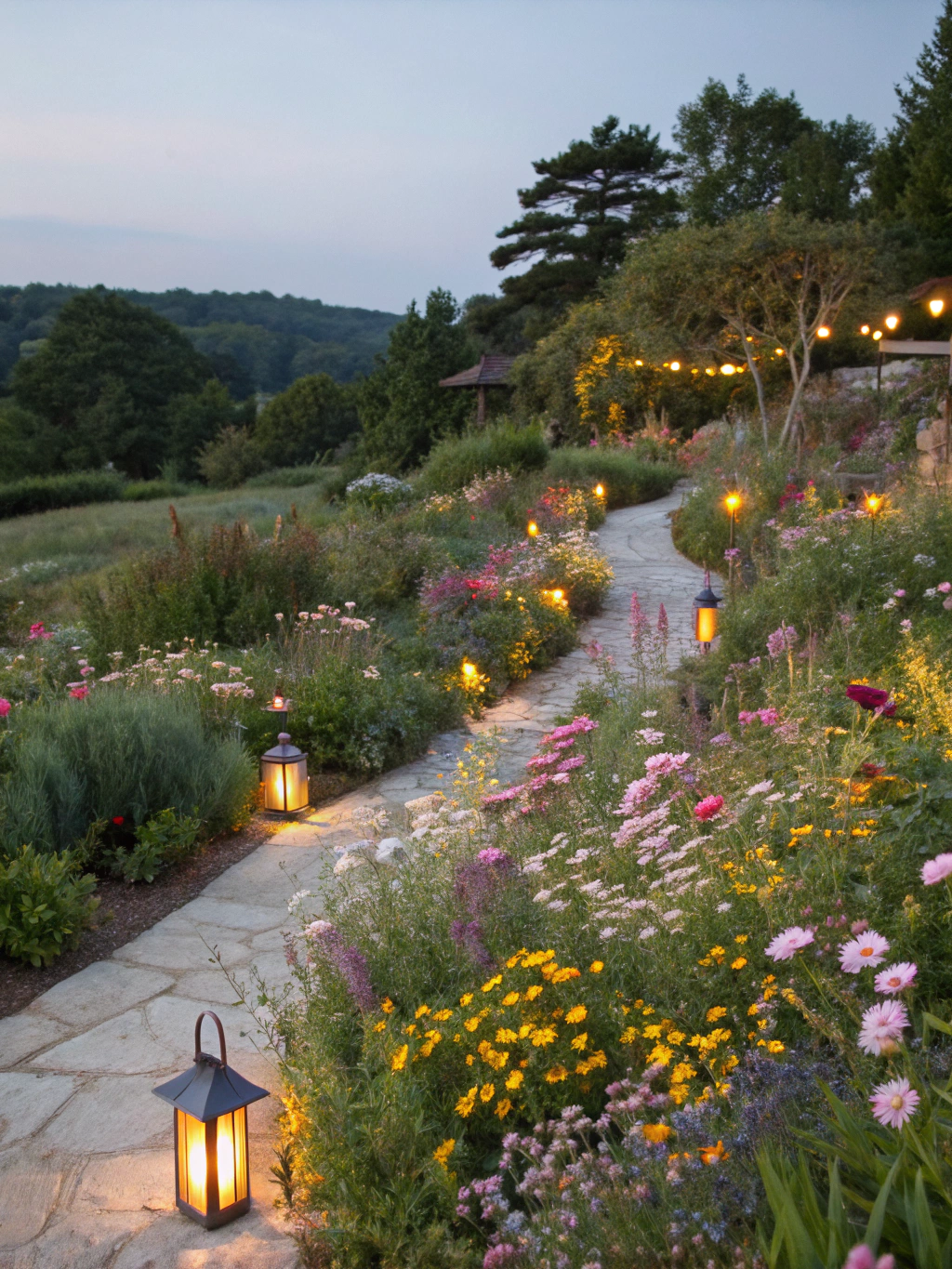
Lighting enhances pathways and flowers beautifully during evenings.
Best Wildflower Garden Lighting Ideas
- Solar path lights
- Lanterns
- String lights
- Tree uplighting
Why It Works
Warm lighting creates a magical nighttime atmosphere.
16. Create a Backyard Wildflower Retreat with Privacy Plants
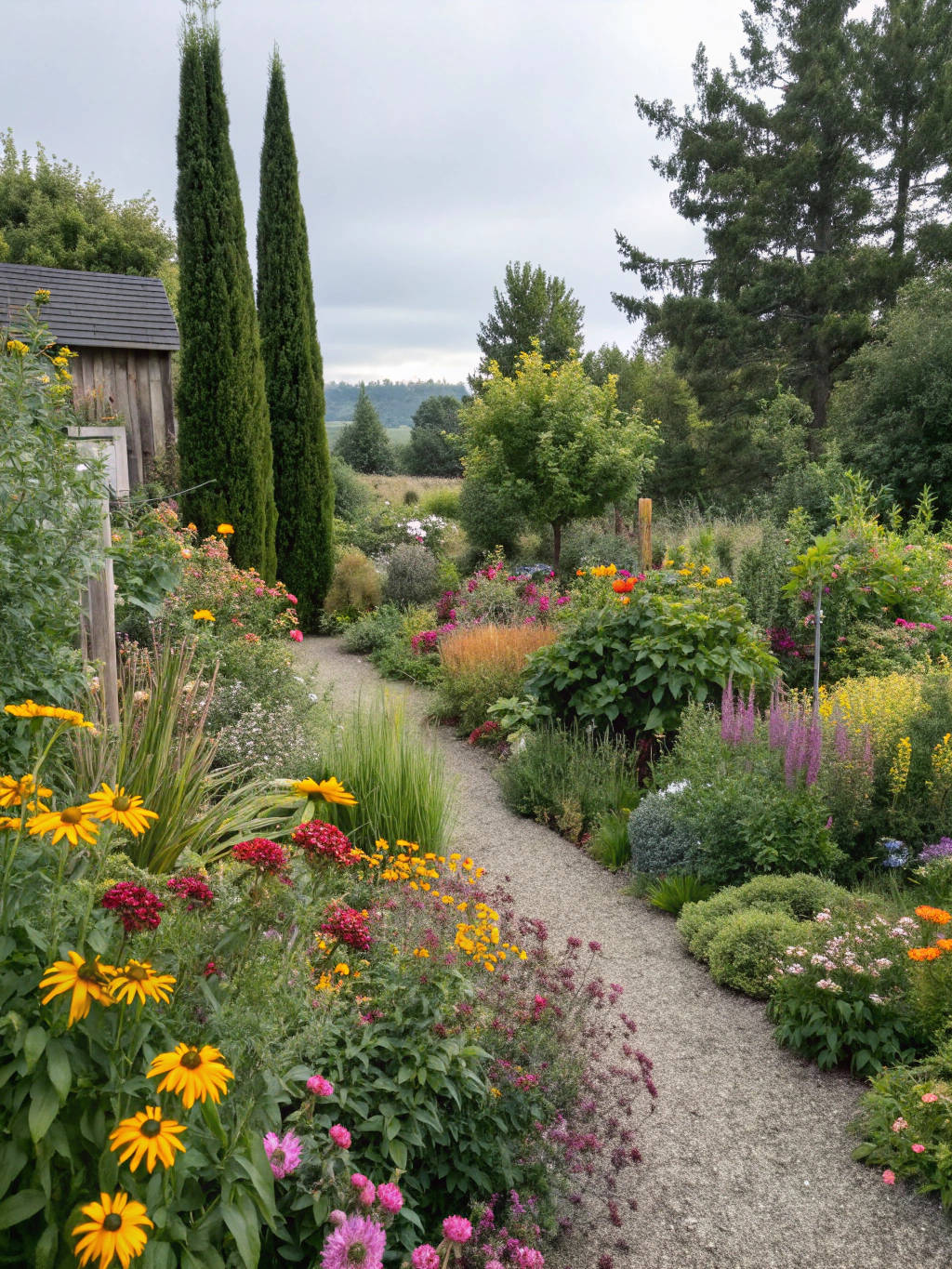
Layered shrubs and grasses help create secluded wildflower spaces.
Best Privacy Plants
- Arborvitae
- Tall ornamental grasses
- Evergreen shrubs
Why It Works
Privacy planting makes wildflower gardens feel more peaceful and immersive.
17. Use Stone Borders to Frame Wildflower Beds
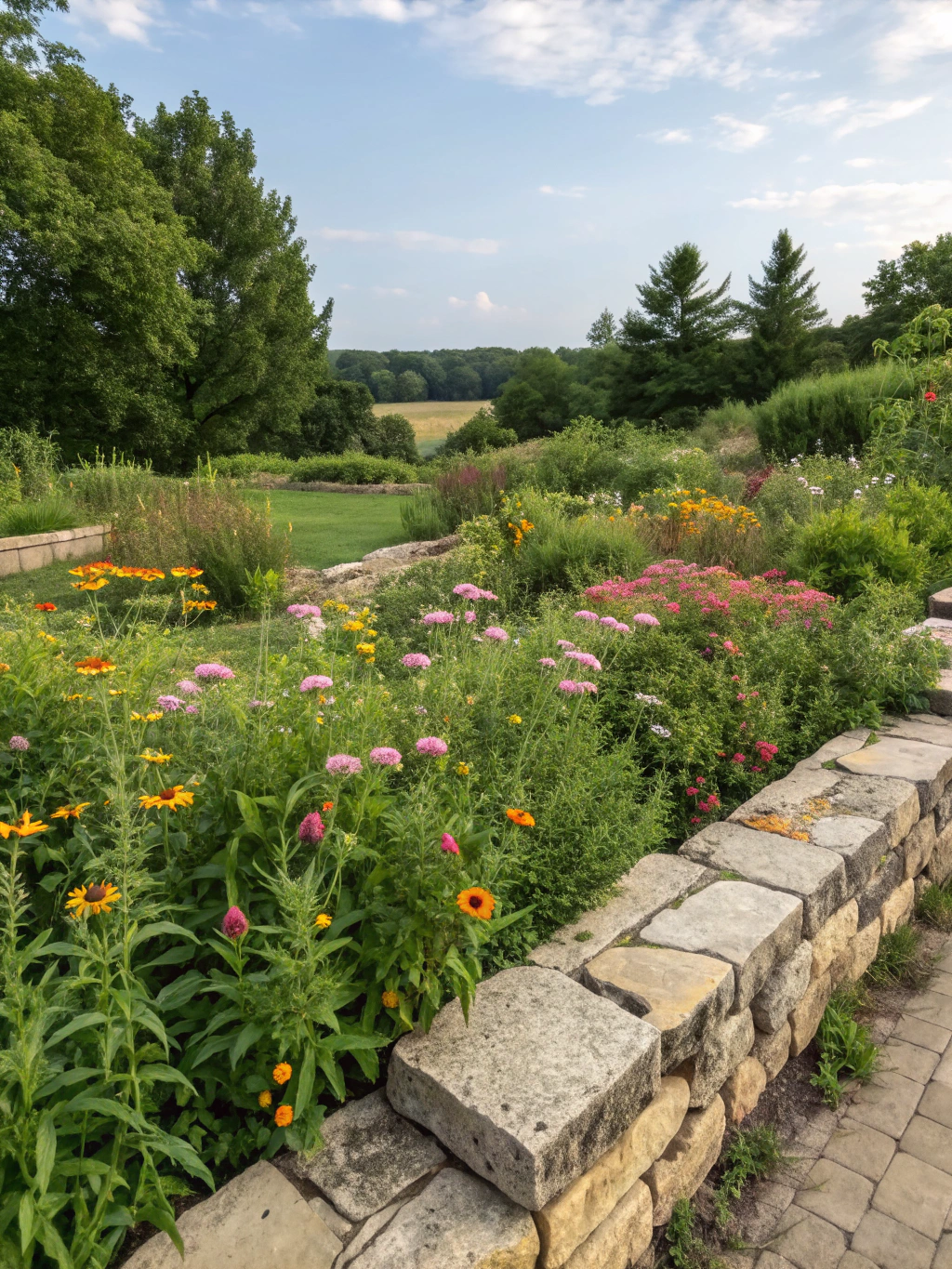
Stone edging helps natural landscapes feel more intentional and organized.
Best Stone Border Materials
- Flagstone
- River rocks
- Limestone
Why It Works
Stone borders create clean definition while maintaining a natural aesthetic.
Final Thoughts
Wildflower garden landscaping creates outdoor spaces that feel vibrant, natural, and full of movement while supporting pollinators and biodiversity. By combining layered flowers, ornamental grasses, pathways, seating, and thoughtful hardscaping, you can design a landscape that feels both relaxed and beautifully intentional.
Whether you prefer meadow-style landscapes, cottage-inspired gardens, modern wildflower borders, or pollinator-friendly backyards, the key is balancing natural abundance with subtle structure. With the right mix of flowers, textures, and seasonal planting, wildflower gardens can create stunning outdoor retreats filled with color, life, and year-round charm.
FAQs
What are the best flowers for a wildflower garden?
Coneflowers, cosmos, black-eyed Susans, coreopsis, lupines, bee balm, and lavender are excellent wildflower garden choices.
Are wildflower gardens low maintenance?
Yes, especially when using native wildflowers that naturally adapt to local soil and weather conditions.
How do you make a wildflower garden look organized?
Use pathways, borders, repeated plant groupings, and layered flower heights to create structure.
Can wildflowers grow in small backyards?
Yes, wildflowers work beautifully in small spaces when planted in raised beds, borders, or compact meadow sections.
Do wildflower gardens attract pollinators?
Yes, wildflower gardens are excellent for attracting bees, butterflies, hummingbirds, and beneficial insects.
What is the best time to plant wildflowers?
Most wildflowers are planted in early spring or fall depending on the climate and flower varieties.