

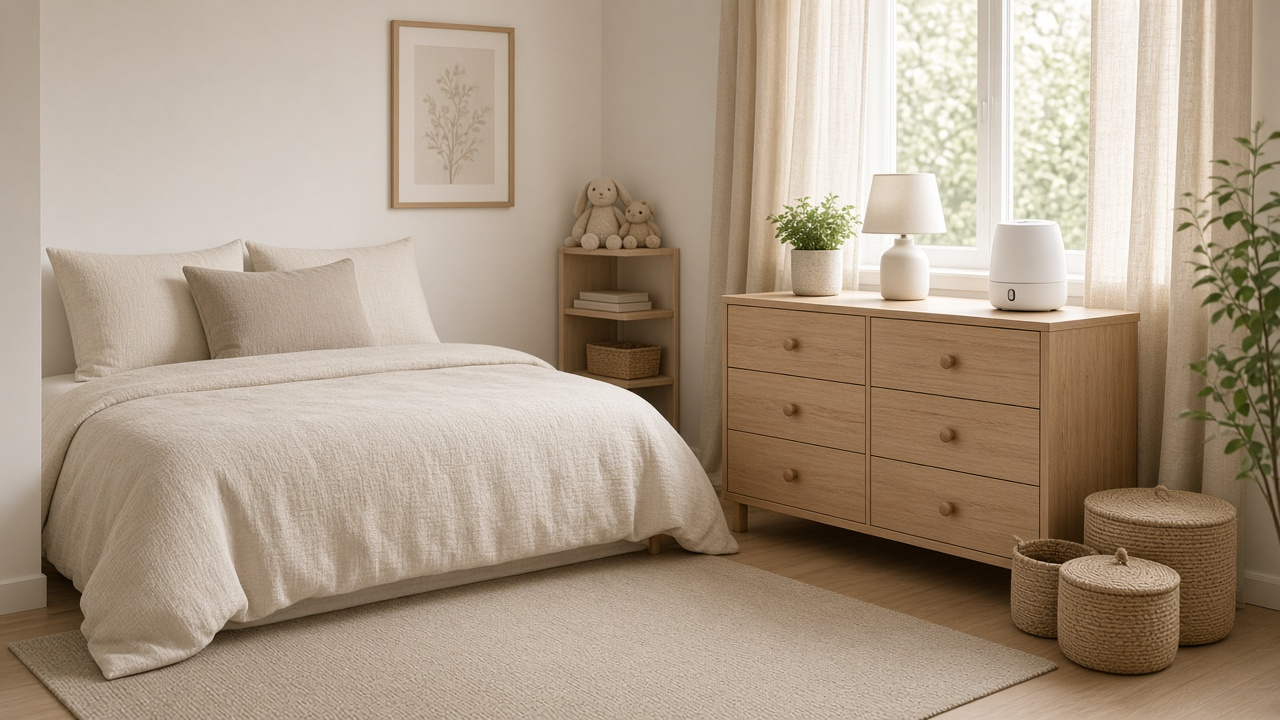
When our kids were little, I spent more time thinking about their bedroom as a pretty space than as a comfortable one. We live in Northern California, where the air can feel dry in summer and even drier once the heat clicks on at night. Our kids have eczema-prone skin, and I started to notice that the room itself — the sheets, the pillows, the rug, even the air — had as much to do with how they slept as anything else.
In this article
I’m Minesh Patel, a dad of two. I’m not a doctor, and this isn’t medical advice. This is the practical, home-decor approach we use to keep our kids’ bedrooms calm, soft and comfortable.
Choose Soft, Breathable Bedding and Pajamas
The first swap I made was the one that touches their skin all night. We switched to soft cotton sheets and pillowcases, and later added bamboo-viscose sheets that feel cool and smooth. I like a washed cotton or percale in a light, washable color. Dark, heavy bedding looks cozy, but it can trap heat, and a warm night is a restless one in our house.
The American Academy of Dermatology recommends dressing children in natural, breathable fabrics like 100% cotton, and notes that wool and synthetic fibers such as acrylic and polyester can irritate the skin. That’s the standard I use for sheets, pillowcases, duvet covers and pajamas. Bamboo has also felt comfortable for our kids as another soft, breathable option, though I don’t present it as medical advice.
I buy tagless pajamas, or I snip the tags, and I keep the fit loose so fabric isn’t rubbing all night. New sheets and pajamas always go through the wash first, which the AAD also suggests, because leftover dyes and fabric finishes can be irritating. On the bed, I use a cotton or bamboo fitted sheet, a lightweight duvet with a washable cover, and one extra cotton blanket they can kick off.
Skip the Scratchy Decor Textiles
This is the part that surprised me. So many “cozy kids’ room” looks depend on texture: a wool throw at the foot of the bed, a sequined or beaded pillow, a rough jute or sisal rug that feels fine under a shoe and much less comfortable under bare legs.
Those pieces came out of the bedroom. I still wanted the room to look finished, so I swapped rather than stripped. A soft cotton or knit throw folds just as nicely as a wool one. Pillow covers in washed linen or cotton, with a hidden zipper, give the bed shape without the scratch. If I want pattern, I use a washable cotton sham, not sequins, metallic thread or a crunchy embroidered surface. On the floor, I like a low-pile, washable rug or a cotton flatweave that can go in the machine. High-pile shag and rough natural-fiber rugs stayed in the hallway. If a textile wouldn’t feel good against the inside of my wrist, it doesn’t belong where our kids play and sleep.
You May Also Love



Keep the Room Cool and Not Too Dry
The air in the room matters as much as the fabrics. The AAD recommends keeping temperature and humidity at comfortable levels, and avoiding air that is extremely dry or rooms where a child may sweat and overheat, which it calls a common trigger of the itch-scratch cycle. It also suggests using a humidifier when the air feels dry, setting the thermostat so a child doesn’t get overheated, and keeping kids away from radiators, heating vents and fireplaces.
The AAD notes that keeping indoor humidity between 45% and 60% can reduce dry, itchy skin, and that a simple humidity gauge, sometimes sold as a hygrometer, makes this easy to check. In our house, I aim for the lower-to-middle part of that range, around 45 to 50 percent. Too dry, and skin can feel tight by morning. Too damp, and the room feels muggy.
A portable cool-mist humidifier sits on the dresser, not on the floor and not right next to the bed, so it stays stable, out of little hands, and far enough from the sheets. I run it at night during dry stretches, empty the tank in the morning, and clean it regularly according to the maker’s instructions, usually with a mild vinegar rinse and a thorough wash. The AAD’s dry-skin guidance specifically suggests placing a portable humidifier in the bedroom, running it during sleep, and cleaning it regularly. In warmer months, we use a fan or open a window, and we keep blankets light.
Use Dust-Friendly Storage That Still Looks Put Together
Open baskets look charming, but they collect dust. I switched to closed storage wherever I could — lidded bins on a low shelf, dresser drawers, and fabric bins with lids. Heavy, lined drapes can hold dust too, so we use washable cotton or linen-look curtains in a light color and put them in the laundry on a regular cadence.
Stuffed animals used to live in a pile on the bed. Now most of them sit in a lidded basket, and one or two washable favorites can come out at night. The AAD’s indoor-trigger guidance notes that dust mites live in everyone’s home, and that regular habits such as washing bedding weekly and dusting the room can help reduce them. The National Eczema Association also points out that more time indoors can mean more exposure to indoor allergens such as dust mites, pet dander and mold. I’m not trying to make a sterile room. I just want surfaces I can wipe and textiles I can wash.
Don't miss: 12+ Indian-Inspired Bedroom Decor Ideas for Culture and Color →
Set Up a Simple Laundry Nook for Gentler Washing
Next to the washer, I keep a small setup for our kids’ sheets, pajamas and towels: a fragrance-free detergent made for sensitive skin, a labeled scoop, and the extra-rinse setting saved as a favorite on the machine. A tray on the shelf holds the detergent, and a mesh bag hangs on a hook for washcloths and the one stuffed animal that goes through the wash.
The AAD’s self-care advice is straightforward: a detergent made for sensitive skin may be helpful, scented fabric softener and dryer sheets may contribute to irritation, it’s best to use only the recommended amount of detergent, and the load needs enough water for a thorough rinse. I skip fabric softener and dryer sheets for their clothes and bedding. An extra rinse takes a few more minutes, but it has been one of the simplest changes in our house. I also wash bedding weekly.
Keep Exploring


A Quick Bedroom Checklist
When I’m setting up a room, or refreshing one for a new season, this is the short list I use:
- Soft, breathable cotton or bamboo sheets, pillowcases and a washable duvet cover
- Loose, tagless cotton or bamboo pajamas, washed before the first wear
- No wool throws, sequined pillows or rough rugs in the sleep space
- A cool room, with the bed away from heating vents
- A clean humidifier on a dresser, with humidity around 45 to 50 percent
- Closed bins, washable curtains, and only a couple of washable stuffed animals on the bed
- Fragrance-free detergent, no dryer sheets, and an extra rinse for bedding and pajamas
Before bed, after a short lukewarm bath, we also smooth on a simple honey-based moisturizer while skin is still a little damp. It’s a quiet step, and it fits the same idea as the room itself: keep things soft, simple and comfortable.
A kids’ bedroom doesn’t have to look clinical to feel gentle on sensitive skin. Soft fabrics, a cool and comfortably humid room, storage you can actually clean, and a laundry habit that leaves less residue in the fibers have made our kids’ rooms calmer places to sleep.
Minesh Patel is a dad of two and founder of Eczema Honey, a small family skincare company started in 2017 and made in California. He writes about the everyday home routines that help his family keep sensitive skin comfortable.