15+ Patio Herb Garden Ideas to Grow Easily
Growing your own herbs is one of those things that sounds like it requires more effort than it actually does. The reality is that most culinary herbs are among the easiest plants you can grow, they thrive in containers, they tolerate the occasional missed watering, and they reward even the most minimal attention with continuous harvests that improve every meal you cook with them.
A patio herb garden is also one of the best investments you can make in your outdoor space per square foot of ground used. A single healthy basil plant costs less than a packet of fresh basil from the grocery store and produces ten times the volume of leaves over a full summer. The same logic applies to rosemary, thyme, mint, chives, and most other common culinary herbs. Grow them yourself and you stop buying them almost entirely.
Why a Patio Herb Garden Changes the Way You Cook
A herb garden close to where you cook changes your relationship with fresh ingredients in a way that buying herbs from a store never does. When herbs are three steps from your grill or kitchen door, you use them constantly because they are there, they are free, and they are always at peak freshness.
You start adding a handful of fresh thyme to things you would never have bothered with. You tear basil over everything in summer. You muddle fresh mint into drinks without thinking twice about it. The cooking becomes more spontaneous, more fragrant, and more genuinely seasonal because the ingredients are living and growing right beside you rather than sitting in a plastic packet at the back of the refrigerator.
Love Chic Living Club?
Add us as one of your preferred Google sources and discover more home decor, DIY, outdoor, and lifestyle inspiration from us.
There is also something quietly satisfying about the maintenance routine of a herb garden. Watering in the morning, pinching off flower heads to keep the plants productive, harvesting what you need for that evening’s dinner. It is a small daily ritual that connects you to the growing season and to the food you eat in a way that modern life rarely provides.
The Most Important Things to Get Right Before You Plant
Most herb growing failures come from the same small set of mistakes. Getting these fundamentals right sets up every setup on this list for success.
Sunlight Is Non-Negotiable
Mediterranean herbs including basil, rosemary, thyme, oregano, and sage need a minimum of six hours of direct sun daily to grow productively and develop the aromatic oils that make them flavorful. In a shaded patio position these herbs survive but produce thin, weak, essentially tasteless growth that is not worth harvesting. Before choosing which herbs to grow, spend a full day observing exactly how much direct sun each part of your patio receives and match your herb choices accordingly.
If your patio is partially or fully shaded, all is not lost. Mint, parsley, coriander, chervil, and chives all tolerate partial shade and grow reasonably well with three to four hours of direct sun. These are your best options for a less sunny patio position.
You May Also Love


Drainage Matters More Than Watering Frequency
The most common cause of herb death in containers is not underwatering. It is overwatering combined with poor drainage. Every container in your herb garden must have drainage holes in the base and those holes must not be blocked by saucers that hold water permanently beneath the pot. Mediterranean herbs in particular evolved in free-draining, relatively poor soils and their roots suffocate and rot quickly when sitting in waterlogged compost.
Use a well-draining potting mix rather than heavy garden soil in all herb containers. Adding twenty percent perlite or coarse grit to standard potting compost improves drainage significantly and creates the fast-draining, slightly lean growing conditions that most culinary herbs genuinely prefer.
Don't miss: 17+ Inspiring Zen Patio Ideas for Relaxation →
Container Size Affects Everything
Herbs in containers that are too small for their root systems dry out constantly, struggle to produce new growth, and exhaust the available nutrients very quickly. A basil plant in a four-inch pot needs watering twice a day in summer and replanting within weeks. The same plant in a ten-inch pot needs watering every two days and grows productively all season. Sizing up your containers is the single easiest way to reduce the maintenance demands of a container herb garden while improving the health and productivity of your plants.
Keep Exploring



The Best Herbs to Grow on a Patio: A Quick Guide
Before diving into the specific setup ideas, here is a brief guide to the herbs that perform best in patio container situations and what each one needs to thrive.
Basil is the star of the summer herb garden. It needs warmth, full sun, and consistently moist but well-drained soil. Pinch out the growing tips regularly to prevent flowering and the plant will produce abundantly all summer. Grow it in a generous pot of at least eight inches diameter for the best results.
Rosemary is one of the most ornamental and useful patio herbs available. It grows as a handsome evergreen shrub, tolerates drought extremely well, and provides a continuous harvest of aromatic leaves year-round in mild climates. Give it full sun and very well-drained soil and it will thrive for years in a large container with minimal attention.
Thyme, oregano, and sage form the Mediterranean trio that suits the same hot, sunny, well-drained conditions. All three are drought-tolerant, long-lived in containers, and provide continuous harvests across a huge range of cuisines. Group them together in a shared trough or in individual terracotta pots in the sunniest part of your patio.
Mint is one of the most useful and vigorous herbs in the kitchen garden. It tolerates partial shade better than most culinary herbs and grows enthusiastically in moist, reasonably rich soil. Keep it in its own container to prevent it from spreading into and overwhelming neighboring plants. A single large pot of mint will provide an essentially unlimited supply of leaves for drinks, sauces, and cooking throughout the season.
Chives are among the easiest and most reliable herbs for any patio setup. They tolerate a wider range of light and soil conditions than most herbs, require almost no maintenance, produce beautiful purple pompom flowers in early summer that are themselves edible, and provide a continuous harvest of mild onion-flavored leaves from spring through autumn.
Parsley is a biennial that performs best in its first year, producing abundant flat or curly leaves in a moist, partially shaded to full sun position. It is slower to germinate than most herbs and benefits from buying as a young plant rather than growing from seed directly into the final pot.
These 15 ideas cover every setup from a single windowsill row of pots to a full tiered herb display, so you can find the approach that fits your patio, your cooking habits, and your ambition.
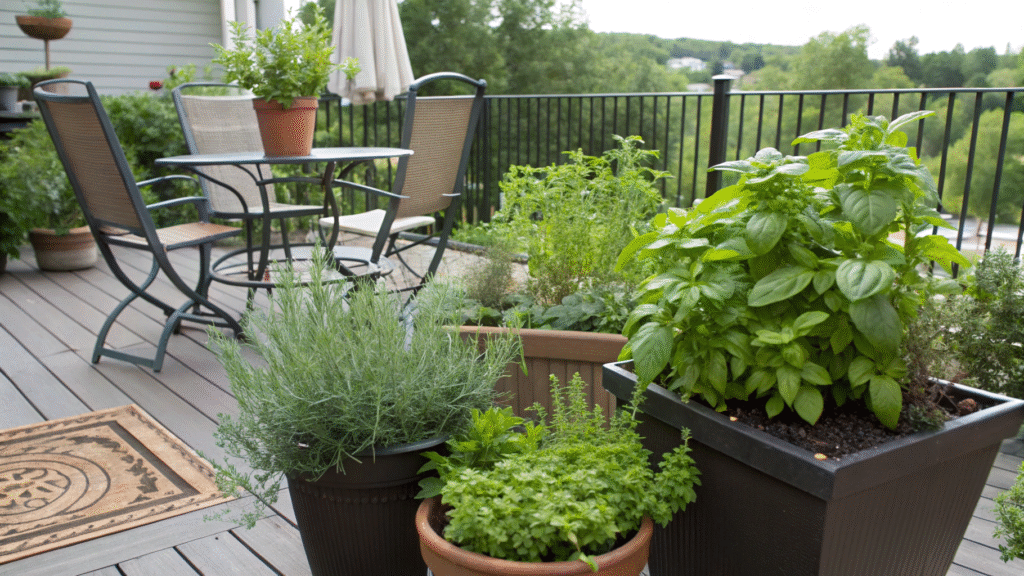
1. Potted Herb Collection
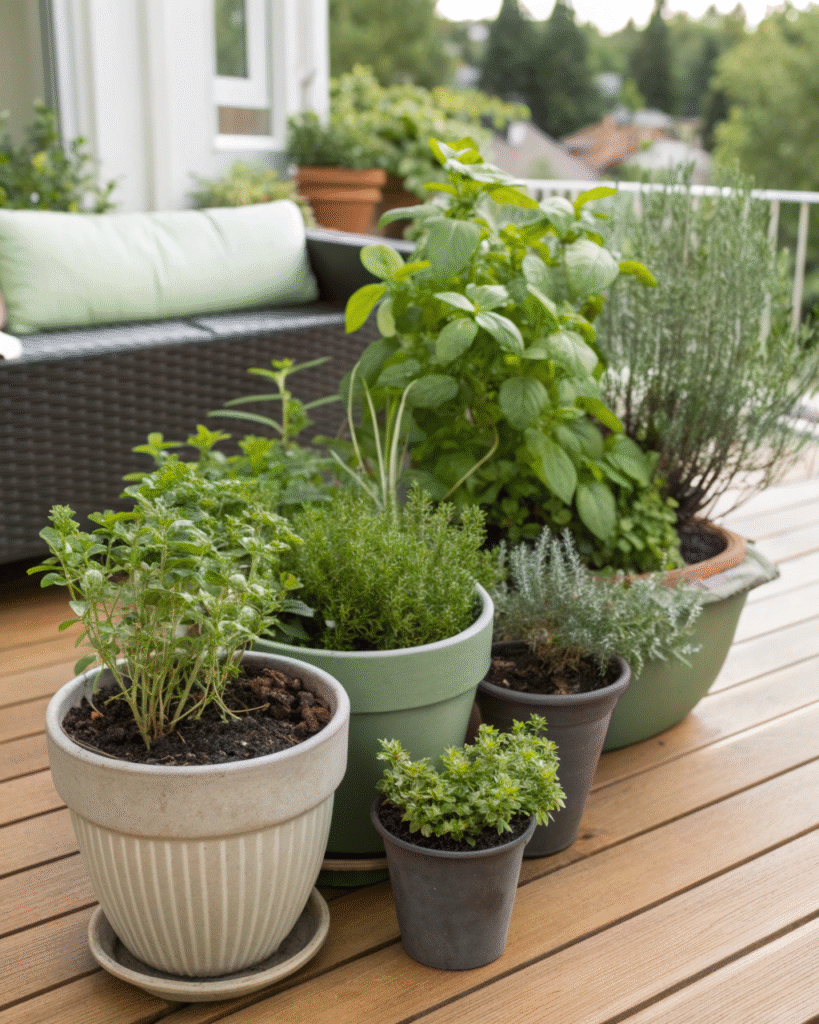
Group different herbs in individual pots for a classic and flexible setup.
Pro Tip: Use terracotta pots for proper airflow and drainage to keep herbs healthy.
2. Vertical Wall Planter
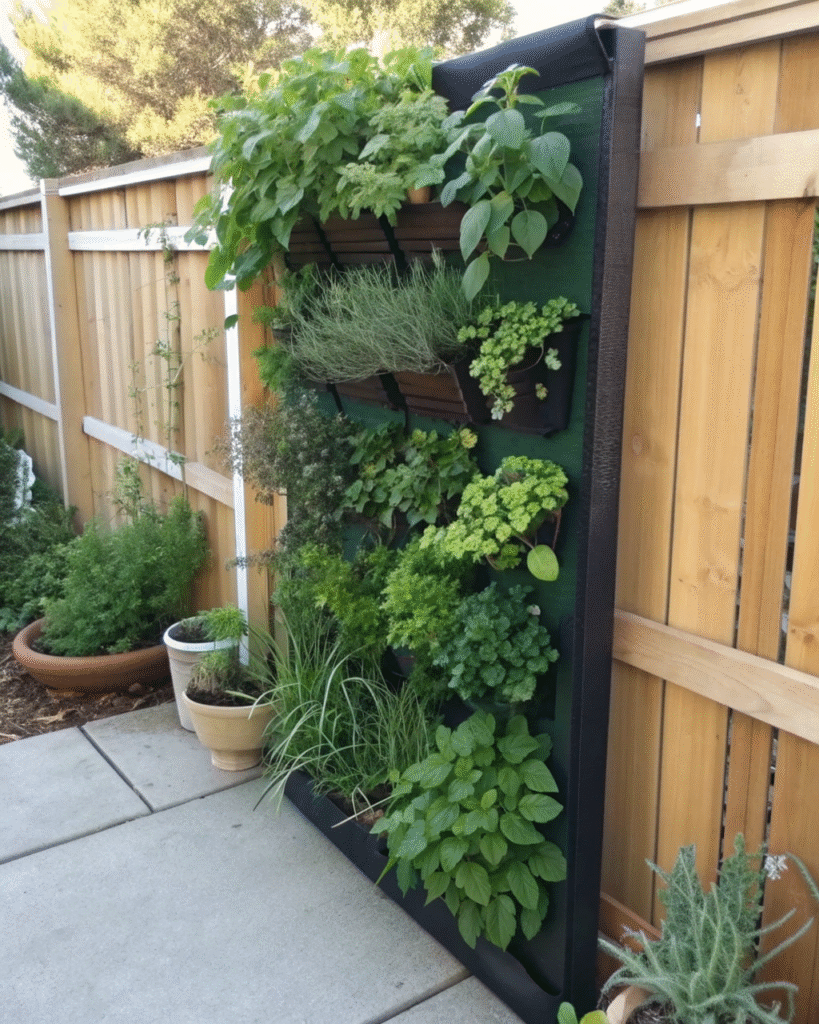
Install a vertical garden to save space and create a stunning green wall.
Pro Tip: Plant herbs with different leaf shapes for a textured, layered look.
3. Tiered Herb Stand
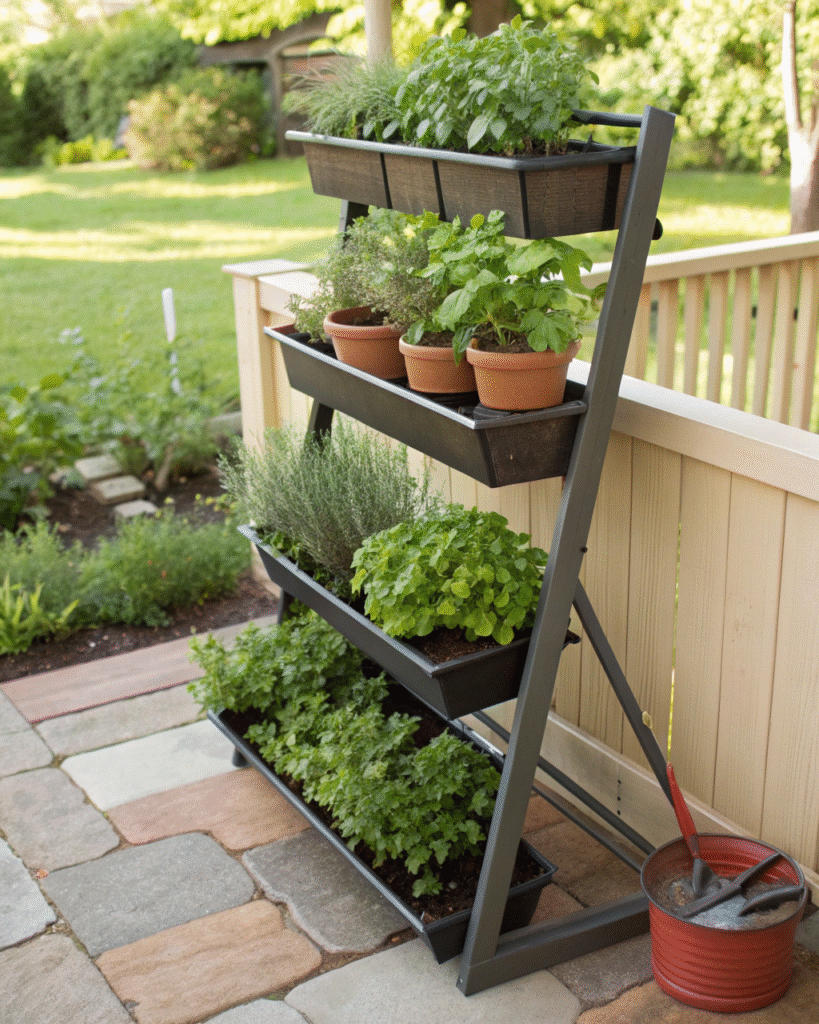
A multi-level plant stand allows you to grow several herbs in a compact space.
Pro Tip: Place sun-loving herbs like basil on top and shade-friendly ones below.
4. Hanging Basket Garden
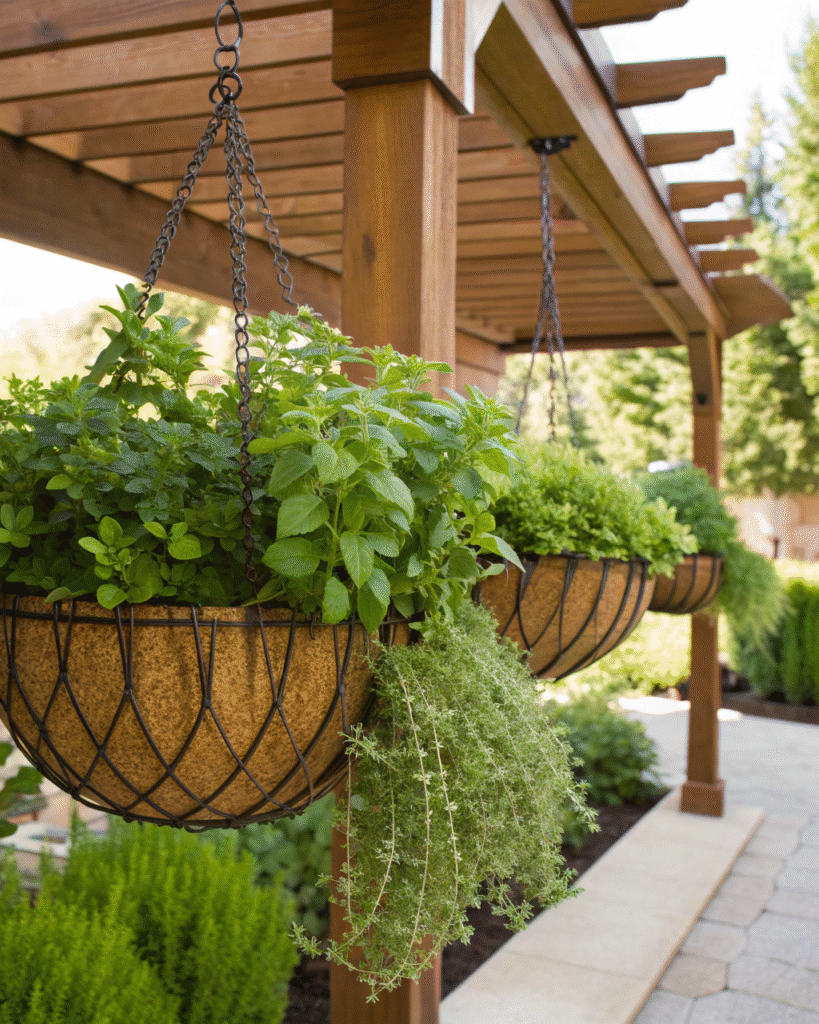
Use hanging baskets for herbs like mint or oregano that spill beautifully over the edges.
Pro Tip: Choose lightweight baskets and line them with coconut fiber for moisture control.
5. Wooden Crate Garden
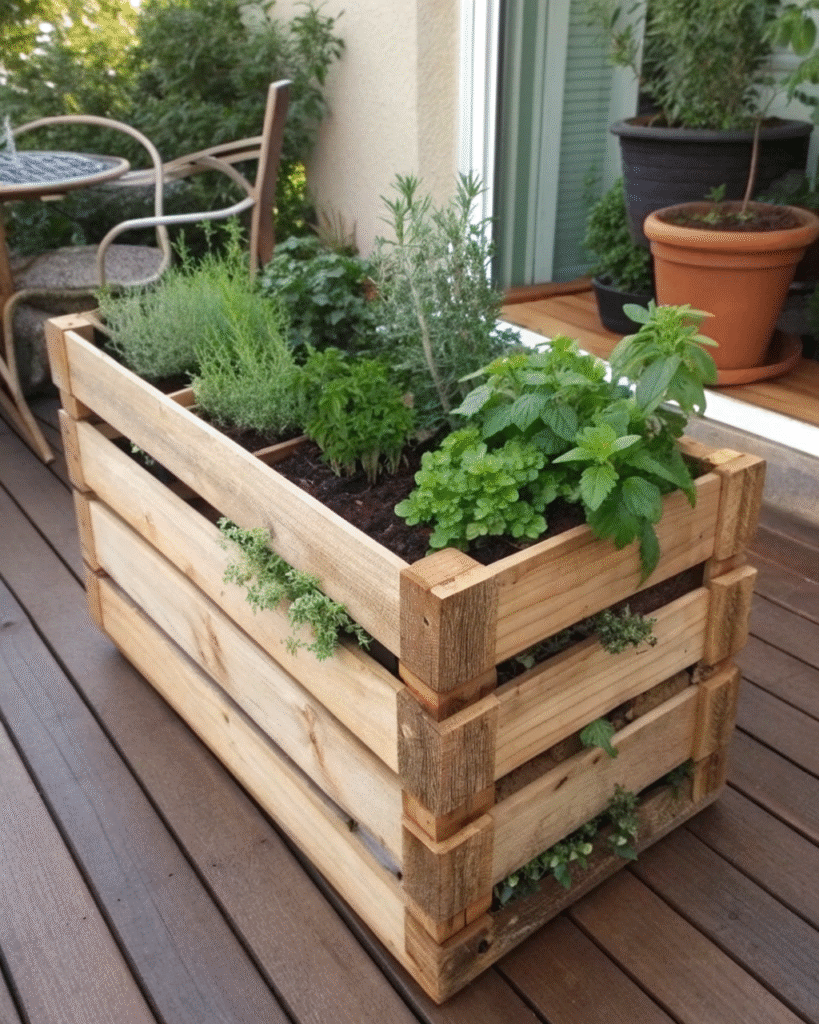
Repurpose wooden crates for a rustic, DIY herb planter.
Pro Tip: Add small pebbles at the bottom of each crate to improve drainage.
6. Windowsill Herb Setup
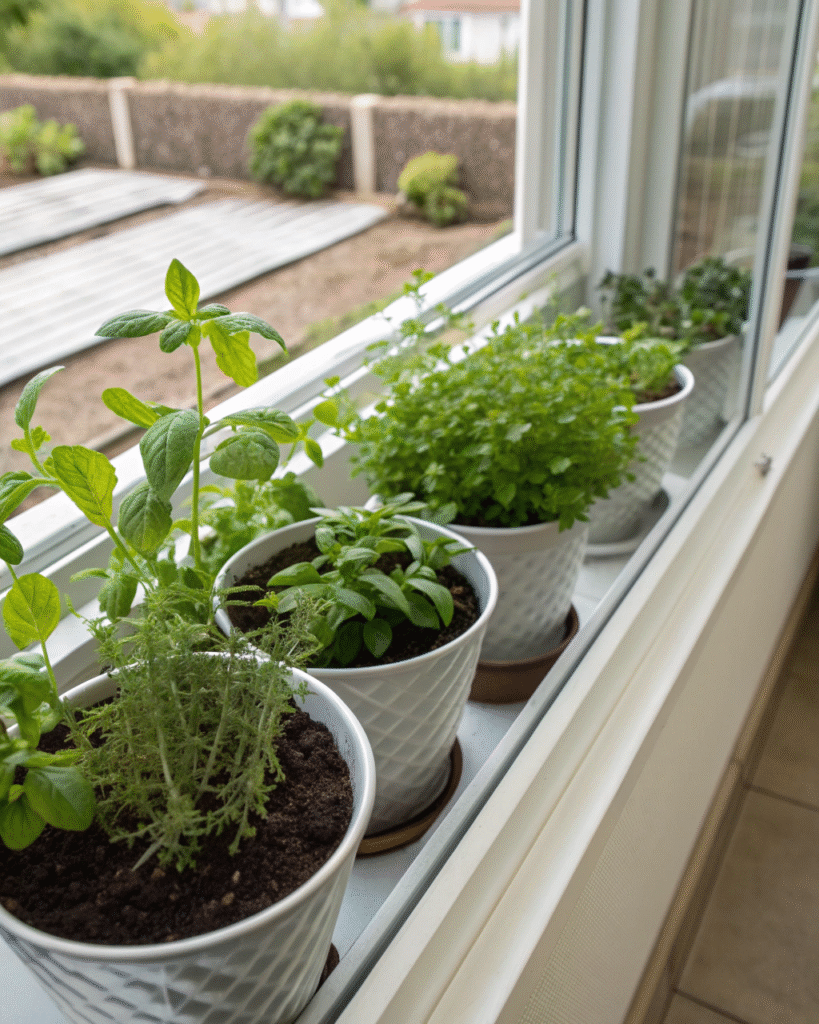
If your patio connects to a window, use the sill for growing compact herbs.
Pro Tip: Keep the soil moist and rotate the pots weekly for even sunlight exposure.
7. Raised Planter Box
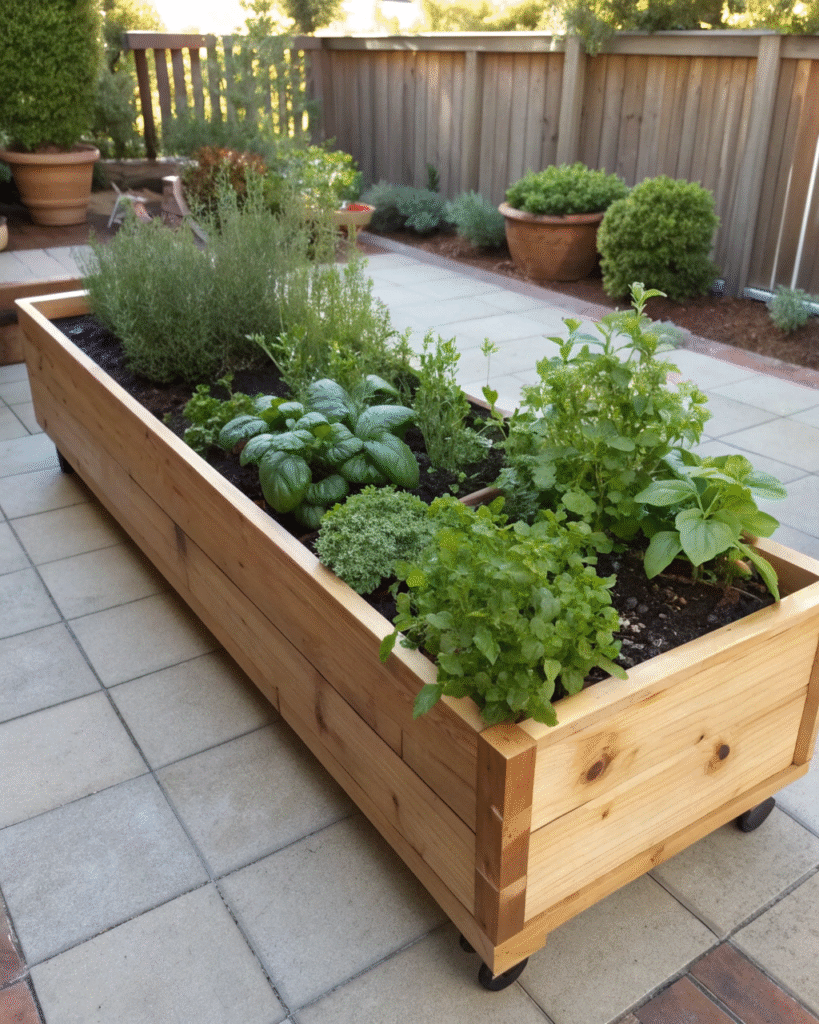
A raised planter is perfect for easy gardening without bending down.
Pro Tip: Use a mix of compost and potting soil for nutrient-rich growth.
8. Mason Jar Herb Garden
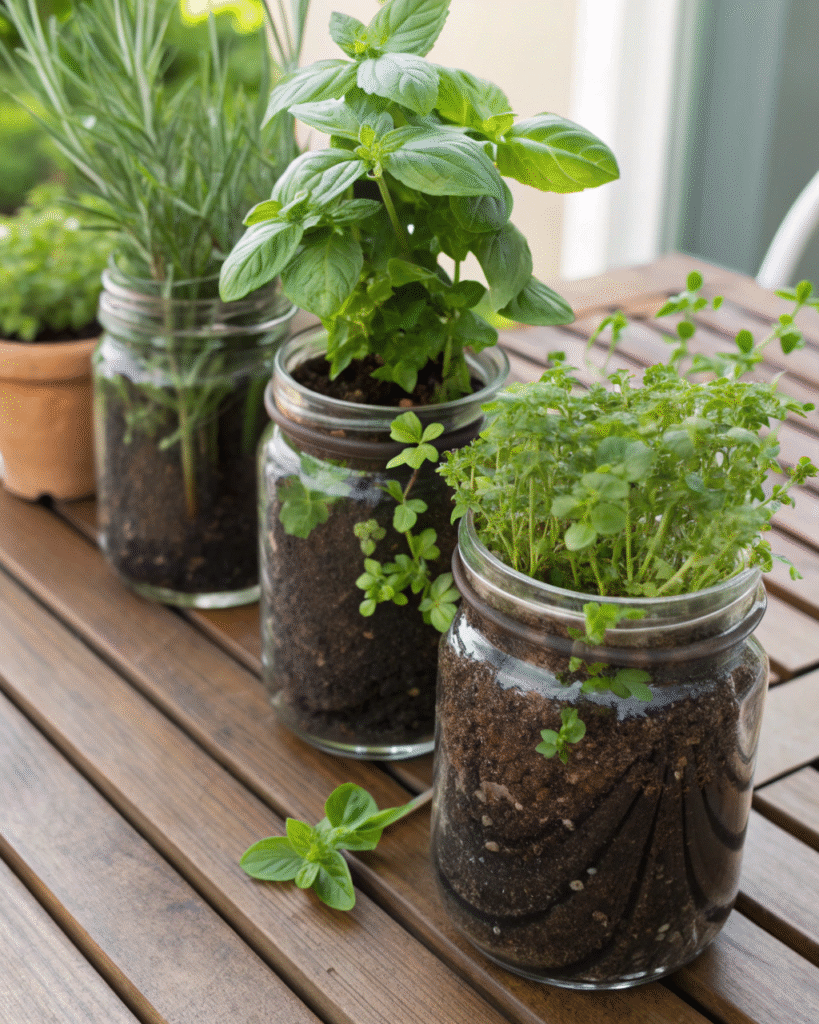
Grow herbs in mason jars for a charming and space-saving option.
Pro Tip: Place small pebbles at the base of each jar for drainage before adding soil.
9. Herb Spiral Garden
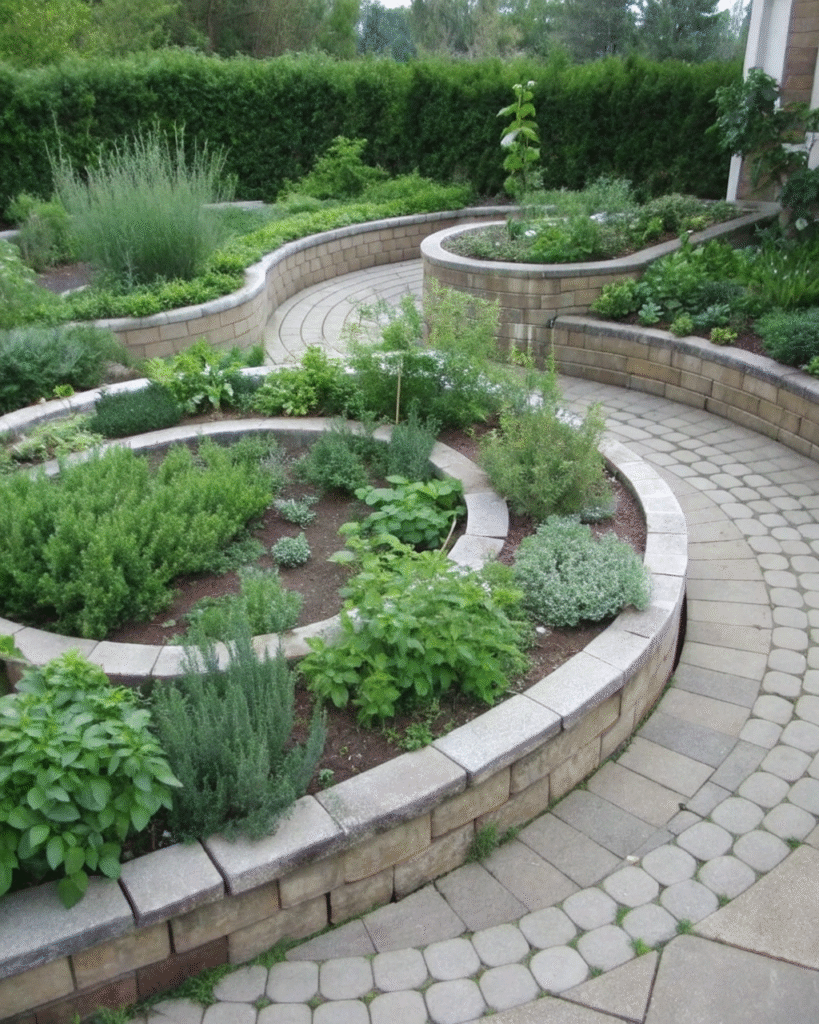
A spiral garden design looks beautiful and helps with efficient water distribution.
Pro Tip: Place drought-tolerant herbs like thyme at the top and moisture-loving ones like mint at the base.
10. Ladder Shelf Planter
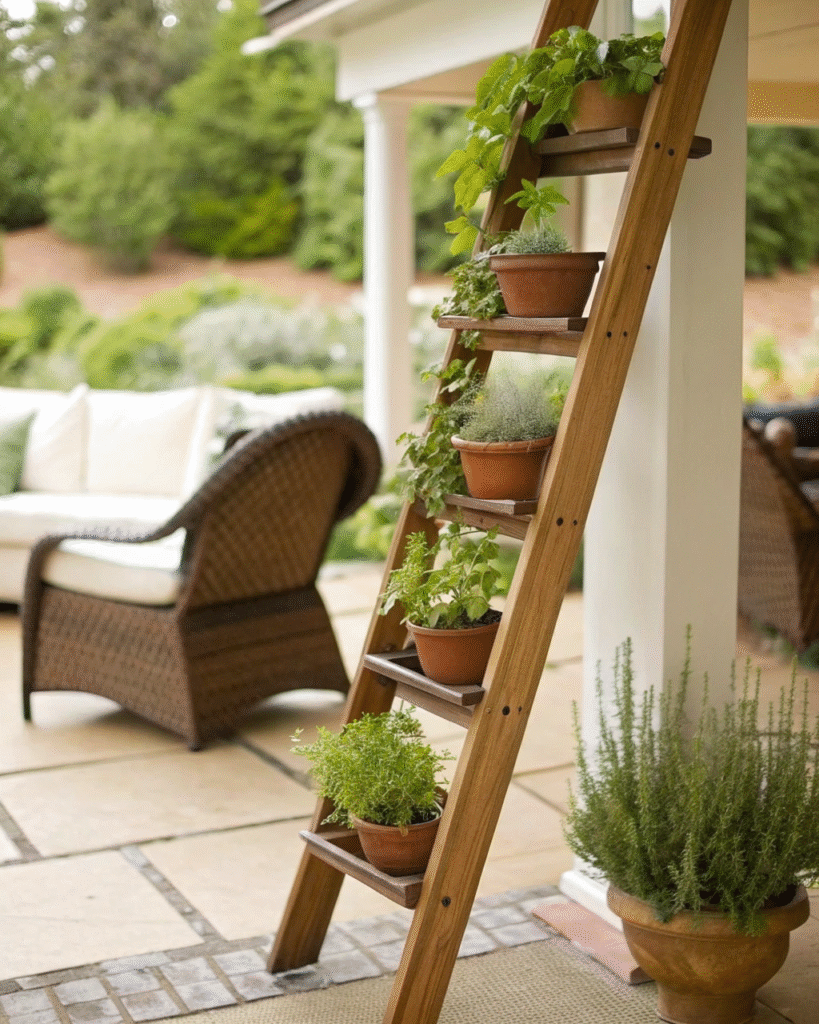
A wooden ladder makes an attractive vertical display for herbs.
Pro Tip: Paint or stain the ladder to protect it from outdoor weather.
11. Tabletop Herb Garden
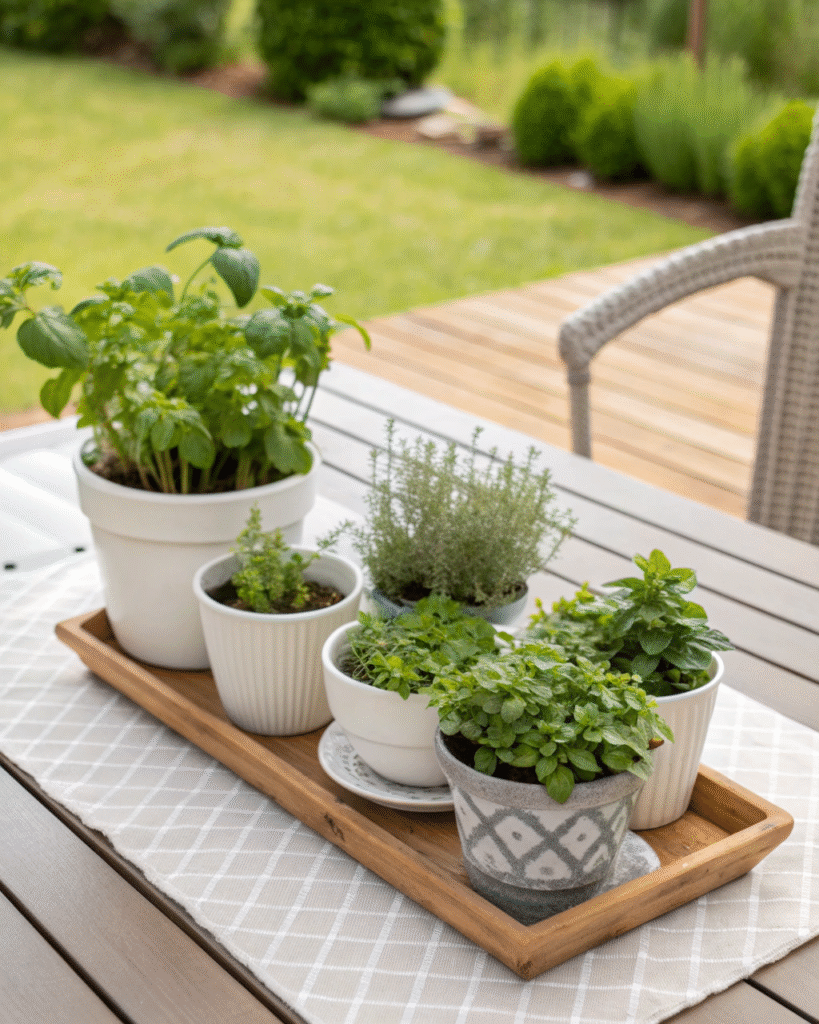
Set up small herb pots on your patio table for easy access during meals.
Pro Tip: Choose compact herbs like chives or parsley that don’t overgrow the table space.
12. Hanging Tin Planters
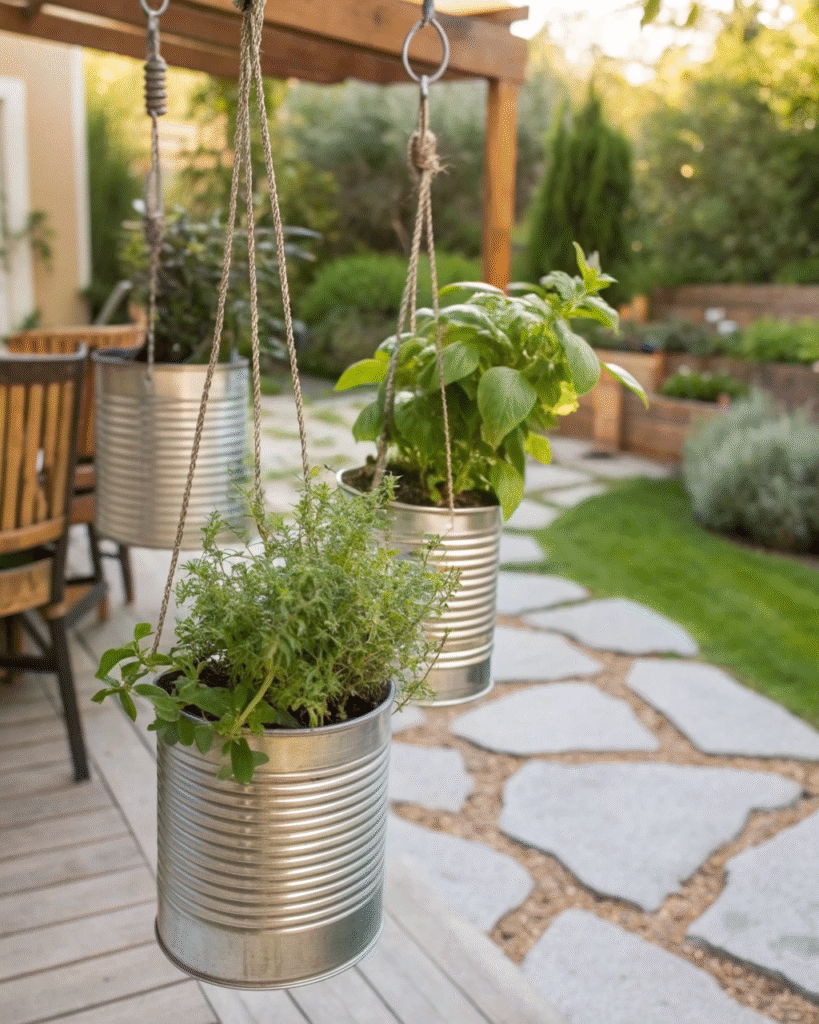
Use metal tins or recycled cans for a creative, budget-friendly garden.
Pro Tip: Drill small holes in the bottom for drainage and add a thin gravel layer.
13. Rolling Herb Cart
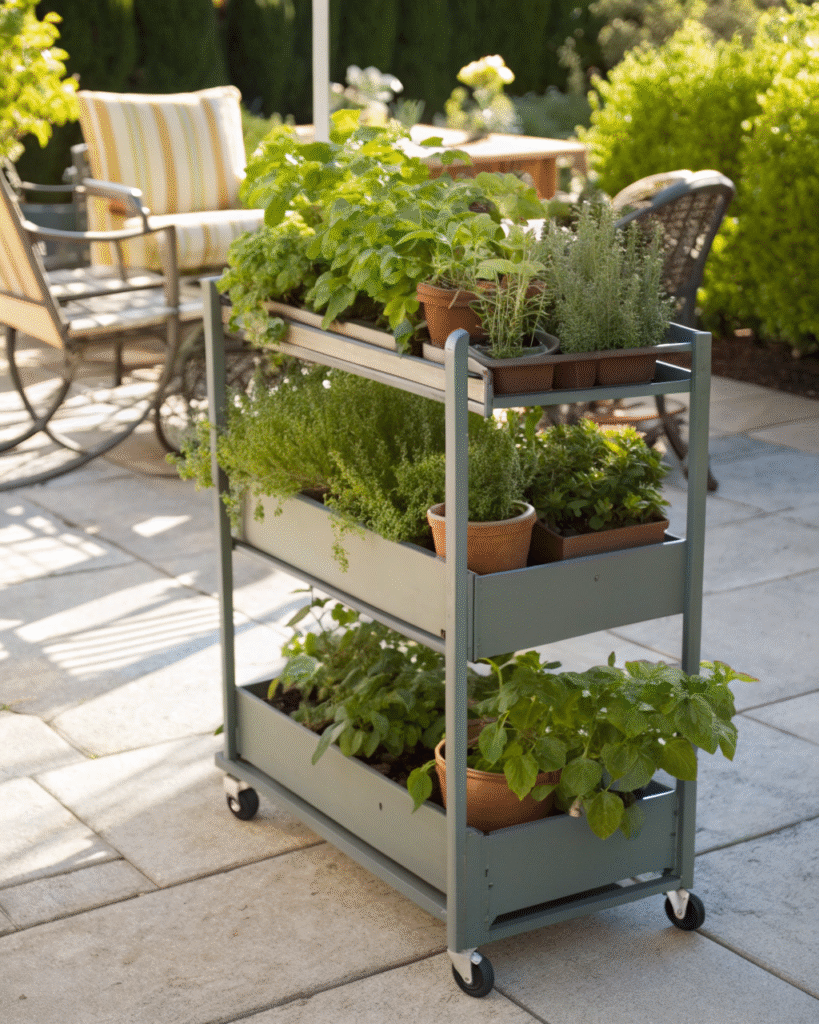
A mobile cart lets you move your herbs easily to catch the best sunlight.
Pro Tip: Keep frequently used herbs like basil and cilantro on the top shelf for easy access.
14. Combination Planter
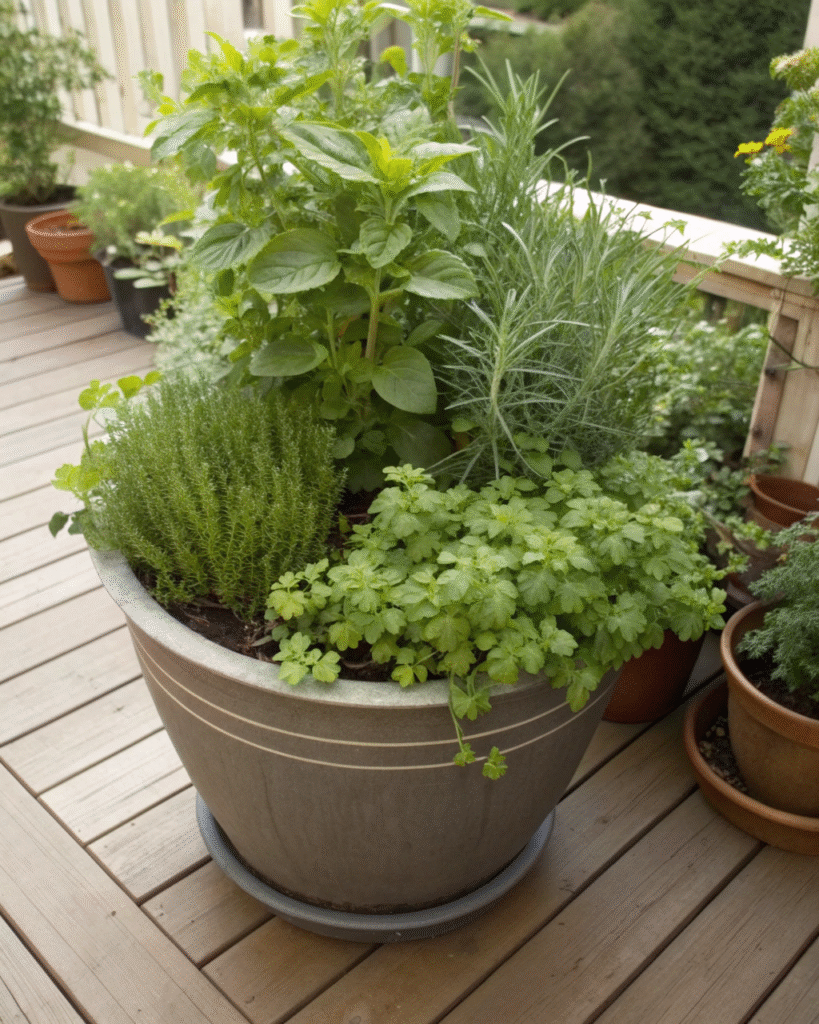
Grow multiple herbs together in one large pot for a lush, full look.
Pro Tip: Pair herbs with similar water and light needs, such as rosemary and thyme.
15. Indoor-Outdoor Transition Garden
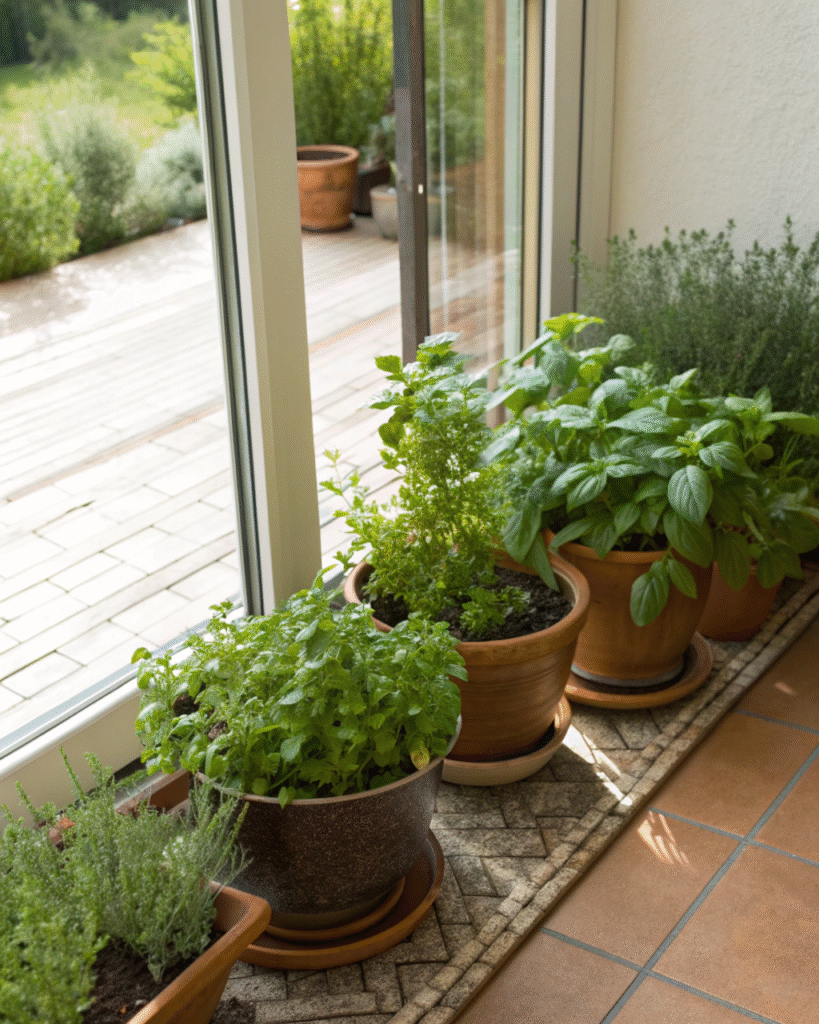
Place herbs near your patio door so they thrive both indoors and outdoors.
Pro Tip: Bring them inside during harsh weather to keep them growing year-round.
Final Thoughts
A patio herb garden is one of those rare improvements to your outdoor space that genuinely pays for itself in the first season. Not in some abstract added-value sense, but in real money not spent on fresh herbs at the grocery store, in real meals improved by ingredients that were growing in a pot two minutes before you needed them.
Start with three or four herbs you actually cook with regularly. Get them in the right size containers in the right amount of sun and master keeping them healthy and productive before expanding. By the end of your first season you will have a much clearer picture of which herbs earn their space on your specific patio and which ones you want more of next year. Build from there. The garden will keep getting better and so will the cooking.
Frequently Asked Questions
What are the easiest herbs to grow on a patio?
Chives, mint, rosemary, thyme, and basil are the five most reliably productive and easiest to maintain culinary herbs for patio container growing. Chives and mint are nearly indestructible. Rosemary and thyme are extremely drought-tolerant. Basil rewards consistent warmth and moisture with abundant harvests all summer. All five are widely available as young plants from garden centers and most grocery stores through the growing season.
How often should I water patio herb containers?
The honest answer is that it depends on the herb, the container size, the weather, and the season. As a starting guide, Mediterranean herbs like rosemary, thyme, sage, and oregano need watering when the top inch of soil feels dry, which in summer is typically every two to three days. Moisture-loving herbs like basil, mint, and parsley need watering when the soil surface feels barely moist, which in summer is often daily. Push your finger into the soil before watering rather than watering on a fixed schedule.
Can I grow herbs on a shaded patio?
Yes, but your herb choices are more limited in shade. Mint, parsley, coriander, chervil, and chives all grow reasonably well with three to four hours of direct sun and will manage in bright indirect light. Mediterranean herbs including basil, rosemary, thyme, sage, and oregano need six or more hours of direct sun to grow productively and will disappoint in shaded positions regardless of other care.
How do I stop herbs from going to seed too quickly?
Pinch out the growing tips and any emerging flower buds regularly and consistently. Once a herb plant flowers and sets seed its energy diverts from leaf production to seed production and the leaves become smaller, tougher, and less flavorful. Pinching out tips before flowers develop keeps the plant in a vegetative growth mode that produces abundant, flavorful leaves all season. This is the single most important ongoing care task for productive herbs like basil, mint, and coriander.
Should I grow herbs from seed or buy young plants?
For most patio herb gardens, buying young plants from a garden center or grocery store is the more practical and immediately rewarding approach. Young plants are inexpensive, already past the slow and fiddly germination stage, and can be harvested within days of purchase. Growing from seed makes more sense for herbs you use in large quantities like basil and coriander, where the economics of buying multiple packets of seed versus multiple plants tilts in favor of seed, and for gardeners who enjoy the full growing process from germination to harvest.