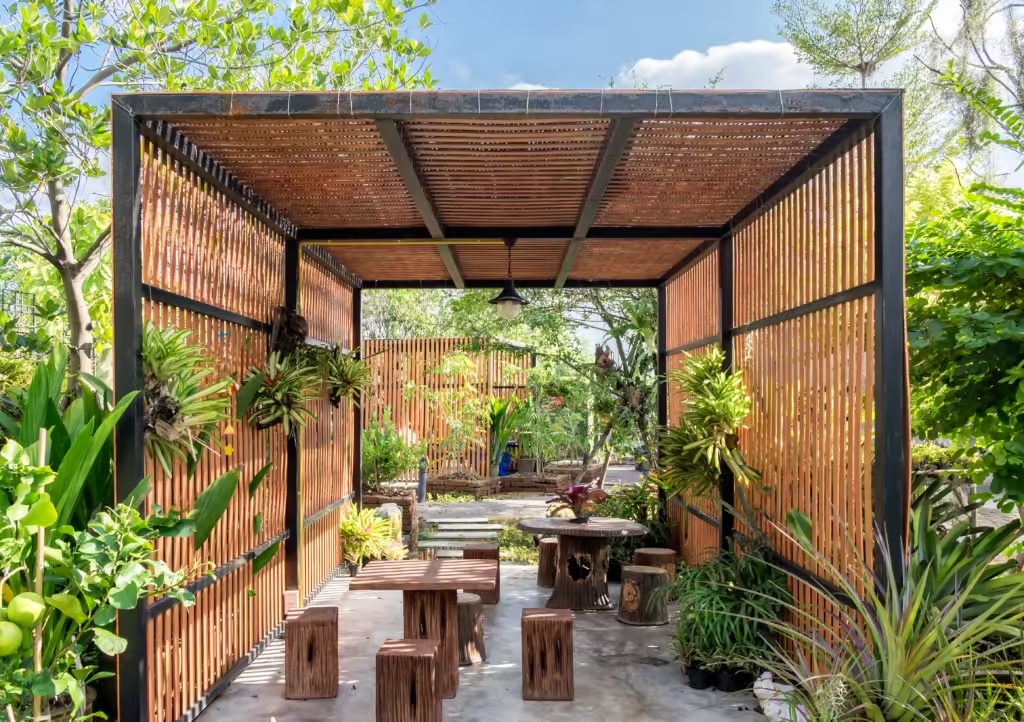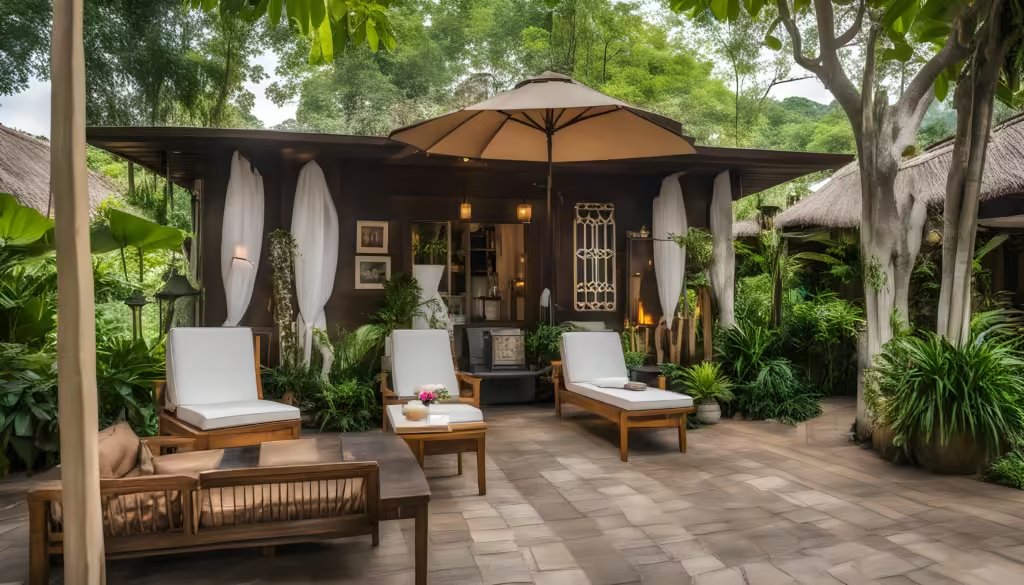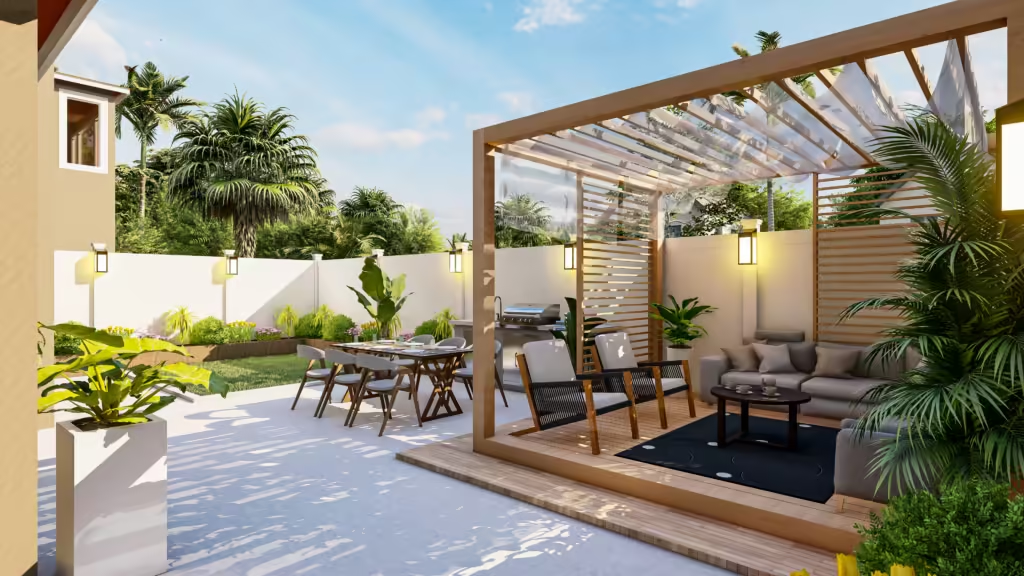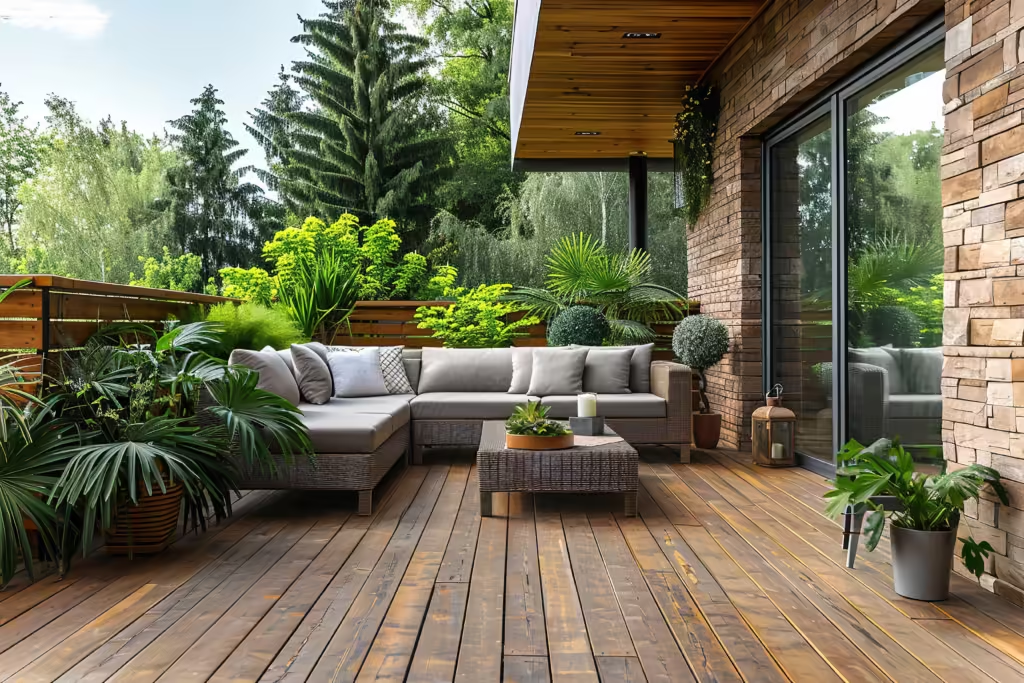
13+ Patio Decor Ideas to Style Your Space
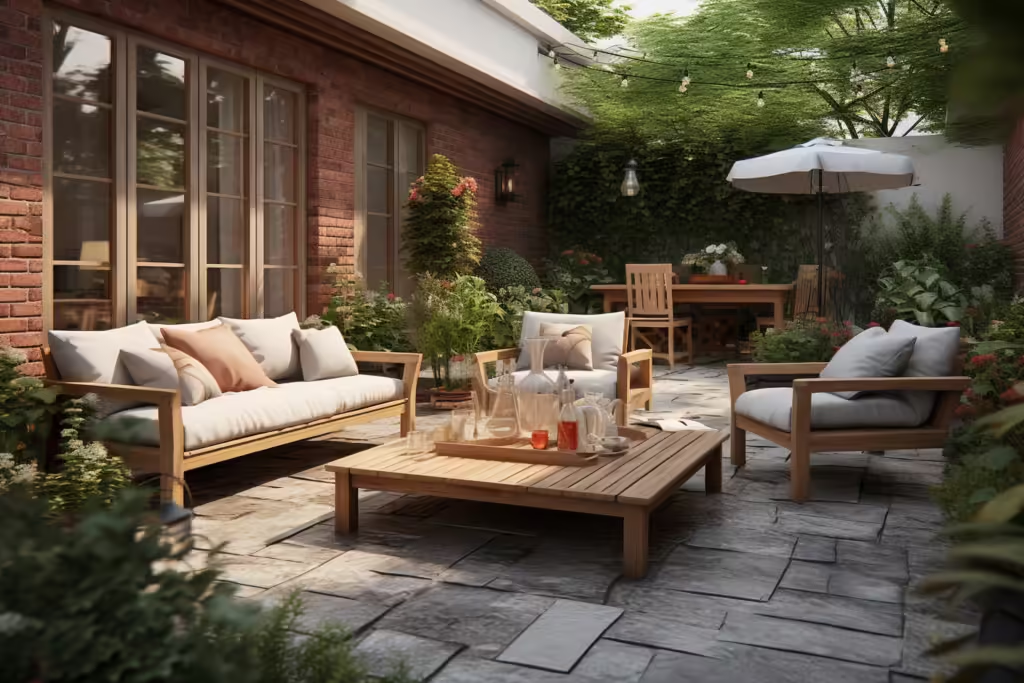
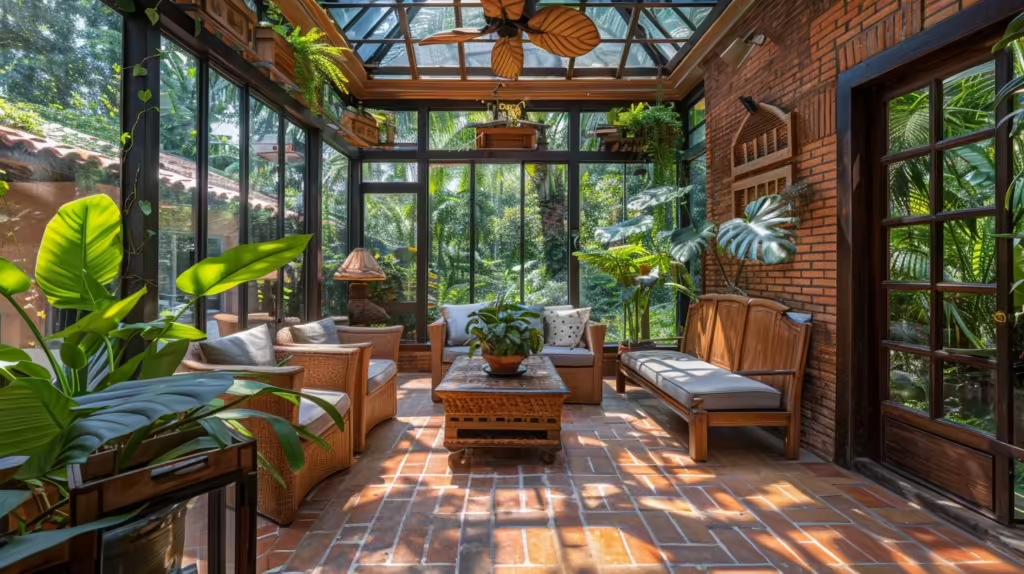
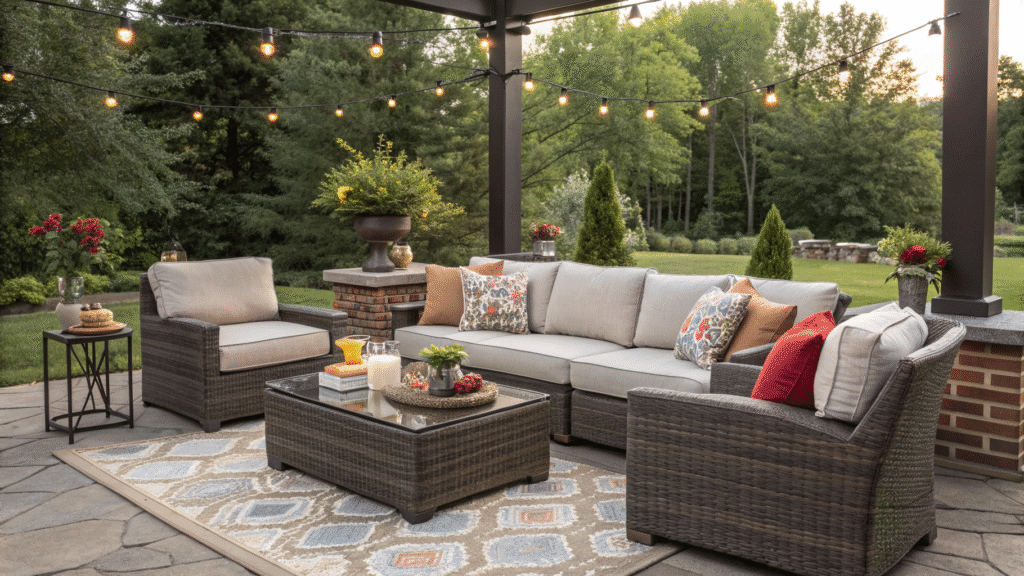
Your patio is an extension of your home, and with the right decor, it can feel just as cozy and stylish.
Styling a patio well is not about spending the most money or filling every surface with beautiful things. It is about making intentional choices that create a space with a genuine atmosphere and a clear sense of character.
What Good Patio Styling Actually Looks Like
There is a version of patio styling that looks impressive in photographs and feels cold and uninviting in real life. And there is a version that looks effortless and lived-in and makes everyone who sits in it want to stay for hours. The difference between the two is not budget or even talent. It is a set of principles that separate decoration from genuine styling.
Styled Spaces Have a Consistent Point of View
The most visually compelling patio spaces have a consistent point of view running through every element. The same material palette appears in the furniture, the planters, and the accessories. The same color tone connects the cushions, the rug, and the throw. The same quality of light, warm and low, runs through every lighting element. This consistency is what makes a space feel designed rather than assembled and it is the quality that makes photographs of outdoor spaces look like they belong in a magazine.
Love Chic Living Club?
Add us as one of your preferred Google sources and discover more home decor, DIY, outdoor, and lifestyle inspiration from us.
Developing your point of view does not require a design education. It requires looking at images of outdoor spaces that appeal to you, identifying the common qualities in all of them, and using those qualities as the filter for every styling decision you make.
Proportion and Scale Matter More Than Most People Realise
The most common patio styling mistake is getting the scale of elements wrong. A small rug under a large furniture grouping looks wrong immediately even if you cannot identify exactly why. A single tiny plant in the corner of a generous patio disappears entirely. A pendant light hung too high loses its intimacy and warmth. Getting proportion right, rugs large enough, plants substantial enough, lights low enough, furniture scaled to the space, is the styling discipline that makes everything else fall into place.
Negative Space Is Part of the Design
The instinct when styling any space is to fill it. The discipline is knowing what to leave empty. Negative space, the gaps between furniture groupings, the clear stretch of paving between a dining zone and a lounge zone, the unplanted section of wall that makes the planted section more visible, is as much a part of the design as the elements themselves. A patio that is filled to every edge with furniture, plants, and accessories feels anxious and overwhelming. One with deliberate breathing room feels considered and calm.
Outdoors Needs More Than Indoors to Feel Complete
The scale and openness of an outdoor setting means that decorating gestures that would feel sufficient indoors often disappear outside. A plant that looks generous in a living room looks small on a patio. A rug that works in a bedroom looks modest on a terrace. A single pendant that creates a warm, intimate atmosphere indoors is lost in the open air. This is not a reason to overdo everything. It is a reason to be deliberate about scale and to choose outdoor decor elements that are sized for the outdoor environment rather than treating an outdoor space like a slightly larger interior room.
How to Build a Patio Decor Scheme From Scratch
If you are starting with a blank patio or looking to rethink an existing one completely, working through these steps in order produces the most coherent and satisfying results.
Step One: Establish the Base
The base of a patio decor scheme is the paving surface, the furniture frames, and the boundary surfaces such as walls and fences. These are the most permanent and most expensive elements and they should be resolved first. Choose paving in a neutral tone that suits your home. Choose furniture frames in a material and color that relates to both the paving and the house. Paint or treat boundary surfaces in a tone that creates the right backdrop for everything that sits in front of it.
Step Two: Add the Anchor Pieces
The anchor pieces are the large decorating elements that define the zones of the patio. A large outdoor rug under the lounge grouping. A pair of substantial planters flanking the seating area. An overhead lighting structure like a pergola with string lights or a pendant above the dining table. These anchor pieces give the scheme its structure and make every smaller element easier to choose because they provide the context each smaller piece needs to make sense.
Step Three: Layer in the Textiles
Cushions, throws, and table textiles are the color and texture layer of the scheme and the most seasonally flexible. Once the base and anchor pieces are established, choosing textiles in colors that complement the palette you have already created is straightforward. This is the layer that most directly expresses the mood and season of the space and it is the one that should be refreshed most regularly.
Step Four: Add the Detail Layer
The detail layer is the finishing layer of accessories, candles, lanterns, decorative objects, table styling, and personal touches that give the space its individuality and warmth. This layer should be the last one added and the most carefully edited. Every detail piece should relate to the overall scheme rather than being added simply because it is attractive in isolation.
Patio Decor Mistakes to Avoid
Understanding what not to do is just as useful as understanding what to do. These are the most common patio styling mistakes and how to avoid them.
Too Many Competing Colors
The outdoor setting already provides a complex visual backdrop of sky, planting, house architecture, and paving. Adding too many competing colors in the furniture and accessories on top of all of that creates visual chaos that makes the space feel restless and exhausting to be in. A tight palette of two to three tones, including the neutral base, is almost always more successful than a broader one regardless of how carefully each individual color is chosen.
Mismatched Scales
A large sofa with tiny side tables. A generous dining table with small, lightweight chairs that look dwarfed by it. A big patio with a rug that covers only a fraction of the seating area. Scale mismatches are immediately and viscerally wrong in a way that is difficult to ignore once you notice them. Check proportions carefully before committing to any purchase and err on the side of larger rather than smaller for rugs, planters, and lighting elements.
Neglecting the Evening Atmosphere
A patio that is beautifully styled in daylight but has no considered lighting plan looks entirely different and significantly less appealing after dark. The evening atmosphere of a patio is shaped almost entirely by its lighting and a styling scheme that does not address lighting is only half finished. Plan the evening atmosphere with the same care and intention as the daytime appearance.
Ignoring the Transitions
The transition from inside to outside, the threshold, the step, the change in flooring material, and the relationship between indoor and outdoor furniture, is a styling opportunity that most people ignore. A doorstep styled with a plant on each side, an indoor rug that bridges toward the outdoor one, a color in the outdoor cushions that echoes a tone in the interior, all of these connections make the indoor and outdoor spaces feel like a continuous, considered whole rather than two separate environments that happen to be adjacent.
These patio decor ideas cover every element of outdoor styling from the ground up, giving you a practical framework for creating an outdoor space that looks and feels exactly the way you want it to.
1. Add a Statement Rug
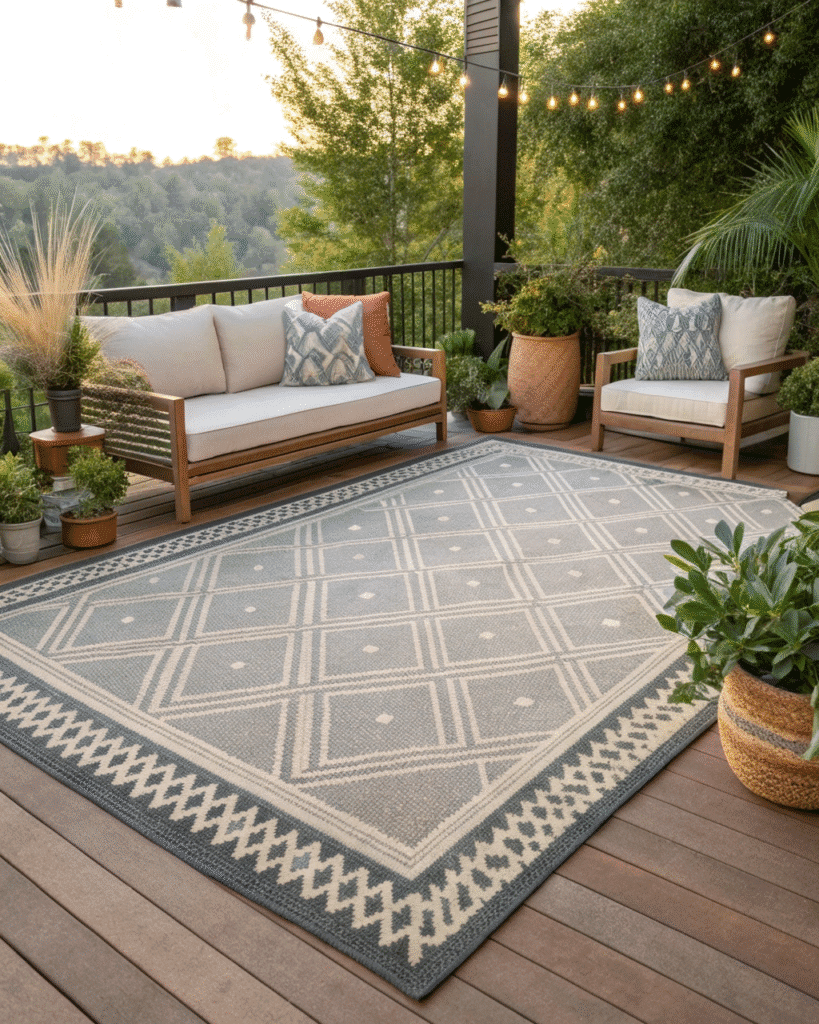
A bold outdoor rug instantly anchors your patio and adds texture underfoot.
Pro Tip: Choose a rug that complements your furniture colors and is UV-resistant.
2. Incorporate Layered Lighting
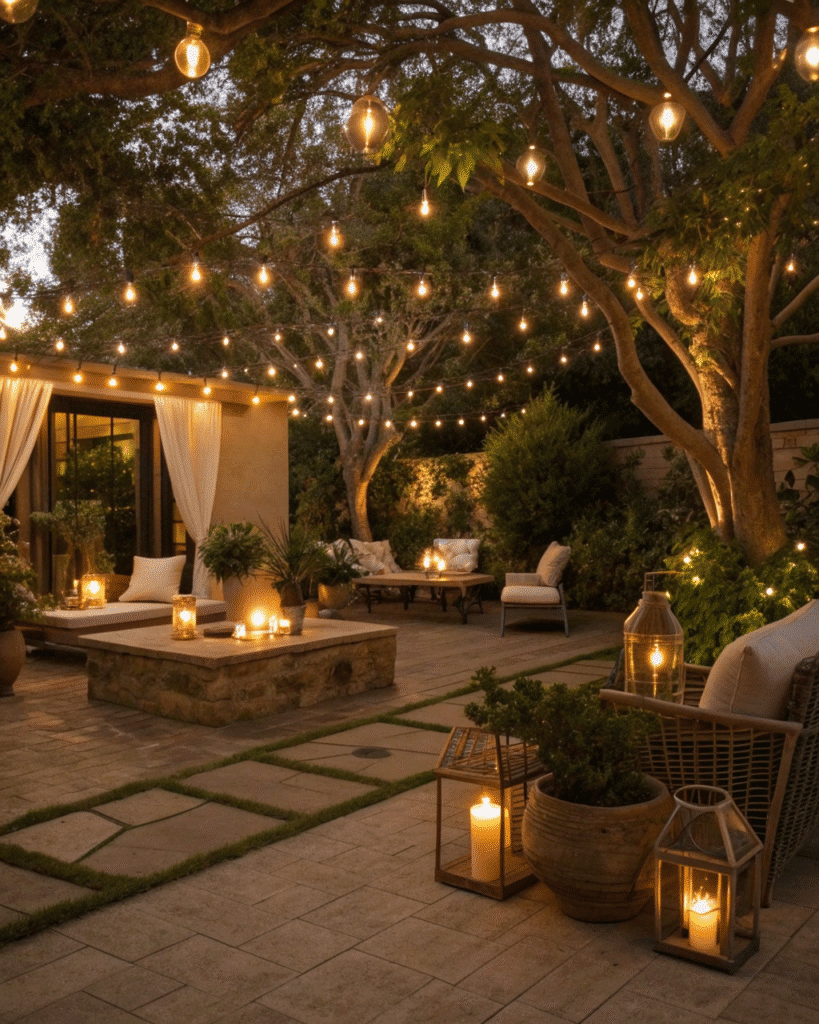
Use string lights, lanterns, and candles to create depth and warmth.
Pro Tip: Combine different lighting heights for a soft and balanced glow.
3. Use Cozy Outdoor Cushions
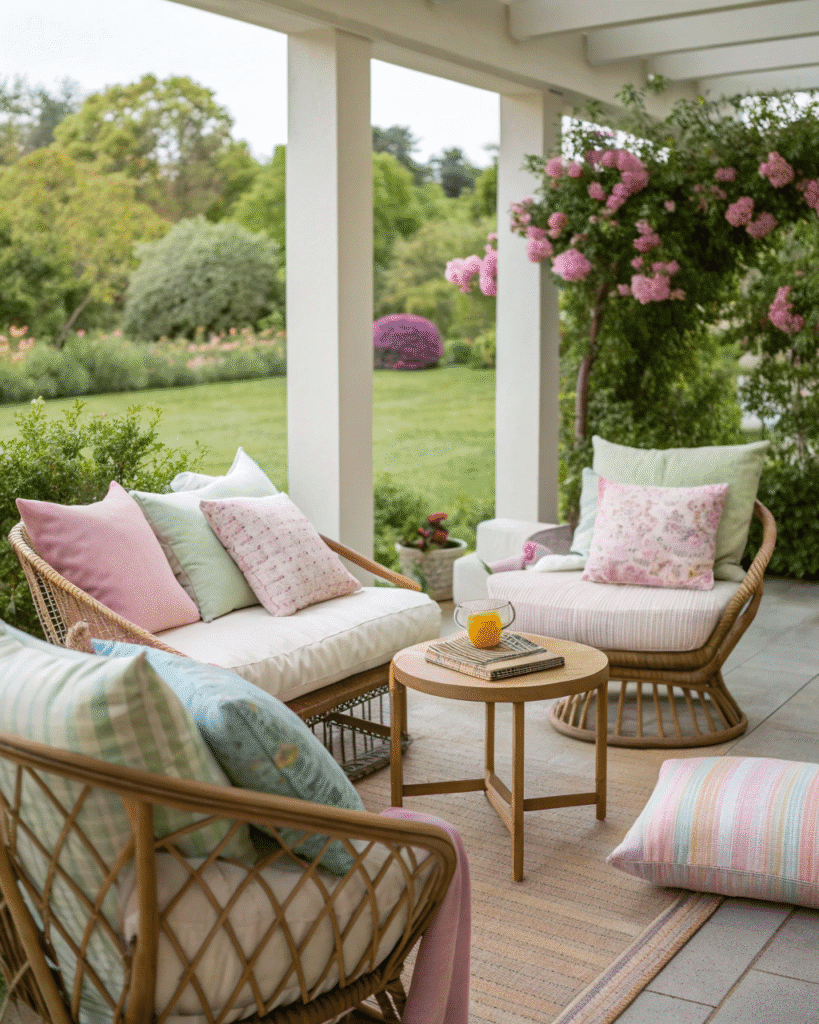
Soft, colorful cushions make your space comfortable and visually appealing.
Pro Tip: Pick quick-drying, fade-resistant fabrics for long-lasting comfort.
4. Add Greenery for Freshness
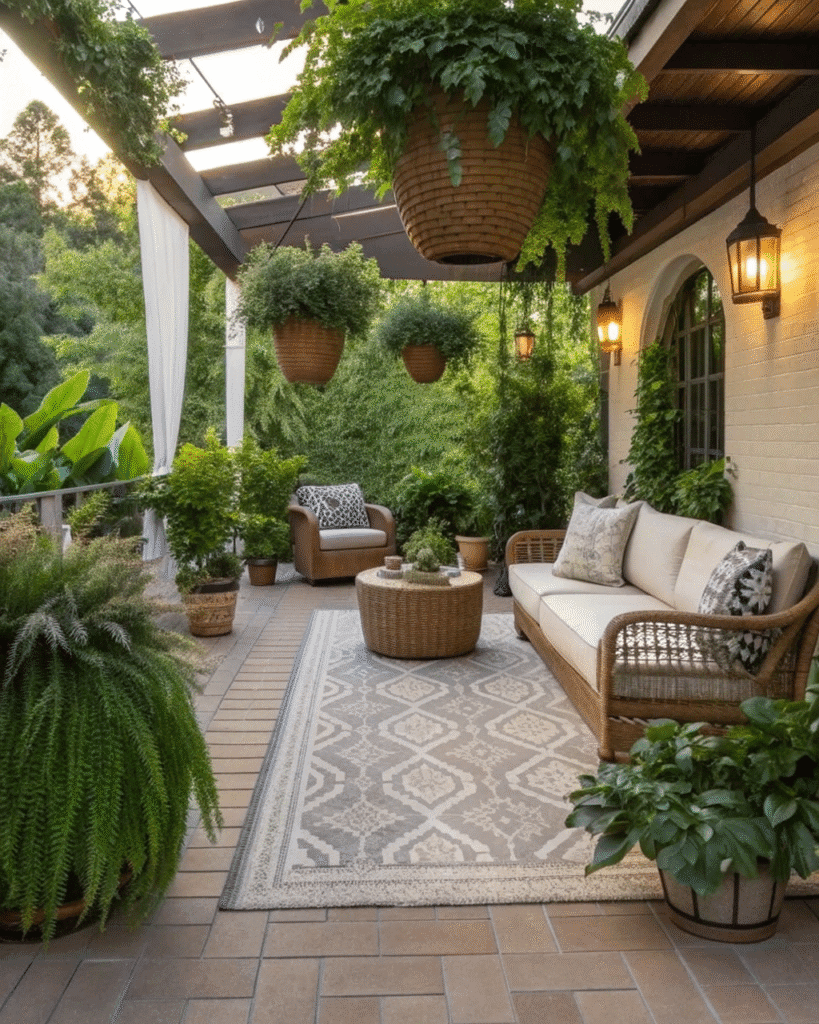
Plants bring life and calmness to your patio setup.
Pro Tip: Mix potted plants, hanging baskets, and small succulents for variety.
5. Create a Dining Corner
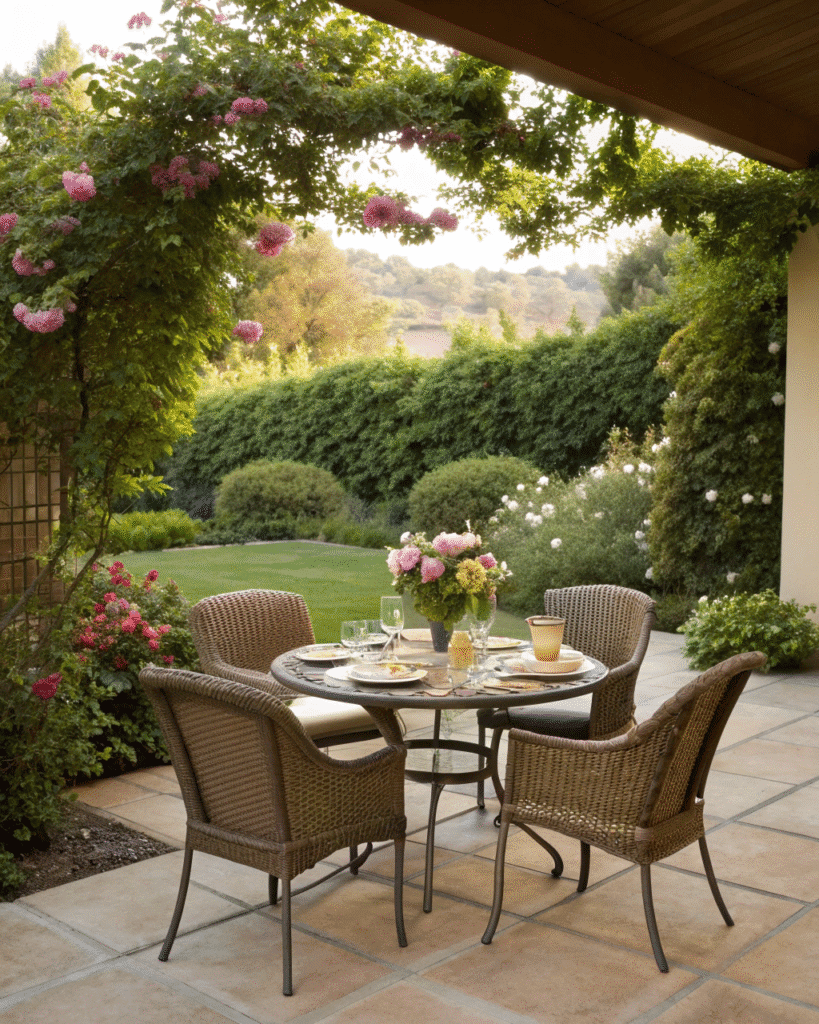
Add a small table and chairs for outdoor meals and gatherings.
Pro Tip: Decorate the table with candles or flowers for a cozy touch.
6. Use Natural Materials

Decorate with rattan, wood, or stone for an organic, relaxed vibe.
Pro Tip: Keep your tones neutral to create a cohesive and calming look.
7. Install Wall Art or Mirrors
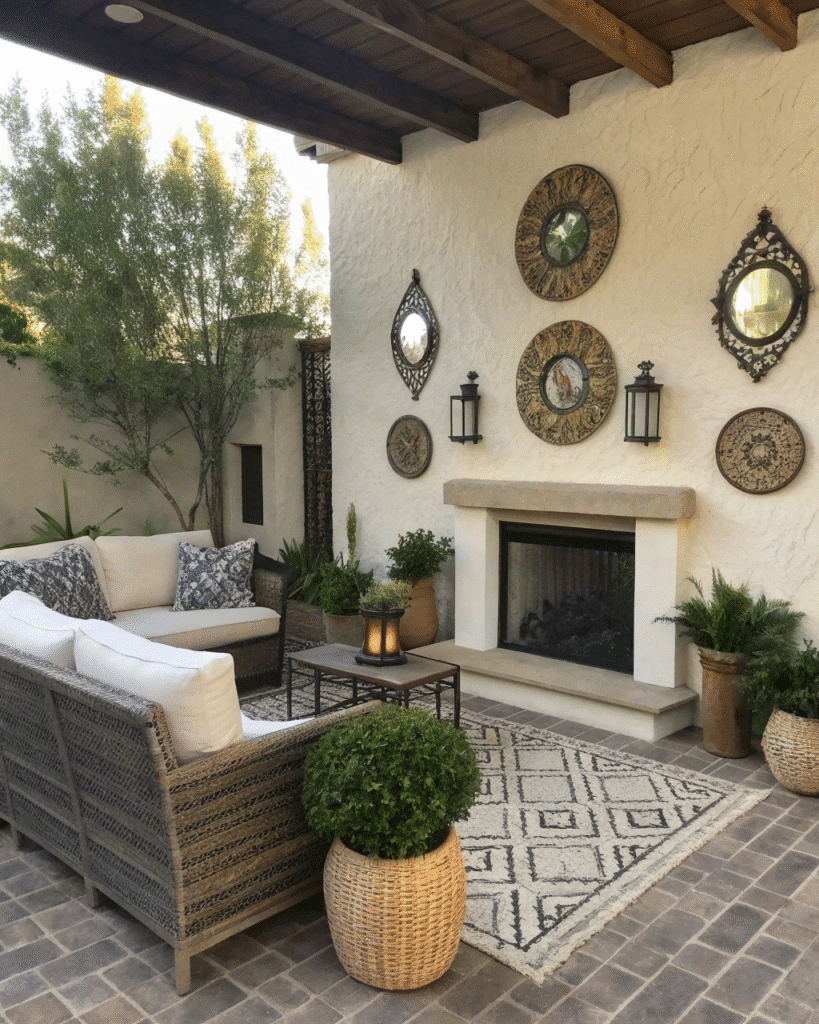
Outdoor-safe art or mirrors make walls feel finished and stylish.
Pro Tip: Position mirrors to reflect natural light and make your space feel bigger.
8. Add an Outdoor Throw Blanket
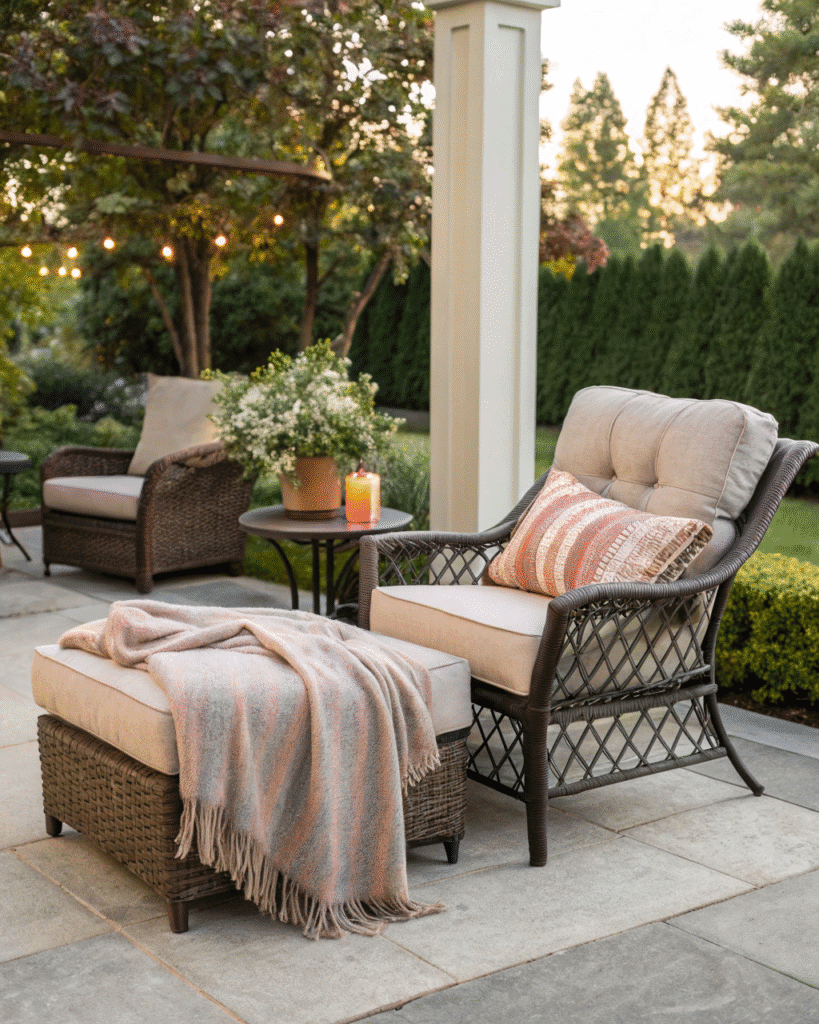
A soft blanket adds both color and comfort during cool evenings.
Pro Tip: Store blankets in a wicker basket for a functional and decorative accent.
9. Include a Coffee Table
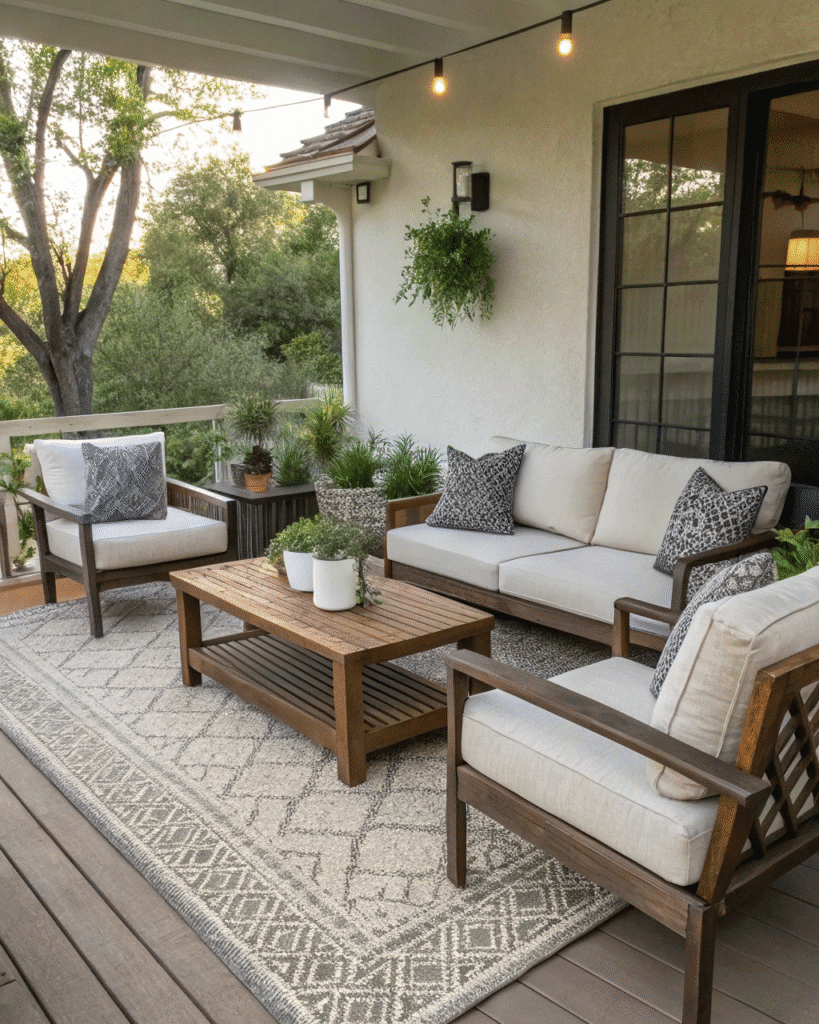
A low outdoor table adds practicality and ties the furniture together.
Pro Tip: Choose weatherproof materials like metal, concrete, or teak.
10. Decorate with Lanterns
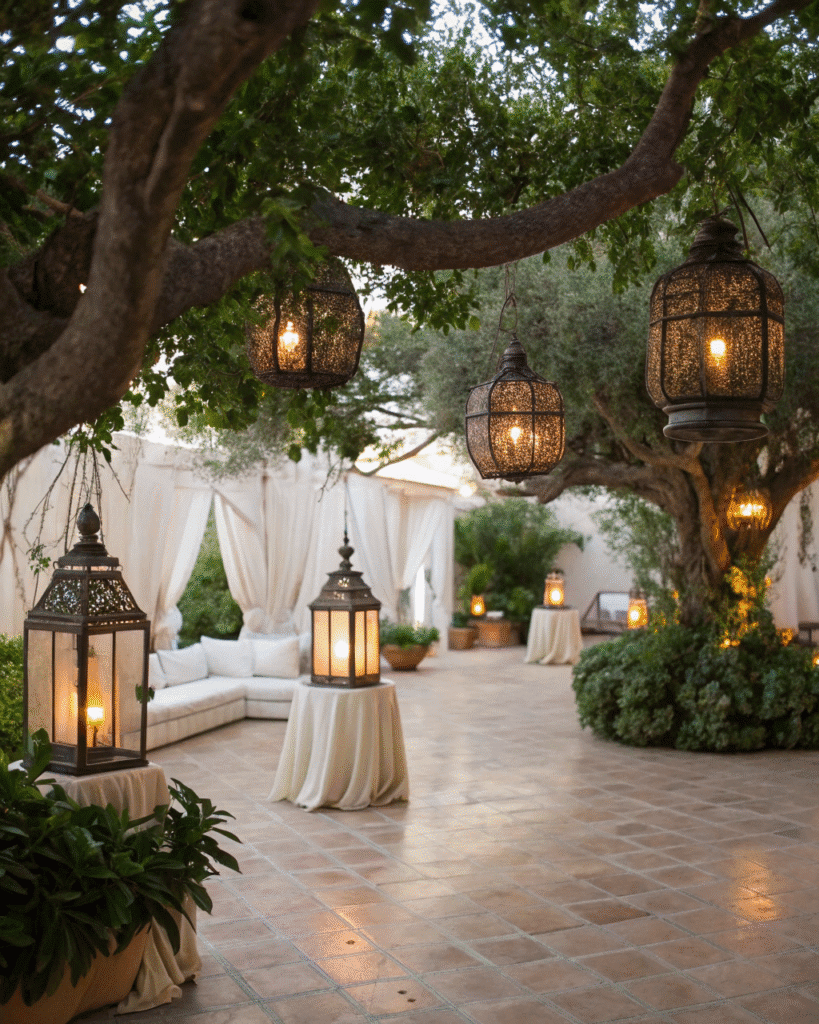
Lanterns bring instant charm and soft illumination at night.
Pro Tip: Mix lanterns of different heights for a cozy layered effect.
11. Incorporate a Fire Feature
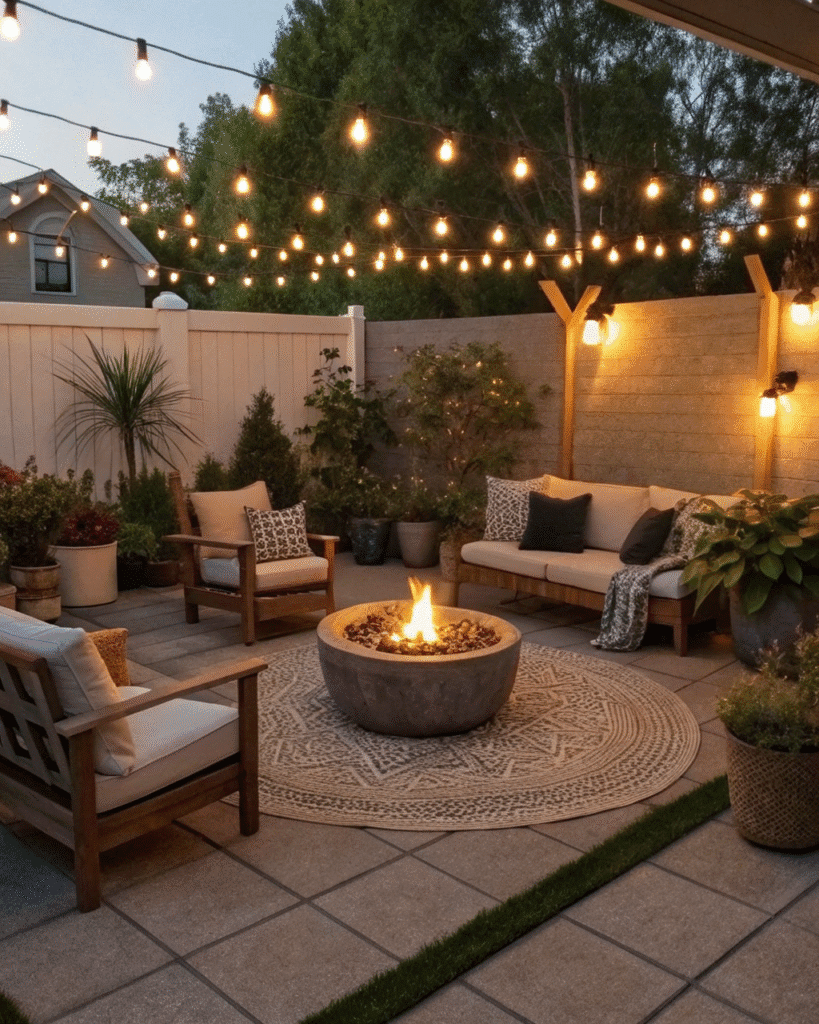
A fire pit or tabletop fireplace makes evenings feel warm and welcoming.
Pro Tip: Surround it with soft seating and natural textures for balance.
12. Style with Outdoor Curtains
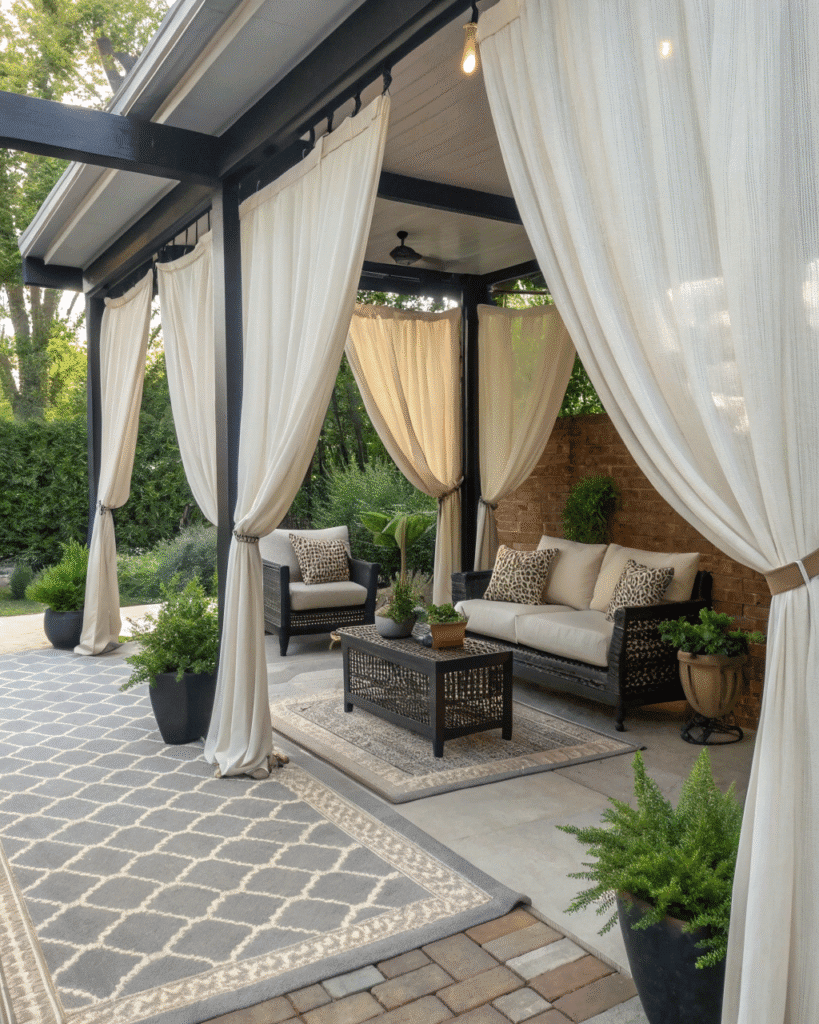
Curtains create privacy and soften the look of your patio.
Pro Tip: Choose light, breezy fabrics that move beautifully in the wind.
13. Add Personal Touches
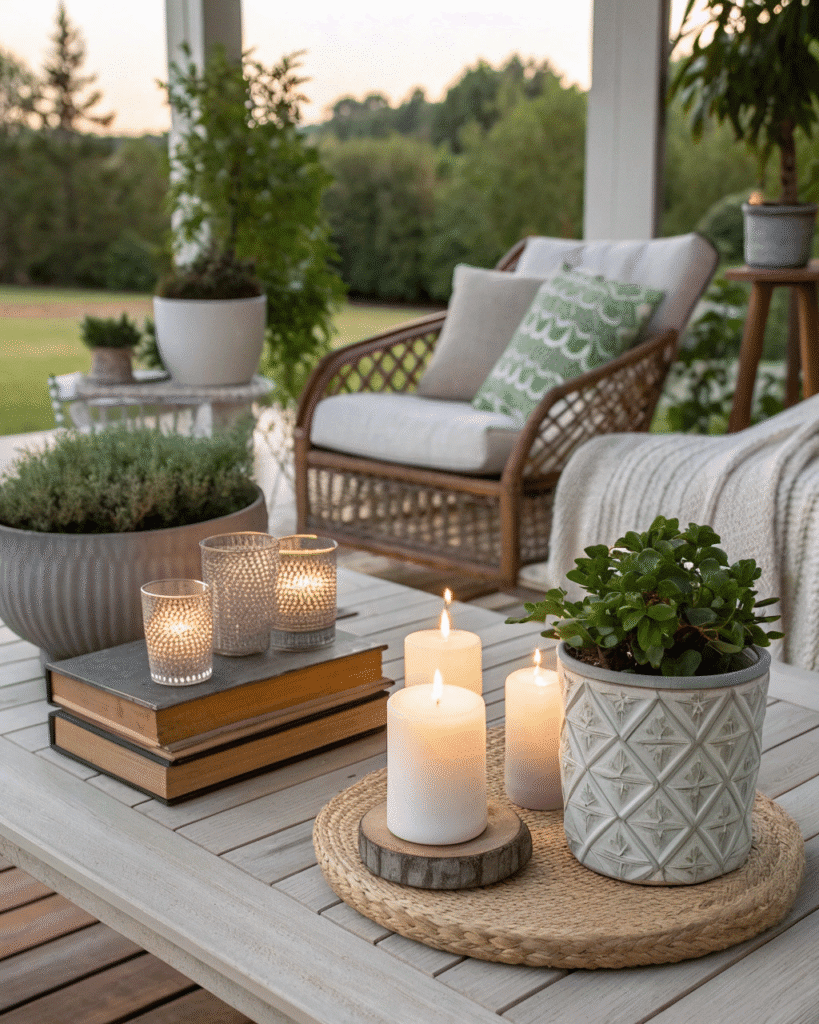
Decorate with items that reflect your personality, like candles, books, or planters.
Pro Tip: Keep decor consistent in tone to maintain a polished, styled appearance.
Final Thoughts
Styling a patio well is one of the most personally satisfying home projects available because the results are immediate, visible from both inside and outside the house, and experienced every time you step outside. The principles are simple. A clear point of view, a restrained color palette, elements sized correctly for the outdoor scale, generous planting, thoughtful lighting, and a few personal touches that make the space genuinely yours. Apply these consistently and your patio will become the most beautiful and most-used room in your entire home.
Frequently Asked Questions
What is the best way to start styling a patio from scratch?
Start by establishing the base layers first, the paving, furniture frames, and boundary surfaces, before adding any decorative elements. Once the base is resolved, add anchor pieces like a large rug and substantial planters. Then layer in textiles, lighting, and finally accessories and personal touches. Working in this order from large to small ensures each layer supports the ones above it and prevents the disconnected, randomly assembled quality that comes from adding decorative items before the structural styling is in place.
How do I make my patio decor look cohesive?
Choose a color palette of two to three tones before buying anything and filter every purchase through it. Use the same material palette consistently across furniture, planters, and accessories. Repeat elements, the same plant species in different sized pots, the same material in furniture and a side table, the same color in cushions and a throw, throughout the space. Repetition is the most reliable tool for creating visual cohesion in any styled space.
What outdoor decor elements last the longest?
Ceramic and terracotta planters, powder-coated metal accessories, natural stone objects, and galvanised metal items all handle outdoor conditions well for many years. Solution-dyed acrylic textiles like Sunbrella last significantly longer than standard outdoor fabrics. Solar and low-voltage LED lighting lasts for years with minimal maintenance. Avoid anything with untreated natural fiber, standard indoor fabric, or chrome plating for outdoor permanent use as these deteriorate quickly.
Can I decorate a patio without spending a lot?
Yes, absolutely. The highest-impact and most affordable patio decor actions are painting a boundary fence or wall, adding string lights, introducing one large statement plant, replacing cushion covers in a fresh color, and adding a generously sized outdoor rug. None of these require significant spending and together they deliver a transformation that is completely disproportionate to the cost involved.
How do I style a patio for entertaining?
For entertaining, prioritise the elements that create atmosphere and social comfort. A fire feature as the focal point, layered ambient lighting that creates a warm, flattering glow, comfortable seating arranged to encourage conversation, a well-styled dining table with an overhead light above it, and abundant planting that makes the space feel lush and enclosed all contribute to an entertaining atmosphere that guests genuinely enjoy and remember. Have a plan for where drinks are served, where food is staged, and how people move between zones so the space works as well practically as it looks visually.
What is the difference between patio decor and patio design?
Patio design refers to the structural and layout decisions that shape the space, the paving, the furniture arrangement, the zones, the built-in features, and the planting structure. Patio decor refers to the styling layer applied on top of the design, the textiles, the accessories, the lighting, the plants in pots, and the personal touches that give the space its character and atmosphere. Good patio decor is much more effective when it sits on top of a resolved patio design. The two work together, with design providing the bones and decor providing the personality.