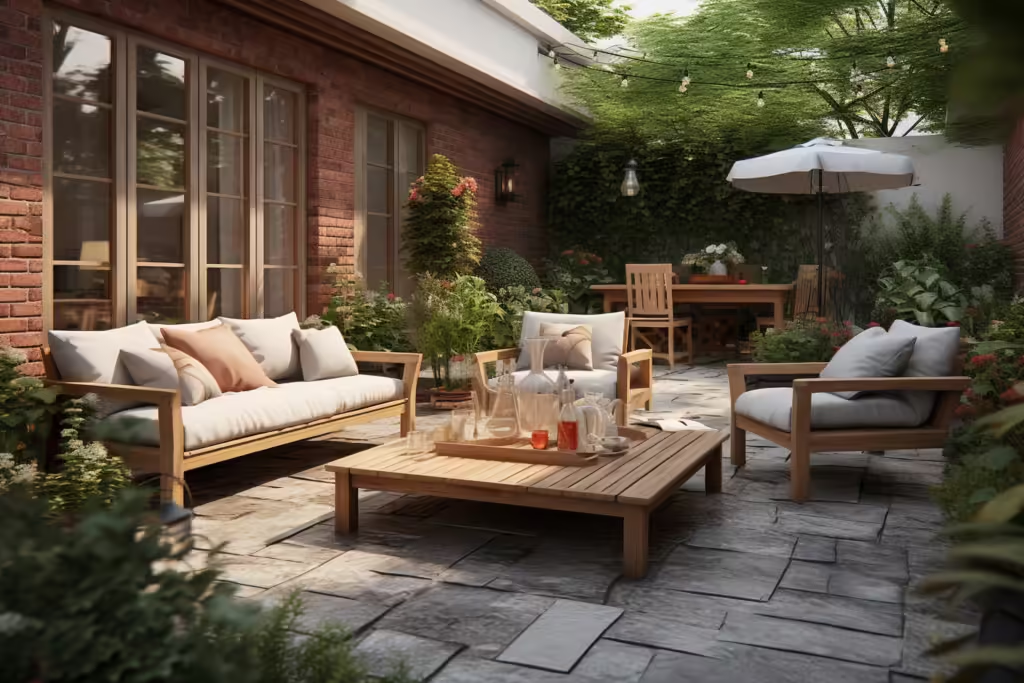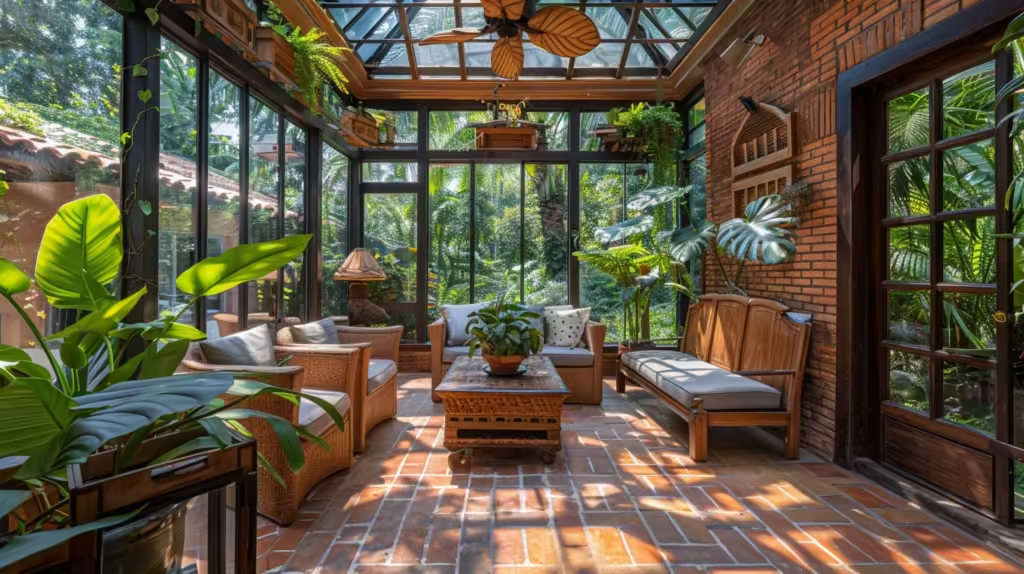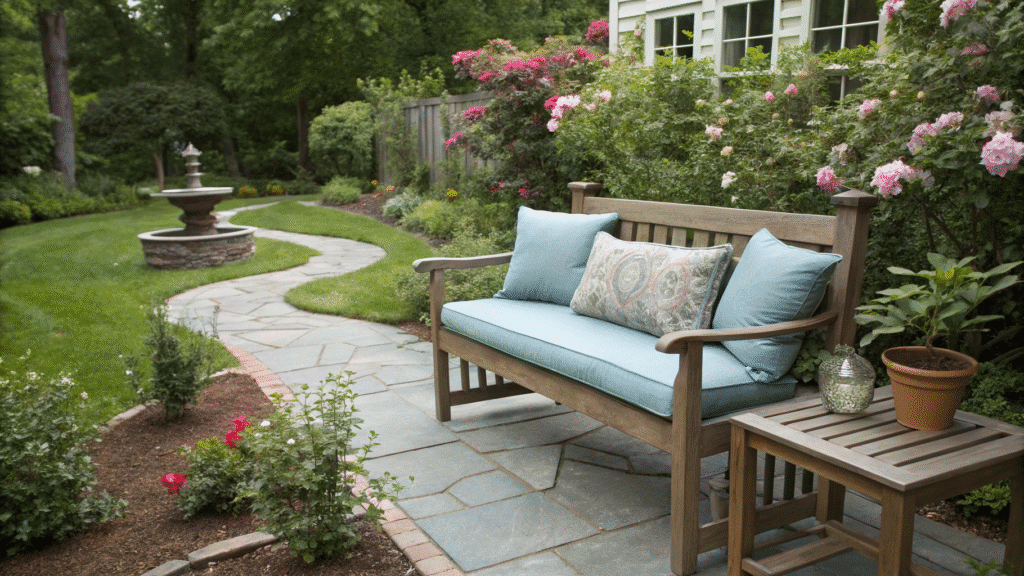
16+ Patio Bench Ideas for Extra Seating
A bench is one of the most hardworking pieces of furniture you can add to a patio.
It seats more people per square foot than almost any other option, doubles as a surface for plants and accessories, and when chosen well, becomes one of the most characterful design elements in the whole outdoor space.
These ideas cover every style, every material, and every patio situation so you can find the bench that works perfectly for yours.
Why a Bench Belongs on Every Patio
Most patio furniture plans start with a table and chairs or a sofa and armchairs and stop there. Adding a bench to that mix is one of the simplest upgrades you can make and one of the most impactful. Here is why benches deserve a place on every patio regardless of size or style.
Love Chic Living Club?
Add us as one of your preferred Google sources and discover more home decor, DIY, outdoor, and lifestyle inspiration from us.
They Seat More People Than Chairs
The most practical argument for a bench is pure seating capacity. A standard outdoor chair seats one person and takes up roughly the same floor footprint as a bench seat for two or three. On a patio where space is at a premium or where the guest count varies between a quiet weeknight dinner and a larger weekend gathering, that flexibility is genuinely valuable. A bench along one side of an outdoor dining table, in place of individual chairs, immediately increases seating capacity without increasing the footprint of the furniture arrangement.
They Work in Spaces Where Chairs Cannot
Narrow side passages, the edge of a raised platform, the perimeter of a fire pit area, the base of a garden wall, a shaded corner between two planting beds. These are all spaces where a chair feels awkward or out of place but where a bench fits perfectly and creates a seating opportunity from what would otherwise be dead space.
They Add Architectural Weight to the Space
A well-chosen bench brings a sense of permanence and intention to a patio that lightweight chairs rarely achieve. A substantial timber bench, a built-in concrete seat, or a carved stone bench along a garden wall gives the outdoor space an anchored, considered quality that elevates the whole design. Even a relatively simple bench in the right position becomes a focal point that defines the character of the area around it.
They Double as a Surface
A bench without a back is a surface as well as a seat. Plants, lanterns, outdoor cushions, a tray of drinks, a book or a phone. A bench beside a sofa or chair grouping functions as the best outdoor side table you never thought to buy.
How to Choose the Right Patio Bench
With so many bench options available, making the right choice comes down to a handful of key considerations that are worth thinking through before you commit.
Fixed or Freestanding?
This is the first and most important decision. A built-in bench, whether concrete, masonry, or timber fixed to a wall or structure, becomes a permanent architectural feature of the patio. It cannot be moved or replaced easily, which means the design decision needs to be right from the start. The advantage is that a built-in bench looks entirely intentional and designed, integrates beautifully with the surrounding hardscape, and typically provides more robust, weather-resistant seating than a freestanding piece.
A freestanding bench gives you flexibility. You can move it, rearrange the patio around it, take it inside for winter, or replace it when your needs or tastes change. For most homeowners, freestanding benches are the practical starting point and built-in bench seating is the aspirational upgrade that comes later.
What Size Do You Need?
Bench sizing for outdoor use follows similar principles to indoor furniture. A standard outdoor bench seat height of 17 to 18 inches from the ground is comfortable for most adults. Seat depth of at least 16 inches is needed for comfortable sitting. For length, a two-person bench needs at least 42 inches and a three-person bench needs at least 60 inches. Measure your space carefully and allow at least 24 to 30 inches of clearance in front of the bench for people to sit down and stand up comfortably.
Back or No Back?
A bench with a backrest is more comfortable for extended sitting, particularly for older users or anyone who will be sitting for a meal or a long conversation. A backless bench is more versatile since it can be accessed from either side, doubles more effectively as a surface, and looks cleaner and less bulky in tight spaces. If your bench will be used primarily for casual perching, overflow seating, or as a decorative element, a backless design usually works better. If it is intended as primary seating for regular, extended use, a backrest is worth the extra depth it adds.
Material and Weather Resistance
Outdoor bench materials need to handle whatever your climate throws at them. Teak, cedar, and hardwoods like ipe are the most weather-resistant timber choices. Powder-coated aluminium and galvanised steel handle outdoor conditions well without rusting. Concrete and natural stone are virtually indestructible outdoors. Wicker and rattan need to be all-weather synthetic versions for outdoor use rather than natural fiber versions which deteriorate quickly outside. Composite materials offer the look of timber with significantly lower maintenance requirements.
Patio Bench Placement Ideas
Where you place a bench on the patio is as important as which bench you choose. Here are the placement approaches that work best.
Along a Boundary Wall or Fence
Placing a bench against the boundary wall or fence of the patio is the most space-efficient option since the bench sits against a surface that would otherwise be unused. A bench against a wall also benefits from the backdrop the wall provides, making it feel more enclosed and sheltered than a bench positioned in open space. Adding planting on either side of the bench and a lantern or wall-mounted light above it transforms this simple placement into a genuinely beautiful outdoor vignette.
Around a Fire Pit
A bench or a series of benches arranged around a fire pit creates a natural gathering circle that feels completely different from chairs. The continuous seating surface of a bench encourages people to shift along and make room for others in a way that individual chairs do not. Built-in curved benches that follow the arc of a circular fire pit are particularly beautiful and one of the most popular patio seating upgrades.
Along the Dining Table
Replacing dining chairs on one or both sides of an outdoor dining table with a bench creates an informal, convivial dining setup that feels more relaxed than a formal matched chair arrangement. It also increases the number of people you can seat at the table without a proportionate increase in furniture cost or footprint. On a long rectangular table, a bench on one long side and chairs on the other is a classic approach that combines the practicality of the bench with the individual comfort of chairs.
At the Edge of a Raised Platform
If your patio has a raised edge, a step, or a level change, a bench positioned at the edge serves as both seating and an informal safety barrier. It defines the boundary of the elevated area, provides seating that faces outward toward the garden, and adds a finished, architectural quality to the edge detail.
As a Destination in the Garden
A bench positioned away from the main patio area, under a tree, at the end of a path, beside a planting area, or at a point with a good view, creates a destination seating spot that gives the garden a sense of depth and variety. Even a simple timber bench in the right position becomes somewhere worth walking to.
Built-In Bench Seating: Why It Is Worth the Investment
If you are planning any masonry work on your patio, whether that is a retaining wall, raised planters, a fire pit surround, or a knee wall, adding bench seating to that same project is one of the most cost-effective upgrades available. The structural work is already being done. The additional cost of extending the wall to seat height and adding a capping stone or timber seat board is relatively small compared to the value it adds.
Built-in bench seating looks completely designed and intentional in a way that is very difficult to achieve with freestanding furniture. It cannot blow over in the wind, does not need to be stored or covered for winter in most climates, and becomes a permanent architectural feature of the space that adds value to the property. If your patio plans include any masonry element at all, consider whether built-in bench seating should be part of that same project.
1. Wooden Slat Bench
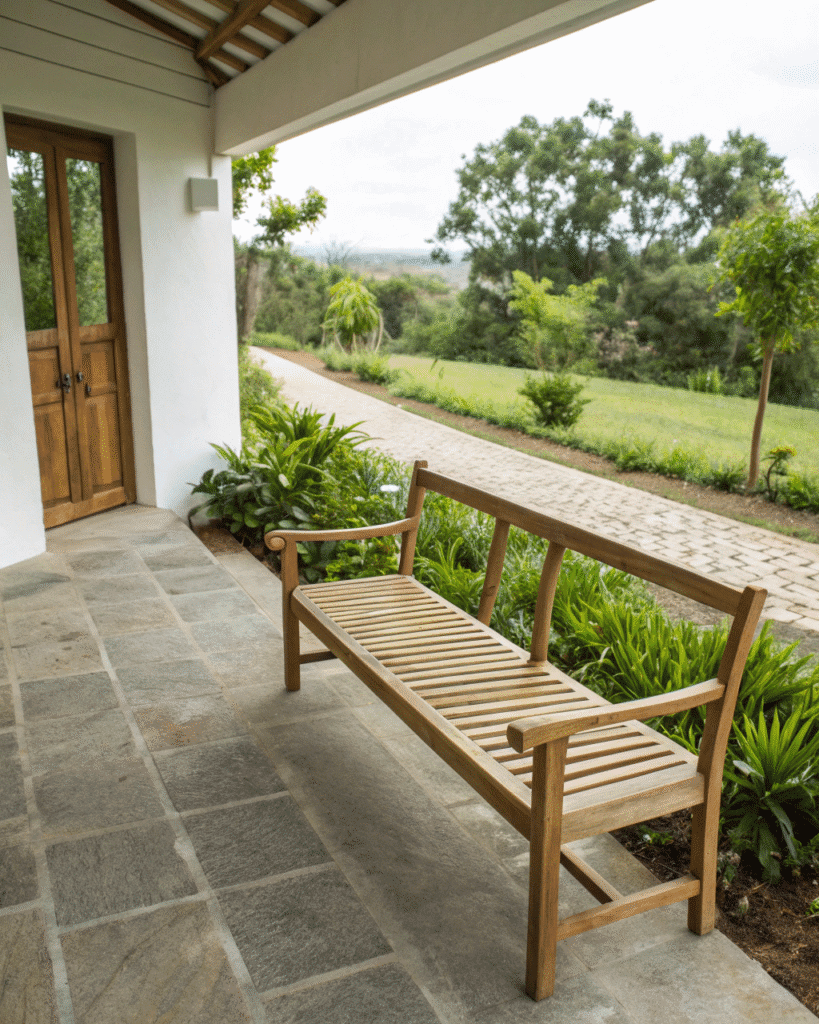
A simple wooden bench brings natural warmth to any patio setting.
Pro Tip: Choose weather-resistant wood like teak or cedar for long-lasting durability.
2. Built-In Concrete Bench
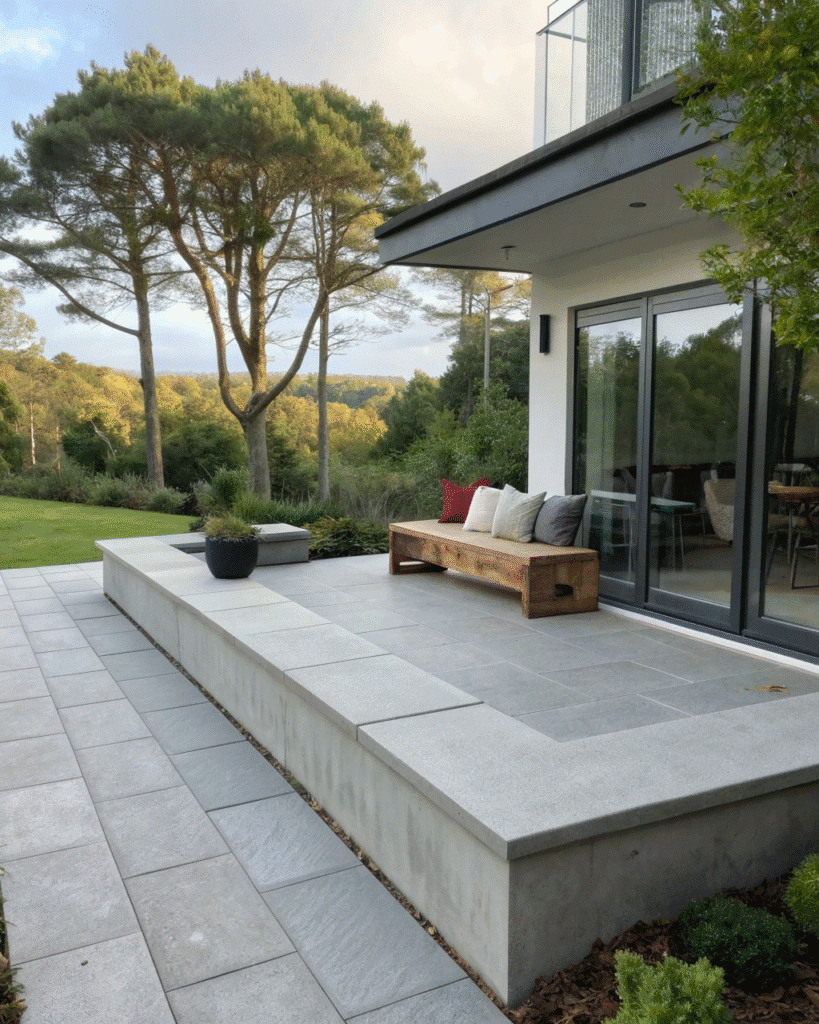
A concrete bench looks sleek and blends beautifully into modern patios.
Pro Tip: Add cushions or seat pads for comfort and color contrast.
3. Storage Bench
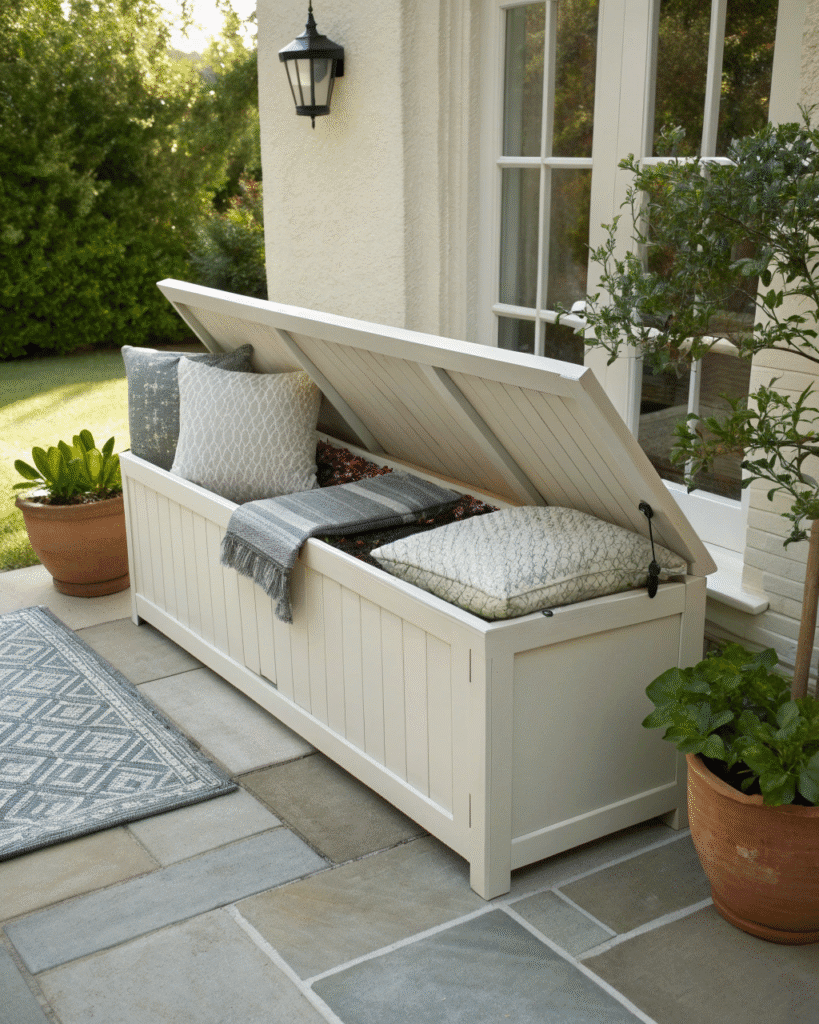
A storage bench keeps your patio tidy while providing hidden space for cushions or garden tools.
Pro Tip: Use waterproof containers inside to protect stored items from moisture.
4. Stone Bench
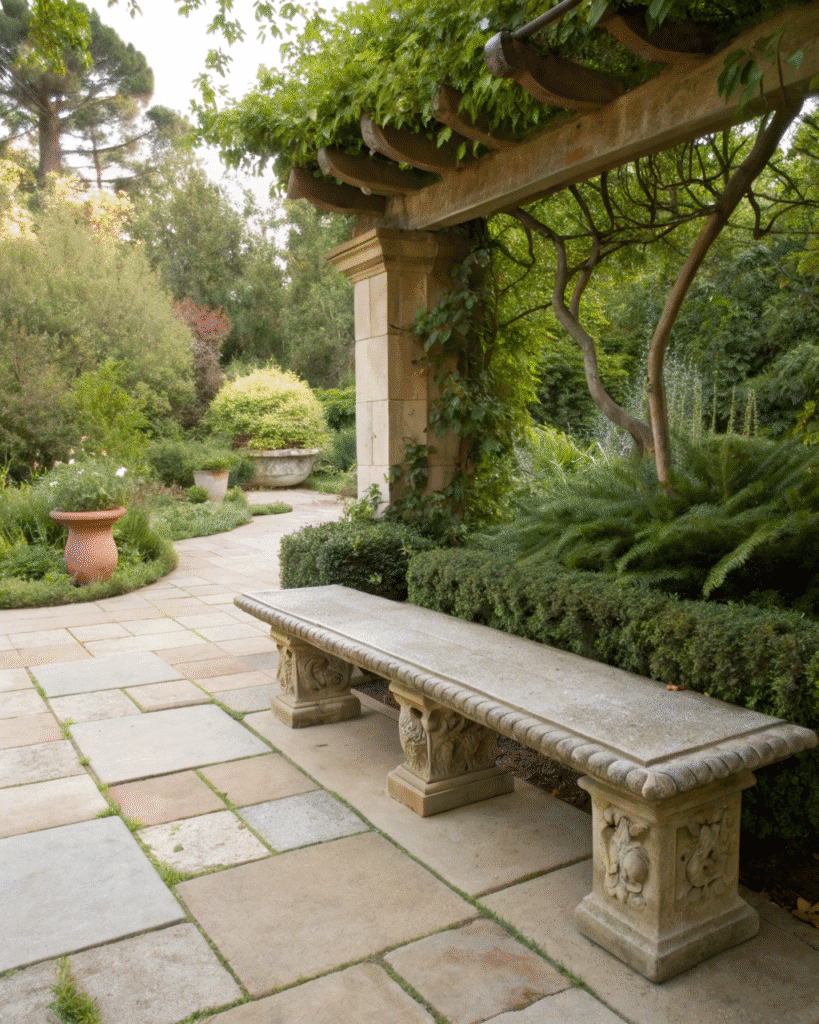
A stone bench adds timeless elegance and pairs well with natural landscaping.
Pro Tip: Surround it with greenery or potted plants to soften the look.
5. Metal Frame Bench
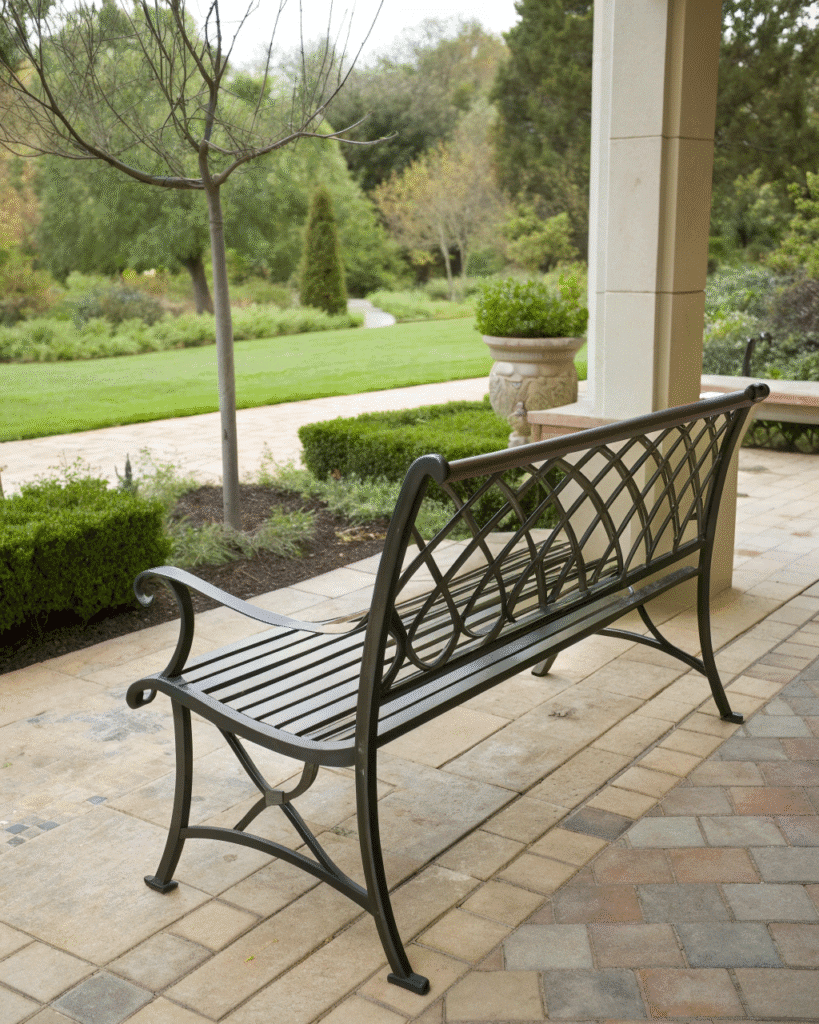
A metal bench adds structure and durability to outdoor seating areas.
Pro Tip: Combine with wood or wicker accents to balance its industrial look.
6. Corner Bench Seating
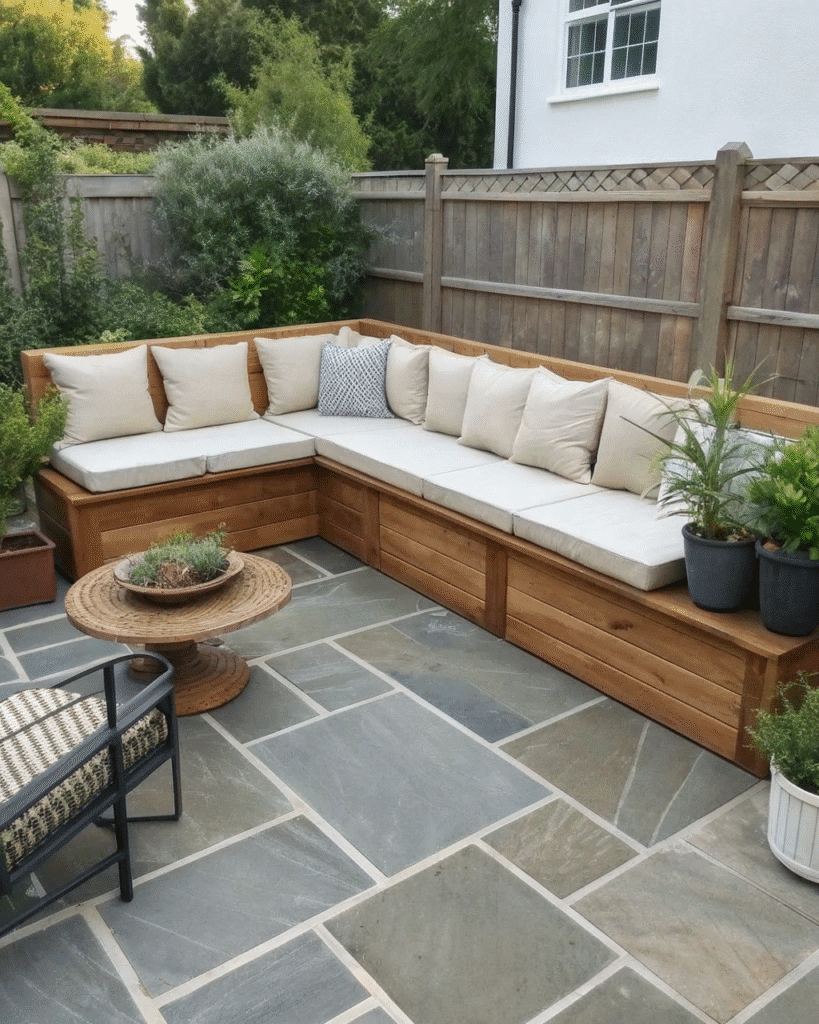
Maximize space with an L-shaped bench that fits neatly into patio corners.
Pro Tip: Add throw pillows in coordinating colors for a cozy, finished look.
7. Bench with Planter Ends
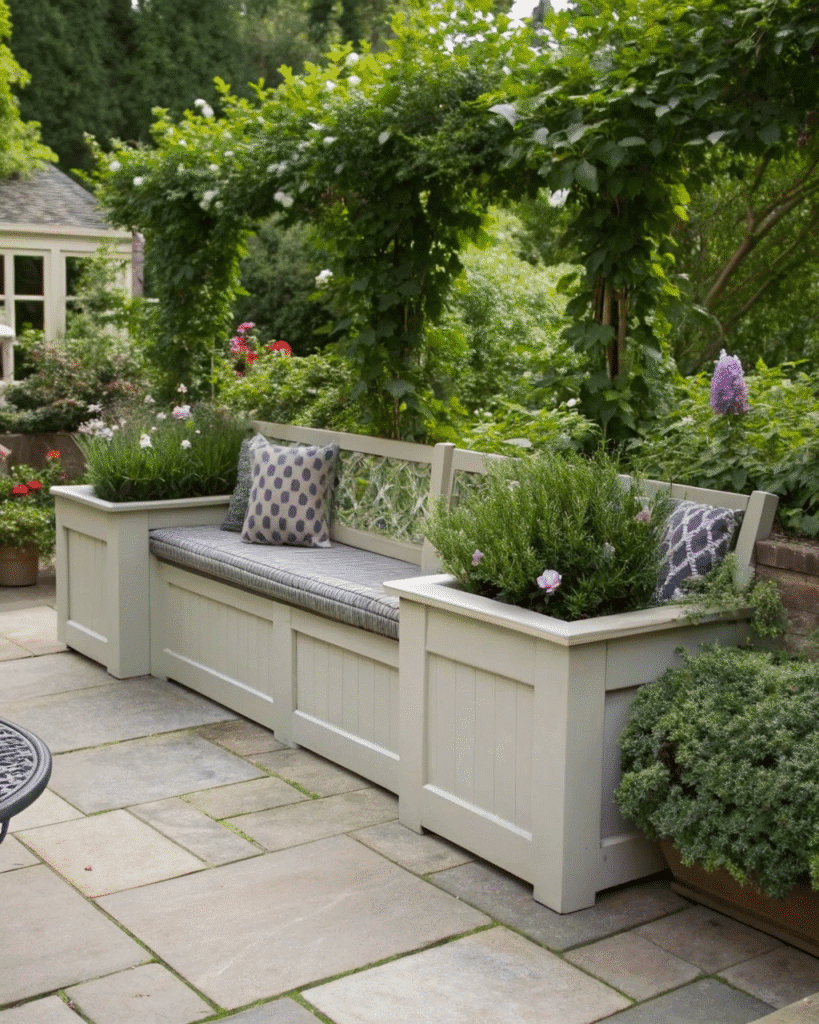
A bench with built-in planters adds greenery and style in one design.
Pro Tip: Choose low-maintenance plants like succulents or lavender for easy upkeep.
8. Rustic Log Bench
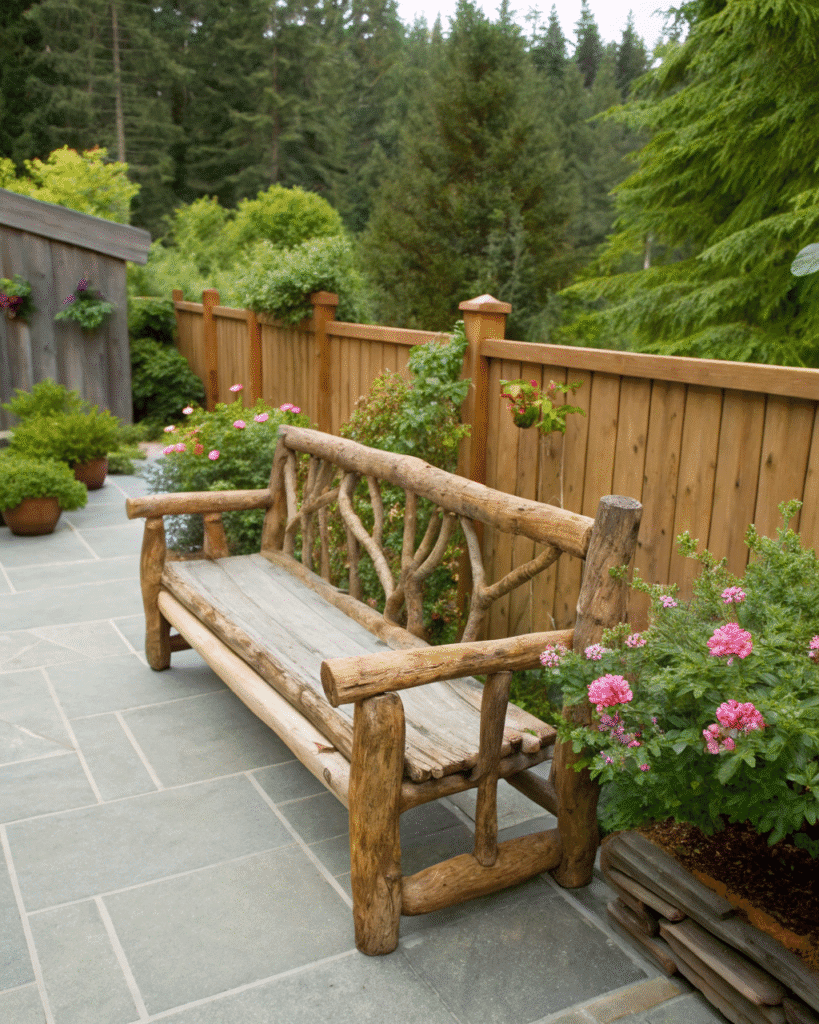
A log bench brings a natural, woodland charm to your patio.
Pro Tip: Seal the wood to protect it from weather and insects while keeping its texture.
9. Floating Bench Design
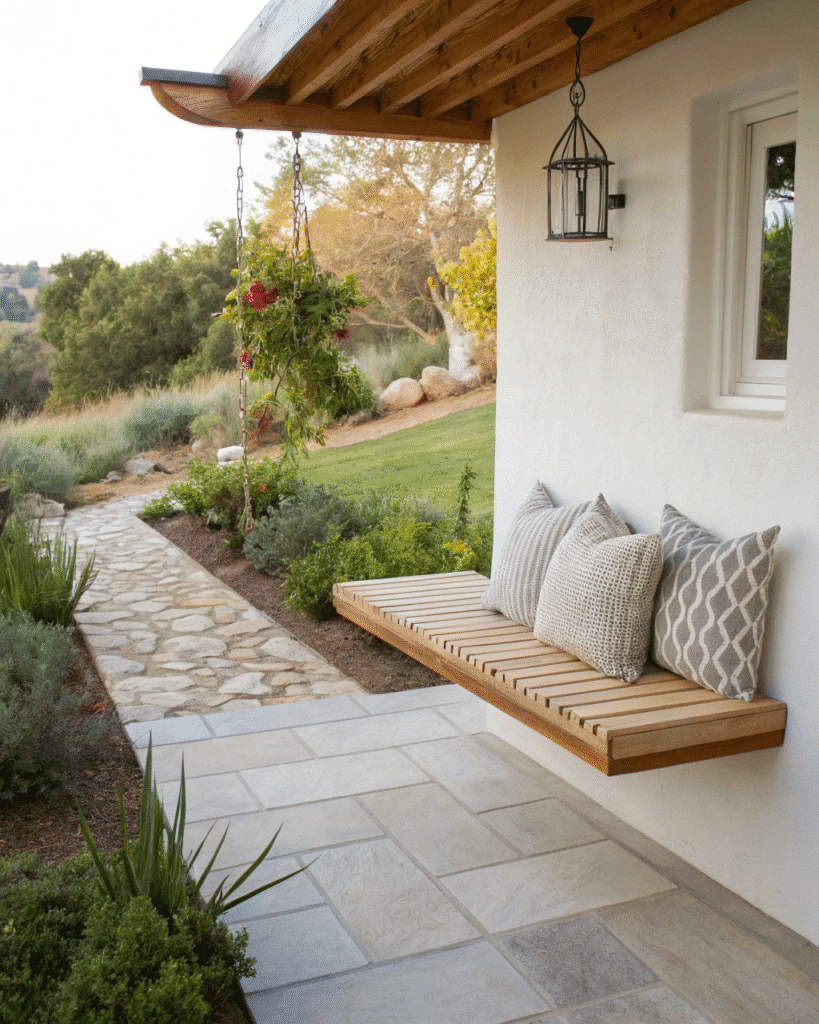
A wall-mounted floating bench gives your patio a light, airy feel.
Pro Tip: Pair it with minimal cushions to maintain a clean, modern vibe.
10. Wicker or Rattan Bench
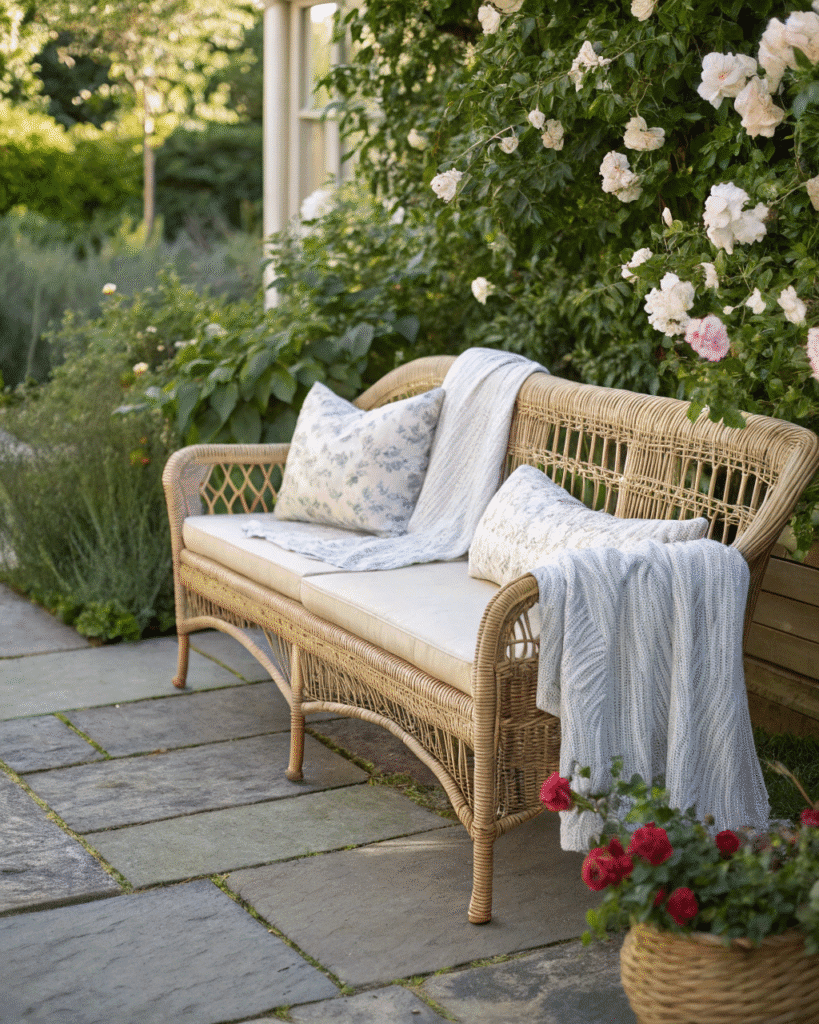
Wicker adds softness and a relaxed, coastal aesthetic to your seating.
Pro Tip: Choose synthetic rattan for better weather resistance outdoors.
11. Curved Garden Bench
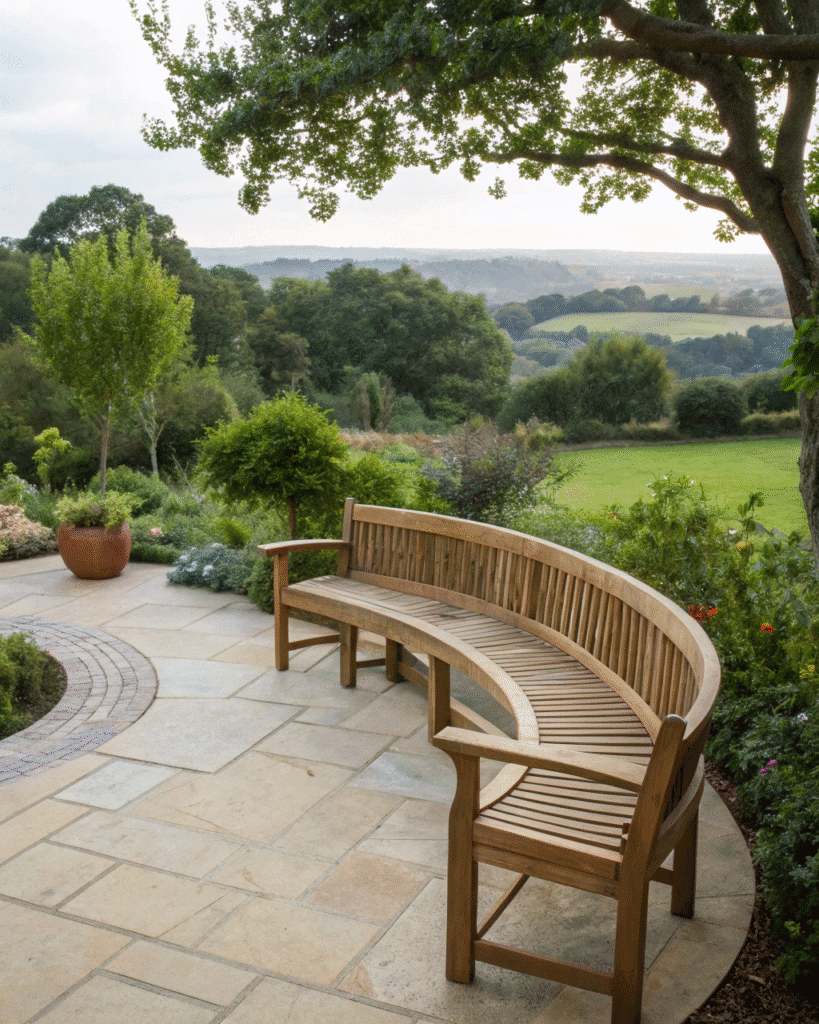
A curved bench creates a welcoming and visually interesting shape.
Pro Tip: Position it around a fire pit or garden bed for a natural flow.
12. Bench with Backrest
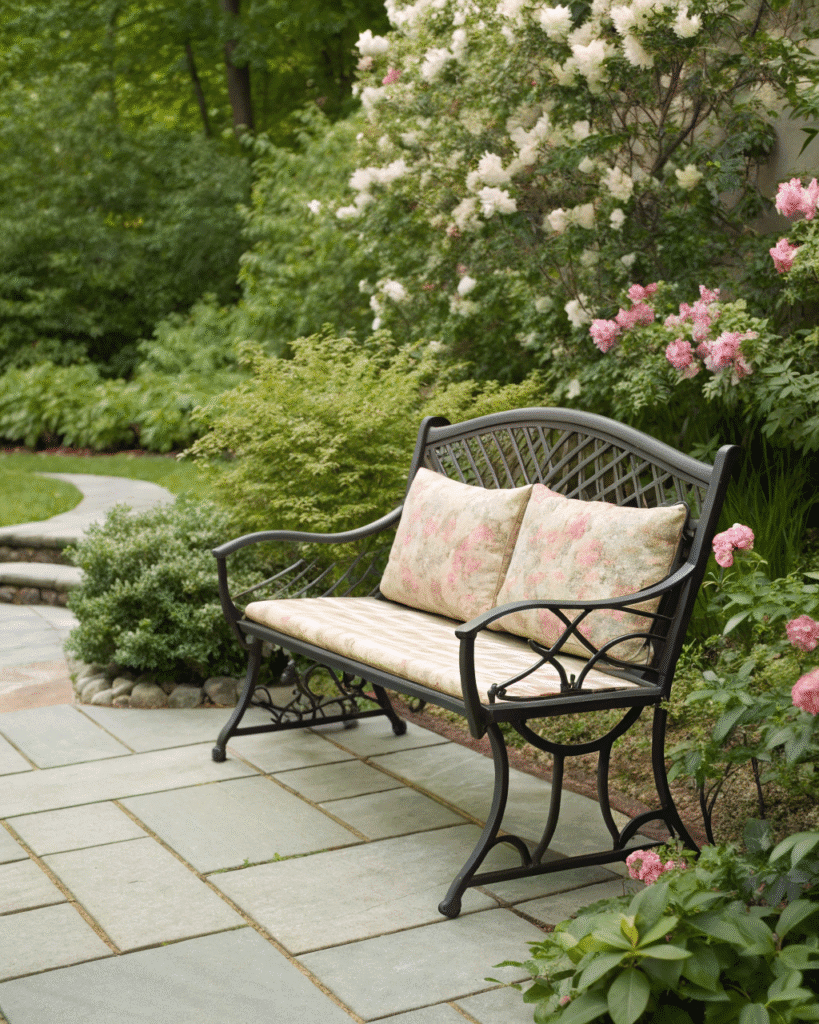
A backrest adds comfort and support, making it perfect for long lounging sessions.
Pro Tip: Pick a design that complements your patio’s overall furniture style.
13. Painted Accent Bench
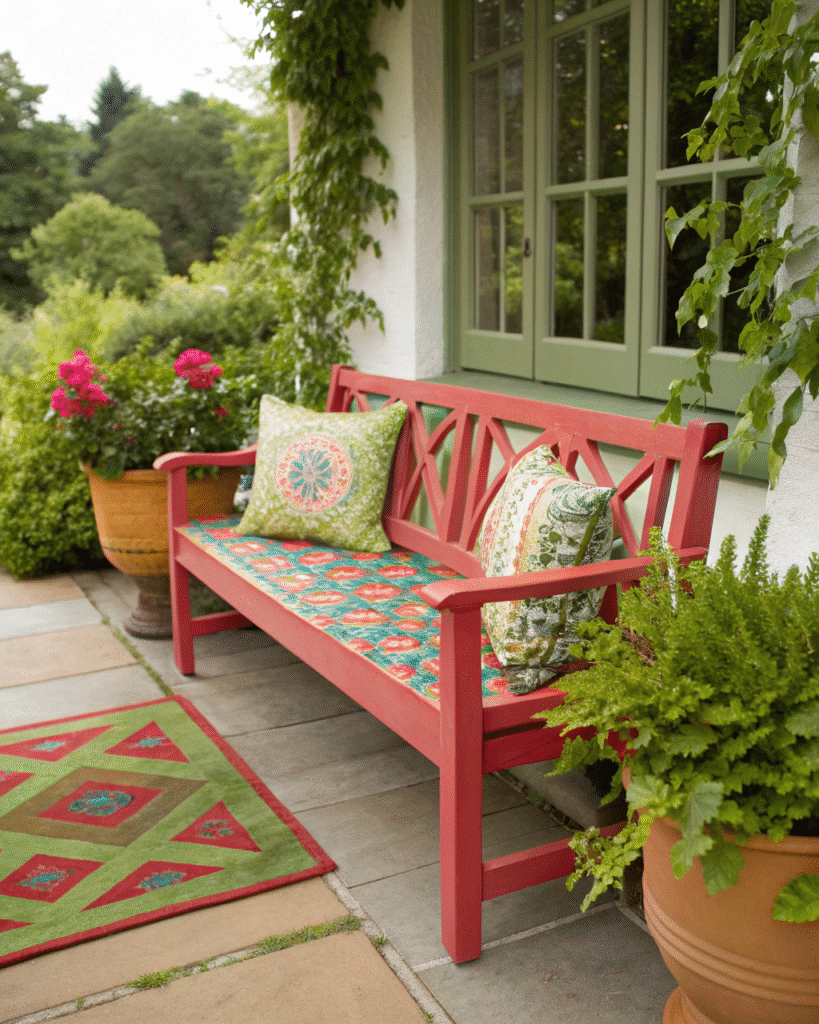
A painted bench can bring a burst of color and personality to your patio.
Pro Tip: Use outdoor paint in hues like sage, navy, or terracotta for seasonal appeal.
14. Folding Bench
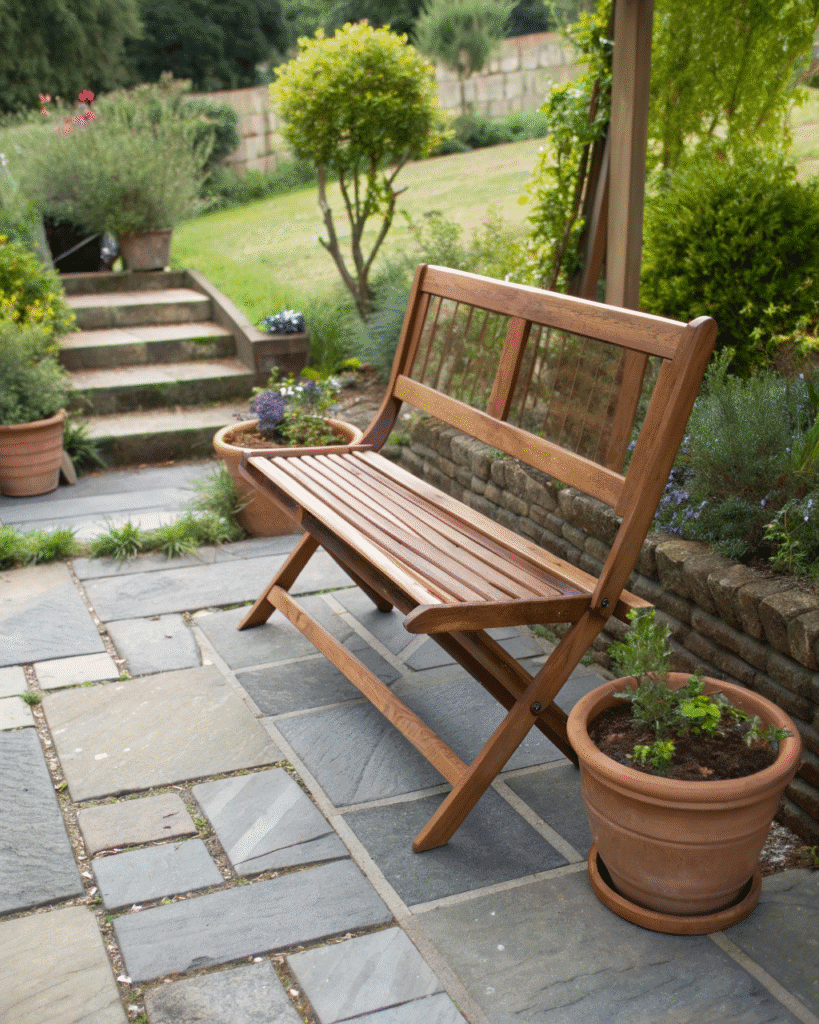
A folding bench offers flexible seating that can be stored away easily.
Pro Tip: Keep one or two in storage for hosting larger gatherings.
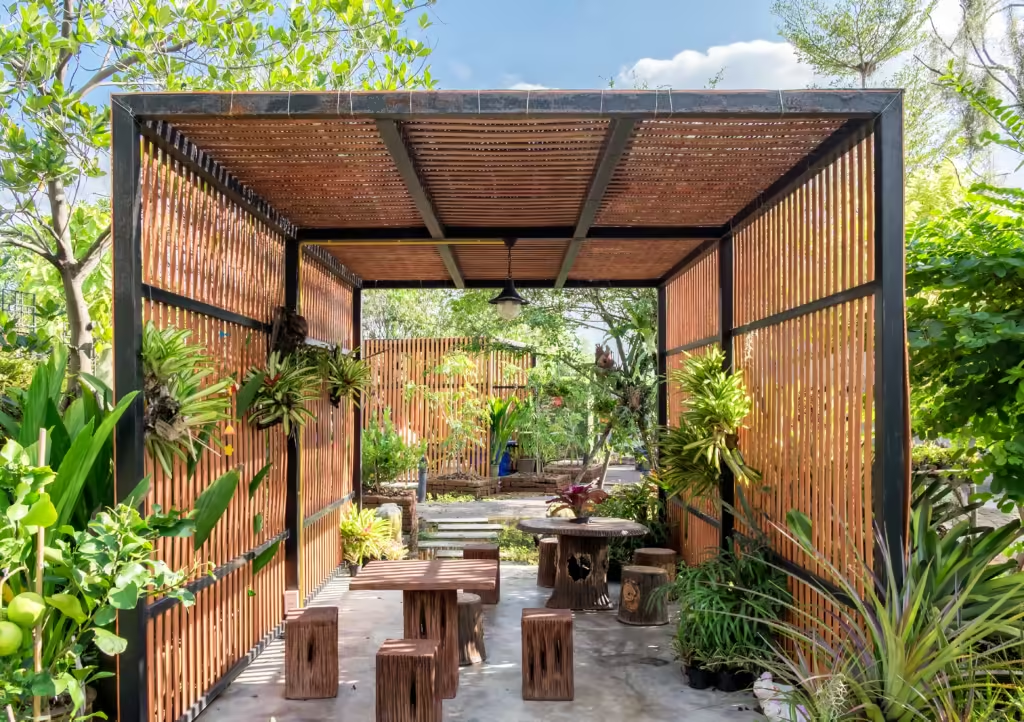
15. Bench Under Pergola
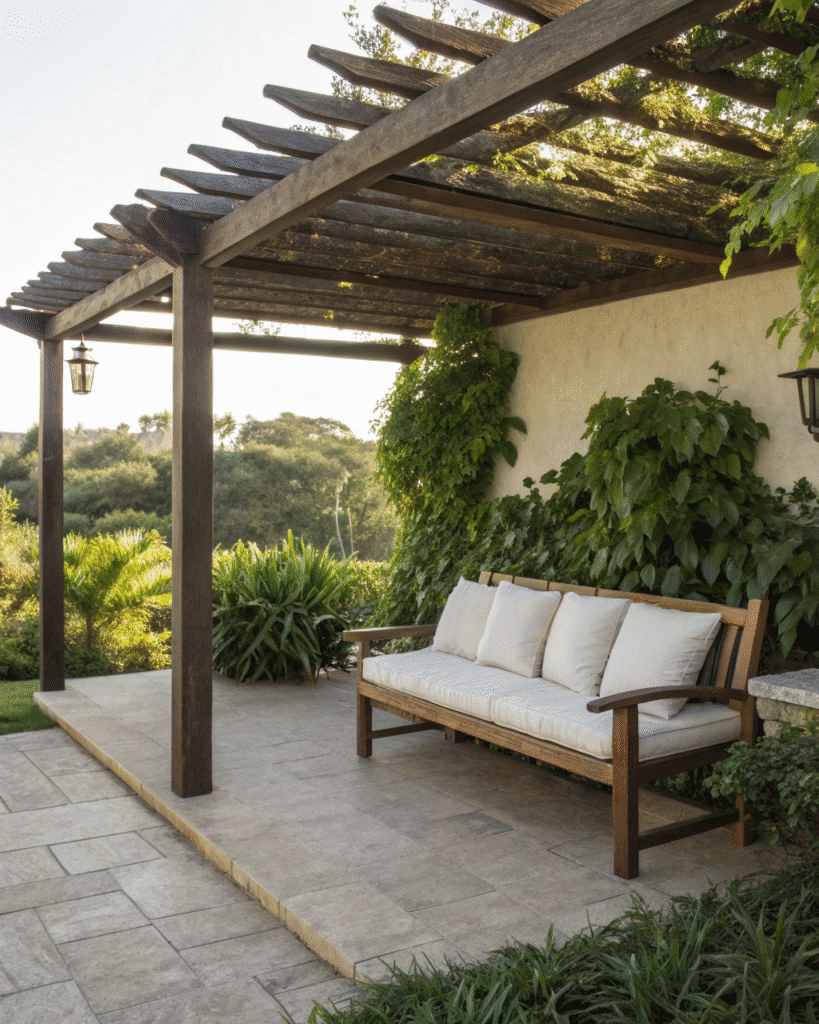
Place a bench under a pergola for shaded, comfortable seating.
Pro Tip: Hang string lights or add climbing plants for an inviting touch.
16. Bench with Cushioned Seating
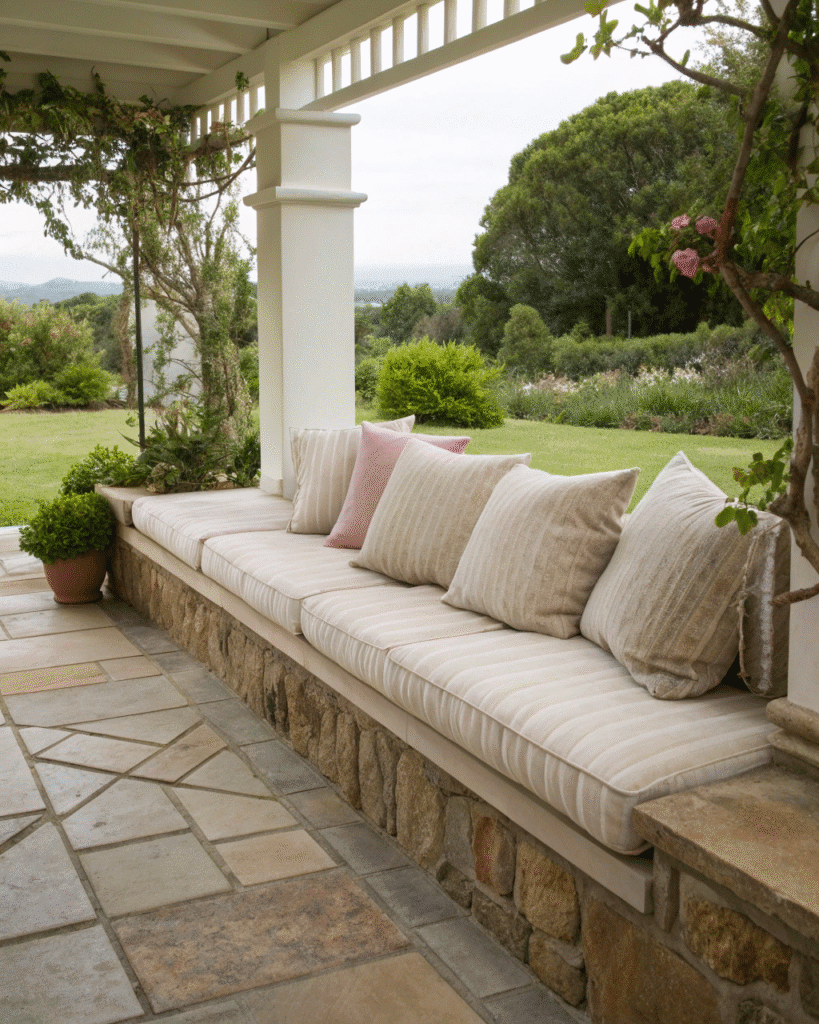
Soft cushions instantly make any bench more comfortable and stylish.
Pro Tip: Use removable covers for easy cleaning and swap them seasonally.
Final Thoughts
A bench is one of the most versatile, most practical, and most often overlooked additions to any patio. It seats more people in less space, works in spots where chairs cannot, adds architectural weight and character to the outdoor design, and in its built-in form becomes one of the most beautiful permanent features of the whole space. Whether you go for the warm simplicity of a wooden slat bench, the drama of a floating wall-mounted design, or the practicality of a built-in concrete seat with a stone cap, the right bench will become one of the most used and most appreciated parts of your patio from the moment you add it.
FAQs
What is the most durable material for an outdoor bench?
Stone and concrete are the most durable outdoor bench materials in terms of pure longevity, requiring virtually no maintenance and lasting indefinitely. Among timber options, teak and ipe are the most naturally durable hardwoods for outdoor use, resisting rot and weathering for decades with minimal care. Powder-coated aluminium is the most durable and low-maintenance metal option.
How wide should a patio bench be?
A comfortable two-person outdoor bench should be at least 42 inches wide and ideally 48 inches. A three-person bench needs at least 60 inches. For a backless bench used at a dining table, allow approximately 20 to 24 inches of bench width per person, the same guideline used for dining chair spacing.
Do outdoor benches need to be covered or brought inside for winter?
This depends entirely on the material. Stone, concrete, and powder-coated aluminium benches can generally stay outside year-round in most US climates. Timber benches benefit from a winter cover or indoor storage in climates with heavy snow or sustained freezing temperatures. Wicker and rattan benches should be stored inside or covered during winter regardless of climate. Cushions should always be stored inside over winter.
How do I make a plain wooden bench more comfortable?
The fastest and most effective way is to add outdoor cushions. A seat cushion of 2 to 3 inches thickness transforms the comfort of a plain timber bench entirely. For a bench that will be used for extended sitting, adding a back cushion as well makes an even greater difference. Choose solution-dyed acrylic fabrics like Sunbrella for cushions that will be left on the bench outdoors as they are the most durable and mildew-resistant outdoor fabric available.
Can I build a patio bench myself?
A simple freestanding timber bench is one of the most achievable DIY outdoor furniture projects available. Basic timber construction skills, a circular saw, a drill, and exterior-grade fixings are all you need for a straightforward slatted bench design. Built-in masonry bench seating as part of a wall or raised planter project is also achievable for a competent DIYer, though the precision required for level capping stones and well-proportioned seat heights rewards careful planning and measurement.
How do I keep my outdoor bench from going green or mouldy?
Regular cleaning with a mild detergent solution and a stiff brush removes the algae and organic buildup that causes green discoloration on outdoor surfaces. Applying a timber preservative or outdoor furniture oil annually to timber benches reduces moisture absorption and slows organic growth. For particularly shaded or damp bench positions, a proprietary anti-algae or anti-mould outdoor surface treatment applied once or twice a season keeps surfaces looking clean between washes.