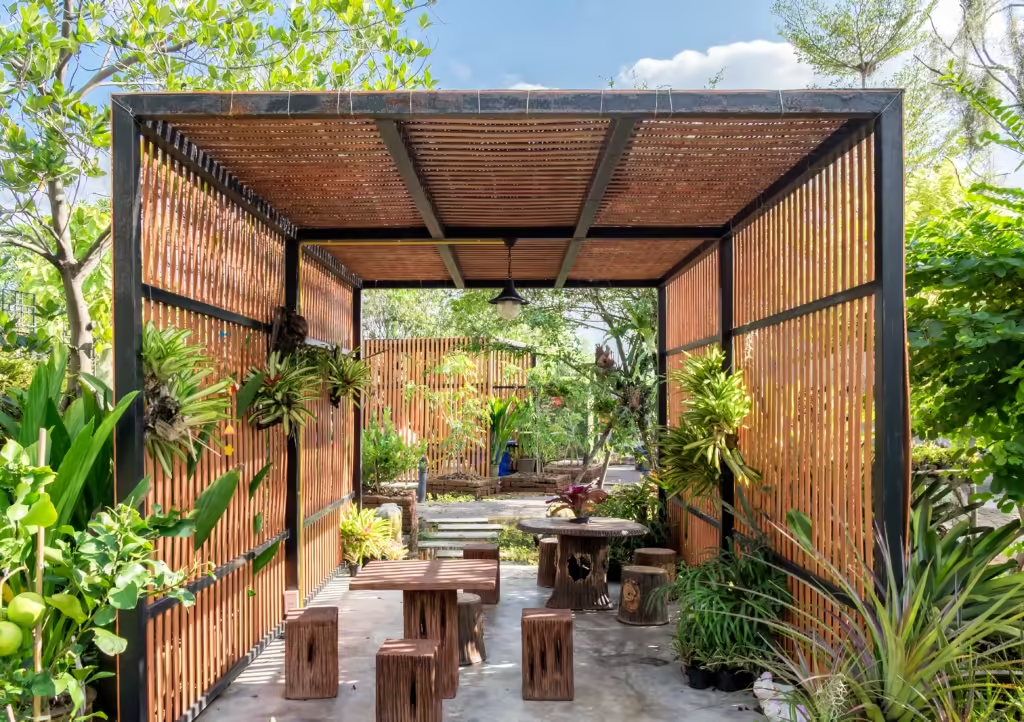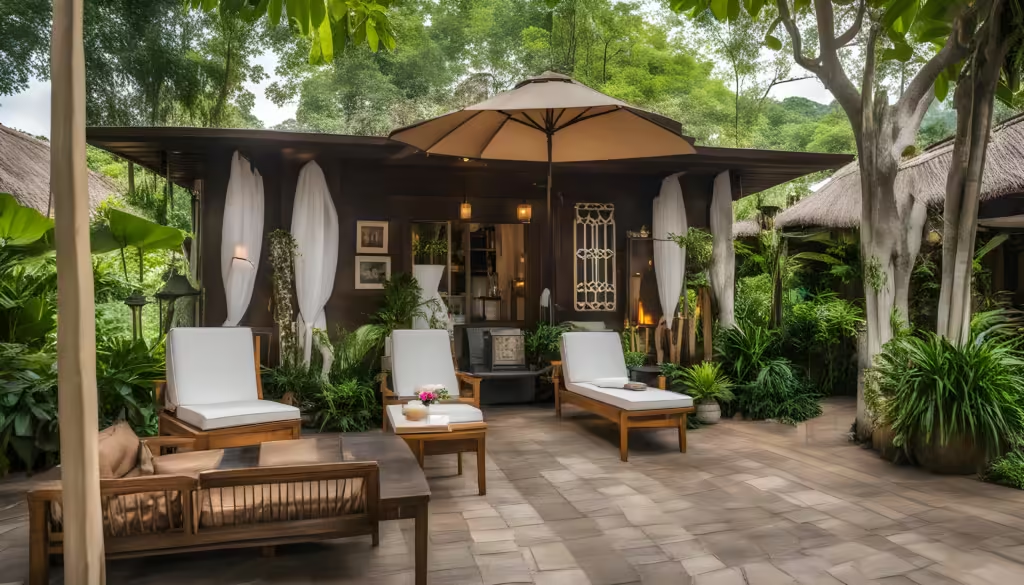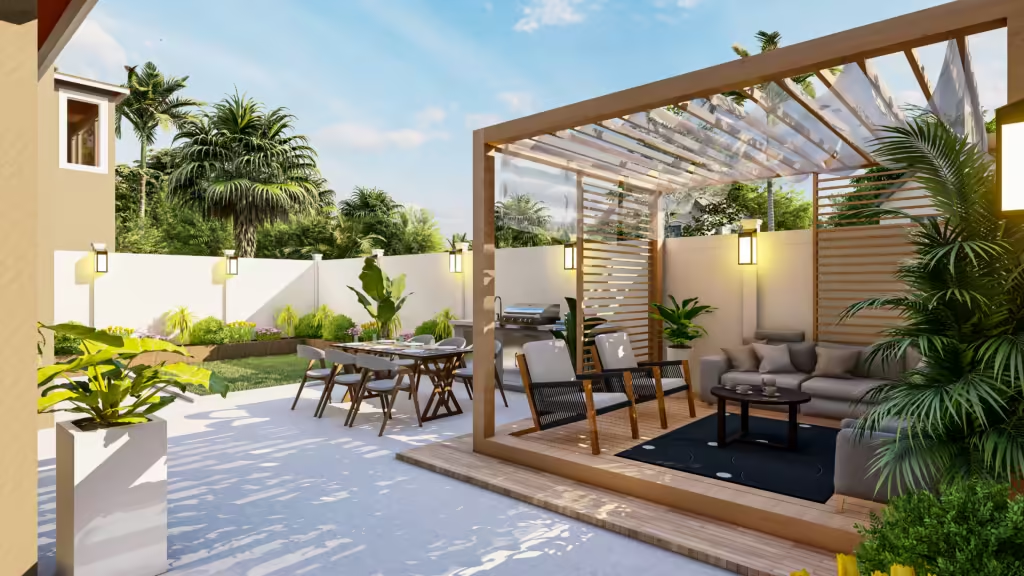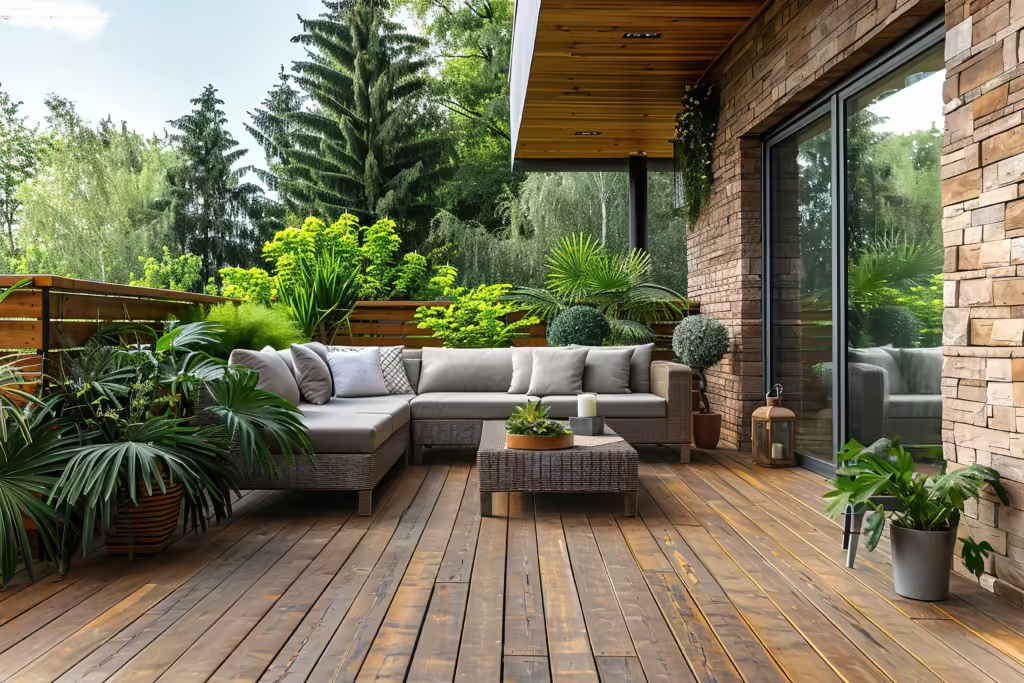
12+ Boho Deck Ideas Filled with Texture and Color
Boho outdoor design is the most personal, most expressive, and most joyfully rule-breaking approach to decorating a deck.
It embraces color, layers texture unapologetically, mixes eras and origins with confidence, and creates spaces that feel genuinely alive rather than showroom-perfect.
If your aesthetic runs toward collected, layered, and full of character, these boho deck ideas are exactly what you have been looking for.
What Boho Design Actually Means for an Outdoor Space
Bohemian design is often described as eclectic, free-spirited, or maximalist, and while all of those descriptions have truth in them, they miss the underlying quality that makes genuinely good boho spaces different from simply cluttered ones. Understanding that quality is the key to creating a boho deck that feels intentional and alive rather than accidentally messy.
Love Chic Living Club?
Add us as one of your preferred Google sources and discover more home decor, DIY, outdoor, and lifestyle inspiration from us.
It Is Personal Before It Is Stylistic
The defining quality of boho design is personal expression. A boho space tells you something about the person who created it. The travel memories in the ceramics. The grandmother’s table repurposed as a side surface. The plant collection grown from cuttings. The tapestry brought back from a market. The wind chime that means something specific. Boho design is the accumulation of objects that matter rather than the purchase of objects that match, and that difference in origin is what gives genuinely good boho spaces their warmth and their authenticity.
A boho deck that has been assembled from a single retail source in a coordinated collection is not really boho. It looks boho from a distance but lacks the personal, discovered quality that is the emotional heart of the aesthetic. The best boho decks take time to develop because they grow organically through real experience and genuine accumulation rather than being designed and purchased all at once.
It Celebrates Cultural and Craft Diversity
The bohemian tradition has always drawn from a wide range of cultural and craft traditions, Moroccan lanterns, Peruvian textiles, Indian block prints, Japanese woven baskets, Mexican ceramics, Scandinavian natural materials. This cross-cultural sensitivity is one of the most beautiful qualities of the boho aesthetic and it comes with a corresponding responsibility to engage with the sources of this material thoughtfully, appreciating the craft and cultural traditions behind the objects rather than treating them as purely decorative exotica.
It Has a Visual Logic Even When It Looks Random
The most successful boho spaces look spontaneous and free but are actually organized around a hidden structure that prevents them from tipping into chaos. The most reliable structure is a consistent color anchor running through the layers. A warm terracotta and deep ochre thread connecting diverse cushions, rugs, and ceramics that would otherwise compete. A neutral base of natural timber and jute that grounds the more colorful elements and gives them somewhere to rest. Without this organizing logic, a boho space accumulates rather than layers and the difference is immediately felt.
The Outdoor Setting Suits Boho Perfectly
The outdoor context is actually one of the most natural environments for boho design. The natural backdrop of planting, sky, and weathered surfaces provides the organic grounding that a boho interior has to create artificially. The relaxed, informal quality of outdoor living aligns naturally with the boho preference for comfort over formality. And the impermanence of the outdoor setting, the way things weather and shift and accumulate natural character with exposure, is completely consistent with the boho appreciation for the beautiful imperfect.
You May Also Love
How to Build a Boho Deck That Looks Collected, Not Cluttered
The difference between a boho deck that looks rich and considered and one that looks like a jumble sale is a small number of organizing principles that are worth understanding before you start.
Anchor Everything With a Color Story
Choose two or three colors that recur throughout every layer of the deck. In a warm boho scheme, these might be terracotta, deep burnt orange, and warm sand. In a cooler one, dusty blue, faded olive, and warm cream. In a jewel-toned one, deep teal, saffron, and plum. Whatever the specific colors, the key is that they appear in the rug, the cushions, the ceramics, the textiles, and the plants rather than each layer having completely different colors. The color story is the organizing logic that makes the layered boho accumulation read as a scheme rather than as miscellany.
Vary Scale and Height Deliberately
A boho deck that has everything at the same height and the same scale looks flat and unconsidered regardless of how many interesting individual pieces it contains. Deliberately vary the heights of plants, lanterns, and accessories to create a sense of visual movement and depth. A tall bamboo behind a medium hanging lantern behind a low cluster of candles at ground level creates a layered visual landscape that rewards the eye rather than offering a single flat plane of objects.
Use Natural Materials as the Foundation
Natural materials, timber, rattan, jute, terracotta, linen, and stone, provide the grounding that allows more exotic and colorful elements to shine without overwhelming the space. If everything on a boho deck is colorful, patterned, and elaborately decorated, the individual elements compete and the overall effect becomes visually exhausting. Natural materials in their most honest forms give the eye somewhere to rest and make the colorful and elaborate elements more visible and more beautiful by contrast.
Layer Gradually Over Time
The best boho decks are not created in a single weekend. They develop over seasons and years as pieces are discovered, added, edited, and replaced. Allow your boho deck to be a work in progress rather than demanding completion all at once. Add one new piece when you find something beautiful. Remove a piece that is no longer working. Let the space evolve naturally rather than forcing it to a finished state that may not reflect where your taste and experience actually are.
Don't miss: 14+ Patio Kitchen DIY Ideas You Can Try at Home →
Boho Deck Design for Different Spaces and Climates
The boho aesthetic adapts to different outdoor contexts with surprising ease because its flexibility is one of its defining characteristics.
Boho on a Small Deck or Balcony
A small outdoor space actually suits boho particularly well because the constraints limit the accumulation and force a tighter curation that is often more successful than the wider collection a larger space allows. On a small boho deck, choose one signature piece that defines the character of the whole space, a hammock chair, a significant macrame hanging, a beautiful lantern, and build a more restrained boho arrangement around it. Less is genuinely more in a small boho space.
Boho in a Shaded Garden
Shaded outdoor spaces suit the slightly mysterious, layered quality of boho design beautifully. In shade, lanterns and candles are more impactful, dappled light through overhead planting creates a naturally atmospheric quality, and the muted colors of shade-tolerant plants relate well to the earthy, jewel-toned boho palette. A shaded boho deck can feel more immersive and more intimate than a sunny one.
Boho in a Hot and Sunny Climate
In a hot, sunny outdoor space, the boho approach needs to prioritise shade and comfort without sacrificing its characteristic layered quality. A canopy or shade sail provides the overhead shelter that makes layered textiles and comfortable low seating viable in intense sun. Choose fade-resistant solution-dyed fabrics for any textile in full sun exposure. Let the plant palette reflect the climate rather than fighting it, with drought-tolerant species that thrive in heat rather than shade-loving plants that struggle.
Keep Exploring
Maintaining a Boho Deck
The layered, textile-rich quality of a boho deck requires more maintenance attention than a more minimal outdoor scheme, particularly in terms of fabric care and seasonal storage.
Rotate and Refresh Textiles Seasonally
The multiple layers of cushions, rugs, throws, and fabric accessories that define a boho deck benefit from seasonal rotation. Bringing in new cushion covers for autumn, refreshing the rug at the start of the outdoor season, and editing out anything that is too faded or worn to contribute positively to the scheme keeps the boho layering looking intentional rather than neglected over time.
Store Delicate Items in Winter
Natural fiber rugs, macrame hangings, tapestries, and any genuinely precious or irreplaceable boho accessories should be stored indoors through the winter months in most US climates. The characteristic irreplaceability of genuine boho finds, the one-of-a-kind market purchase, the handmade piece, the inherited object, makes them worth protecting carefully even when similar protection would not be taken with mass-produced equivalents.
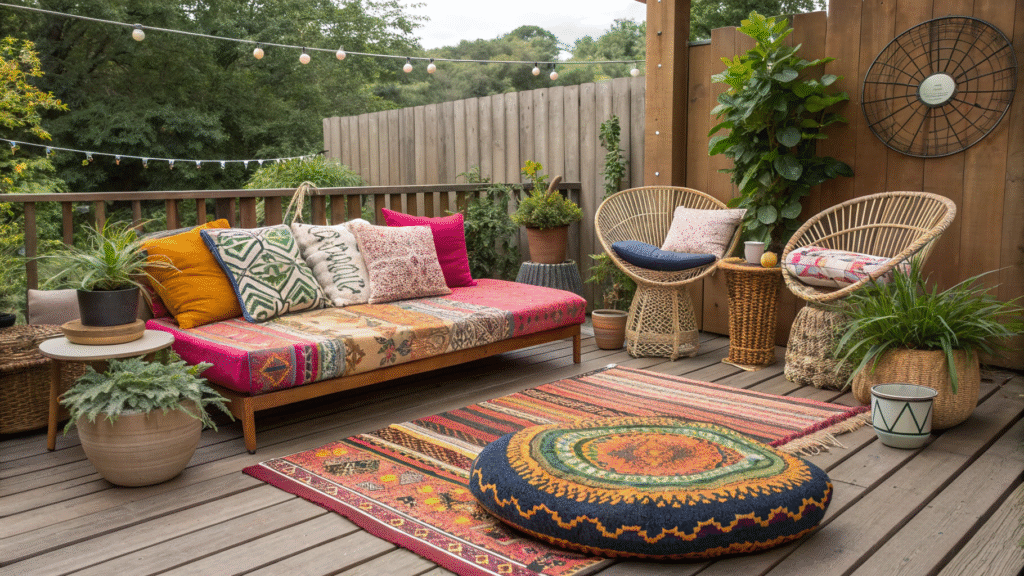
1. Layered Rugs
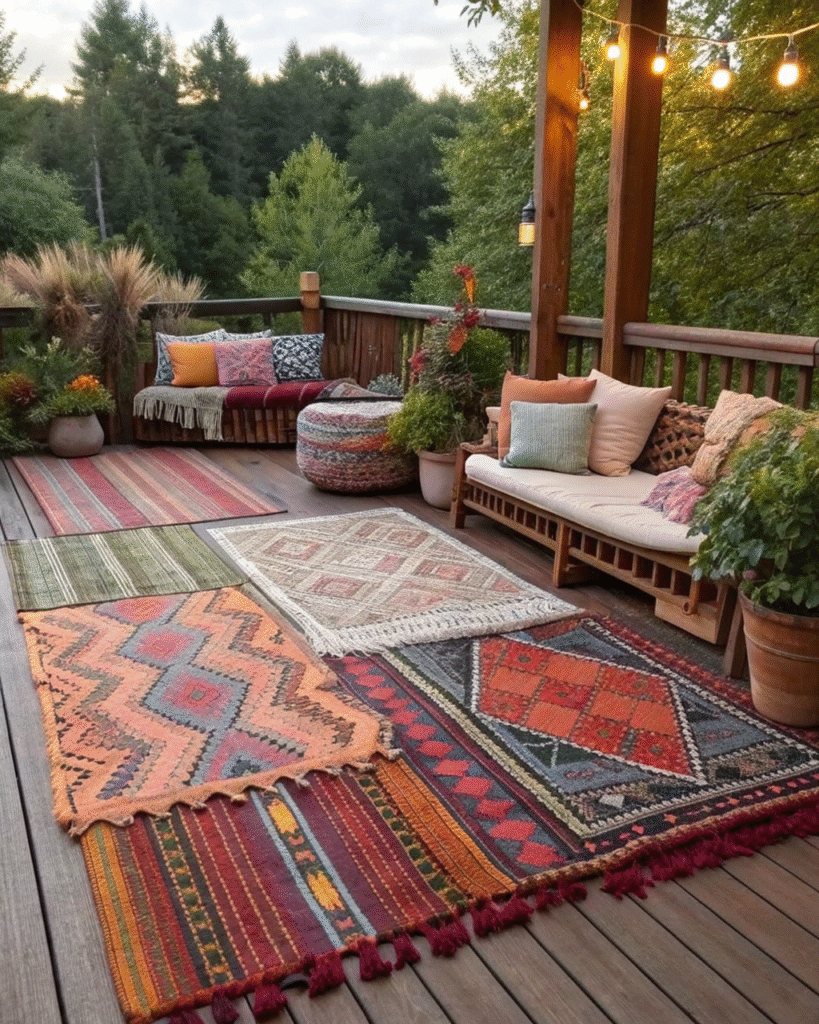
Start with multiple outdoor rugs in different sizes and patterns for a cozy, eclectic base.
Pro Tip: Mix earthy tones with pops of color like terracotta, mustard, or teal for a balanced boho look.
2. Mismatched Furniture
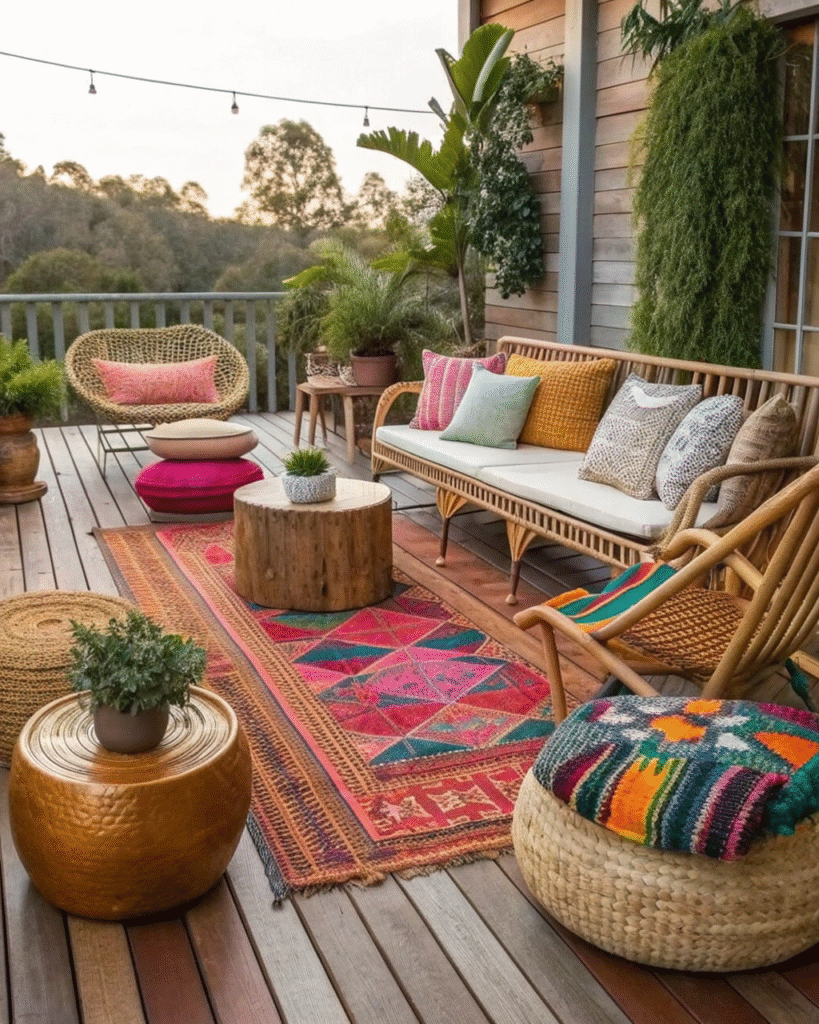
Combine various furniture styles and materials for a casual, collected feel.
Pro Tip: Use wicker chairs, wooden benches, and low tables to create depth and visual interest.
3. Macrame Decor
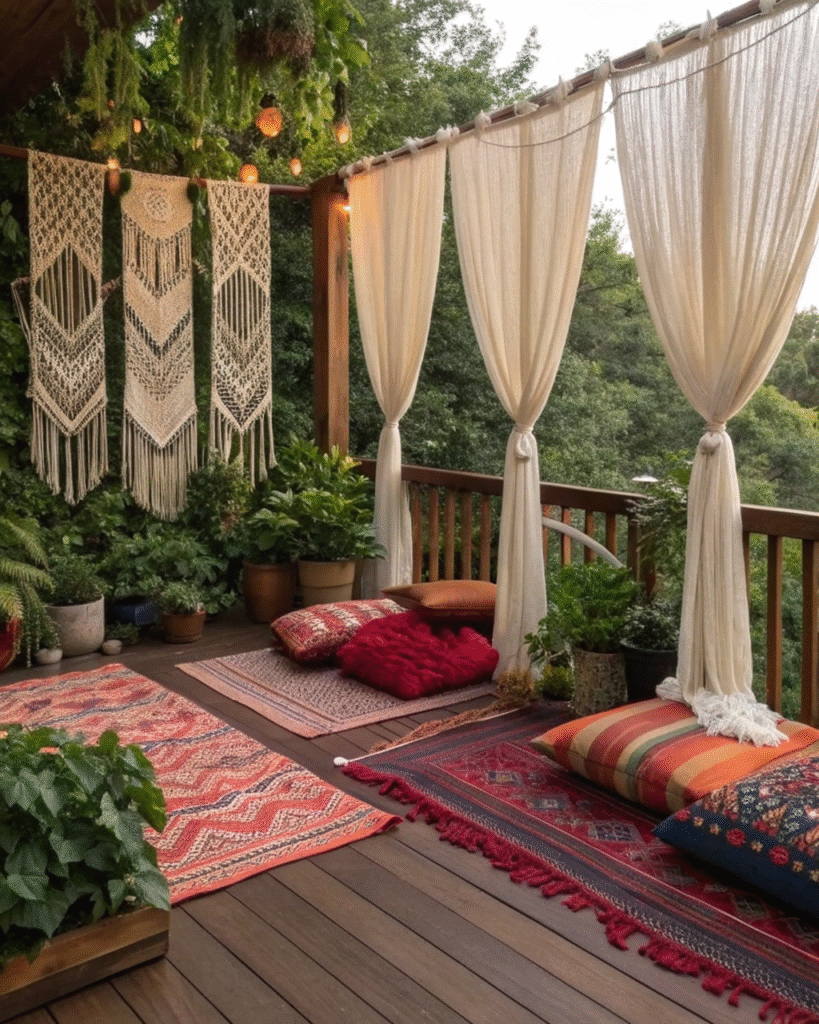
Macrame wall hangings, plant holders, or curtains add texture and softness.
Pro Tip: Choose off-white or natural beige macrame to balance bold patterns elsewhere.
4. Patterned Cushions
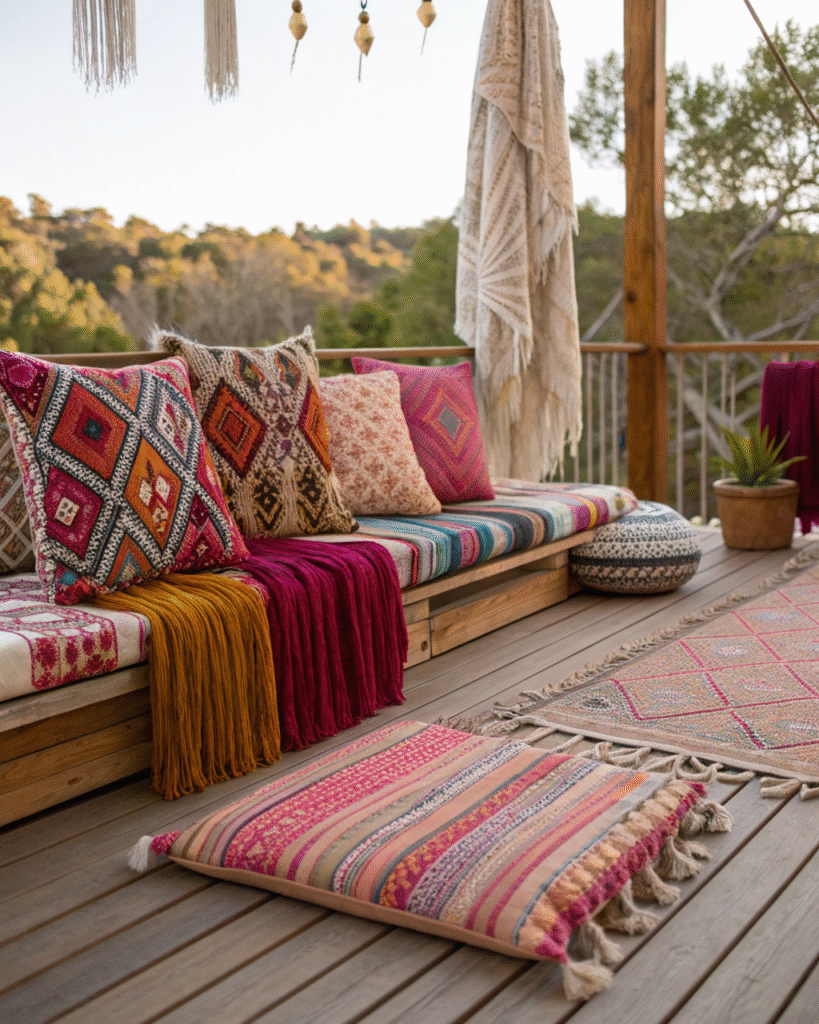
Mix cushions with bold prints, fringes, and tassels for that signature boho charm.
Pro Tip: Stick to a cohesive color palette so the mix feels artistic, not chaotic.
5. Hanging Lanterns
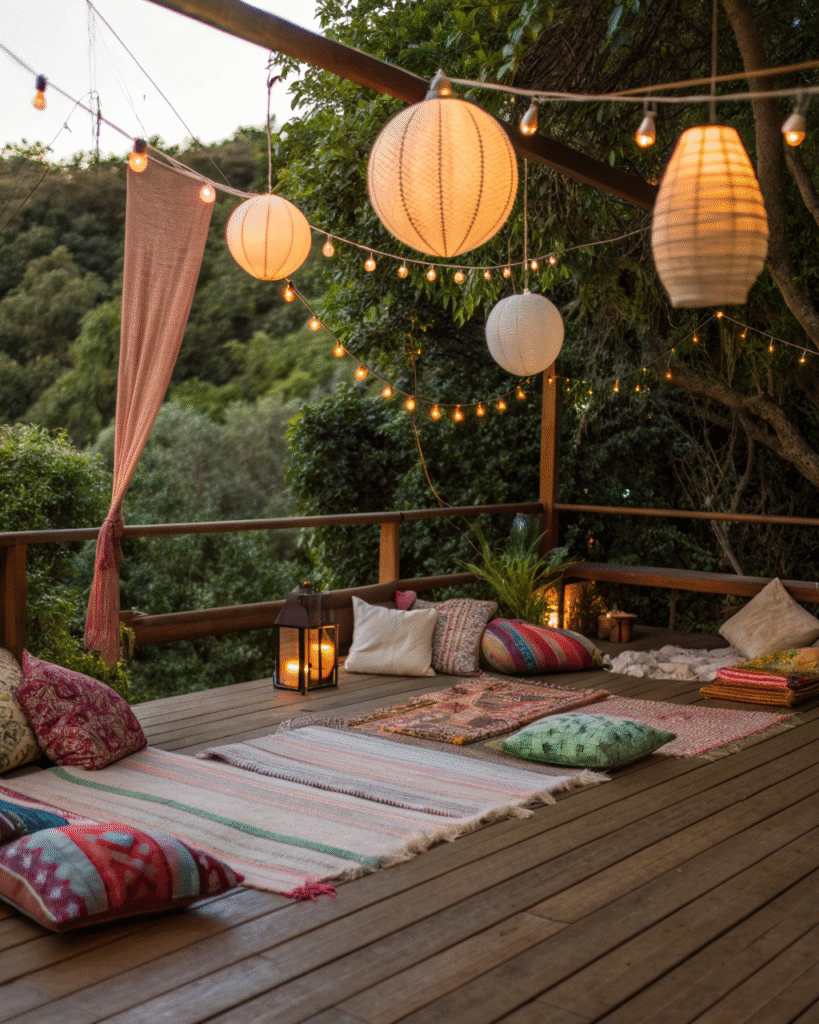
Lanterns add a dreamy glow and a sense of wanderlust to your deck.
Pro Tip: Combine metal, rattan, and glass lanterns in different shapes and heights.
6. Woven Poufs and Ottomans
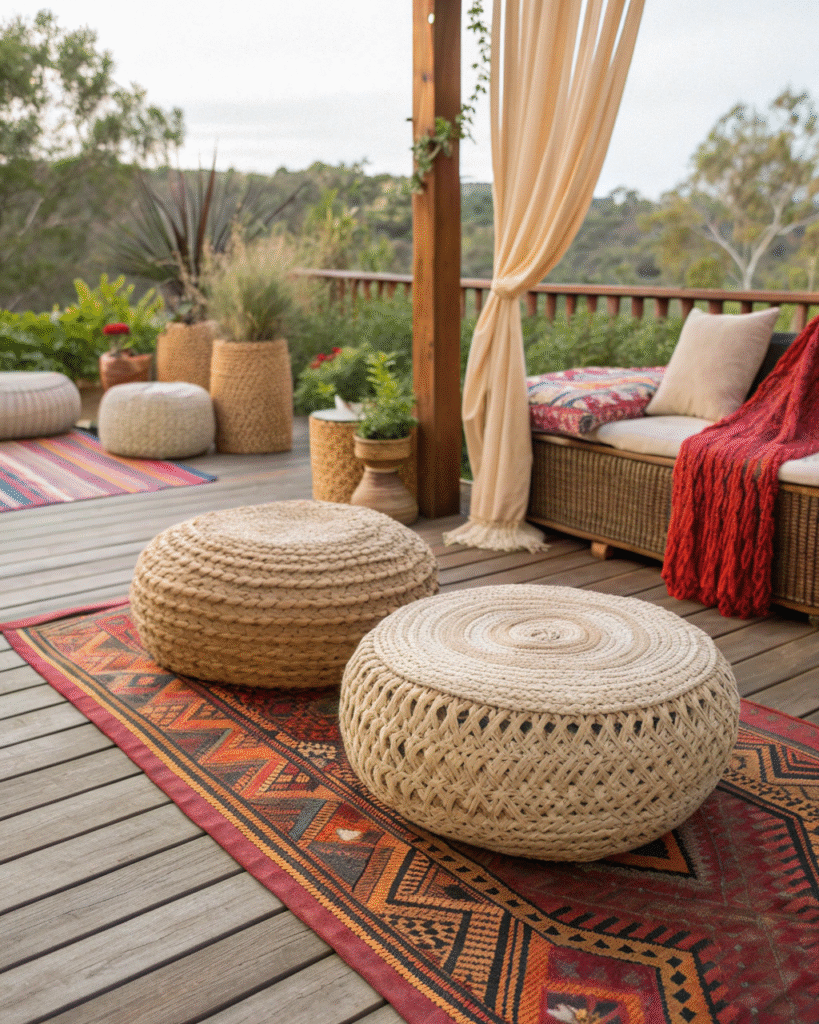
Soft poufs create comfortable, movable seating for relaxed gatherings.
Pro Tip: Layer poufs with textured blankets for a laid-back, lounge-style corner.
7. Low Lounge Seating
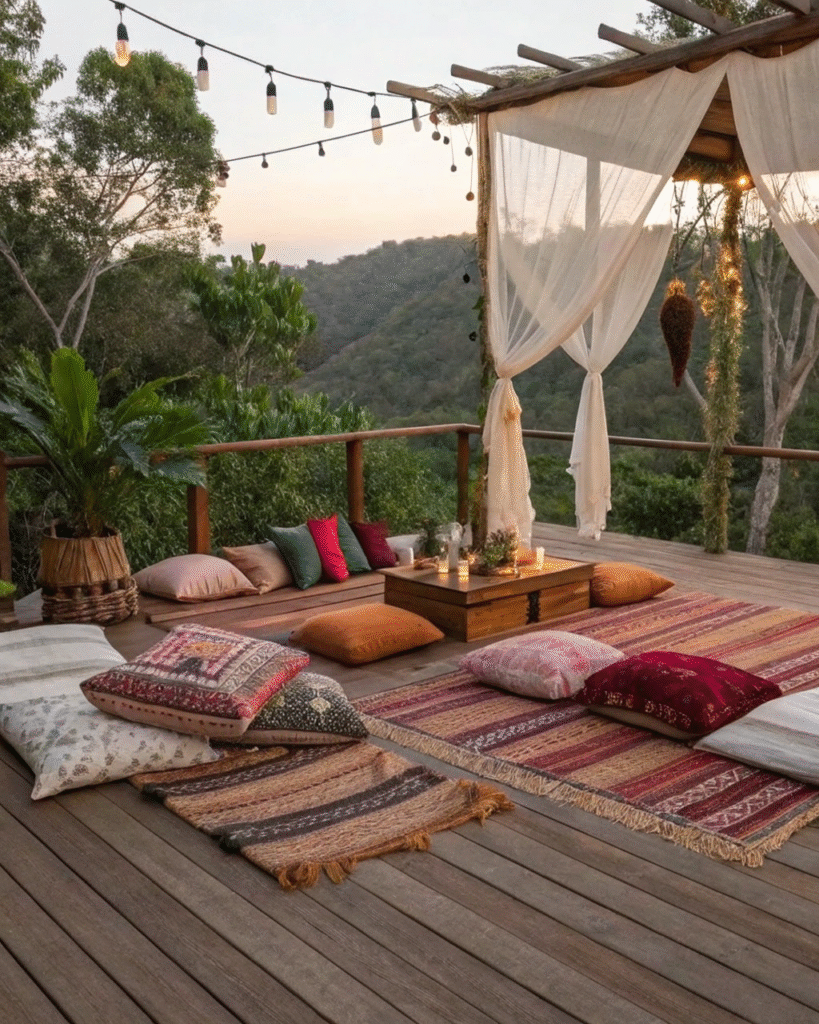
Keep your seating low to the ground for an intimate, grounded atmosphere.
Pro Tip: Use floor cushions and a low coffee table for a relaxed Moroccan-inspired vibe.
8. Rattan and Bamboo Accents
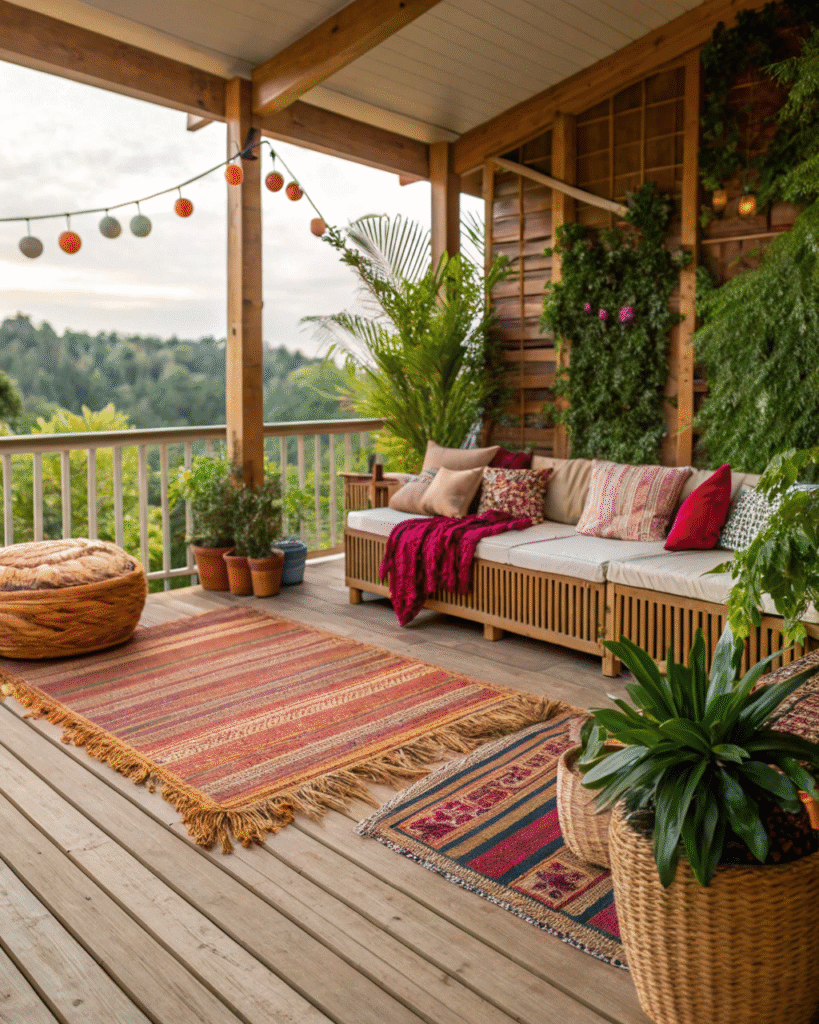
Rattan and bamboo add warmth and organic beauty to your deck decor.
Pro Tip: Pair these materials with linen or cotton textiles for a balanced, natural mix.
9. String Lights and Fairy Glow
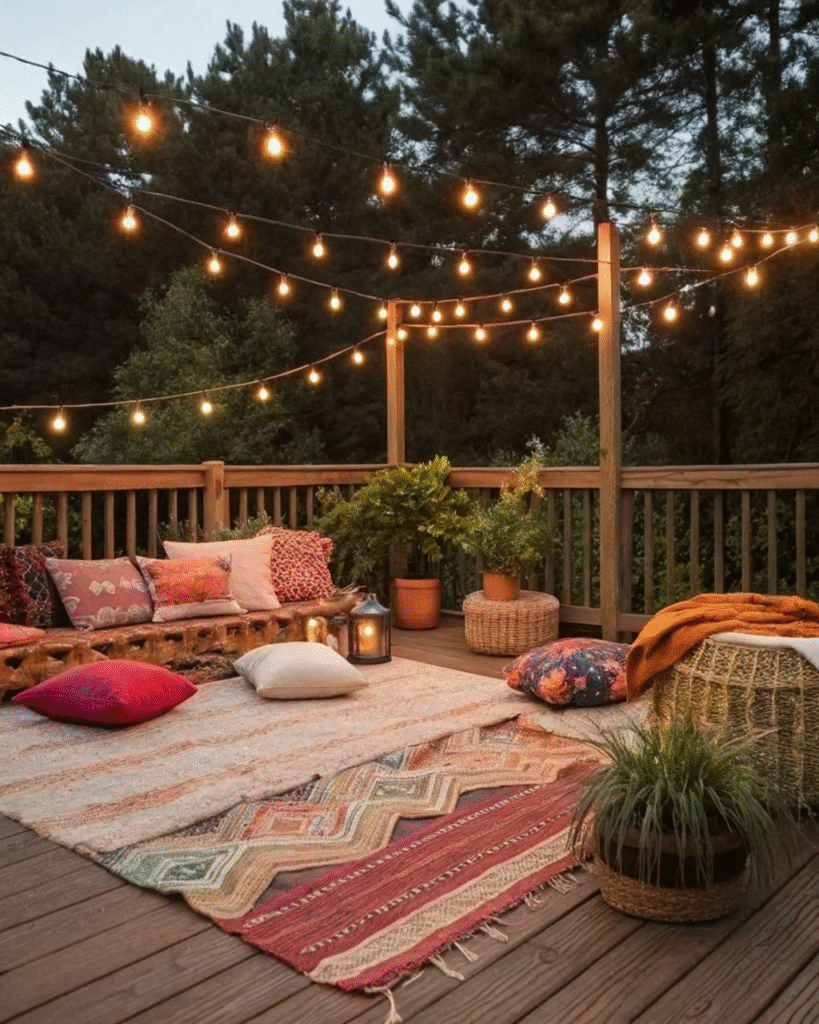
String lights create the soft, magical atmosphere that defines boho spaces.
Pro Tip: Drape them casually across beams or railings to enhance the cozy glow.
10. Potted Greenery
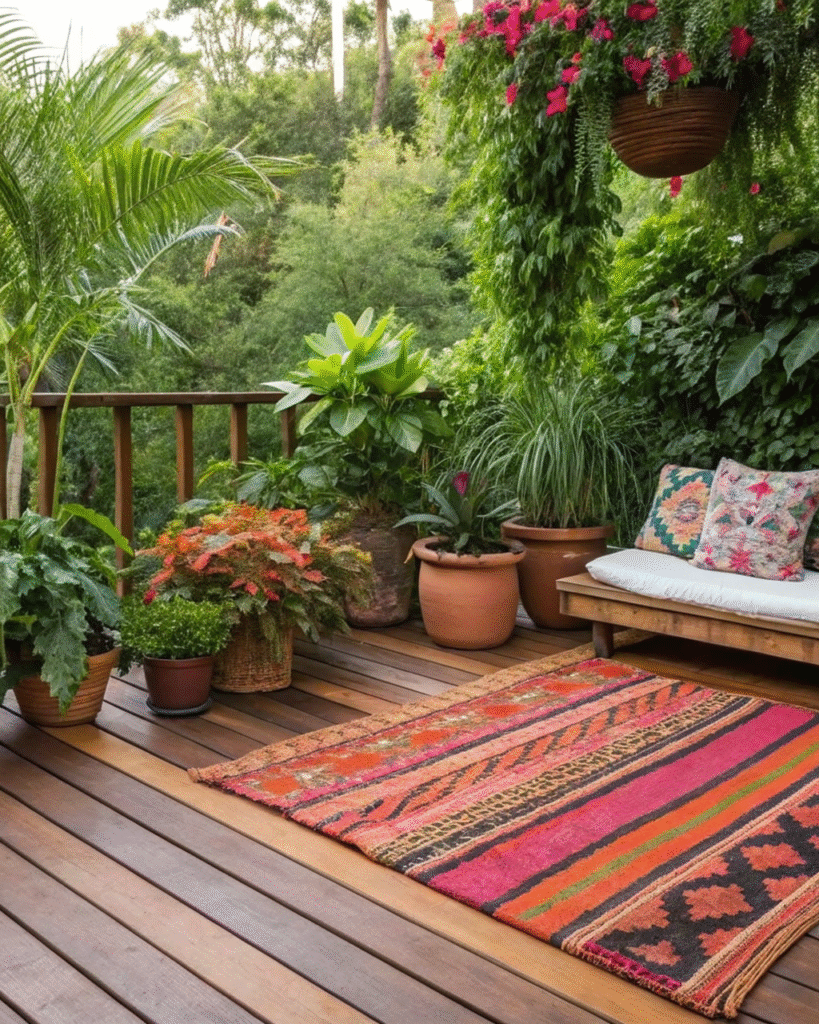
Fill your deck with plants of various sizes for a lush, jungle-like setting.
Pro Tip: Mix leafy greens with succulents and trailing vines for natural layers and movement.
11. Vintage Finds
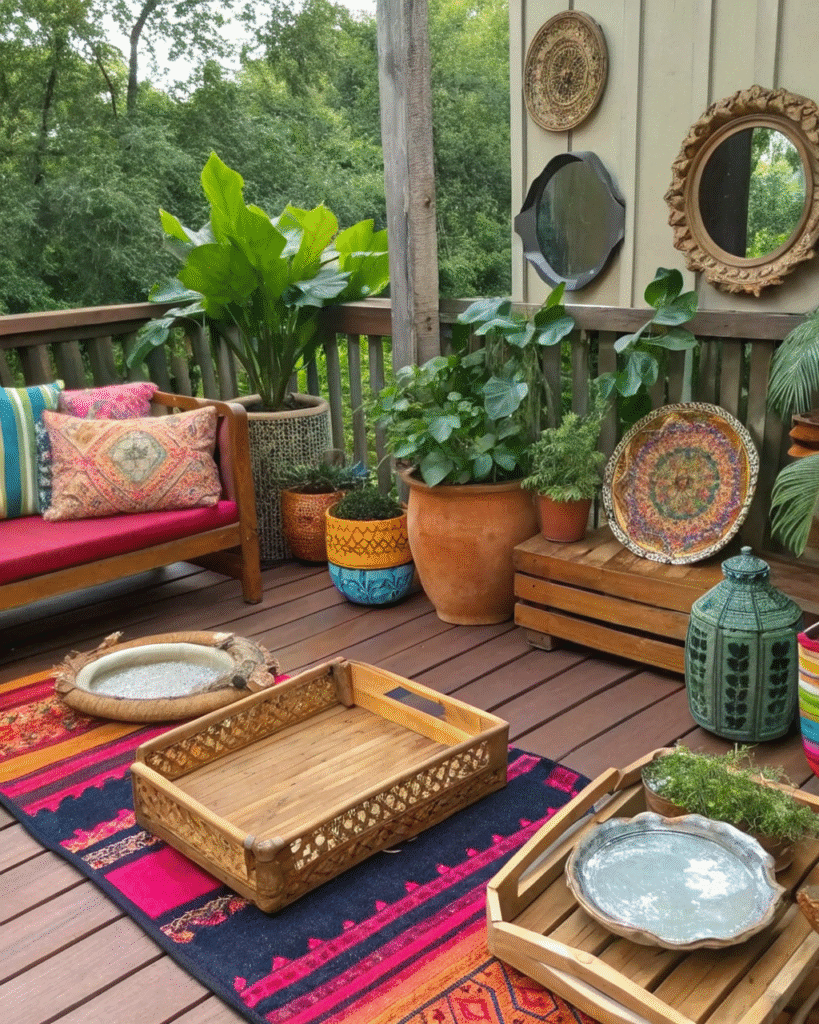
Incorporate vintage or thrifted pieces like trays, mirrors, or planters.
Pro Tip: Look for items with patina or texture that add character to your deck styling.
12. Canopy or Fabric Drapes
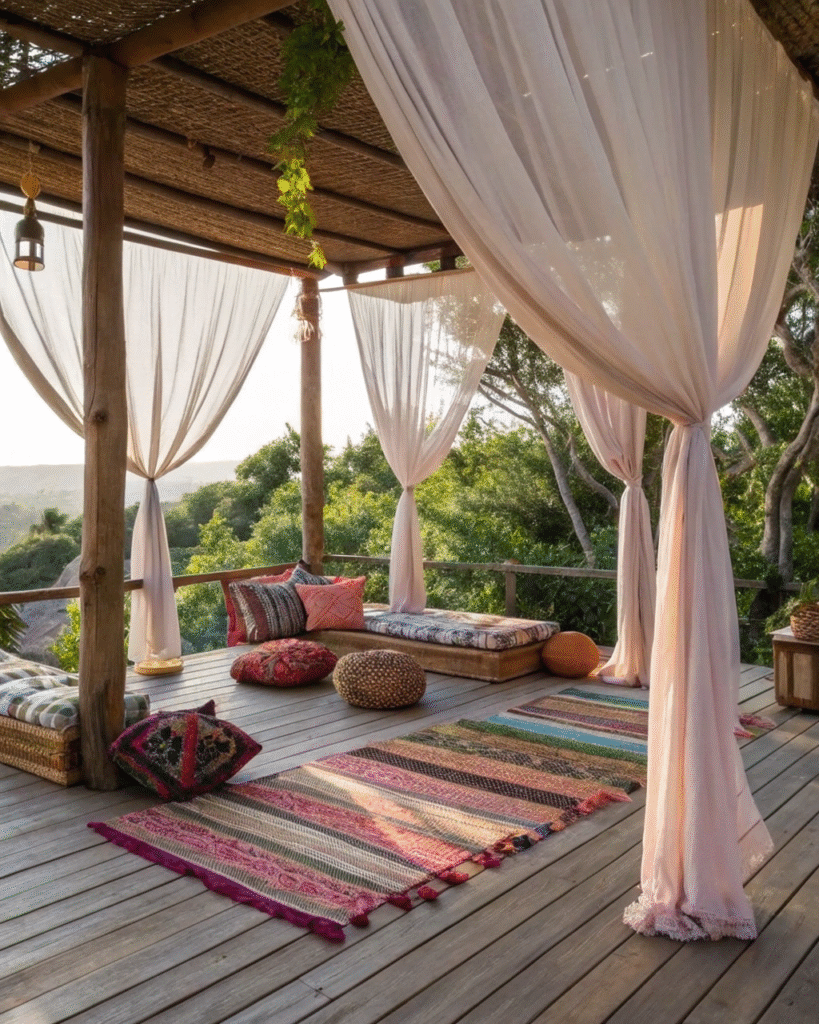
Soft flowing fabric adds shade and enhances the relaxed boho aesthetic.
Pro Tip: Choose sheer white or muted earth-toned fabric for a dreamy, effortless vibe.
Final Thoughts
A boho deck is one of the most joyful and most personally expressive outdoor spaces you can create, and it is one that genuinely improves over time as it accumulates pieces that mean something, weathers to a beautiful patina, and develops the layered complexity that no newly decorated space can have. Start with a color story and a natural material base. Add texture and pattern through cushions, rugs, and woven accessories. Light it warmly with lanterns and candles. Fill it with plants in mismatched pots. And then let it grow and evolve and accumulate character at its own pace. Your boho deck will be unlike anyone else’s and that is exactly the point.
Frequently Asked Questions
How do I make a boho deck look intentional rather than chaotic?
The organizing principle that prevents boho from becoming chaos is a consistent color story running through every layer. Choose two to three colors that recur in the rug, the cushions, the ceramics, and the textiles and ensure these colors appear in every layer of the arrangement. Use natural material neutrals, jute, timber, terracotta, as the grounding foundation. Vary the scale and height of elements deliberately. And edit ruthlessly, a boho arrangement with twenty well-chosen pieces at varying heights and scales looks far more intentional than one with forty pieces at a uniform level.
What colors work best in a boho deck scheme?
Warm, earthy, and jewel-toned palettes work best for boho outdoor spaces. Terracotta, burnt orange, saffron, deep ochre, warm rust, and copper for a warm boho palette. Dusty teal, faded turquoise, indigo, and sage green for a cooler boho palette. Deep plum, berry, and magenta alongside warm terracotta for a jewel-toned boho palette. Avoid pale pastels, which lose the richness that boho requires, and avoid very bright, highly saturated colors, which tip boho toward garish rather than vibrant.
Can boho work on a small deck?
Yes, with slightly more discipline than on a larger space. Choose one signature statement piece, a hammock chair, a significant macrame hanging, or a beautiful collection of lanterns, and build a more restrained boho arrangement around it. Use vertical space for plants and hanging elements rather than covering the entire limited floor with accessories. Keep the color story tight and the number of patterns to a maximum of three at any one time. A small boho deck should feel curated and intimate rather than attempting to replicate the abundance of a larger space.
What outdoor fabrics work best for boho cushions and rugs?
Solution-dyed acrylic fabrics like Sunbrella are the most durable and most colorfast choice for boho outdoor cushions, particularly important in a boho scheme where bold colors and patterns need to stay vibrant rather than fading quickly to pale, washed-out versions of themselves. For outdoor rugs, polypropylene and polyester outdoor rugs are the most practical choices for boho pattern mixing, as they handle moisture and outdoor conditions well while being available in a wide range of the earthy, pattern-rich designs that suit the aesthetic.
How do I incorporate lighting into a boho deck scheme?
Layer multiple warm light sources at different heights. String lights or Edison bulb festoon lights overhead for ambient glow. Hanging lanterns at mid-height for pattern and warmth. Candles in hurricane glasses or pierced metal lanterns at table and floor level for the most intimate, flickering layer. The variety of light source types and heights, all warm white rather than cool, creates the layered, atmospheric glow that is as essential to the boho evening experience as the textiles and plants are to the daytime one.
What plants suit a boho deck best?
Plants that are lush, slightly informal, and visually interesting from close up suit boho outdoor spaces best. Trailing plants that spill over the edges of pots and baskets. Large-leafed tropical varieties that create a sense of lushness and abundance. Cacti and succulents in painted or ceramic pots that add structural interest. Flowering plants in the boho color palette. Herbs in terracotta pots for fragrance and utility. The boho approach to planting is always toward abundance, variety, and the slightly overgrown quality that makes a space feel genuinely alive rather than neatly maintained.