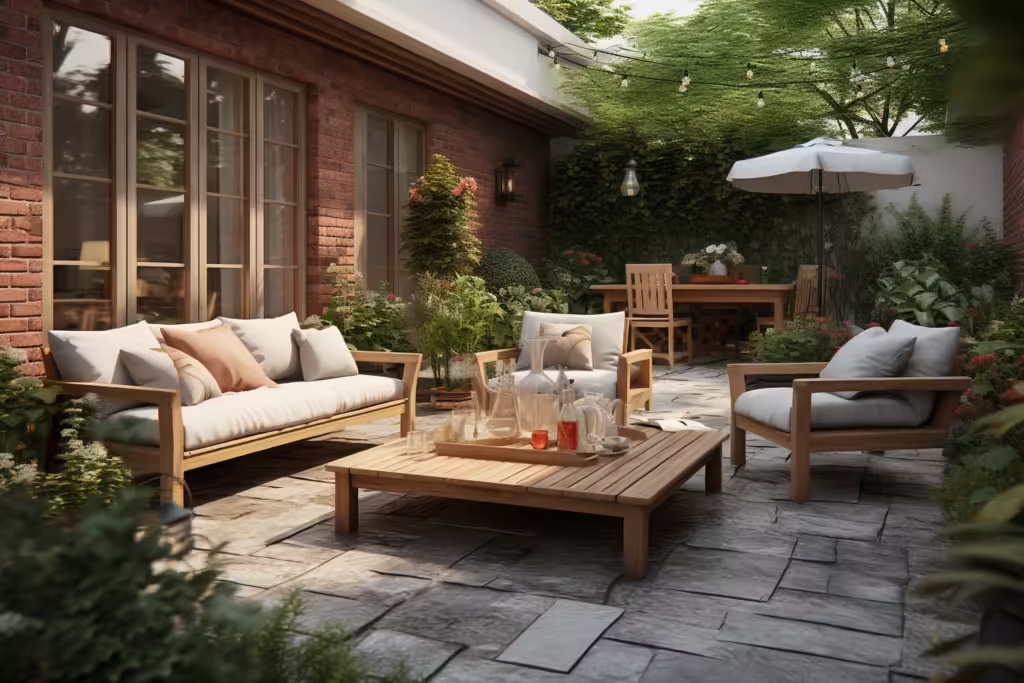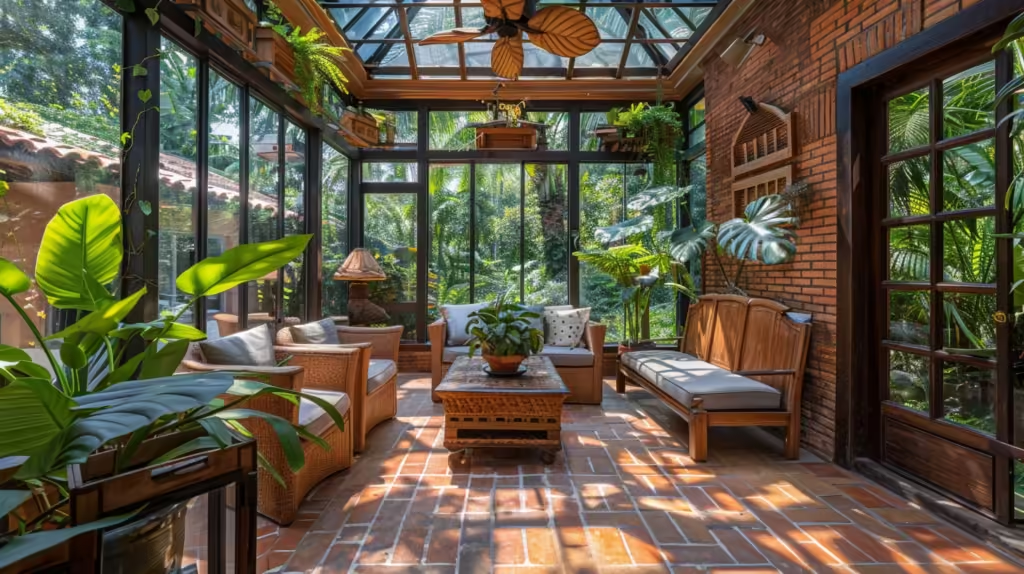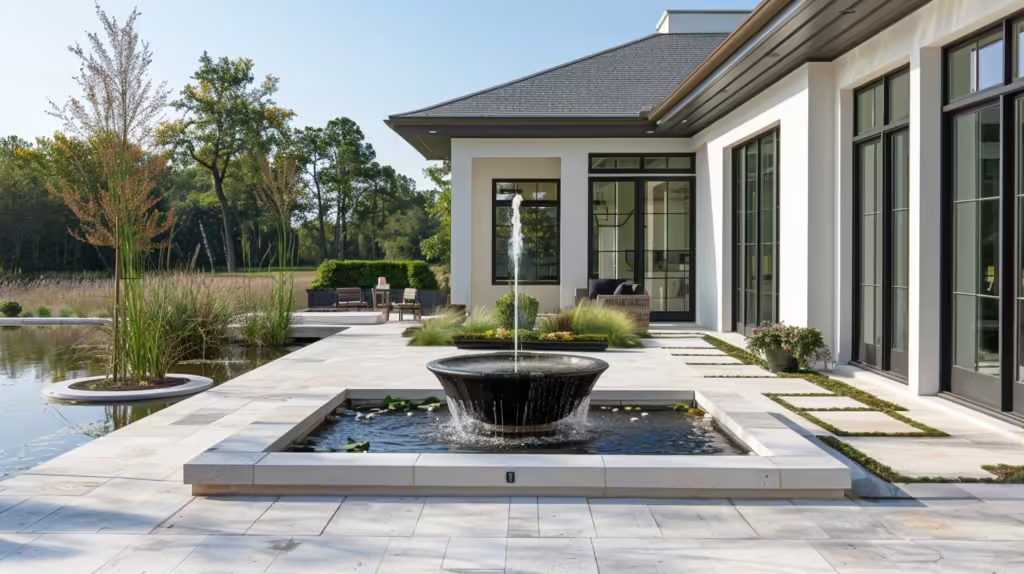
20+ Creative Patio Floor Ideas for Every Style
A patio designed properly can help one make his or her outside space comfortable for relaxing and hosting people.
The floor is the foundation of every patio. Get it right and everything built on top of it looks better, feels better, and lasts longer. Get it wrong and no amount of beautiful furniture or clever planting will fully rescue the space.
How to Choose the Right Patio Floor for Your Space
With so many materials and options available, choosing a patio floor can feel overwhelming. Breaking the decision down into a few key considerations makes it much more manageable.
Start With Your Climate
Climate is the single most important factor in patio flooring choice and the one most people underweight. A material that looks beautiful and performs perfectly in a warm, dry climate can be completely inappropriate in a cold, wet one. Natural stone and terracotta can crack in freeze-thaw cycles if they are not properly frost-rated. Timber decking becomes slippery and prone to mould in consistently wet climates without the right treatment. Gravel and sand-set paving can shift and migrate in heavy rainfall without proper edging and sub-base preparation.
Love Chic Living Club?
Add us as one of your preferred Google sources and discover more home decor, DIY, outdoor, and lifestyle inspiration from us.
Always check that any flooring material you are considering is rated for outdoor use in your specific climate zone before committing to it.
Consider the Sub-Base Requirements
Every patio floor, regardless of the surface material, relies on what is underneath it. A well-prepared sub-base of compacted crushed stone, typically 4 to 6 inches deep depending on the application, is the foundation that prevents sinking, cracking, and uneven settlement over time. Some flooring options like interlocking deck tiles and artificial grass can be laid over existing hard surfaces with minimal sub-base work. Others, like flagstone, brick, and concrete pavers, need a properly prepared ground-level sub-base to perform correctly. Factor the sub-base into your planning and budget from the very start.
Think About Maintenance Honestly
The maintenance requirements of your chosen patio floor have to match your willingness and ability to maintain it. Real timber decking looks beautiful but needs annual treatment to stay that way. Natural stone can require sealing. Gravel migrates and needs occasional topping up. Polished concrete can stain. Be honest with yourself about how much time and effort you will realistically put into maintenance and let that inform your material choice as much as aesthetics does.
Match the Floor to the House
The patio floor is the visual bridge between the house and the garden. A floor that relates well to the exterior materials of the house, in color, tone, texture, or style, makes the patio feel like a deliberate extension of the architecture. A floor that ignores or clashes with the house always looks like an afterthought, no matter how beautiful the material is in its own right.
Patio Flooring for Different Situations
Different spaces and situations call for different flooring solutions. Here is a practical guide to the best choices for the most common scenarios.
Best Patio Flooring for Heavy Rainfall Areas
In areas with significant annual rainfall, drainage is the primary concern. Permeable materials like gravel, pea gravel, and permeable pavers allow water to drain directly through the surface rather than running off. For impermeable surfaces like stone and concrete, ensure a minimum fall of 1 in 80 away from the house toward a drainage point. Avoid materials with very tight or mortared joints that leave no path for surface water to escape.
Best Patio Flooring for Hot, Dry Climates
In hot climates, light-colored materials that reflect rather than absorb heat make the floor much more comfortable underfoot and reduce the ambient temperature of the patio during the hottest part of the day. Pale limestone, cream-colored porcelain, and light concrete pavers all perform well in heat. Dark materials like slate, charcoal brick, and dark composite decking absorb and radiate heat significantly, making them uncomfortable to walk on barefoot and noticeably warming the space around them.
Best Patio Flooring for Shade
Shaded patios have a different set of challenges from sunny ones. Moisture retention in shade encourages moss, algae, and mould growth on paving surfaces, making them slippery. In shaded areas, choose materials with good texture and slip resistance, avoid smooth polished surfaces, and consider applying an anti-algae treatment annually. Regular sweeping and occasional pressure washing keeps shaded paving clean and safe.
Best Patio Flooring for Sloped Sites
On a sloped site, the patio floor needs to be laid level, which means either cutting into the slope and building a retaining wall on the downhill side, or building up the level on the downhill side with a sub-base fill retained by a wall or edging. Gravel is the only surface material that can be laid directly on a gentle slope without full levelling, and even then it tends to migrate gradually downhill. All other materials require a level base.
Best Patio Flooring for a Rental Property
In a rental situation where permanent changes are not possible or appropriate, interlocking deck tiles are the most practical solution. They lay directly over existing concrete, stone, or even compacted earth, require no adhesive or mortar, and can be lifted and taken with you when you leave. Outdoor rugs over an existing hard floor are another zero-commitment option for adding color, texture, and warmth temporarily.
Budget Patio Flooring Options That Do Not Compromise on Style
You do not need a large budget to achieve a patio floor that looks genuinely good. These options deliver strong results at lower cost.
Gravel
Gravel is the most affordable patio surface available and one of the most attractive when done well. A well-edged gravel area with a properly compacted sub-base and a layer of landscape fabric underneath to suppress weeds looks clean, natural, and intentional. Different grades and colors of gravel create very different aesthetics, from fine pale limestone chippings for a contemporary look to rounded river pebbles for a more naturalistic feel.
Concrete Pavers
Modern concrete pavers, particularly in large format and neutral tones, have come a long way from the small grey slabs of previous decades. They are significantly less expensive than natural stone or porcelain, widely available, and straightforward to lay. Choose large format pavers in a pale neutral tone for the most considered and contemporary result.
Poured Concrete
A poured concrete slab is one of the most cost-effective permanent patio floor solutions available, particularly for large areas. On its own, plain grey concrete is not particularly inspiring, but with a brushed, exposed aggregate, stamped, or stained finish, it becomes a genuinely attractive surface with real character.
Patio Floor Patterns and Laying Directions That Make a Difference
The direction and pattern in which you lay a patio floor material has a significant impact on the perceived proportions of the space.
Laying Parallel to the House
Laying rectangular pavers with their long axis parallel to the house wall makes the patio feel wider. This is the most common and conventional laying direction and suits most situations well.
Laying Perpendicular to the House
Laying rectangular pavers with their long axis pointing away from the house creates strong lines that draw the eye toward the garden and make the patio feel longer. This works particularly well on narrow patios where you want to counteract the sense of width being compressed.
Diagonal Laying
Laying pavers diagonally at 45 degrees to the house creates energy and movement in the floor and makes a square or rectangular space feel more dynamic and interesting. It does increase the number of cuts required at the edges, which adds both time and material wastage.
Mixed Patterns
Combining two laying patterns in a single patio floor, a field of one pattern within a border of another, or different patterns in different zones, creates visual richness and can help define areas within the patio. Keep the material consistent even when the pattern changes to avoid a floor that looks chaotic rather than designed.
These 20+ creative patio floor ideas cover every style, every budget, and every practical situation so you can make the best possible choice for your outdoor space.
1. Stamped Concrete
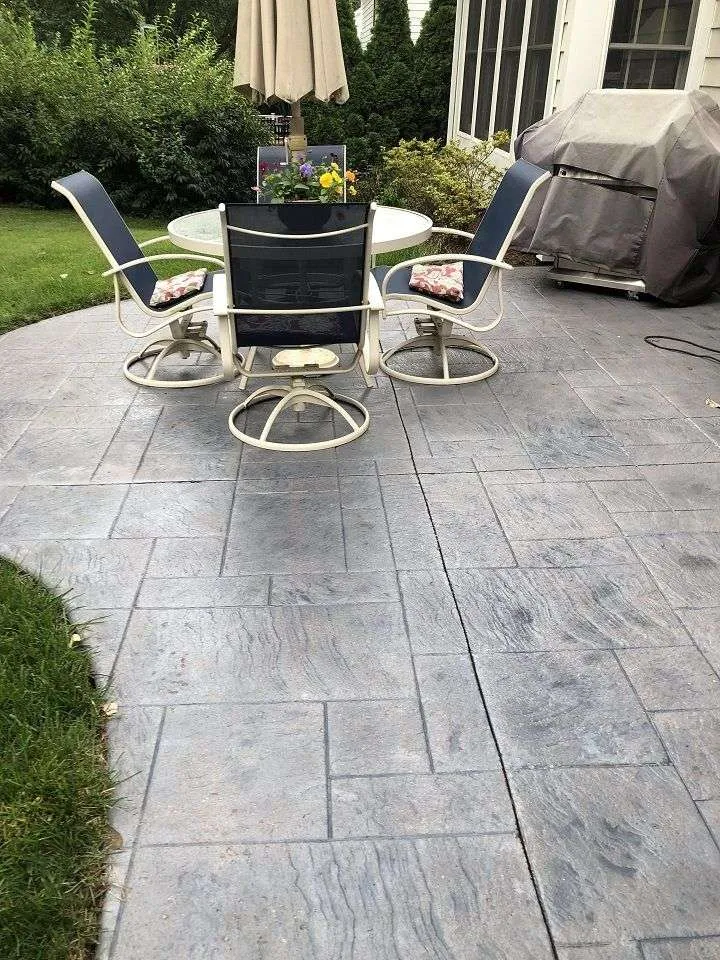
Decorative Concrete Resurfacing
Stamped concrete gives the floor the natural look of stones, bricks, or tiles. It is one of the most long-lasting and also one of the most economical flooring options, and it can be done in many patterns and colors according to one’s preference.
2. Interlocking Deck Tiles
Outdoor Flooring
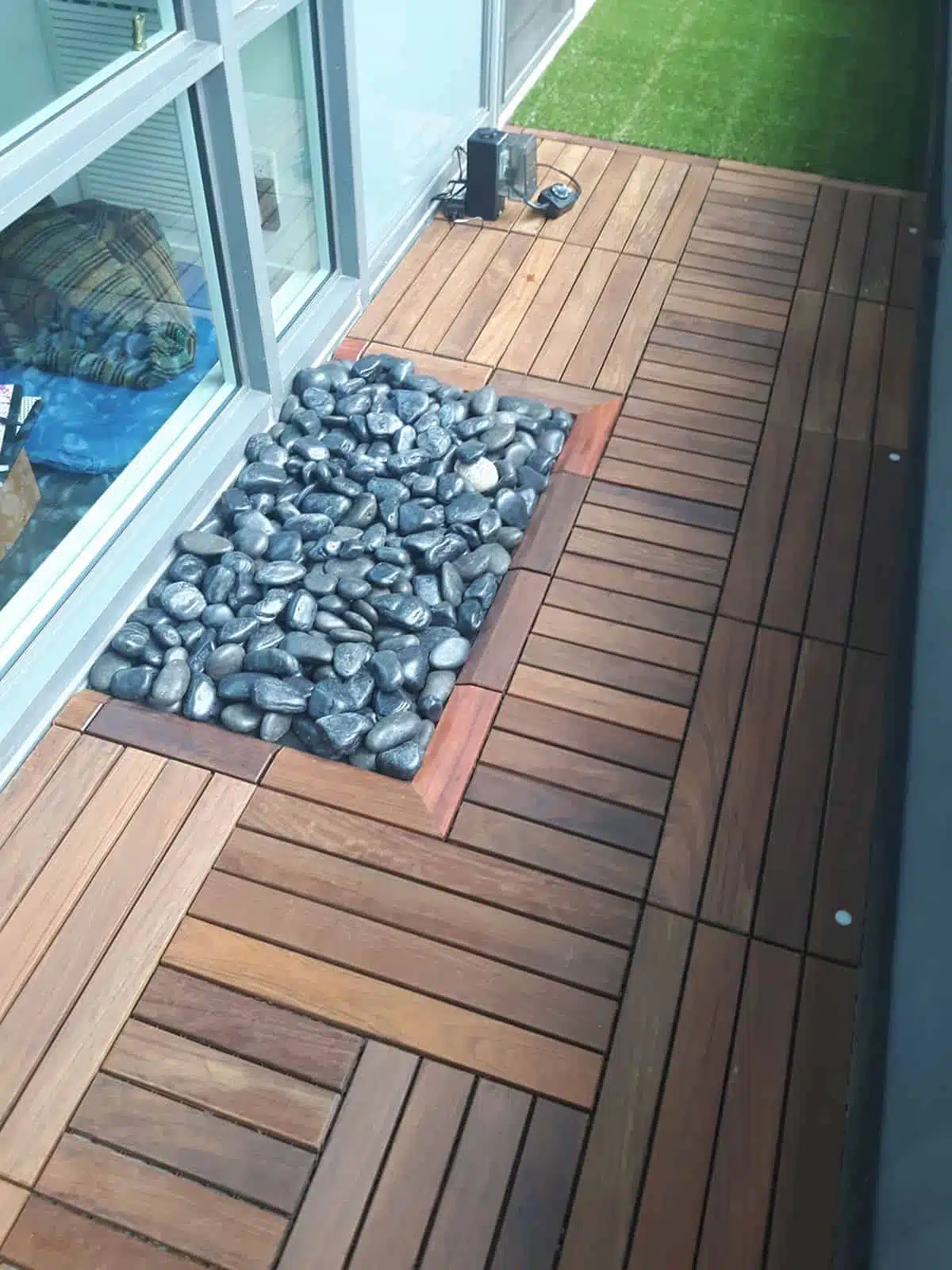
Outdoor flooring technique is in the form of deck tiles which are easily interlocking and come in wood, composite, and stone type. They are great for do it yourself projects as they could be rearranged to form various designs.
3. Flagstone
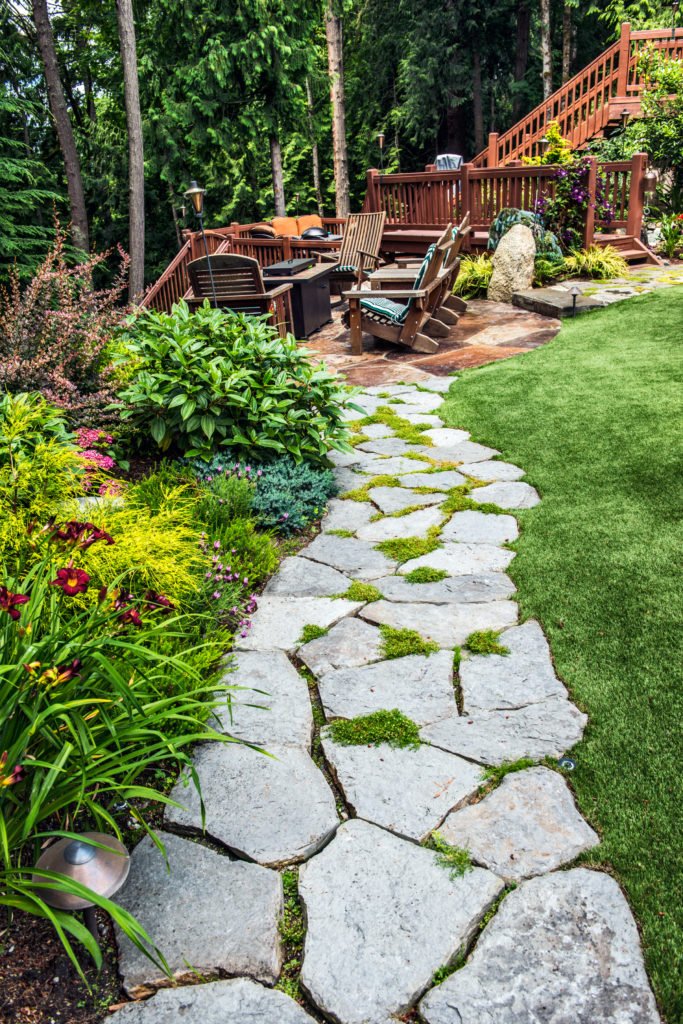
Flagstone patios also have a natural looking, and they are also more like the rustic type. Due to the specific shapes of such products and their colors, they look unusual and organically complement garden landscapes.
4. Brick
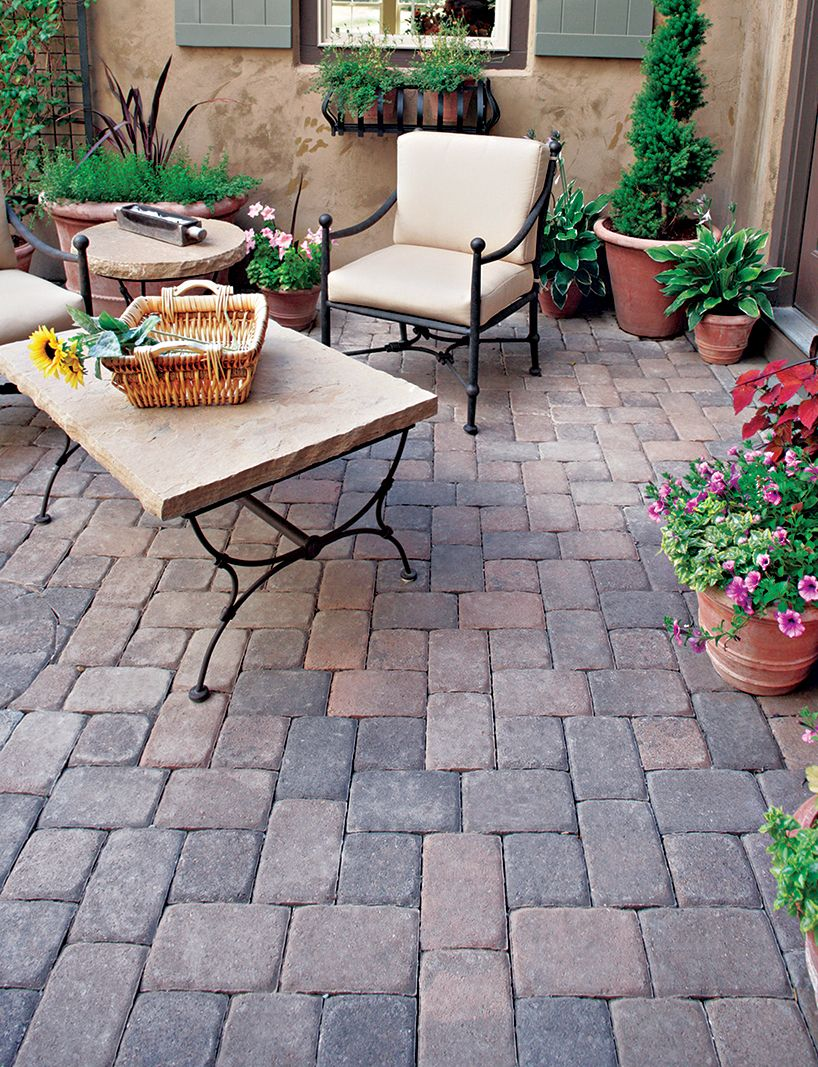
There is nothing like a brick patio, as it has a classic touch. Bricks can be laid in designs like herringbone, basket weave, or running bond for both traditional and modern styles.
5. Outdoor Carpet

Boston Design Guide
Outdoor carpets are made to stay outside and, at the same time, create a home like feel to your patio. They are also available in many colors and prints to complement the beauty of any patio style.
6. Gravel
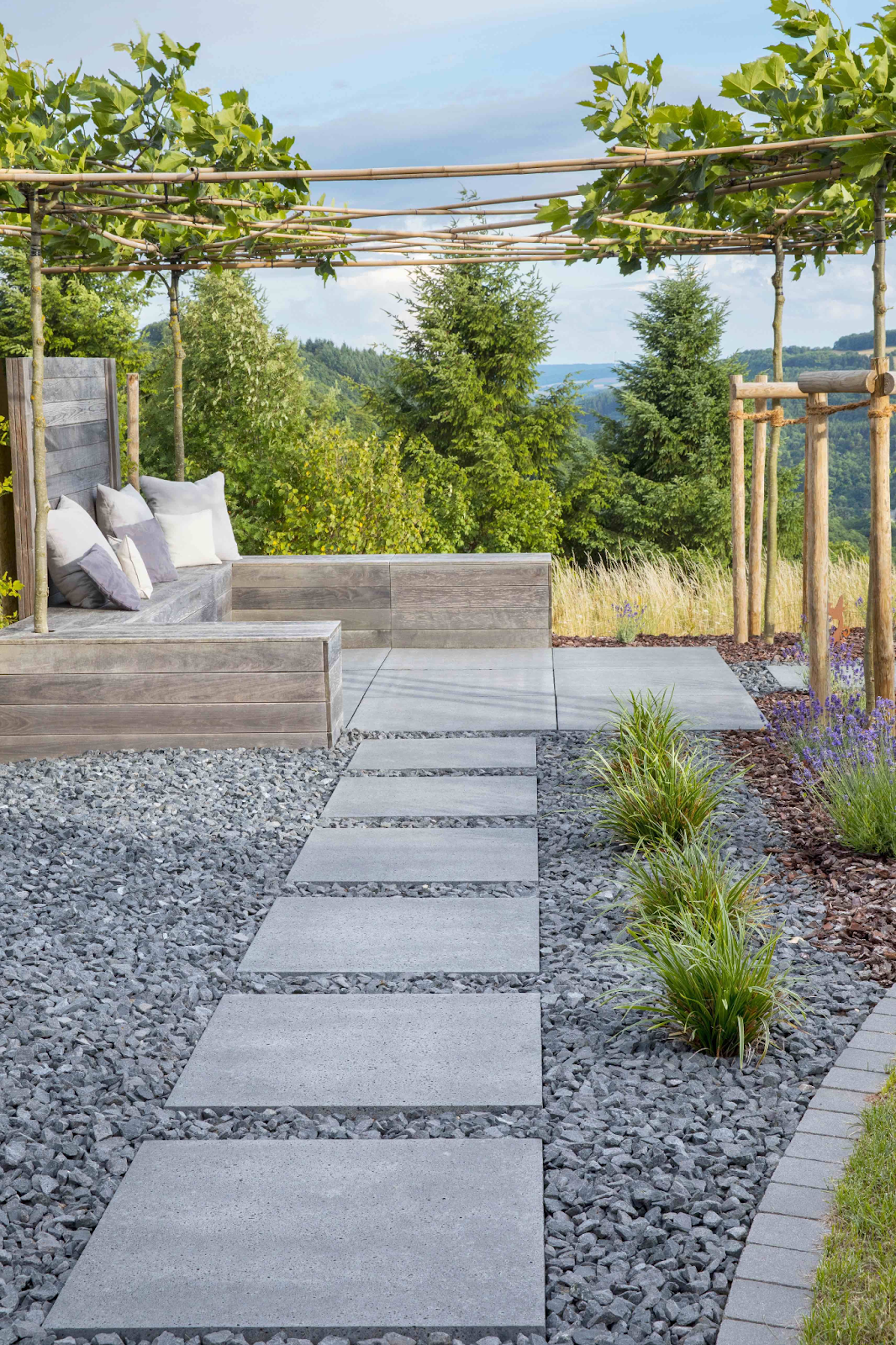
Gravel is relatively cheap and does not require much attention from the owner. It provides excellent drainage and can be paired with stepping stones or pavers to create a functional and attractive patio floor.
7. Composite Decking
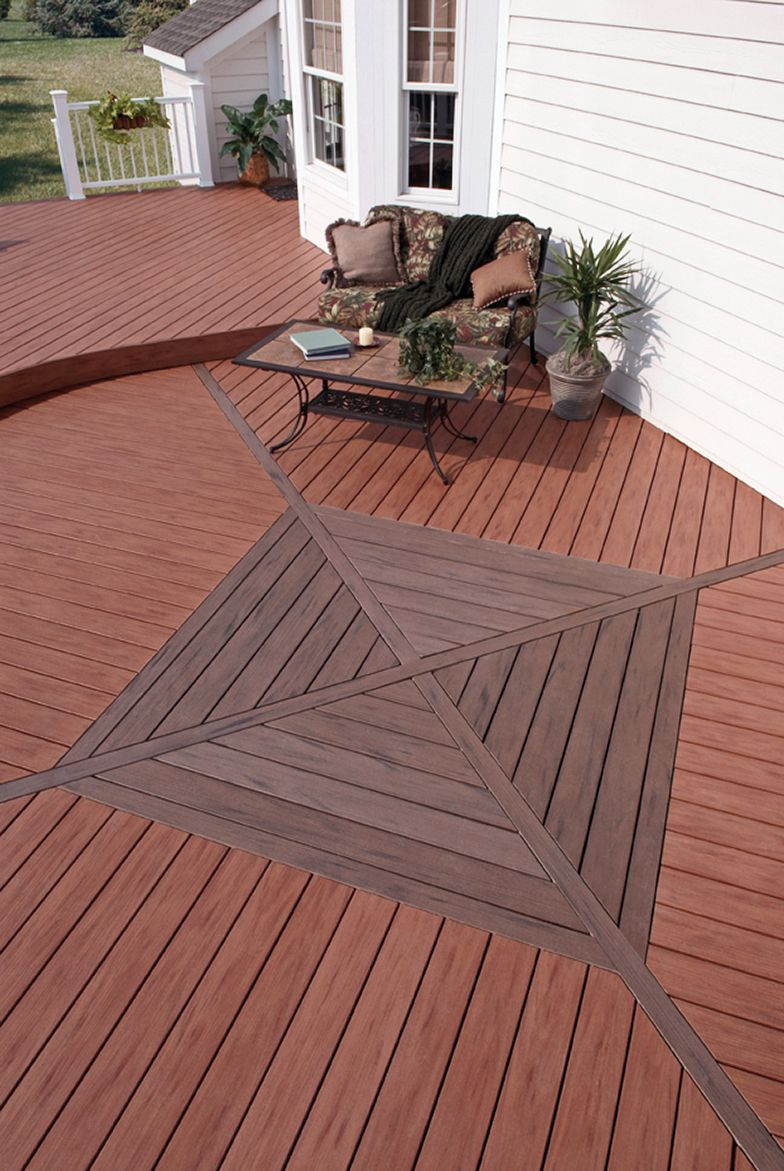
Composite decking is made from timber and plastic with varying proportions of both components. They do not rot, are insect repellent, and do not fade, qualities that make them ideal for use in outside flooring.
8. Tile
Lovely Indeed
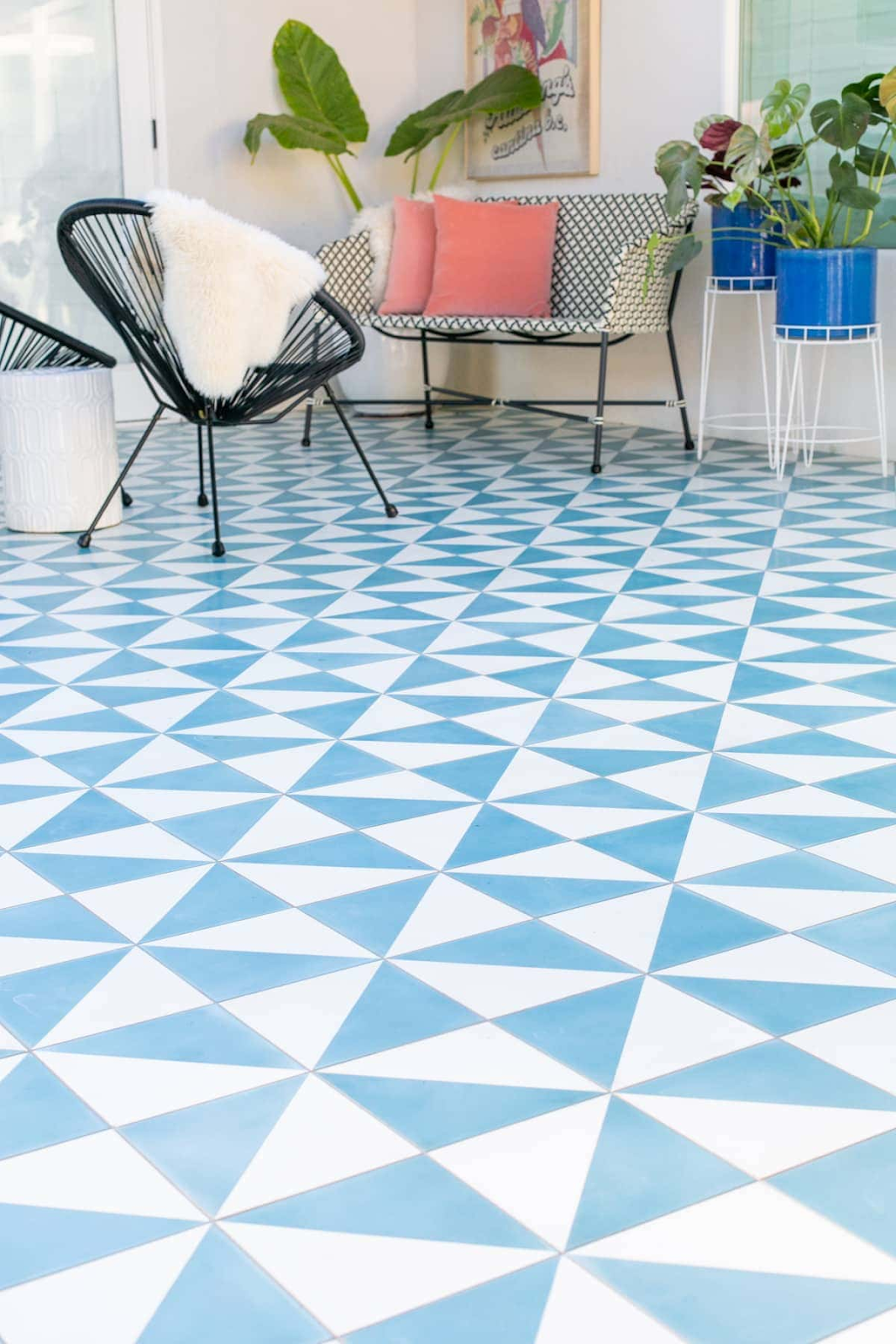
Ceramic or porcelain tiles are great for a contemporary look on a patio floor. They come in various configurations, and the pieces can be arranged in different formations to make physiognomic designs.
9. Wood Pallets
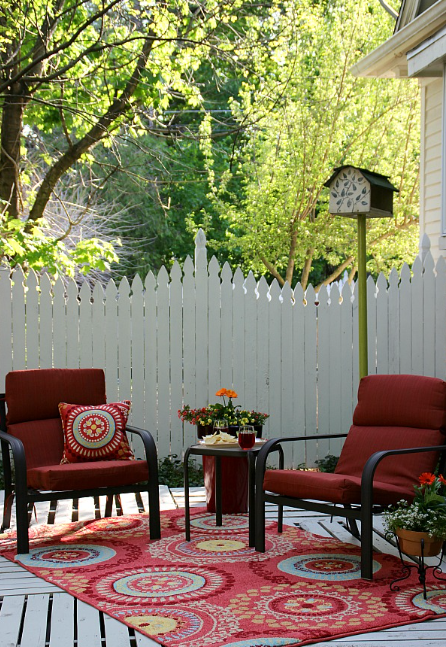
Pallets made of reused wood are quite cheap and friendly to the environment. They can be painted or stained to match the patio and arranged in different patterns to fulfill the client’s desire.
10. Concrete Pavers
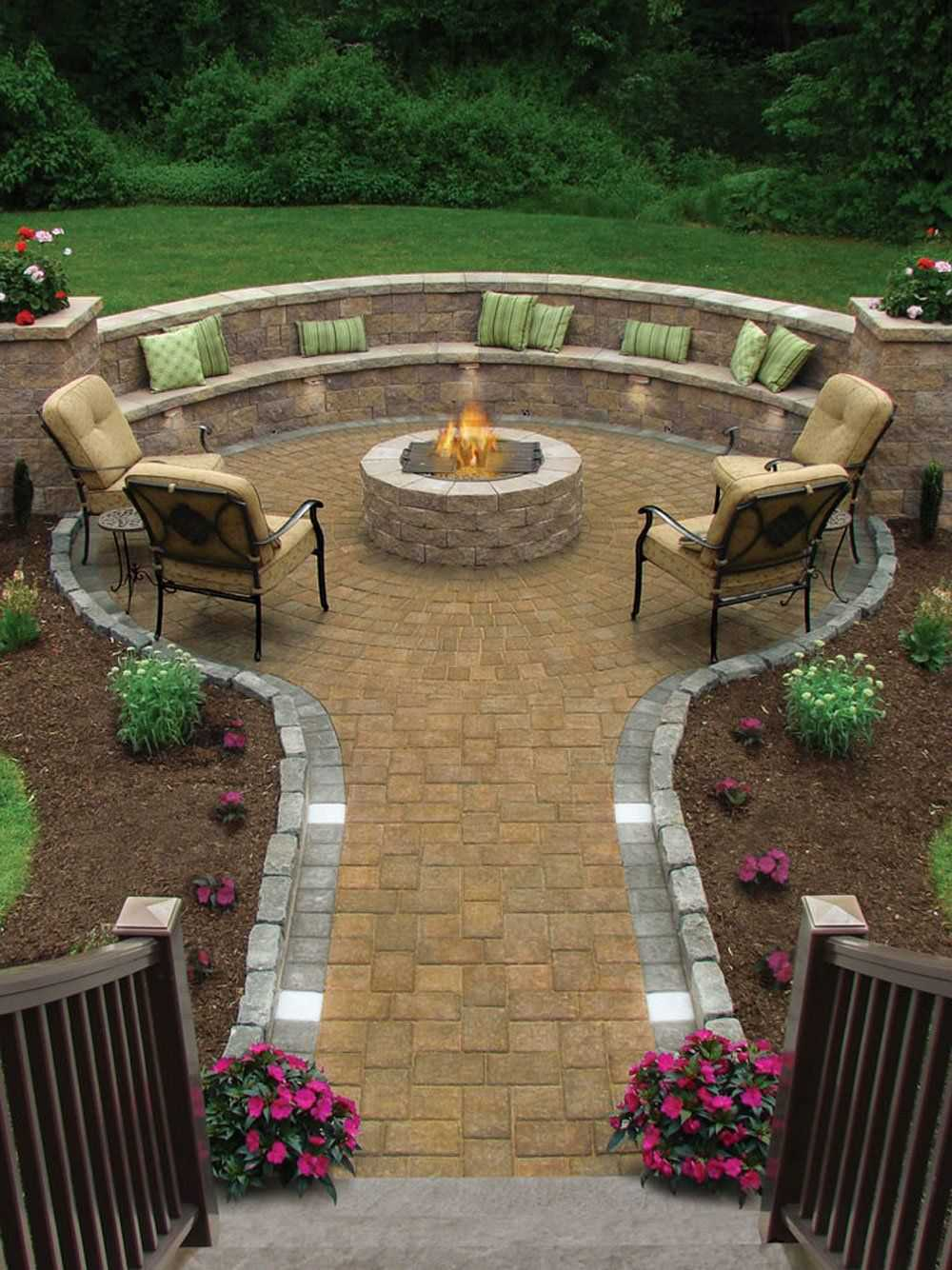
Concrete pavers can have different forms and dimensions and contain different colors. They can be installed in various designs and can also be installed together with other materials for an interesting pattern.
11. Artificial Grass
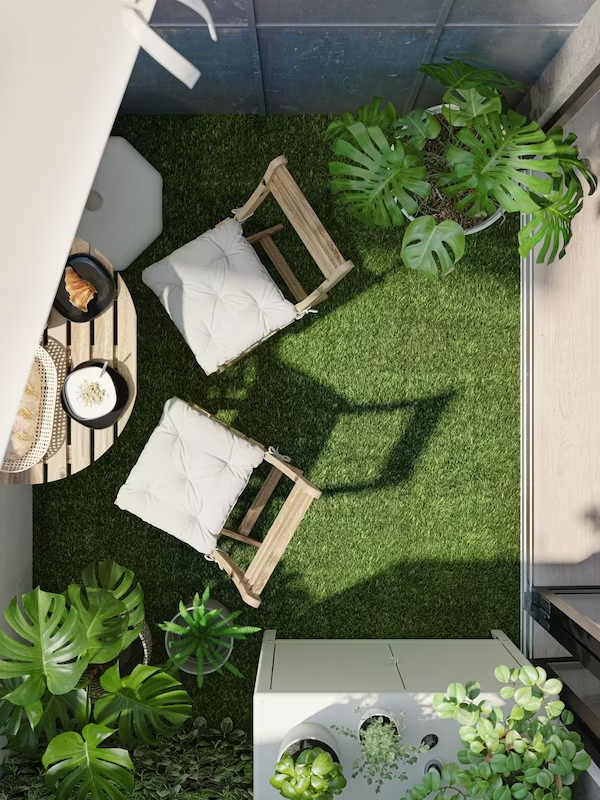
Synthetic turf imitates the actual grass in appearance and touch and does not require the usually associated care. It is best suited for establishing a soft natural ground that will suit the use of a lounge or play area in patios.
12. Natural Stone
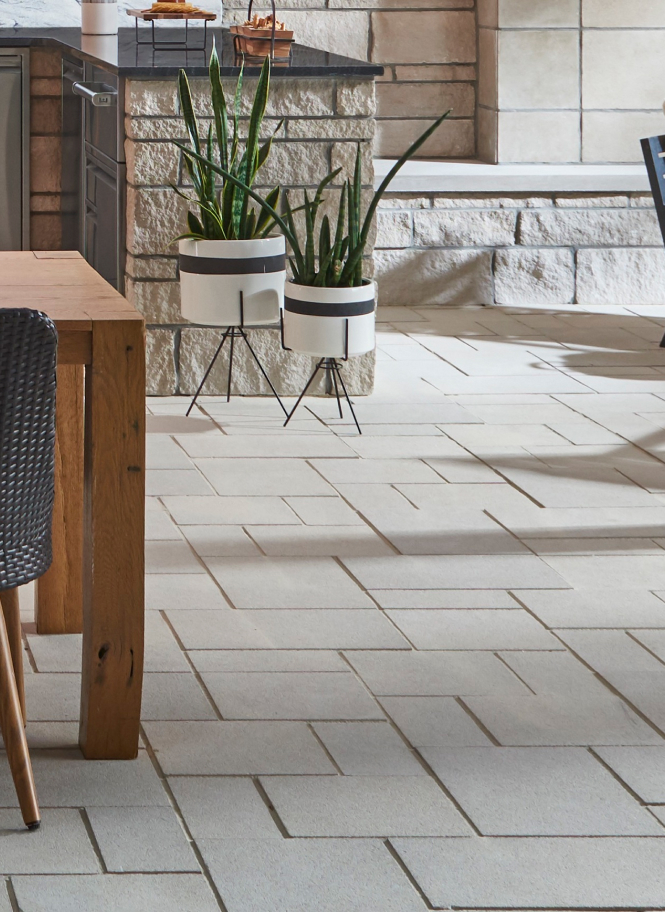
Slate or limestone is a costly but beautiful paving material that can give one’s patio that natural and royal look. They are also presented in different textures and colors, giving every stone an individual personality, which is a plus for the exterior ambiance.
13. Sand and Pavers
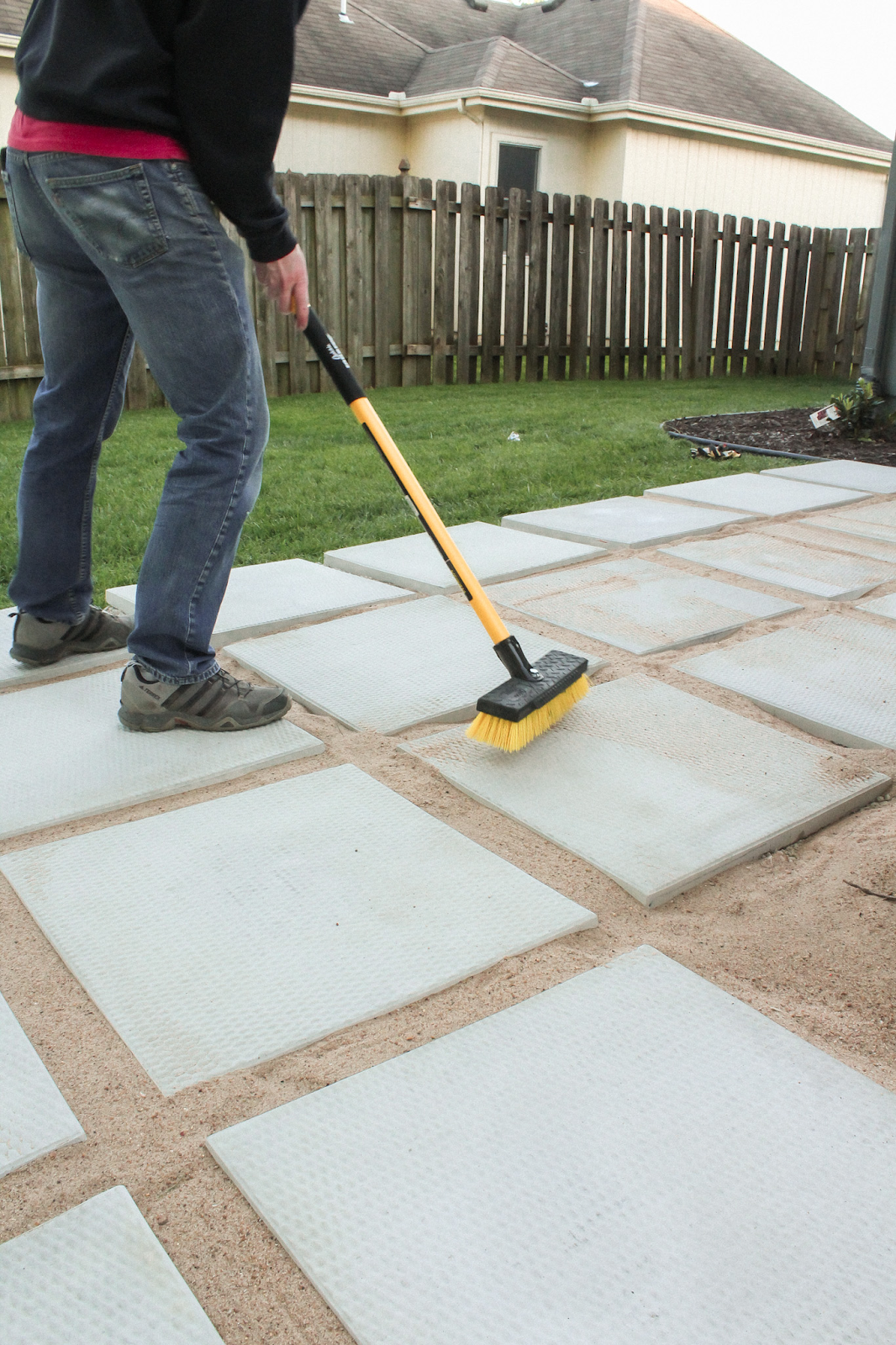
Mixing sand and pavers will give a laid-back or beach-like look and feel. Sand offers the possibility of leveling, and its feel under the feet is smooth, while Pavers give structure and aesthetics.
14. Mosaic Tiles
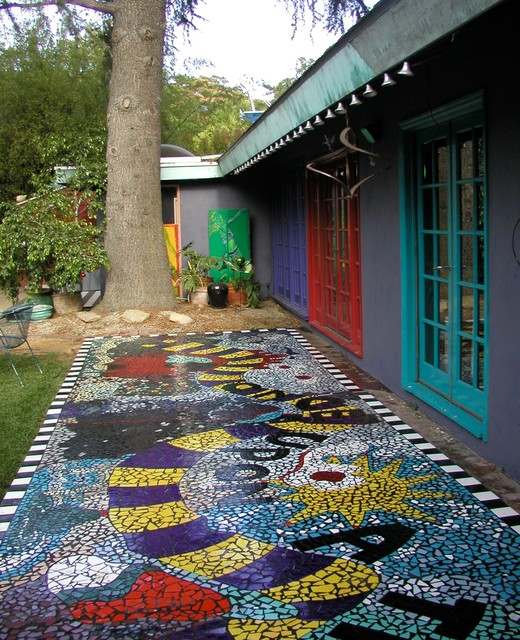
Mosaic tiles can install protractive and beautiful looking floors in the patios. Because of the flexibility of the materials and their application, they can be used to make intricate patterns or loud statements.
15. Stained Concrete
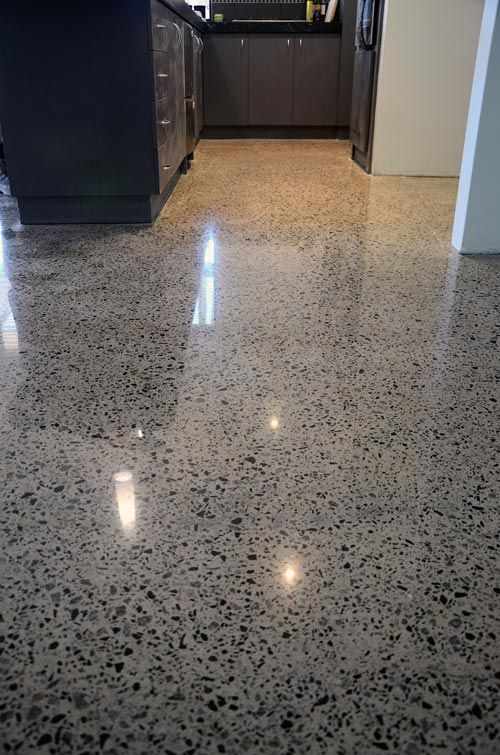
Stained concrete gives a neat and sleek look that is new age and trendy. This process also enables one to get a variety of colors and different looks, such as marbling or even antiquing your patio floor.
16. Cobblestone
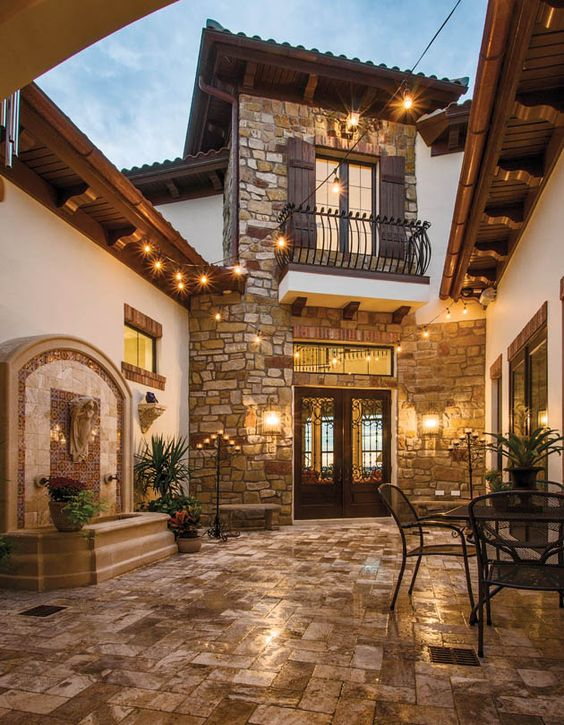
Cobbled patios look very much like traditional pavements in a village and are very nice. The smooth interlocking nude stones make it easy to construct the interlocking puzzle, and the rounded rocks make the surface smooth, easy to clean, comfortable, and aesthetically pleasing.
17. Recycled Rubber Tiles
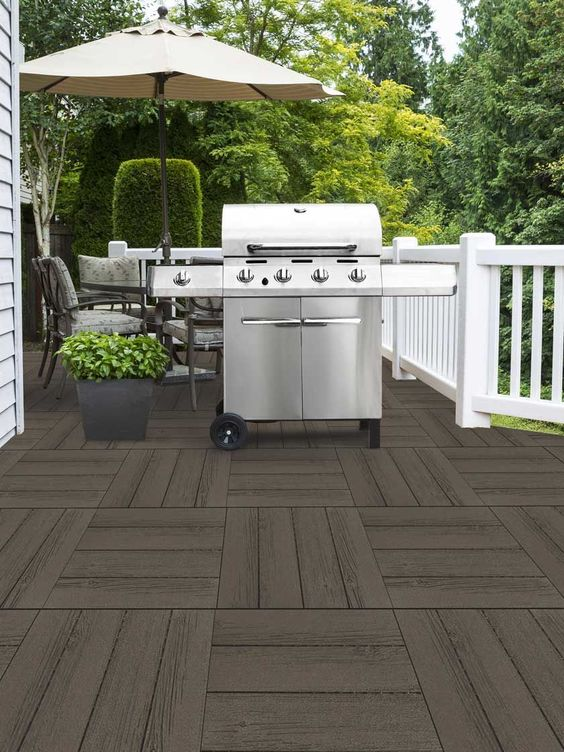
Reclaimed rubber tiles are environmentally friendly and comfortable. They have a slip-resistant surface and come in different colors and designs, perfectly fitting the family patios.
18. Pea Gravel
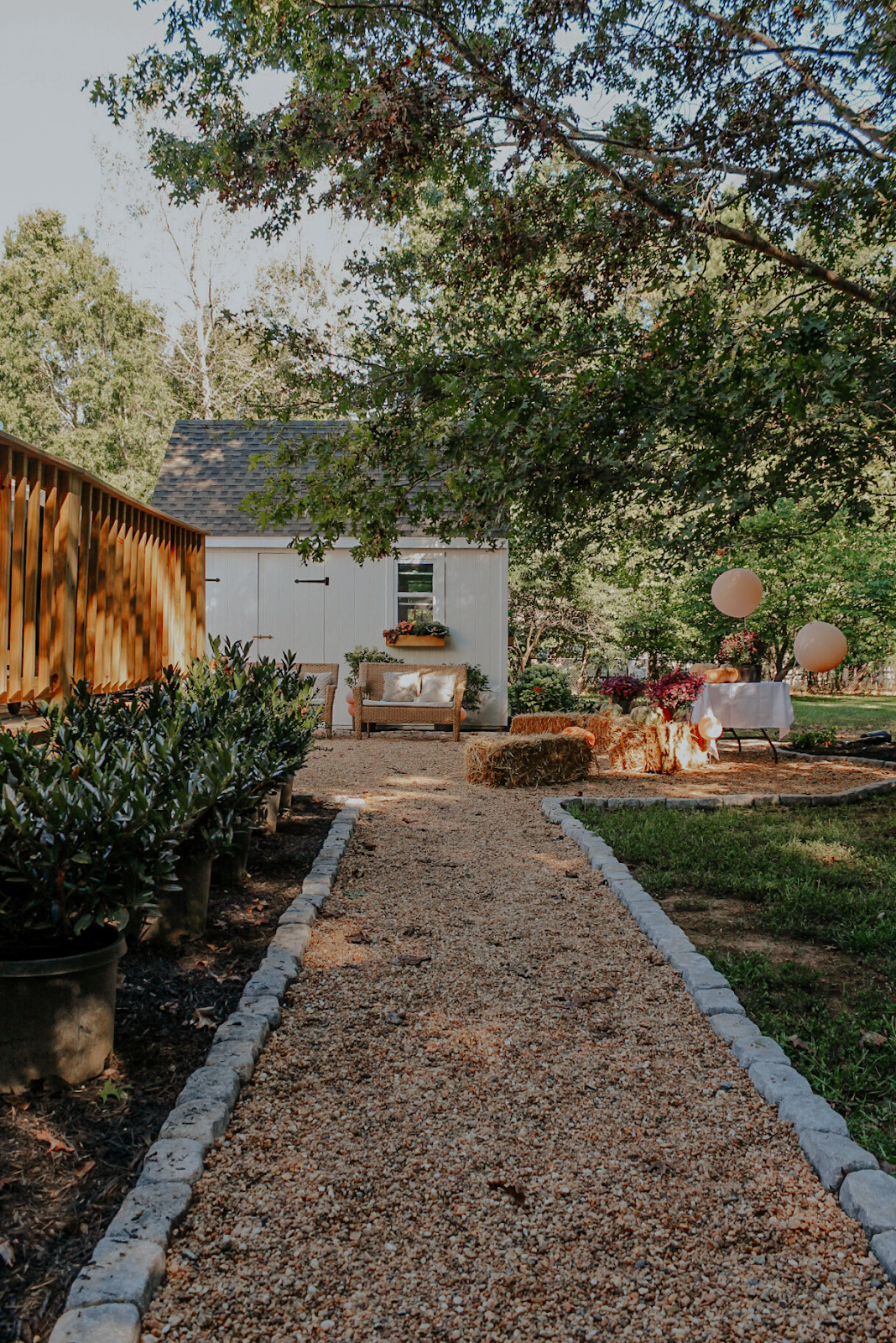
RHIANNON LAWSON HOME
Pea gravel is a tiny, rounded stone that is ideal for patios and is cheap. It is simple to fit and can be utilized in laid-back outdoor areas that will not require consistent cleaning.
19. Terracotta Tiles
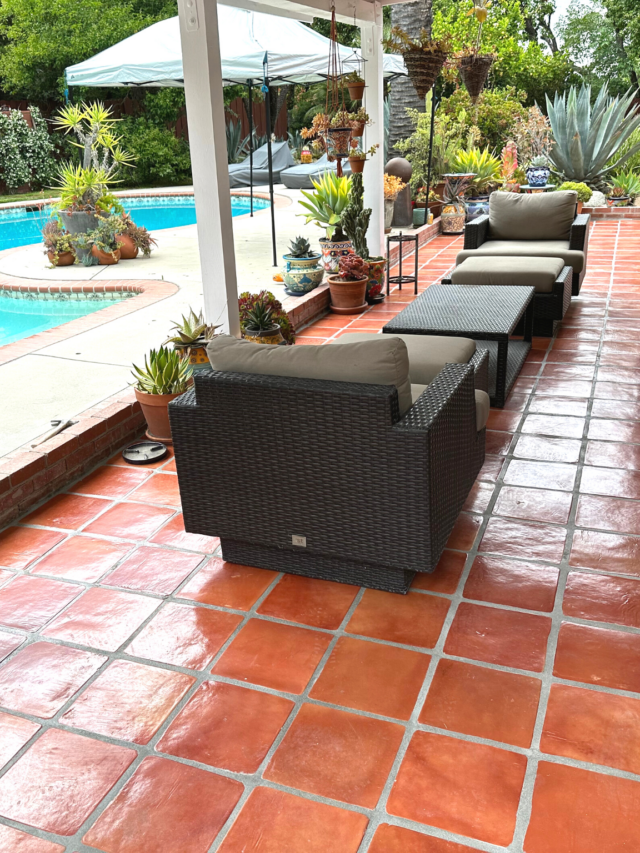
Terracotta tiles give the house a warm, rustic feel and look. Because of their color and material, they are suitable for Mediterranean or Southwestern-style patios.
20. Patterned Concrete Slabs
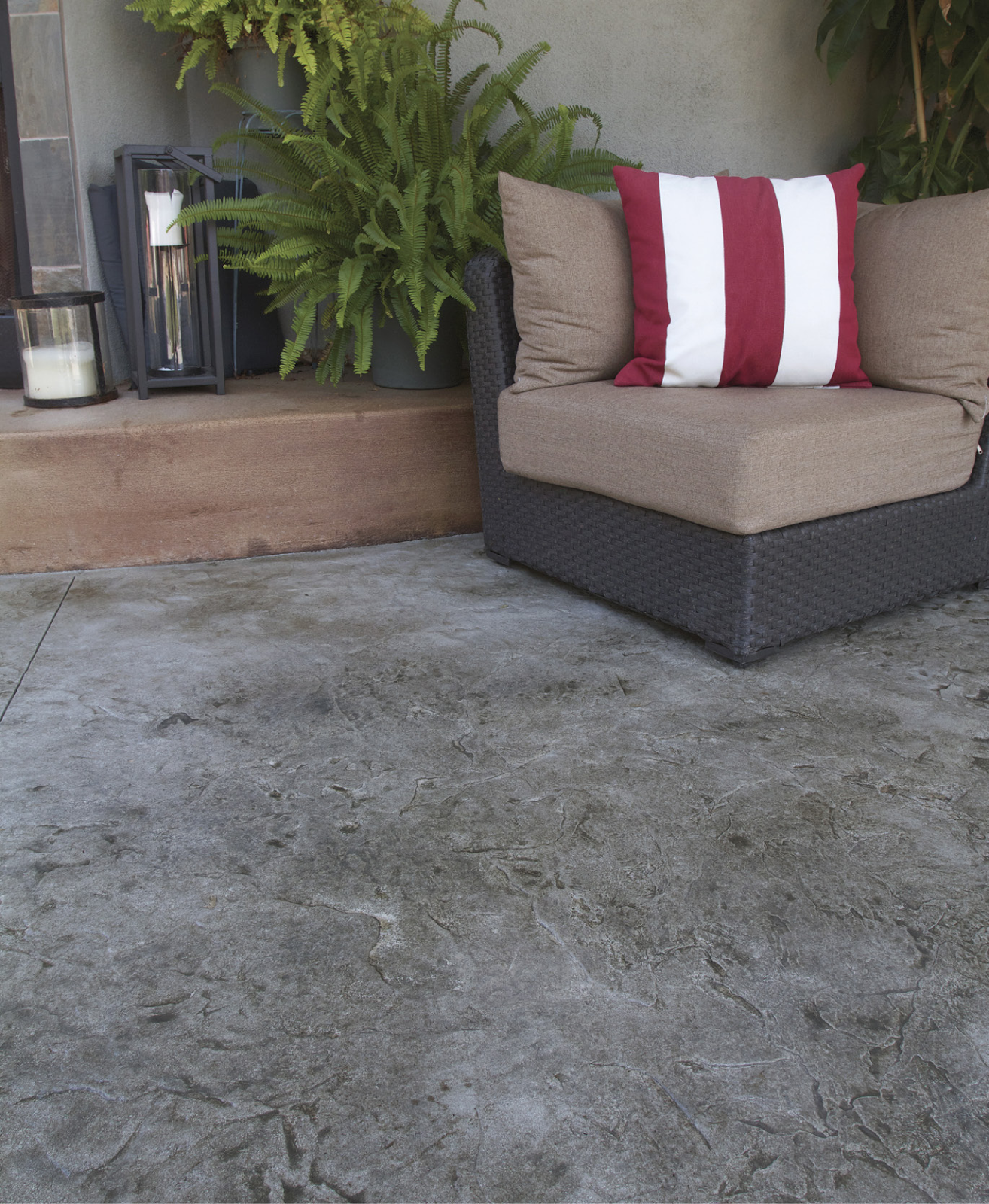
Patterned concrete slabs are made with different patterns and surfaces of concrete to fit into the market. They are easy to lay down and provide a way to create a stylish patio floor.
Final Thoughts
The right patio floor sets the tone for everything that happens above it.
Whether you want the timeless warmth of natural stone, the relaxed character of gravel, the practicality of composite decking, or the bold creativity of mosaic tiles, there is a floor idea here that will make your outdoor space look and feel exactly the way you want it to.
Choose the material that suits your home, your climate, and your life, and build everything else around it.
FAQs
What is the most durable patio flooring material?
Natural stone and quality clay brick pavers are the most durable patio flooring materials available, with lifespans of 50 years or more when properly laid and maintained. Large format porcelain tiles are also extremely durable, highly stain-resistant, and virtually frost-proof. For decking, composite materials outlast natural timber significantly with far less maintenance required.
What is the cheapest patio flooring option?
Gravel is the most affordable patio surface, followed by poured concrete and standard concrete pavers. Interlocking deck tiles are a cost-effective option for patios where an existing hard surface is already in place, as they require no sub-base preparation or professional installation.
How do I make my patio floor less slippery?
Choose materials with appropriate slip resistance ratings for outdoor use, R10 minimum for general outdoor areas. For existing slippery paving, an anti-slip treatment or textured surface coating can be applied. Regular cleaning to remove algae and moss growth is also essential as organic growth is the most common cause of slippery outdoor paving.
Can I lay patio flooring over an existing concrete slab?
Yes, in most cases. Interlocking deck tiles can be laid directly over an existing concrete slab with no preparation. Porcelain tiles can be bonded directly to a sound concrete slab using an appropriate outdoor tile adhesive. Natural stone and brick can also be laid over an existing slab using a mortar bed, though additional weight and height need to be considered.
How do I prevent weeds growing through my patio floor?
For sand-set or gravel surfaces, a layer of heavy-duty landscape fabric beneath the surface material is the most effective weed suppression method. For mortared paving, ensuring joints are fully filled eliminates the gaps where weed seeds germinate. Polymeric jointing sand, which hardens slightly when wetted, provides better weed resistance than standard jointing sand for dry-set paving.
What patio floor works best for a small space?
Large format pavers in a pale neutral tone make a small patio feel significantly larger than small-format or dark-colored alternatives. Laying the pavers in a diagonal direction adds dynamism and also creates the illusion of a larger floor area. Avoid using too many different materials or patterns in a small space as visual complexity makes the area feel even smaller.